

La Evolución del Diseño de Presentaciones en 2026
La forma en que los profesionales crean y comparten información ha experimentado un cambio fundamental. Durante décadas, el panorama de presentaciones estuvo dominado por diapositivas estáticas y formato manual. Hoy, el auge de la inteligencia artificial ha introducido una nueva era de eficiencia. Al evaluar los los mejores constructores de presentaciones con IA, dos nombres aparecen con frecuencia en la parte superior de la lista: Gamma y Pitch.com.
Aunque ambas herramientas buscan reducir el tiempo dedicado al diseño, adoptan enfoques muy diferentes al problema. Gamma se centra en un formato web‑nativo y fluido que rompe con los límites tradicionales de las diapositivas. Pitch.com se enfoca en la colaboración de alto nivel y en plantillas de diseño profesional para equipos. Elegir entre ellas requiere comprender tu flujo de trabajo específico, las expectativas de tu audiencia y la necesidad de formatos de exportación tradicionales.
En esta comparación detallada, exploraremos los puntos fuertes y débiles de ambas plataformas. También analizaremos cómo NextDocs ofrece un punto intermedio para quienes necesitan el poder de la investigación con IA combinado con una flexibilidad de exportación universal.
Gamma: El Innovador Web‑Nativo
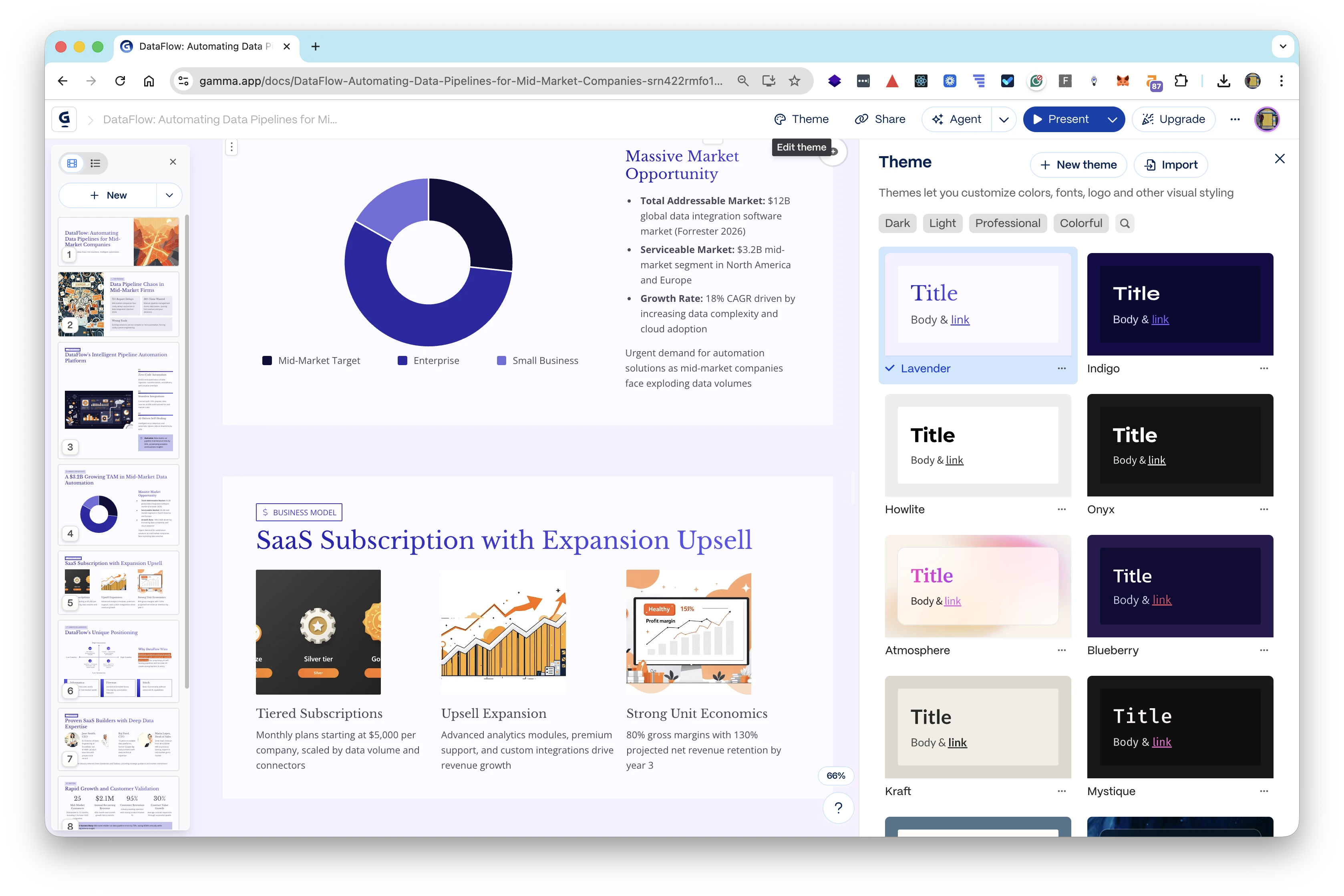
Gamma ha ganado popularidad al desafiar la idea de que una presentación debe ser una serie de diapositivas de relación de aspecto 16:9. En su lugar, utiliza un sistema de tarjetas que pueden expandirse para adaptarse al contenido. Esto hace que se sienta más como un sitio web moderno o un documento de Notion que como un archivo tradicional de PowerPoint. Para muchos usuarios, esta flexibilidad es un soplo de aire fresco.
Gamma está construido para la velocidad. Su generador de IA es notablemente rápido, convirtiendo una simple indicación en un conjunto totalmente diseñado de tarjetas en segundos. Al ser web‑nativo, permite contenido anidado como videos, páginas web en vivo y gráficos interactivos que serían difíciles de gestionar en una presentación de diapositivas estándar. Esto lo convierte en una excelente opción para startups y equipos internos que comparten su trabajo principalmente a través de enlaces en lugar de archivos adjuntos.
Sin embargo, esta innovación viene con compromisos. El formato web‑nativo puede ser difícil de traducir a formatos tradicionales. Aunque Gamma ofrece exportaciones a PDF y PowerPoint, los resultados a veces pueden sentirse algo limitados en comparación con la versión web en vivo. Además, el nivel gratuito incluye una marca de agua, lo que puede no ser adecuado para reuniones externas de alto riesgo.
Pitch.com: La Potencia Colaborativa
Pitch.com adopta un enfoque más tradicional a las diapositivas pero eleva la experiencia mediante una colaboración superior y controles de diseño avanzados. Está diseñado para equipos que necesitan trabajar juntos en tiempo real. Donde Gamma se siente como una herramienta de productividad individual, Pitch se siente como un espacio de trabajo profesional.
Una de las mayores fortalezas de Pitch es su biblioteca de plantillas. No son diseños genéricos. Son diseños profesionalmente elaborados que mantienen altos estándares visuales incluso cuando son editados por personas sin formación de diseño. La plataforma también ofrece un historial de versiones robusto y sistemas de comentarios. Estas funciones son esenciales para organizaciones grandes donde múltiples partes interesadas deben aprobar una presentación antes de que se presente.
Aunque Pitch ha integrado funciones de IA para ayudar con la generación de contenido, su enfoque principal sigue siendo el pulido manual y el flujo de trabajo en equipo. Es una herramienta para personas que desean la estructura de una presentación tradicional pero con funciones de colaboración modernas. Si descubres que Pitch no satisface completamente tus necesidades, podrías explorar varios alternativas a Pitch que ofrecen diferentes equilibrios entre IA y control manual.
Diferencias Clave Entre Gamma y Pitch
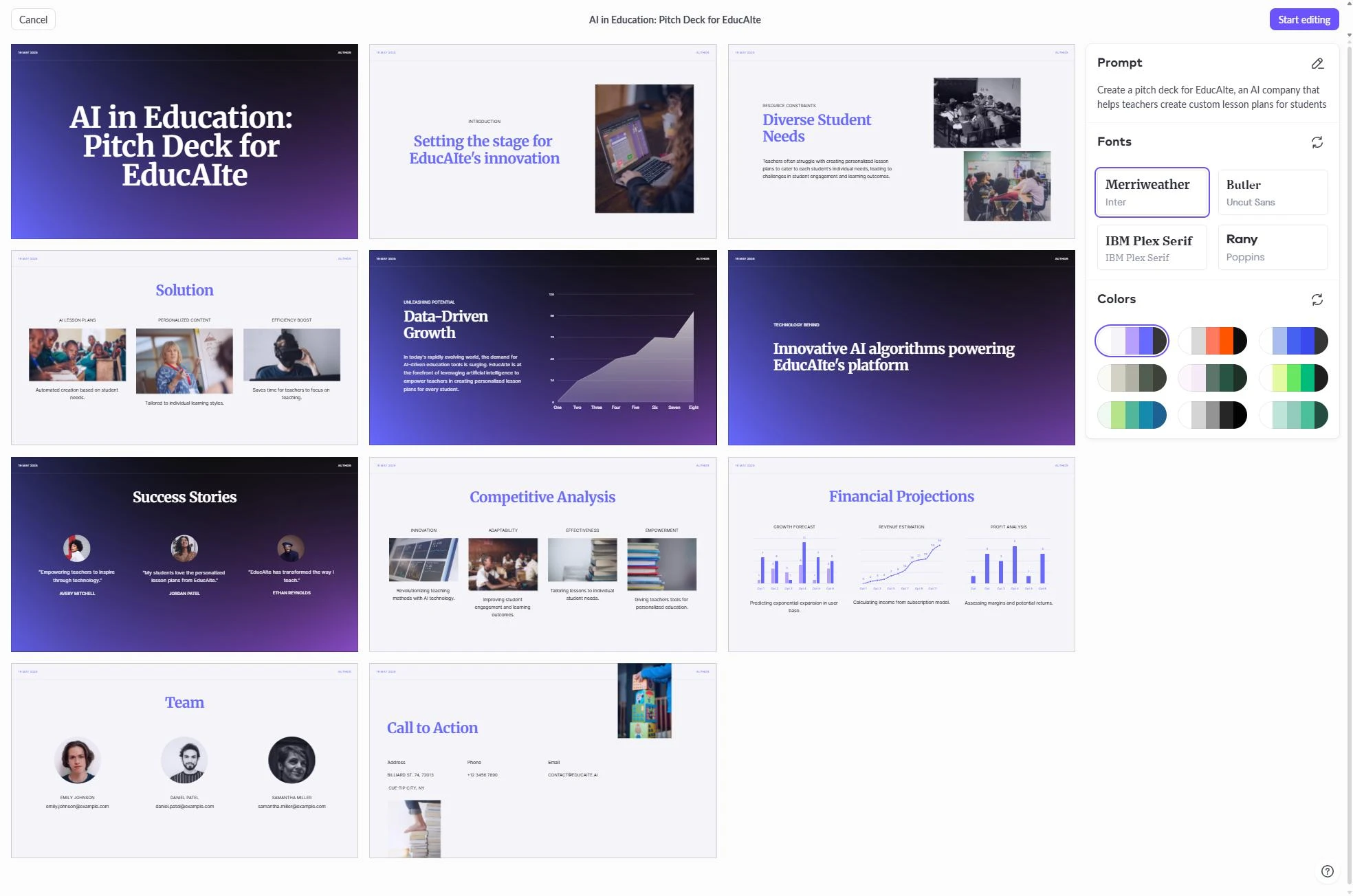
La diferencia principal entre estas dos herramientas radica en su filosofía central. Gamma se trata de romper el formato de diapositiva para permitir una creación más rápida y web‑first. Pitch se trata de refinar el formato de diapositiva para entornos profesionales de equipo.
Formato y Diseño
Gamma utiliza un sistema de tarjetas fluidas. Puedes añadir tanto texto como desees a una tarjeta, y ésta se expandirá verticalmente. Esto es ideal para actualizaciones con mucho contenido. Pitch utiliza diapositivas fijas. Esto te obliga a ser más conciso, lo que suele ser mejor para presentaciones reales.
Integración de IA
Gamma depende en gran medida de su IA para generar la estructura y el diseño inicial. Se siente como una herramienta IA‑first. Pitch usa la IA como asistente para ayudarte a completar diapositivas o generar ideas dentro de una plantilla predefinida. La IA en Pitch se percibe como una característica secundaria diseñada para apoyar el proceso de diseño manual.
Colaboración
Pitch es el claro ganador para equipos. Su versionado y niveles de permiso son mucho más avanzados que lo que Gamma ofrece actualmente. Para una inmersión profunda en cómo los equipos usan estas tecnologías, consulta nuestra guía sobre constructores de presentaciones empresariales con IA 2026.

Tabla Comparativa de Funcionalidades
| Funcionalidad | Gamma | Pitch.com |
|---|---|---|
| Formato Principal | Tarjetas web‑nativas | Diapositivas tradicionales 16:9 |
| Velocidad de Generación de IA | Extremadamente Rápida | Moderada |
| Colaboración | Compartir y editar básico | Versionado avanzado y comentarios |
| Formatos de Exportación | PDF, PPTX (limitado) | PDF, PPTX |
| Calidad de Plantillas | Moderna y limpia | Profesional de alta gama |
| Nivel Gratuito | Generoso (con marca de agua) | Disponible para individuos |
| Controles de Marca | Básico | Kits de Marca Avanzados |
| Elementos Interactivos | Alto (basado en web) | Moderado |
Comparación de Precios
Tanto Gamma como Pitch han adoptado modelos de precios similares para atraer a una amplia gama de usuarios.
Gamma ofrece un nivel gratuito que es bastante funcional, aunque incluye la marca Gamma en tus exportaciones. Sus planes de pago comienzan en $8 al mes. Este nivel elimina la marca de agua y desbloquea más créditos de IA avanzados y opciones de exportación. Es una elección asequible para freelancers y estudiantes.
Pitch también inicia su precio profesional alrededor de $8 por usuario al mes. Sin embargo, los costos pueden escalar rápidamente para equipos más grandes. Pitch es más propenso a requerir una inversión mayor si necesitas acceso completo a su suite de colaboración y herramientas de gestión de marca. Para quienes buscan estructuras de precios diferentes, explorar alternativas a Gamma 2026 puede ayudar a encontrar un plan que se ajuste a tu presupuesto.
Pros y Contras
Pros de Gamma
- Velocidad increíble para convertir indicaciones en presentaciones.
- El formato web‑nativo es perfecto para compartir mediante enlaces modernos.
- Muy fácil de usar para personas que encuentran intimidante el software tradicional de diapositivas.
- Estética moderna incorporada por defecto.
Contras de Gamma
- Exportar a PowerPoint puede generar problemas de diseño.
- La marca de agua en el nivel gratuito se ve poco profesional para algunos usos empresariales.
- Capacidad limitada para afinar elementos de diseño específicos comparado con herramientas tradicionales.
Pros de Pitch.com
- Funciones de colaboración de primera clase para equipos.
- Plantillas profesionales que garantizan una apariencia de alta calidad.
- Control de versiones sólido y sistemas de comentarios.
- Mejor consistencia de marca para organizaciones grandes.
Contras de Pitch.com
- La IA es menos central en la experiencia que en otras herramientas de presentación con IA.
- Puede sentirse ligeramente más rígido que los diseños fluidos de Gamma.
- El precio para equipos puede volverse costoso en departamentos grandes.
El Papel de NextDocs en el Flujo de Trabajo Profesional
Mientras Gamma y Pitch son excelentes herramientas independientes, muchos profesionales descubren que necesitan algo más robusto para trabajos intensivos en investigación. Aquí es donde NextDocs encaja en el ecosistema. NextDocs no es solo un creador de diapositivas. Es una plataforma de documentos y presentaciones nativa de IA diseñada para trabajos profesionales de alto riesgo.
NextDocs resuelve un problema importante encontrado tanto en Gamma como en Pitch: la limitación de IA "de un solo disparo". La mayoría de las herramientas te dan una versión de una presentación y te piden que la corrijas. NextDocs utiliza generación multivariante. Esto significa que obtienes múltiples versiones diferentes de tu presentación a partir de una sola indicación. Luego puedes elegir la mejor estructura o combinar elementos de distintas versiones.
Además, NextDocs incluye una integración profunda de investigación. En lugar de que la IA invente datos o use información desactualizada, NextDocs extrae información en tiempo real con citas. Esto es crítico para consultores y fundadores que necesitan presentar datos de mercado precisos. Nuestro blog reciente sobre los mejores constructores de presentaciones con IA 2026 discute cómo este enfoque centrado en la investigación está cambiando la industria.
Finalmente, NextDocs ofrece exportación universal. Ya sea que necesites un PDF, un archivo PowerPoint, una presentación de Google Slides o incluso un Google Doc, NextDocs maneja la conversión sin romper tu diseño. Esto elimina la "ansiedad de exportación" a menudo asociada con herramientas web‑nativas como Gamma.
Veredicto: ¿Cuál Deberías Elegir?
La elección entre Gamma y Pitch.com depende de tus necesidades específicas como creador.
Elige Gamma si eres un fundador solitario o un estudiante que necesita crear contenido hermoso rápidamente. Es perfecto si tu objetivo principal es compartir un enlace que la gente pueda ver en sus teléfonos o laptops. La velocidad de su IA es inigualable para obtener un borrador inicial listo en segundos.
Elige Pitch.com si trabajas en un entorno de equipo donde varias personas deben revisar y editar la misma presentación. Es la mejor opción para empresas establecidas que tienen directrices de marca estrictas y necesitan una herramienta que se sienta más como una suite de presentación profesional tradicional.
Sin embargo, si eres un profesional que necesita más que un diseño atractivo, deberías considerar una opción más avanzada. Si requieres investigación profunda, múltiples variantes generadas por IA para elegir, y la capacidad de exportar a cualquier formato sin problemas, NextDocs es la elección superior. Cubre la brecha entre la libertad creativa de Gamma y la estructura profesional de Pitch.
¿Listo para Crear Mejores Presentaciones?
Prueba NextDocs Gratis y experimenta generación multivariante, exportaciones universales e integración profunda de investigación. No se requiere tarjeta de crédito.