Best Ai Pitch Deck Builders (affordable) in 2026
A comprehensive roundup of the best affordable AI pitch deck builders to help founders and consultants create investor-ready presentations in minutes.

The landscape of professional presentations has undergone a radical transformation. Only a few years ago, building a pitch deck required a grueling combination of research, narrative structuring, and manual design. Founders and consultants would spend dozens of hours tweaking bullet points or wrestling with alignment in traditional software. Today, the emergence of artificial intelligence has compressed this timeline from days to minutes.
Affordable AI pitch deck builders have democratized high-quality design. You no longer need a dedicated design team or a massive budget to produce a deck that captures investor attention. However, the market is now flooded with tools that promise more than they deliver. Some generate generic content that lacks the nuance required for a Series A pitch, while others provide beautiful layouts that are nearly impossible to export or edit.
We have tested the leading platforms to identify the most effective, cost-efficient solutions for 2026. This review focuses on tools that balance price with professional output, ensuring you can scale your presentation workflow without breaking the bank. For a broader look at the industry, you can read our best AI presentation builders 2026 roundup.
Summary Comparison Table
| Rank | Tool | Best For | Starting Price |
|---|---|---|---|
| 1 | NextDocs | Overall, Research-Heavy Decks | $15/mo |
| 2 | Plus AI | PowerPoint & Google Slides Users | $10/mo |
| 3 | Gamma | Budget-Conscious & Web-Sharing | $8/mo |
| 4 | Beautiful.ai | Non-Designers Seeking Polish | $12/mo |
| 5 | Pitch.com | Collaborative Team Workflows | $8/mo |
| 6 | Copilot (PPT) | Microsoft 365 Enterprise Users | $30/mo |
| 7 | Canva Magic | Marketers & Visual Content | $13/mo |
| 8 | Gemini (Slides) | Google Workspace Integration | $0/mo |
| 9 | SlidesAI | Quick Drafts & Students | $10/mo |
| 10 | MagicSlides | Content Repurposing | $8/mo |
1. NextDocs
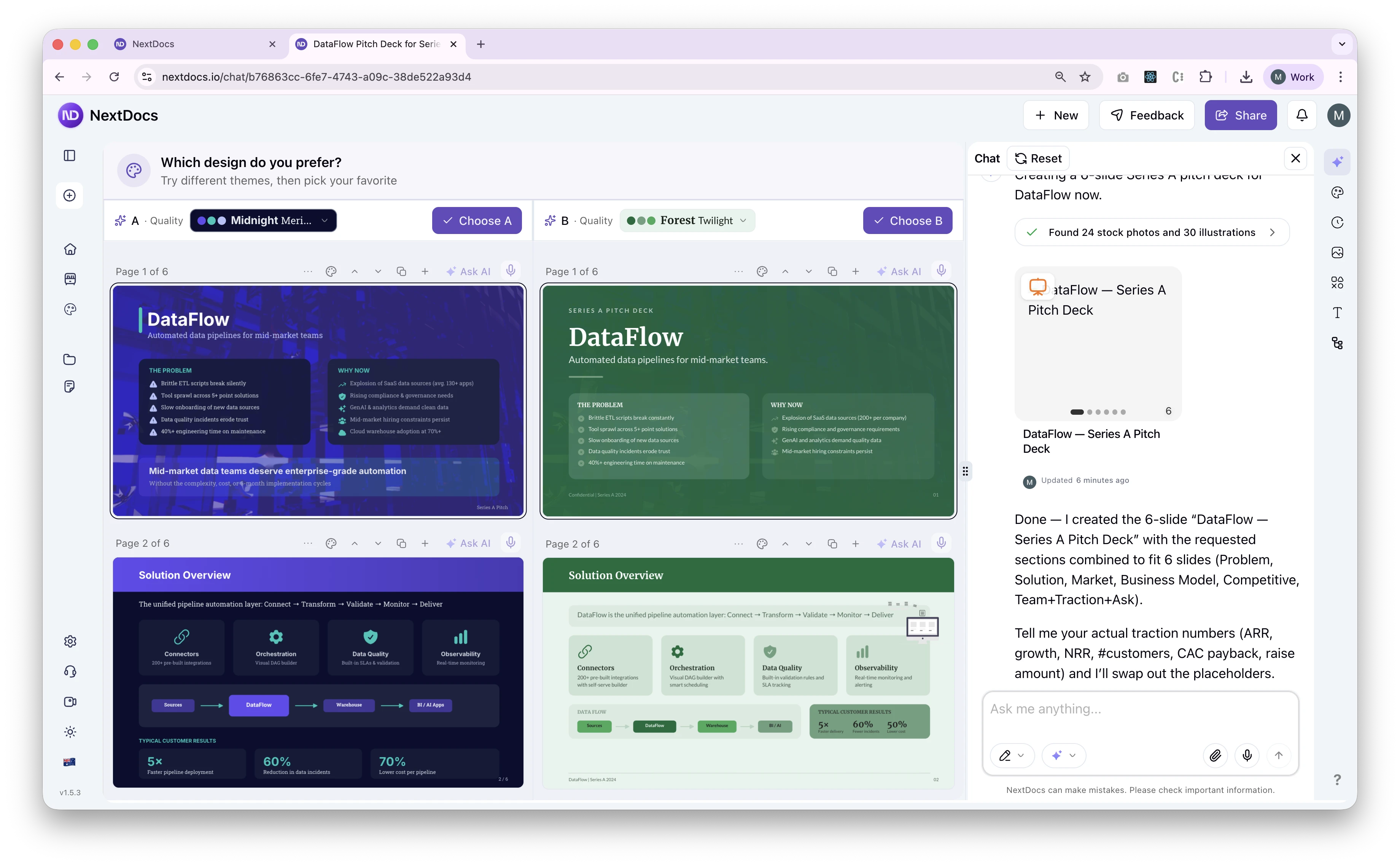
NextDocs takes the top spot because it solves the two most significant problems with AI presentation tools: lack of choice and difficult exports. Most AI builders give you one version of a deck. If the AI misses the mark, you have to start over. NextDocs utilizes a multi-variant generation engine. This means that for every prompt you enter, the system generates multiple distinct versions of the presentation. You can choose the narrative flow that fits your voice or combine the best slides from different variants.
The platform is also built for the research-heavy requirements of founders and consultants. It features a deep research integration that pulls actual data and citations from the web. This prevents the common AI issue of generating plausible but fake statistics. Furthermore, NextDocs offers universal exports. You can move your work seamlessly between PDF, PowerPoint, Google Slides, and even Google Docs without losing your formatting.
Key Features:
- Multi-variant generation provides multiple interpretations of your prompt.
- Deep research integration pulls real-world data with citations.
- Universal export support for all major professional formats.
- Brand styling tools ensure every variant matches your company identity.
- Native support for multiple AI models to optimize output quality.
Pricing: A free tier is available for new users. Paid plans start at $15 per month.
Best For: Overall use, consultants, founders, and sales teams who need high-stakes, data-driven decks.
Verdict: NextDocs is the most versatile tool on this list. It offers the best balance of creative choice and professional export flexibility. It is particularly strong for those who need to see how Nano Banana Pro vs NextDocs compare in high-end environments.

2. Plus AI
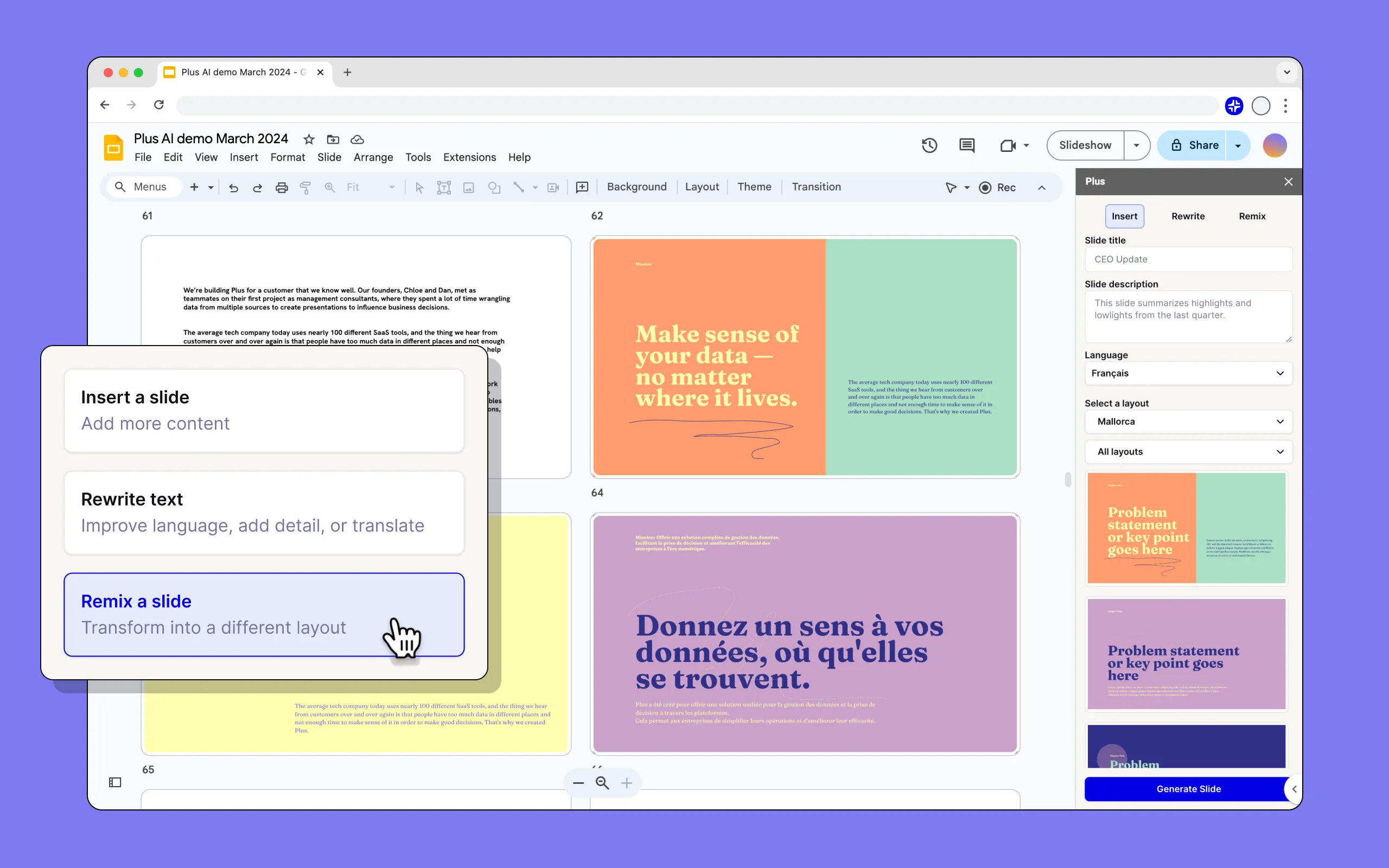
Plus AI is a dedicated add-in that brings artificial intelligence directly into the tools you already use. It functions within Google Slides and PowerPoint, making it an excellent choice for those who do not want to learn a new standalone interface. The tool focuses on template preservation. If you have an existing corporate template, Plus AI can generate new slides that adhere strictly to your existing layouts and styles.
One of its most useful features is the remix tool. Instead of just generating new content, you can take an existing slide and ask the AI to rewrite it, change the layout, or convert it into a different format like a pros and cons list. This makes it a powerful utility for refining existing presentations rather than just creating new ones.
Key Features:
- Native integration with Google Slides and Microsoft PowerPoint.
- Remix feature for transforming existing slide layouts.
- Preserves existing corporate templates and master slides.
- AI-powered rewriting and content enhancement.
Pricing: No free tier is available. Pricing starts at $10 per month.
Best For: PowerPoint and Google Slides power users who want AI assistance within their current workflow.
Verdict: Plus AI is the best option for users who refuse to leave the Google or Microsoft ecosystems. If you are looking for more options, you can check our Plus AI alternatives 2026 guide.

3. Gamma
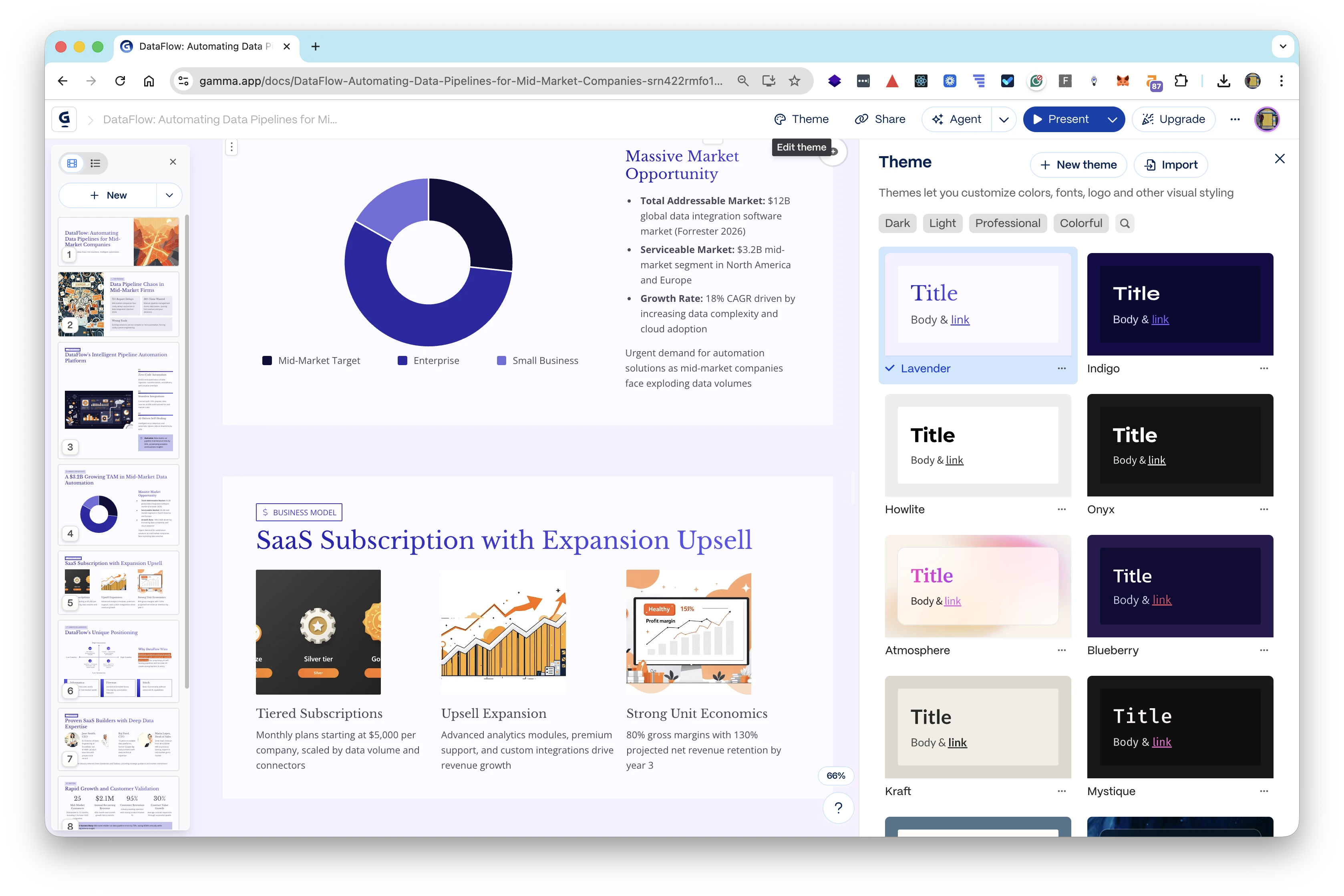
Gamma has gained a massive following due to its modern approach to presentation design. It treats slides more like web-native "cards" that can expand and adapt to content. This makes it one of the fastest tools for generating a visually impressive deck. The free tier is quite generous, allowing users to create several presentations without an initial investment.
The tool is particularly effective for internal presentations or startup pitches that will be shared as a link. The designs are modern, clean, and mobile-responsive. However, the web-first nature of Gamma can sometimes make traditional PDF or PowerPoint exports feel slightly less polished than the native web version.
Key Features:
- Web-native format that allows for interactive and responsive decks.
- One-click themes and styling for instant professional looks.
- Support for embedding videos, GIFs, and live websites.
- Fast generation based on simple text prompts or outlines.
Pricing: Free tier available. Pro plans start at $8 per month.
Best For: Budget-conscious founders and teams who prefer sharing presentations via web links.
Verdict: Gamma is a top-tier choice for speed and modern aesthetics. For those comparing it to our top pick, the Gamma vs NextDocs 2026 breakdown is a helpful resource. You can also explore other Gamma alternatives 2026 if the web-native format is not a fit.

4. Beautiful.ai
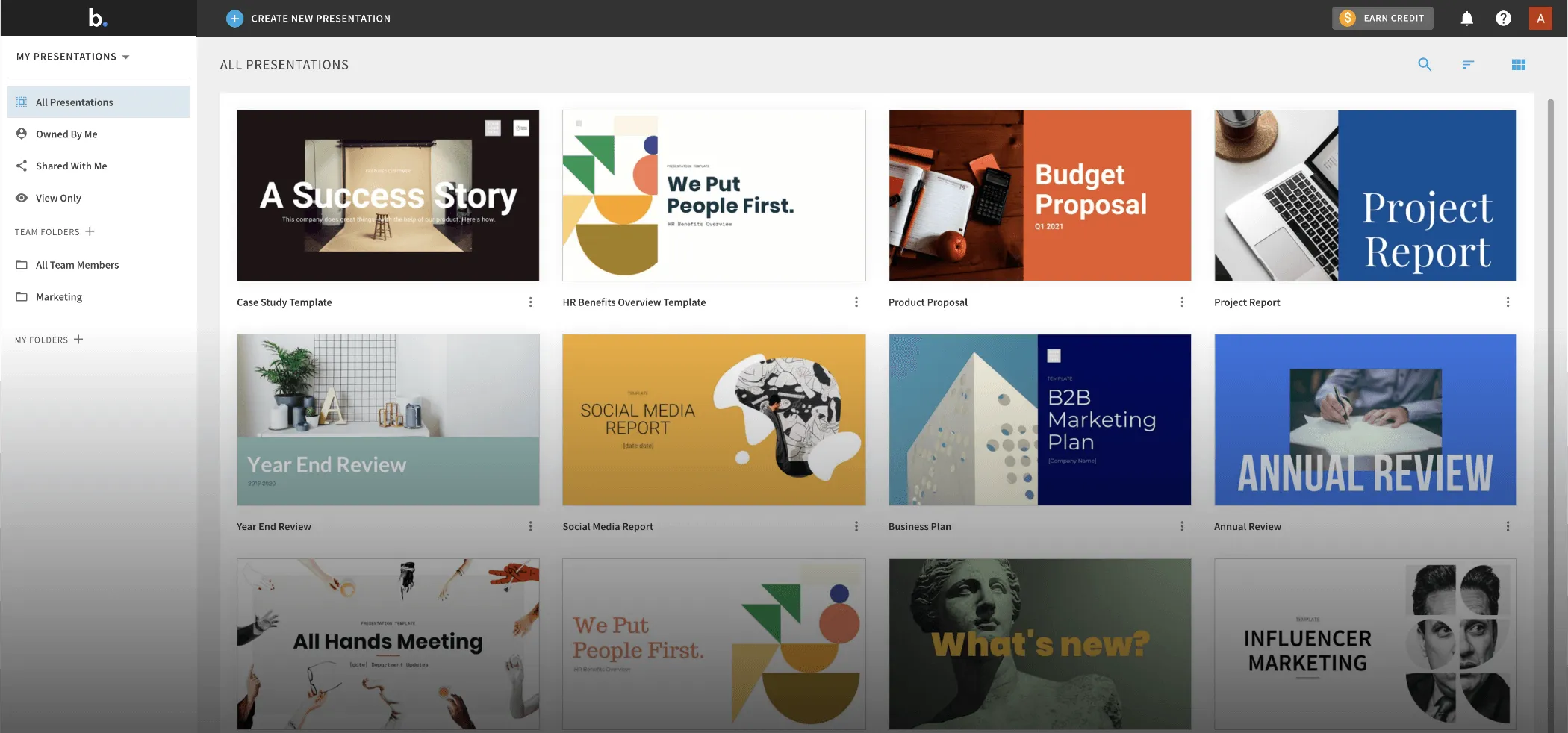
Beautiful.ai focuses on the "smart" aspect of design. It uses a system of constraints to ensure that your slides always look professional. As you add content, the slides automatically resize and reposition elements to maintain visual balance. This makes it nearly impossible to create an ugly slide, which is a major benefit for non-designers.
While its AI generation capabilities have improved, its core strength remains its library of smart templates. These templates are specifically designed for business use cases, such as data visualization and competitive landscapes. It is a highly structured environment that trades some flexibility for guaranteed design quality.
Key Features:
- Smart templates that automatically adjust as content is added.
- Designer-level animations and transitions.
- A vast library of searchable icons and stock photos.
- Brand control features to lock in fonts and colors.
Pricing: No free tier. Starting price is $12 per month for individuals.
Best For: Professionals who need high-quality visual results without spending time on manual alignment.
Verdict: This is the gold standard for design consistency. If the pricing or structure feels too restrictive, there are several Beautiful.ai alternatives worth considering.

5. Pitch.com
Pitch.com is built with collaboration at its core. It combines a modern presentation editor with powerful team features like real-time co-editing, version history, and integrated commenting. The platform has recently integrated AI to help users generate starting points for their decks.
The AI features in Pitch are designed to act as a creative partner. You can generate a draft and then use the platform's robust manual editing tools to perfect the details. It bridges the gap between fully automated AI tools and traditional design software.
Key Features:
- Strong real-time collaboration and team management.
- Built-in version history and slide status tracking.
- AI-assisted deck generation from prompts.
- High-quality template library created by professional designers.
Pricing: Free tier available. Pro plans start at $8 per month.
Best For: Teams that need to collaborate closely on presentations with a mix of AI and manual input.
Verdict: Pitch.com is excellent for collaborative environments. It offers a more traditional but highly polished editing experience compared to web-native competitors.
6. Microsoft Copilot for PowerPoint
Copilot is Microsoft's answer to the AI revolution. It is integrated directly into the PowerPoint desktop and web applications. Its primary advantage is organizational context. If you are part of an enterprise, Copilot can look at your Word documents and Excel files to generate a presentation that is grounded in your company's actual data.
The tool is excellent for drafting speaker notes and summarizing long presentations. However, it is one of the more expensive options on this list, as it requires a specific Microsoft 365 license. The design output also tends to be more conservative compared to startups like NextDocs or Gamma.
Key Features:
- Integration with the full Microsoft 365 ecosystem.
- Ability to generate slides from Word documents.
- Automatic creation of speaker notes and summaries.
- Enterprise-grade security and compliance.
Pricing: No free tier. Requires a Microsoft 365 subscription and a $30 per month Copilot add-on.
Best For: Enterprise users and organizations already heavily invested in the Microsoft ecosystem.
Verdict: Copilot is powerful for internal corporate use. It excels at data synthesis but lacks the creative flair of standalone AI builders.
7. Canva Magic Design
Canva has expanded from a simple graphic design tool into a comprehensive presentation platform. Its Magic Design feature allows you to enter a prompt and receive a fully designed presentation in seconds. The biggest strength of Canva is its massive library of assets, including millions of icons, photos, and videos.
Canva is ideal for marketers who need to create presentations that are visually loud and engaging. It supports a wide variety of export formats, including video. While the AI is helpful for drafting, the real value lies in the platform's endless customization options.
Key Features:
- Massive library of templates and design assets.
- Magic Media tool for generating AI images and videos for slides.
- Multi-format exports including PDF, PPTX, and MP4.
- User-friendly drag-and-drop interface.
Pricing: Genuinely useful free tier. Pro plans start at $13 per month.
Best For: Marketers, social media managers, and small business owners.
Verdict: Canva is the most versatile creative tool. It is excellent for visual presentations but can sometimes feel too "busy" for formal investor pitch decks.
8. Gemini for Google Slides
Gemini is Google's integrated AI assistant for Workspace. Like Copilot, it lives directly inside the application. It is primarily used for generating images for slides and creating initial content drafts. Because it is part of Google Workspace, it is often the most accessible tool for teams already using Google Drive.
While it is convenient, Gemini is currently less sophisticated than standalone tools when it comes to slide layout. It often generates text and images that still require significant manual arrangement. For a deeper look at how it compares to other Google-based tools, see our Gemini vs MagicSlides comparison.
Key Features:
- Seamless integration with Google Workspace and Google Drive.
- AI image generation directly within the Slides sidebar.
- Content drafting and summarization.
- No additional software installation required.
Pricing: Basic features are often included in Workspace tiers. Advanced features require a Gemini subscription.
Best For: Google Workspace users who need quick drafts and AI-generated imagery.
Verdict: Gemini is a solid starting point for Google users, but it currently lacks the specialized presentation logic found in tools like NextDocs.
9. SlidesAI
SlidesAI is a straightforward Google Slides extension that focuses on speed. You paste your text, choose a presentation type, and the tool generates the slides for you. It is one of the most affordable options for those who just need a quick first draft.
The tool is less about creative design and more about automation. It is a favorite among students and professionals who have a lot of text and need to distribute it across a slide deck quickly. It is simple, effective, and stays out of the way.
Key Features:
- Text-to-presentation conversion in seconds.
- Supports over 100 languages.
- Simple, no-frills interface.
- Customizable color and font presets.
Pricing: Free tier available for up to 3 presentations. Paid plans start at $10 per month.
Best For: Students, educators, and professionals needing quick drafts for internal reviews.
Verdict: SlidesAI is perfect for those who prioritize speed and simplicity over complex design features.
10. MagicSlides
MagicSlides is another popular Google Slides add-on. It distinguishes itself by its ability to repurpose content from various sources. You can feed it a YouTube URL, a website link, or a PDF, and it will attempt to summarize that content into a presentation.
While the output often requires design cleanup, the content synthesis is quite helpful. It saves a significant amount of time during the research and outlining phase. For users deciding between this and the top-ranked tool, the MagicSlides vs NextDocs 2026 comparison highlights the differences in export quality and design depth.
Key Features:
- URL-to-presentation conversion (YouTube, websites, etc.).
- PDF-to-presentation support.
- Integrated with Google Slides for easy editing.
- Bulk slide generation from long-form text.
Pricing: Free tier available. Paid plans start at $8 per month.
Best For: Content creators and researchers who need to turn existing media into presentations.
Verdict: MagicSlides is a great utility for content repurposing, though its design capabilities are basic compared to standalone platforms.
How to Choose the Right Builder
Selecting the best tool depends on your specific workflow and the audience for your deck. If you are a founder preparing for a high-stakes investor meeting, your requirements are different from a marketing manager creating a weekly internal report.
For Founders and Consultants
If you are building a pitch deck, accuracy and flexibility are paramount. You cannot afford for an AI to invent market statistics. This is why tools with deep research capabilities, such as NextDocs, are superior. The ability to export to PowerPoint is also essential, as many investors still prefer traditional files over web links. The multi-variant approach allows you to explore different narrative arcs, which is critical when you are trying to find the most persuasive way to tell your startup's story.
For Internal Corporate Use
In a corporate setting, brand consistency and ease of use are the primary drivers. If your company already uses Microsoft 365, Copilot is the logical choice despite its higher price. It understands your internal documents and keeps your data within a secure environment. For those in the Google ecosystem, Plus AI offers a great balance of AI power and template preservation.
For Visual and Creative Decks
When your goal is to wow an audience with visuals, Beautiful.ai and Canva are the leaders. Beautiful.ai is better for professional, clean, and data-driven visuals. Canva is better for creative, high-energy presentations that might include social media assets or video. Gamma also fits into this category, offering a unique web-native experience that feels very modern and forward-thinking.
The Importance of Multi-Variant Generation
One of the most frustrating aspects of using AI is the feeling of being "locked in" to a single output. You provide a prompt, wait for the generation, and then realize the AI misunderstood your tone or focus. This leads to a cycle of re-prompting that can sometimes take longer than manual creation.
Platforms that offer multi-variant generation change this dynamic. By seeing three or four different versions of your pitch deck simultaneously, you can quickly identify which structure works best. You might like the problem statement from version A but prefer the financial slide from version B. This modular approach to AI creation is a significant reason why NextDocs has become a preferred tool for professional consultants who need to iterate quickly.
Pricing and Value for Money
While all the tools listed are considered affordable compared to hiring a professional designer, their value propositions differ. A $10 per month subscription for an add-in like SlidesAI is great for students, but it may lack the features a professional needs. Conversely, a $15 per month plan for a tool like NextDocs provides universal exports and research tools that can save hundreds of dollars in labor costs.
When evaluating price, consider the "export tax." Some tools have cheap monthly fees but make it very difficult to get your data out of their platform. Always prioritize tools that support standard formats like PPTX and PDF. This ensures that you own your content and can present it even if you decide to cancel your subscription later.
Conclusion
The best AI pitch deck builders in 2026 are those that empower the user rather than just automating them. Whether you are looking for the native integration of Plus AI, the visual perfection of Beautiful.ai, or the versatile, research-driven approach of NextDocs, there is an affordable solution available for every need.
For most professionals, the combination of multi-variant generation and universal export support makes NextDocs the strongest overall choice. It acknowledges that AI is a starting point, not a finished product, and provides the tools necessary to refine a deck into something truly investor-ready. As you explore these options, remember that the best tool is the one that fits seamlessly into your existing workflow and helps you communicate your ideas with clarity and impact.
Ready to Create Better Presentations?
Try NextDocs Free and experience multi-variant generation, universal exports, and deep research integration. No credit card required.