

Introduction
The landscape of professional presentations has shifted dramatically. In 2026, creating a slide deck is no longer just about choosing a theme and typing bullet points. It is about how effectively an artificial intelligence can interpret your data and transform it into a compelling narrative. For users who live within the Google Workspace ecosystem, two primary contenders have emerged: Gemini for Google Slides and SlidesAI.
Both tools function as add-ins that live directly within the Google Slides interface. This shared architecture means that users do not have to learn an entirely new software platform. However, the similarities often end there. Gemini is Google's own native intelligence, deeply woven into the fabric of Drive and other Workspace apps. SlidesAI, on the other hand, is a dedicated third-party tool designed specifically for high speed slide generation from text.
For students looking for the best AI presentation builders for students, the choice often comes down to cost and ease of use. For professionals, the criteria are more rigorous. They require accuracy, brand consistency, and the ability to handle complex business data. This article provides a comprehensive comparison to help you decide which tool deserves a place in your workflow.
Gemini for Google Slides: The Native Powerhouse
Gemini for Google Slides represents Google's effort to bring generative AI directly to the presentation canvas. Because it is a first-party tool, its primary advantage is the depth of its integration. It does not just see the slide you are working on. It can, in theory, understand the context of your entire Google Drive.
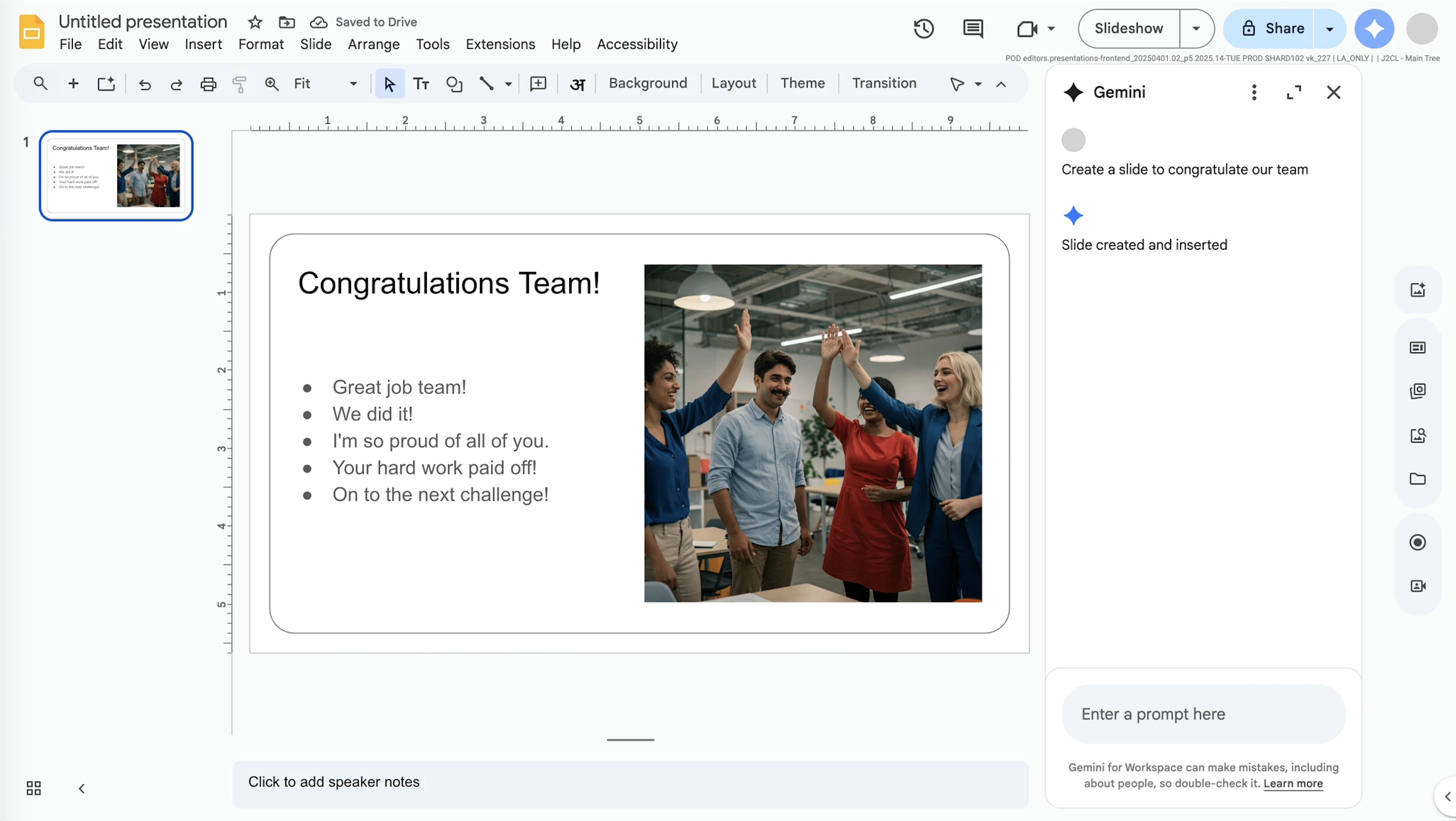
The core functionality of Gemini revolves around the "Help me organize" and "Help me visualize" features. When you open the Gemini panel, you can prompt it to create an entire presentation outline or generate specific images to match your content. This makes it an attractive option for those who already pay for a Google Workspace business or enterprise license.
Strengths of Gemini
The most significant strength of Gemini is its accessibility. There is no extra software to install if your organization has enabled it. It feels like a natural extension of the toolbar. Furthermore, its ability to generate custom images using Google's latest Imagen models allows for a level of visual customization that many third-party add-ins struggle to match.
Gemini also excels at referencing existing content. If you have a detailed project proposal in Google Docs, Gemini can help bridge the gap between that document and a new slide deck. This native synergy is a major selling point for those considering enterprise AI presentation builders 2026.
Weaknesses of Gemini
Despite the heavy backing of Google, Gemini often suffers from inconsistent output quality. The slides it generates can feel generic, often relying on standard layouts that lack professional polish. Users frequently report that the AI struggles with complex technical data, sometimes producing "hallucinated" facts or logically disconnected bullet points. For high-stakes investor meetings, the output usually requires a significant amount of manual cleanup.
SlidesAI: The High-Speed Alternative
SlidesAI has carved out a niche as one of the most popular third-party add-ins for Google Slides. Its value proposition is simple: turn long-form text into a presentation in seconds. Unlike Gemini, which tries to be a general-purpose assistant, SlidesAI is laser-focused on the "text-to-deck" workflow.
This tool is particularly popular among those who need to summarize reports or create internal training materials quickly. It offers a straightforward interface where you paste your text, select a presentation type, and let the AI handle the structural work.
Strengths of SlidesAI
SlidesAI is remarkably fast. For users who already have a finished script or a long article and need to visualize it immediately, SlidesAI provides a very low-friction path. It is often cited as one of the more affordable AI presentation tools because of its tiered pricing model that offers a functional free version for casual users.
The tool also includes features like "Magic Write," which helps paraphrase or shorten existing slide text. This is useful for fitting too much information into a limited visual space.
Weaknesses of SlidesAI
The primary drawback of SlidesAI is its limited design sophistication. While it is excellent at placing text on slides, the actual visual design often feels basic. The templates provided are functional but rarely reach the level of "investor-ready" quality. Customization options are also somewhat restricted compared to standalone platforms.
Furthermore, because it is a third-party add-in, it does not have the same level of deep access to your Google Drive files that Gemini possesses. This means you must manually provide the text you want it to process every time.
Key Feature Comparison Table
| Feature | Gemini for Google Slides | SlidesAI | NextDocs (Alternative) |
|---|---|---|---|
| Category | Native Workspace Add-in | Google Slides Add-in | AI-Native Platform |
| Primary Workflow | Prompt-to-Slide / Image Gen | Text-to-Presentation | Multi-Variant Generation |
| Design Quality | Basic / Generic | Functional / Simple | Professional / Custom |
| Research Capabilities | Basic Drive Access | Limited | Deep Research with Citations |
| Export Formats | Google Slides, PDF, PPTX | Google Slides, PPTX | PPTX, Google Slides, PDF, Docs |
| Image Generation | Native (Imagen) | Basic Integration | Multi-Model Support |
| Pricing | Included in Workspace / $20+ | Free tier / $10+ | Free tier / Professional |
Key Differences in Workflow and Output
When choosing between these tools, the decision often hinges on how you prefer to work. Gemini is built for the iterative user who wants to chat with an assistant while they build. SlidesAI is built for the user who has a finished document and wants to automate the boring parts of slide creation.
Integration and Accessibility
Gemini wins on pure integration. It is available across Docs, Sheets, and Slides, allowing for a unified AI experience. However, users often look for 2026 Gemini Google Slides alternatives when they find the actual slide layouts too restrictive or the AI's creative choices too repetitive.
SlidesAI requires a separate installation from the Google Workspace Marketplace. While this is a small hurdle, it remains a separate tool with its own subscription and interface. Users often explore SlidesAI alternatives when they outgrow the basic design templates and need something more visually impressive.
Content Quality and Narrative Flow
Gemini tends to be better at creative brainstorming. If you give it a vague prompt like "Create a deck about the future of renewable energy," it will provide a decent, if high-level, outline. SlidesAI, conversely, requires more structured input to produce a good result. If you give SlidesAI a weak prompt, the resulting slides will likely be disorganized.
Why You Might Need an Alternative: The NextDocs Advantage
While Gemini and SlidesAI are convenient because they live inside Google Slides, they both share a fundamental flaw. They are "add-ons" to a legacy platform. This means the AI is often fighting against the limitations of the Google Slides editor itself.
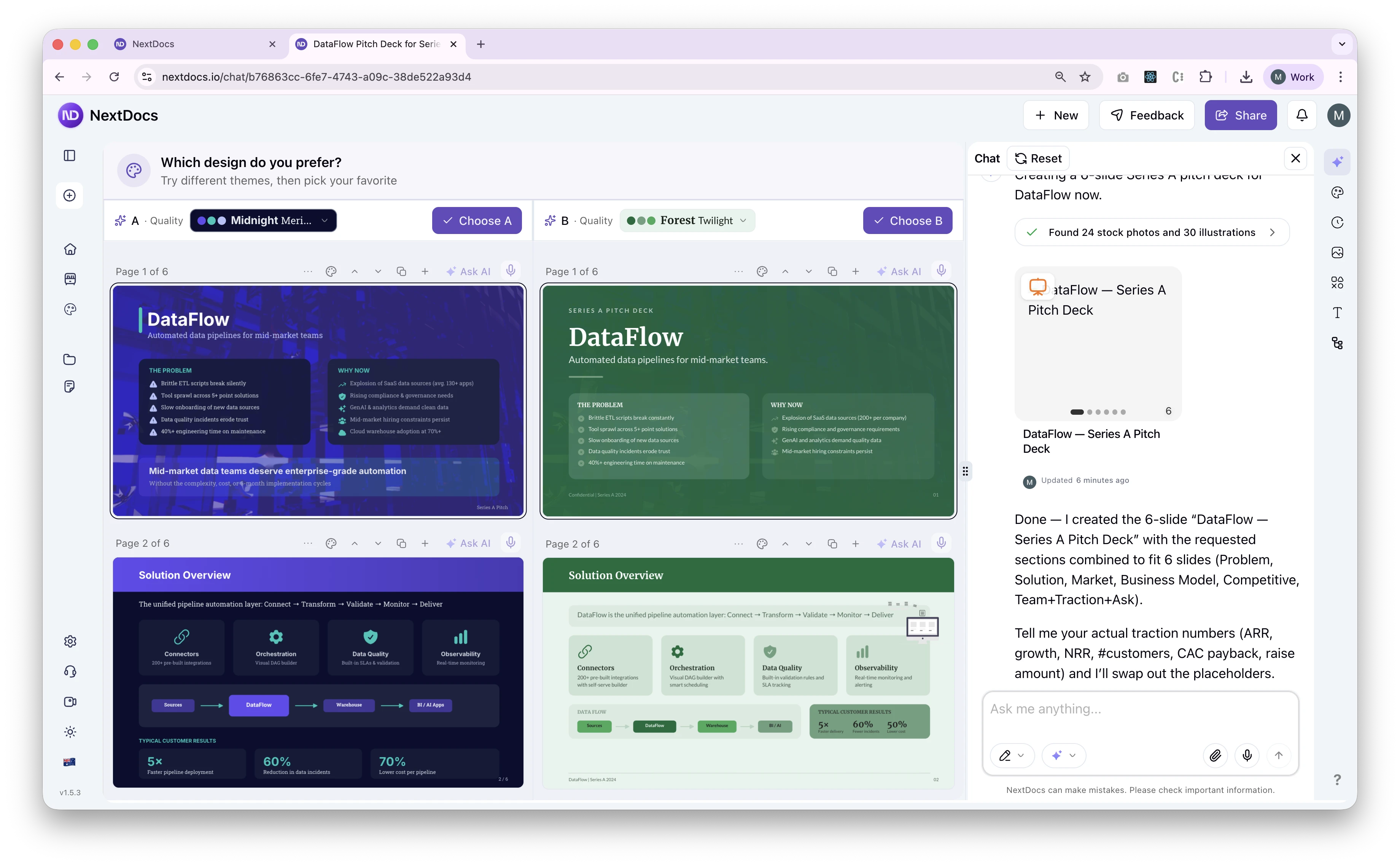
NextDocs takes a fundamentally different approach, as detailed in our best AI presentation builders 2026 guide. Instead of giving you one single output that you have to fix, NextDocs uses multi-variant generation.
Multi-Variant Generation
When you provide a prompt to NextDocs, it generates several different versions of the presentation simultaneously. This allows you to choose the narrative structure and visual style that actually fits your vision. You are not stuck with the first thing the AI happens to produce.
Deep Research and Accuracy
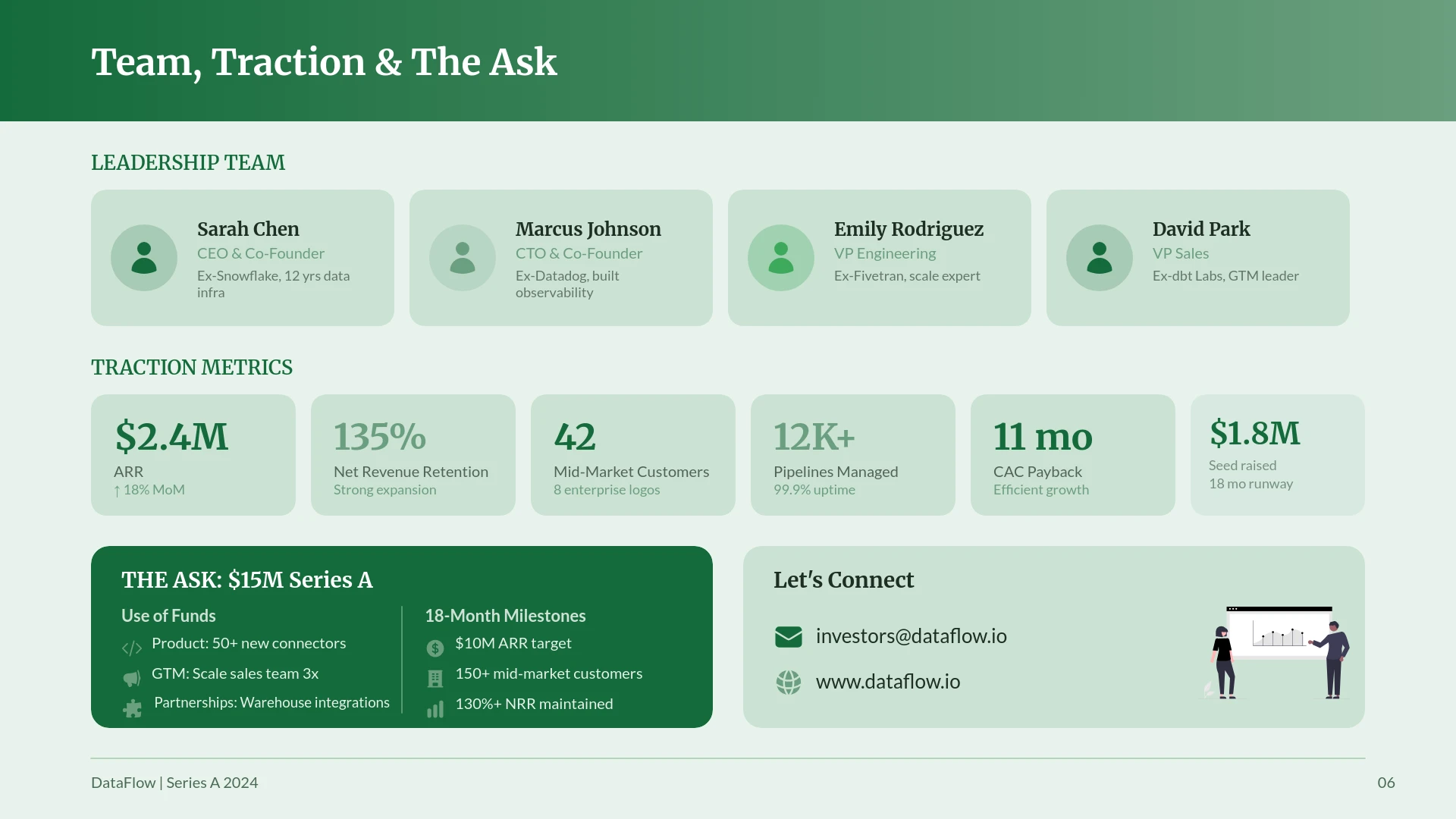
One of the biggest risks with tools like Gemini or SlidesAI is the potential for factual errors. Professionals cannot afford to present incorrect market data or fake statistics. NextDocs solves this through deep research integration. The tool actually searches the web, finds verified data, and provides citations for the information it includes on your slides. This eliminates the need for a separate research phase and ensures your deck is grounded in reality.
Universal Export
A common frustration with Google Slides add-ins is that you are locked into that specific ecosystem. NextDocs offers universal exports. You can create your presentation once and then export it as a polished PowerPoint file, a Google Slides deck, a PDF, or even a structured Google Doc. This flexibility is essential for consultants who must deliver files in the format their clients prefer.
Pricing Comparison
Pricing for these tools varies based on your existing subscriptions.
Gemini for Google Slides:
- Free tier: Limited features available for standard Google account users.
- Business tier: Usually requires a Google Workspace Gemini add-on, starting around $20 per user per month.
- Best for: Teams already paying for high-level Google Workspace licenses.
SlidesAI:
- Free tier: Allows for a limited number of presentations per month with a character cap on input text.
- Pro tier: Starts around $10 per month, increasing limits and adding features like high-quality image exports.
- Best for: Individual users and students who need a low-cost automation tool.
NextDocs:
- Free tier: Available for users to experience the multi-variant generation and research features.
- Pro tier: Competitive pricing for professionals who require brand kits, universal exports, and advanced research capabilities.
Pros and Cons
Gemini for Google Slides
Pros:
- Deeply integrated with Google Drive and Workspace.
- Native image generation is convenient.
- No separate account management if you use Google.
Cons:
- Slide designs are often generic and uninspired.
- AI can be prone to hallucinations with technical data.
- Limited flexibility in changing the AI's foundational logic.
SlidesAI
Pros:
- Extremely fast at converting text to slides.
- Very easy to use for beginners.
- Affordable pricing for casual users.
Cons:
- Design quality is basic and lacks professional flair.
- No deep research or citation features.
- Requires manual text input; no direct Drive file processing.
Verdict: Choosing the Right Tool for Your Workflow
The choice between Gemini for Google Slides and SlidesAI depends on your specific priorities.
If you are an enterprise user who values integration above all else, Gemini is the logical choice. It is "good enough" for internal updates and quick brainstorming sessions. Its ability to live within your existing security and compliance framework is a major benefit for large teams.
If you are a student or a solo creator who has a lot of text and very little time, SlidesAI is a better fit. It excels at the "text-to-slide" conversion and is more affordable than a full Gemini Advanced subscription.
However, if you are a professional who needs more than just "good enough," you may find both tools lacking. When the quality of your presentation directly impacts your ability to close a deal or secure funding, the "add-in" approach often falls short. NextDocs provides the professional-grade features—like deep research, multi-variant choices, and universal exports—that allow you to create high-stakes decks with confidence.
Ready to Create Better Presentations?
Try NextDocs Free and experience multi-variant generation, universal exports, and deep research integration. No credit card required.