
nextdocsplus-aicopilotgemini-slidesgammabeautiful-aipitchcanvamagicslidesslidesai

Best Ai Presentation Tools (enterprise) in 2026

A comprehensive roundup of the best enterprise AI presentation tools available in 2026, ranked by performance, design quality, and workflow efficiency.

14 min
Best Ai Presentation Tools (enterprise) in 2026

The landscape of corporate communication has undergone a radical transformation. In 2026, the expectation for presentations has shifted from simple bullet points to data driven, visually stunning narratives produced in a fraction of the time. Enterprise teams no longer have the luxury of spending forty hours on a single deck. Instead, they require intelligent systems that can synthesize complex data, maintain brand integrity, and offer flexible export options.

This guide evaluates the top ten AI presentation tools specifically through an enterprise lens. We prioritize tools that offer more than just aesthetic templates. We look for deep research capabilities, organizational security, and the ability to integrate with existing professional workflows. Whether you are a consultant building a high stakes proposal or a founder preparing for a Series A, the following rankings highlight the tools that actually deliver on the promise of AI productivity.

Summary Comparison Table

Rank Tool Best For Starting Price
1 NextDocs Multi-variant research and universal exports $15/mo
2 Plus AI Native PowerPoint and Google Slides integration $10/mo
3 Copilot Microsoft 365 ecosystem users $30/mo
4 Gemini Google Workspace native users $0/mo
5 Gamma Web-native interactive presentations $8/mo
6 Beautiful.ai Non-designers needing polished visuals $12/mo
7 Pitch.com Real-time team collaboration $8/mo
8 Canva Magic Design Marketing and visual-heavy content $13/mo
9 MagicSlides Content repurposing and YouTube-to-slides $8/mo
10 SlidesAI Quick internal drafts and basic outlines $10/mo

1. NextDocs

NextDocs stands at the top of our list as the most capable standalone AI presentation builder for professional environments. While many competitors focus solely on design, NextDocs prioritizes the content and the research that goes into a high quality deck. It uses an AI native architecture that understands the structure of a persuasive argument. This makes it arguably the best AI presentation builder 2026 for users who cannot afford to have incorrect data or generic slides.

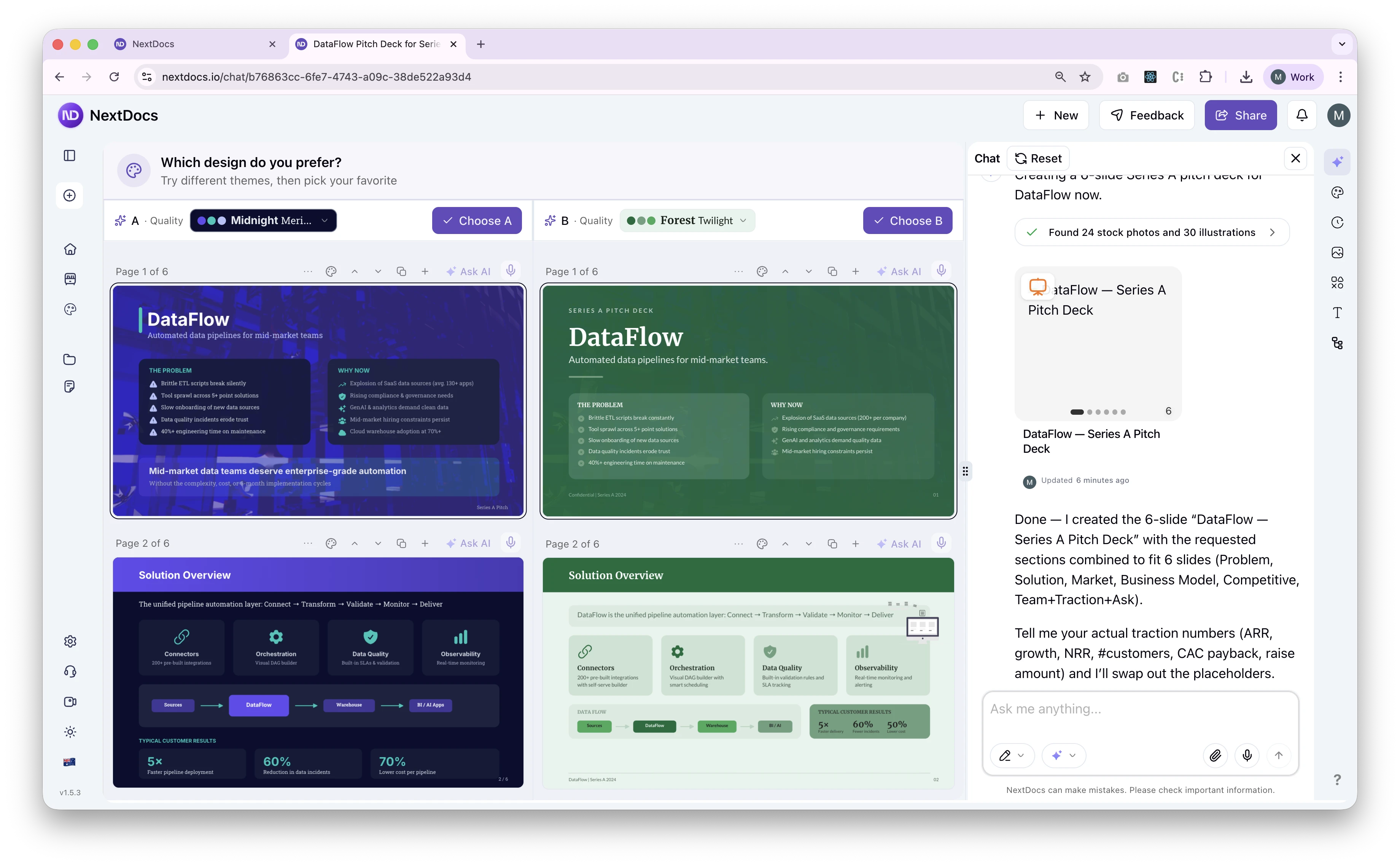
The standout feature of NextDocs is its multi-variant generation. When you provide a prompt, the system does not just give you one result. It generates multiple versions, allowing you to choose the structure and tone that best fits your specific needs. This approach is significantly more effective than the single-output model used by others. For a detailed look at how this compares to general assistants, you can read our ChatGPT vs NextDocs 2026 analysis. Additionally, its deep research capabilities allow it to pull real world data with citations, which is a massive advantage over tools that often hallucinate statistics.

Key Features:

  • Multi-variant generation for diverse slide options.
  • Deep research integration with verifiable citations.
  • Universal exports to PDF, PPTX, Google Slides, and Google Docs.
  • Comprehensive brand styling and multi-model support.
  • AI native editor for granular manual control.

Pricing: Free tier available. Paid plans start at $15/mo.

Best for: Consultants, founders, sales teams, and anyone creating research-heavy decks.

Verdict: NextDocs is the most robust tool for professionals who need accuracy and flexibility. It is the gold standard for enterprise AI presentations.

NextDocs multi-variant pitch deck generation

2. Plus AI

Plus AI is the leading choice for teams that want to stay within the traditional ecosystems of PowerPoint or Google Slides. Rather than asking you to learn a new interface, Plus AI acts as a sophisticated add-in. This allows you to leverage AI while maintaining your existing workflow and muscle memory. It is particularly strong at taking an existing presentation and enhancing it slide by slide.

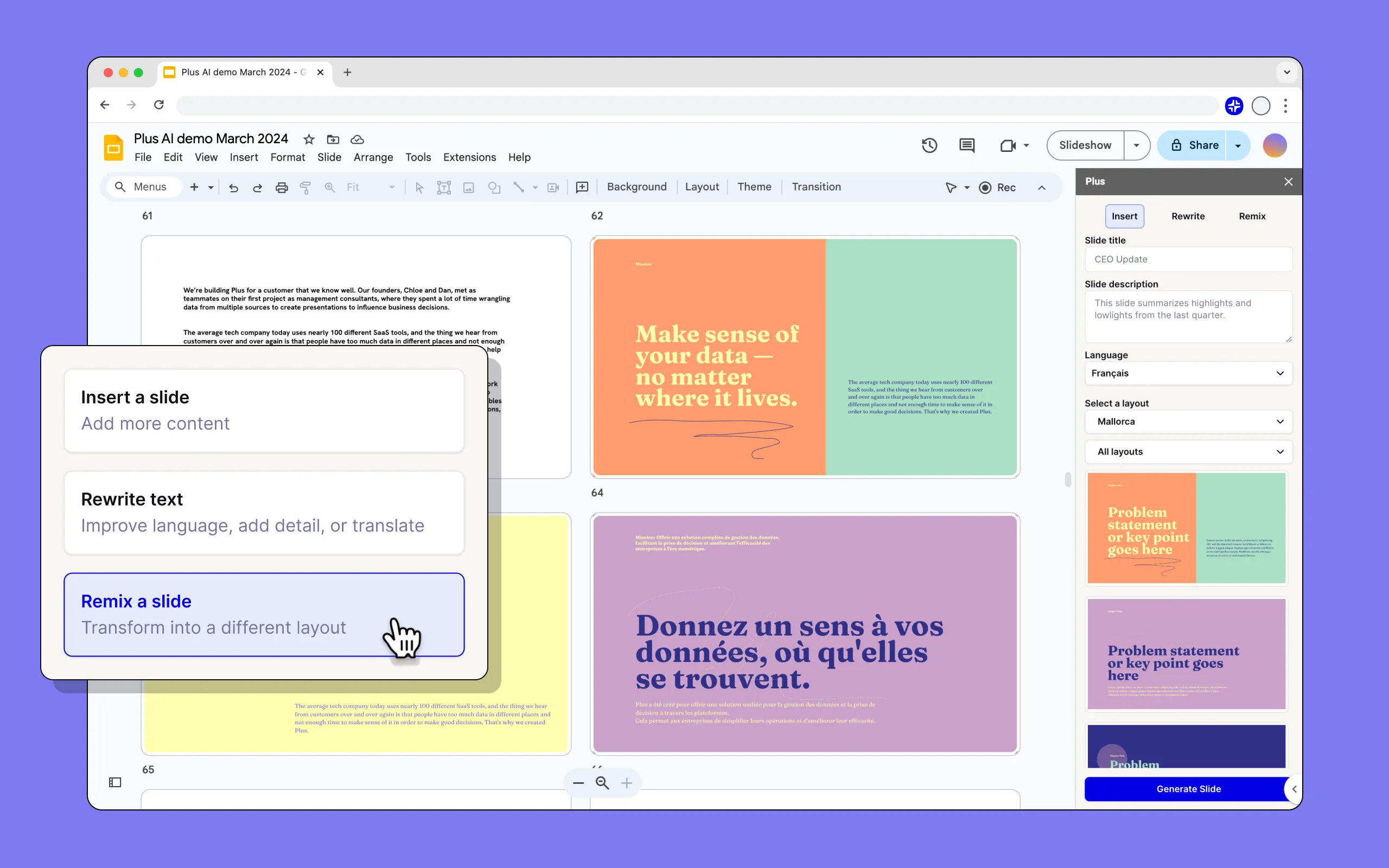
For enterprise users, the ability to preserve existing templates is critical. Plus AI respects your master slides and brand formatting better than most other tools. It also features a unique remix tool that can take a messy slide and reorganize it into a professional layout instantly. While it lacks the standalone power of NextDocs, it is the best option for those who refuse to leave Microsoft or Google environments.

Key Features:

  • Native integration with PowerPoint and Google Slides.
  • Template preservation to keep your brand consistent.
  • Remix feature for enhancing existing slides.
  • Prompt-based generation from within the side panel.

Pricing: No free tier. Starting at $10/mo.

Best for: Power users of PowerPoint and Google Slides who need an integrated assistant.

Verdict: The best add-on for users who want AI power without switching to a new platform.

Plus AI Google Slides add-in interface

3. Microsoft Copilot for PowerPoint

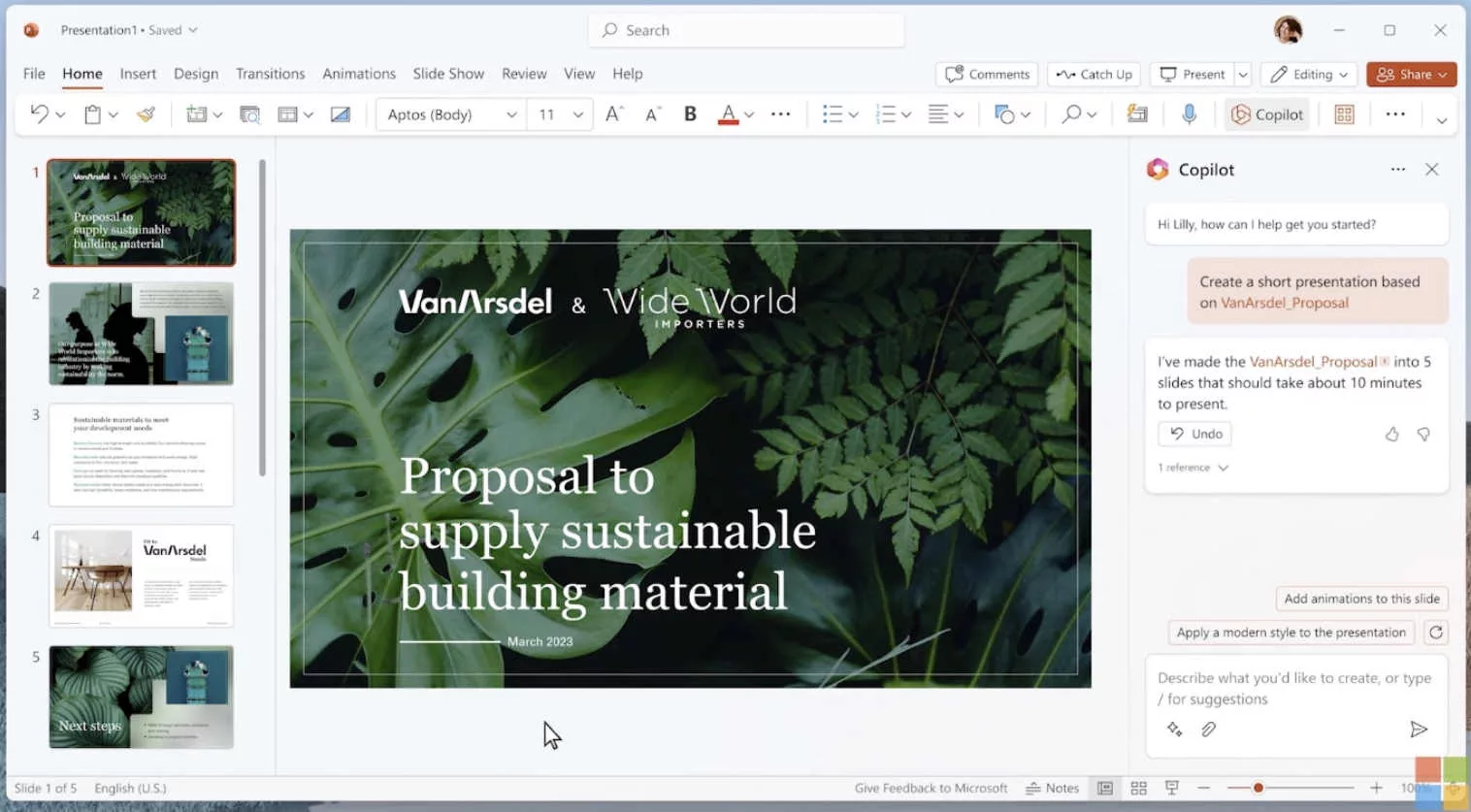
Copilot is Microsoft’s flagship AI offering for the enterprise. Its primary strength is organizational context awareness. Because it lives within the Microsoft 365 tenant, it can reference your internal documents, emails, and Excel spreadsheets to build presentations. This makes it an incredible tool for internal reporting and project updates.

However, Copilot can feel somewhat conservative in its design choices. It often produces functional but visually standard slides. For high stakes external pitches, users might find the design variety lacking. It is also one of the more expensive options on the market, requiring a full Microsoft 365 Copilot license. For those comparing research capabilities, it is worth looking at the Genspark vs NextDocs comparison to see how different AI models handle data retrieval.

Key Features:

  • Access to internal organizational data via Microsoft 365.
  • Automatic speaker notes generation.
  • Deep integration with Word and Excel.
  • Enterprise grade security and compliance.

Pricing: No free tier. Starting at $30/mo per user.

Best for: Large enterprise organizations already fully committed to the Microsoft ecosystem.

Verdict: Unmatched for internal context, but expensive and design-limited for creative use.

Microsoft Copilot PowerPoint chat panel

4. Gemini for Google Slides

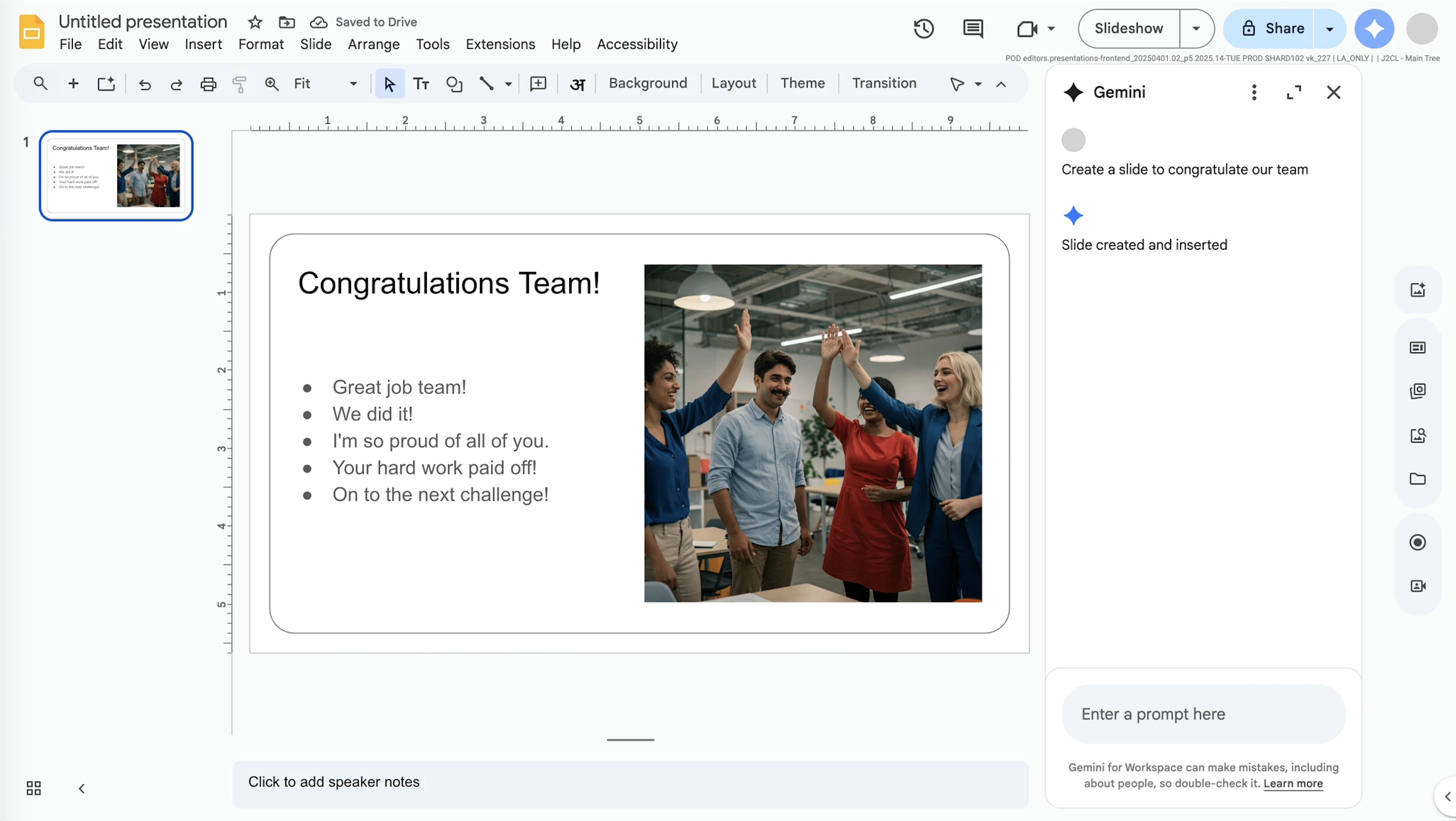
Gemini is Google’s answer to Copilot, integrated directly into the Google Workspace experience. It excels at simplicity and speed. For users who live in Google Drive, Gemini can quickly pull images and text to populate a deck. It is particularly useful for drafting quick internal presentations or brainstorming slide layouts.

The main drawback of Gemini is its inconsistency. The quality of the generated slides can vary significantly, and it currently offers fewer sophisticated features than standalone platforms. However, since it is often included in Workspace tiers at no extra cost, it is a highly accessible entry point for AI slide generation.

Key Features:

  • Native Google Workspace integration.
  • Built-in AI image generation.
  • Ability to reference content from Google Drive.
  • Collaborative editing in real-time.

Pricing: Free tier available for basic use. Workspace tiers start at $0/mo for basic features.

Best for: Google Workspace users who need quick drafts without extra software.

Verdict: A convenient and cost-effective choice for basic Google Slides automation.

Gemini Google Slides AI slide generation

5. Gamma

Gamma has gained massive popularity for its web-native approach to presentations. Instead of sticking to the traditional slide aspect ratio, Gamma creates fluid, document-like presentations that look great on any screen. It is an excellent tool for modern startups and internal knowledge sharing. When considering Gamma, many users also look at Beautiful.ai vs Gamma to decide between a web-first or a design-first approach.

Gamma offers a very generous free tier, making it accessible for budget-conscious teams. The design is modern and clean by default. However, for enterprise users, the web-native format can be a limitation if a traditional PPTX file is required for a client meeting. While it does offer exports, the layout can sometimes shift during the conversion process.

Key Features:

  • Modern web-native presentation format.
  • Fast generation from text prompts or outlines.
  • Interactive elements like embedded videos and forms.
  • Clean, professional default themes.

Pricing: Free tier available. Paid plans start at $8/mo.

Best for: Startups and teams that prefer modern, web-based sharing over traditional files.

Verdict: A fantastic, modern tool for digital-first presentations, though sometimes limited by its own format.

6. Beautiful.ai

Beautiful.ai was one of the first players in the AI presentation space, and it remains a leader in design quality. It uses smart templates that automatically adjust as you add content. This ensures that your slides always look balanced and professional, regardless of your design skills. If you find its templates too restrictive, you may want to explore some Beautiful.ai alternatives that offer more manual freedom.

The platform is perfect for non-designers who need to produce high quality client-facing materials. While its AI generation features have been updated, its core strength is still the intelligent layout engine. The pricing is slightly higher than some modern AI-first tools, but the visual polish is often worth the investment for consultants and creative teams.

Key Features:

  • Smart templates that auto-adjust to content.
  • Polished, designer-quality output.
  • Shared company libraries for brand assets.
  • Professional animations and transitions.

Pricing: No free tier. Starting at $12/mo.

Best for: Non-designers who need high-end visual results for client presentations.

Verdict: Still the king of automated design, though it can feel restrictive for power users.

7. Pitch.com

Pitch.com focuses heavily on the collaborative aspect of presentation building. It is designed for teams that need to work together in real-time, offering features like version history, commenting, and slide status tracking. When comparing it to more research-focused tools, the NextDocs vs Pitch matchup highlights the difference between collaboration-first and content-first workflows.

The AI features in Pitch help with initial drafting and layout suggestions, but the platform shines most in its manual editor and template library. It is a very polished experience that feels like a modern version of PowerPoint. For teams that prioritize workflow and communication over deep AI research, Pitch is an excellent choice.

Key Features:

  • Real-time collaboration and commenting.
  • Excellent template library with modern aesthetics.
  • Version history and slide status tracking.
  • Integration with data sources like Google Analytics.

Pricing: Free tier available. Pro plans start at $8/mo.

Best for: Collaborative teams that value design and version control.

Verdict: A top-tier choice for teams, though its AI capabilities are slightly more basic than newer rivals.

8. Canva Magic Design

Canva is a household name in design, and its Magic Design AI brings that expertise to presentations. It leverages Canva's massive library of assets, icons, and photos to create visually diverse decks. It is perfect for marketing teams that need to create social-media-friendly presentations or visual-heavy pitches.

While Canva is incredibly versatile, it can sometimes feel too "designed" for traditional corporate environments. The export to PowerPoint can also be problematic, with fonts and layouts occasionally breaking. However, for internal creative sessions or marketing decks, the sheer volume of available assets is hard to beat.

Key Features:

  • Enormous library of templates and visual assets.
  • Multi-format exports including video and social posts.
  • AI-driven layout suggestions.
  • Strong free tier for basic users.

Pricing: Free tier available. Canva Pro starts at $13/mo.

Best for: Marketers and creative teams who need visual variety.

Verdict: Great for visual impact, but sometimes lacks the professional rigor required for enterprise data.

9. MagicSlides

MagicSlides is a specialized tool designed to turn content from other sources into slides. One of its most interesting features is the ability to take a YouTube URL and convert the video content into a coherent presentation. This makes it a unique tool for educators and trainers who need to repurpose existing video material.

The output from MagicSlides is often quite basic and usually requires significant manual editing to meet enterprise standards. It is more of a "drafting assistant" than a final-deck builder. For those looking for more comprehensive options, checking out MagicSlides alternatives is a good idea to find tools with better design capabilities.

Key Features:

  • YouTube-to-slides conversion.
  • Simple Google Slides add-in interface.
  • Fast content repurposing from text or URLs.
  • Affordable entry price.

Pricing: Free tier available. Starting at $8/mo.

Best for: Trainers and content creators repurposing video or long-form text.

Verdict: A useful niche tool for content conversion, but lacks design depth.

10. SlidesAI

SlidesAI is another Google Slides add-in that focuses on speed. It is designed for users who have a block of text and need to turn it into a presentation in seconds. It is very easy to use and requires almost no learning curve.

Because of its simplicity, the designs can be generic. It is a great tool for students or for quick internal meetings where the visual quality is secondary to the speed of creation. Enterprise users might find it too limited for high stakes work, leading many to search for SlidesAI alternatives that offer more professional styling and control.

Key Features:

  • Text-to-presentation generation.
  • Simple integration with Google Slides.
  • Support for multiple languages.
  • Very fast generation times.

Pricing: Free tier available. Starting at $10/mo.

Best for: Students and internal teams needing quick, basic outlines.

Verdict: Good for speed and basic drafts, but lacks the polish for external enterprise use.

The Enterprise Decision Framework

Choosing the right AI presentation tool requires an understanding of your specific organizational needs. Not all AI is created equal, and in 2026, the differences between these tools are more pronounced than ever.

Content versus Design

If your primary goal is to save time on research and content structuring, tools like NextDocs are superior. These platforms use advanced logic to build the narrative of your presentation. On the other hand, if you already have the content and simply need it to look beautiful, Beautiful.ai or Canva are more appropriate choices.

Workflow Integration

For many enterprise users, the friction of moving to a new platform is too high. In these cases, native add-ins like Plus AI or Copilot are the logical choice. They allow you to stay within the familiar boundaries of PowerPoint or Google Slides while still benefiting from AI automation. However, remember that these add-ins are often limited by the host application's capabilities.

Data Security and Accuracy

Enterprise teams must be wary of AI hallucinations. A presentation with incorrect market data can ruin a company's credibility. This is why NextDocs' deep research feature is so significant for the enterprise. It provides a layer of verification that generic tools lack. Always check if your tool of choice offers citations for the data it generates.

Collaboration Needs

If your decks are built by a committee, you need a tool that handles real-time editing and version control gracefully. Pitch.com is the standout here, though NextDocs and Google Workspace also offer strong collaborative features. Avoid tools that require you to export and email files back and forth, as this defeats the purpose of a modern AI workflow.

Conclusion

The "best" AI presentation tool is the one that removes the most friction from your specific workflow. For the vast majority of enterprise professionals, NextDocs offers the most complete package. Its ability to generate multiple variants, perform deep research, and export to any format makes it a versatile powerhouse.

However, the market is diverse for a reason. Plus AI remains an incredible choice for those who need to stay in PowerPoint. Gamma is perfect for those who want to move beyond the slide. And Beautiful.ai continues to set the bar for automated aesthetics. By evaluating these tools against your specific needs for research, design, and collaboration, you can significantly reduce the time spent on slide production while actually increasing the quality of your output.

Ready to Create Better Presentations?

Try NextDocs Free and experience multi-variant generation, universal exports, and deep research integration. No credit card required.