

The Evolution of AI Presentations in 2026
The landscape of professional communication has undergone a radical transformation over the last few years. In 2026, creating a presentation is no longer about moving text boxes or searching for stock photos for hours. Artificial intelligence has moved beyond simple text generation to become a sophisticated design partner. Today, the most effective tools do not just build slides. They conduct research, maintain brand integrity, and offer multiple creative directions from a single prompt.
While the market is flooded with options, finding the right balance between advanced features and affordability is the primary challenge for most professionals. Whether you are a startup founder preparing for a Series A pitch or a consultant delivering a weekly report, the tool you choose determines how much time you spend on formatting versus strategy. This guide focuses on the most capable yet affordable solutions available today.
We have tested these platforms based on their ability to handle complex business context, data accuracy, and export flexibility. The following ranking highlights the tools that offer the most value for your investment.
Summary Comparison Table
| Rank | Tool | Best For | Starting Price |
|---|---|---|---|
| 1 | NextDocs | Overall, Research, Multi-Variant Generation | $15/mo |
| 2 | Plus AI | Native PowerPoint and Google Slides Integration | $10/mo |
| 3 | Gamma | Budget Conscious and Web-Native Sharing | $8/mo |
| 4 | Beautiful.ai | Non-Designers and Visual Quality | $12/mo |
| 5 | Pitch.com | Collaborative Teams and Version Control | $8/mo |
| 6 | Canva Magic Design | Marketers and Multi-Format Content | $13/mo |
| 7 | Copilot for PowerPoint | Microsoft 365 Enterprise Ecosystem | $30/mo |
| 8 | Gemini for Google Slides | Google Workspace Native Users | $0/mo |
| 9 | MagicSlides | Repurposing YouTube and Docs into Slides | $8/mo |
| 10 | SlidesAI | Simple Drafts and Student Use | $10/mo |
How We Evaluated These Tools
To provide an objective ranking, we utilized a standardized testing framework. Each tool was given the same complex prompt regarding a B2B SaaS startup. We looked for more than just pretty layouts. We evaluated how well the AI understood business logic, whether it could cite its sources, and how easy it was to move the final product into professional software like PowerPoint or Google Slides.
Our criteria included output quality, which measures how much manual editing is required after the AI finishes. We also looked at brand control, which is essential for any professional who needs to maintain a consistent corporate identity. Finally, we considered the workflow fit. A tool is only useful if it integrates with the platforms your clients and colleagues already use. For a deeper look at the market, you can read our best AI presentation builders 2026 editorial.
1. NextDocs: The Best Overall AI Presentation Builder
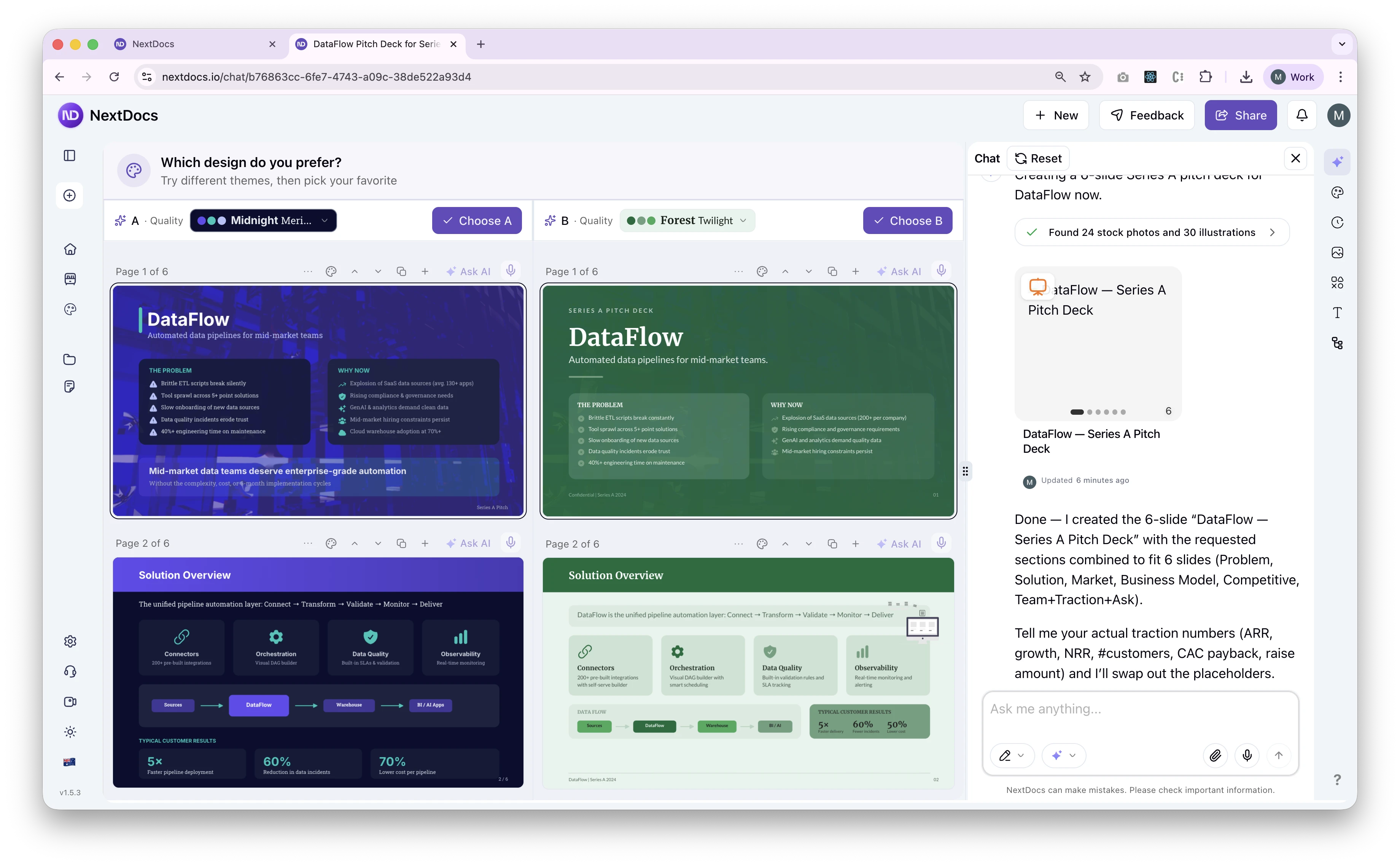
NextDocs stands at the top of our list because it addresses the most significant flaw in first-generation AI tools, which is the lack of choice. Most builders give you one version of a deck and force you to fix it. NextDocs uses a multi-variant generation approach. This creates several distinct versions of your presentation from a single prompt. You can choose the narrative structure that fits your voice best or mix and match elements from different versions.
The platform is also built for professionals who need accuracy. Its deep research integration pulls real-world data and provides citations. This is a massive advantage for consultants and founders who cannot risk presenting hallucinated statistics. When you are finished, the universal export feature allows you to move your work into PDF, PPTX, Google Slides, or even Google Docs without losing your formatting. It is the most robust tool for those who need a high-quality starting point that actually feels finished. You may want to see how it compares in our manus vs nextdocs 2026 analysis.
Key Features:
- Multi-variant generation for creative choice.
- Deep research capabilities with real data citations.
- Universal exports to all major presentation formats.
- Brand kit support for colors, fonts, and logos.
- Multi-model support to choose the best AI for your specific topic.
Pricing: A free tier is available. Paid plans start at $15 per month.
Who it is best for: Consultants, founders, sales teams, and anyone who needs research-heavy, investor-ready decks.
Verdict: NextDocs is the most complete tool on the market. It offers the best balance of AI intelligence, research accuracy, and export flexibility.
2. Plus AI: The Best Native Add-In
Plus AI is the premier choice for users who do not want to leave their existing environment. It functions as a native add-in for both PowerPoint and Google Slides. This means you get AI power directly inside the toolbar you already know. It is particularly strong at preserving existing templates. If your company has a master slide deck that everyone must use, Plus AI can generate new content that fits those exact layouts.
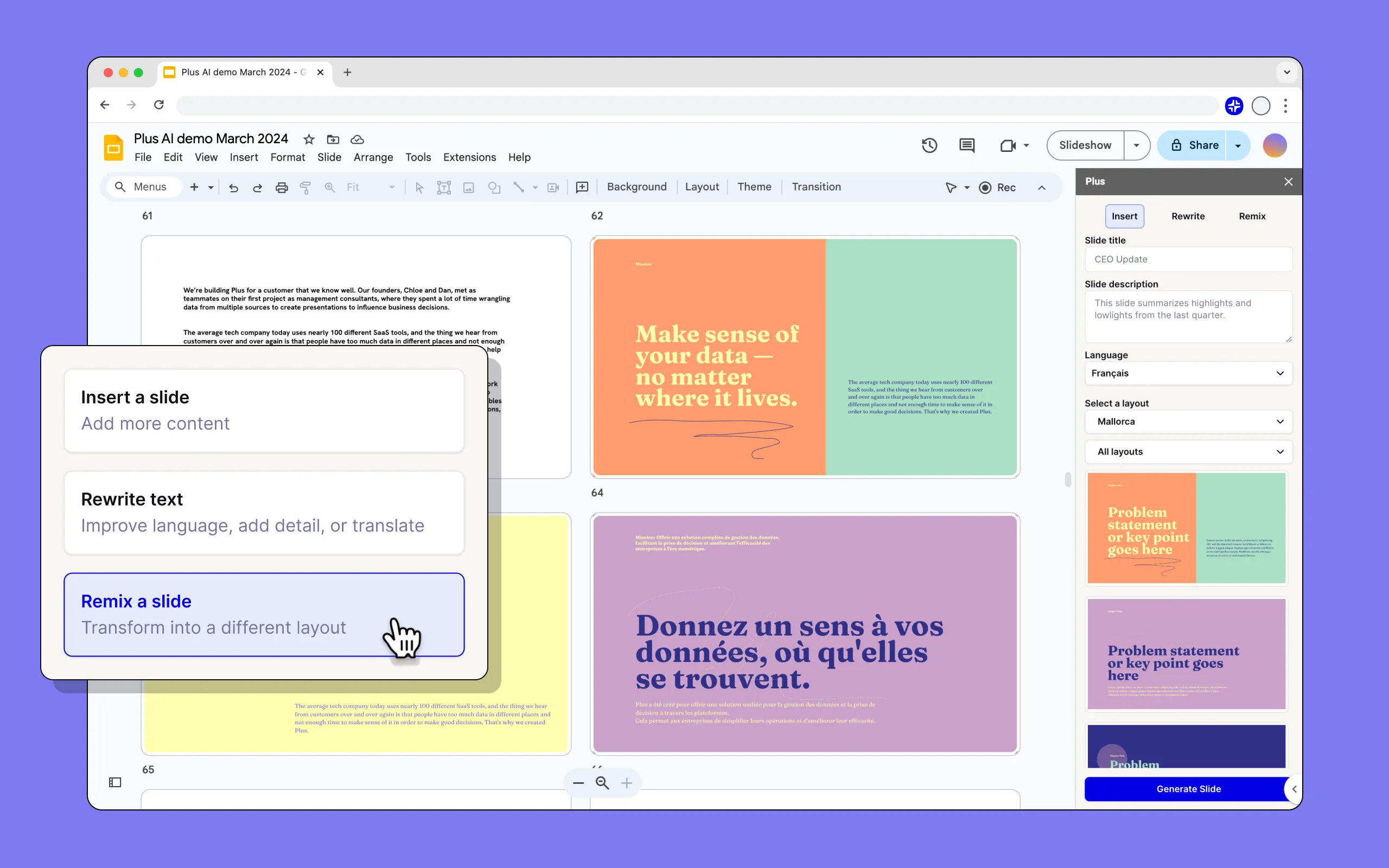
The "remix" feature is another standout. It allows you to take an existing slide and tell the AI to turn it into a three-column layout or a visual timeline. This makes it a great tool for editing and enhancing old decks rather than just starting from scratch. We have evaluated several plus ai alternatives 2026 for those seeking different add-in experiences.
Key Features:
- Native integration with PowerPoint and Google Slides.
- Template preservation to match your existing brand slides.
- Remix feature for fast layout changes.
- Content enhancement for existing presentations.
Pricing: No free tier is available. Starting price is $10 per month.
Who it is best for: Microsoft and Google power users who need AI help within their existing workflow.
Verdict: If you want AI that feels like a natural extension of your current software, Plus AI is the most seamless option available.
3. Gamma: Best for Budget and Web-Native Sharing
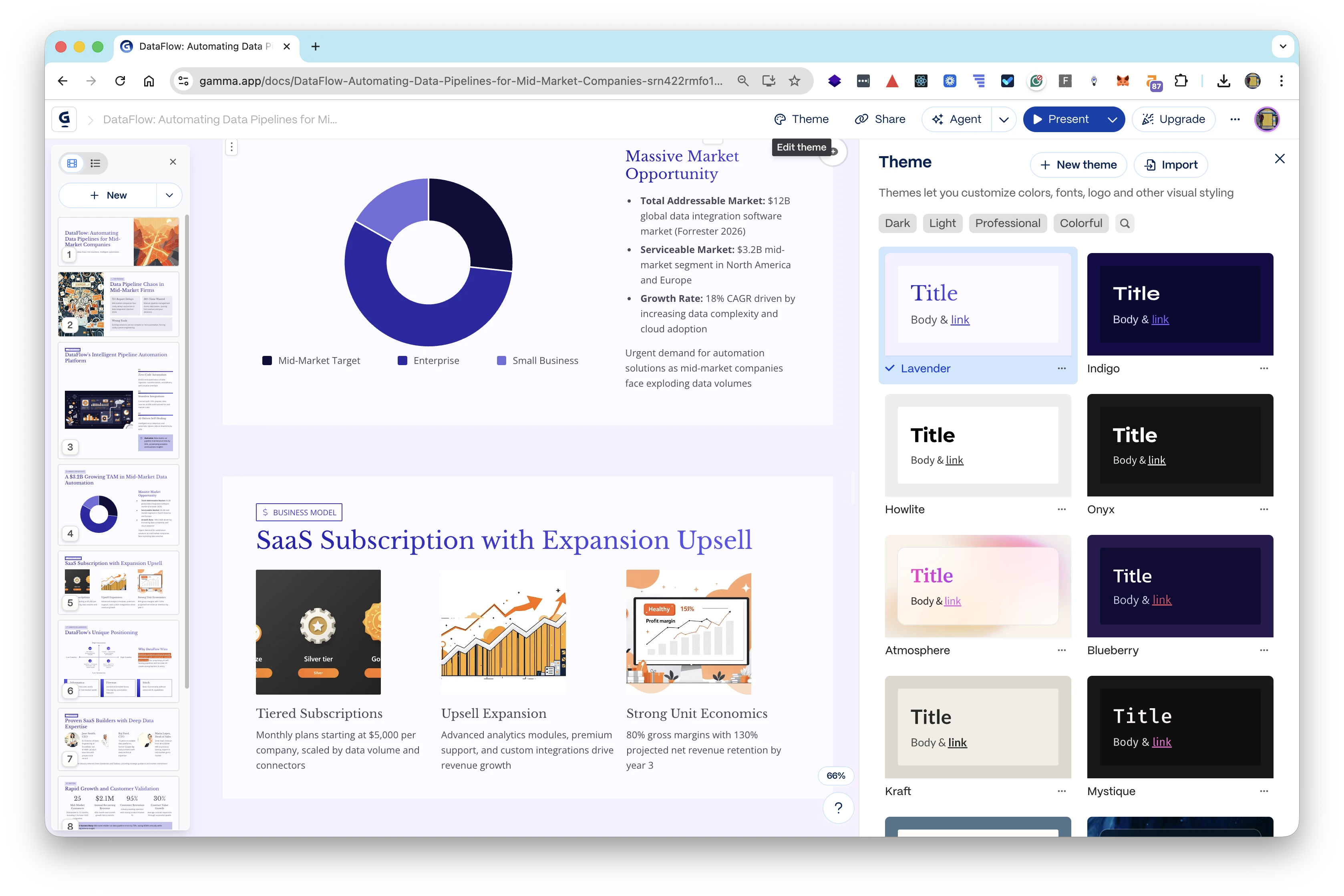
Gamma has gained massive popularity because it breaks away from the traditional slide format. It uses a web-native "card" system that looks beautiful on mobile devices and browsers. It is incredibly fast. You can go from a text prompt to a fully designed, interactive presentation in under a minute. It also offers a very generous free tier, making it the top choice for those who are just starting out.
While it does offer PowerPoint and PDF exports, Gamma is at its best when shared as a live link. This allows you to embed videos, interactive charts, and live website previews directly into the presentation. It is a modern approach for a digital-first world.
Key Features:
- Web-native format optimized for screen sharing.
- Generous free tier with meaningful features.
- Modern, clean design aesthetics by default.
- Fast generation from prompts or existing documents.
Pricing: Free tier available. Pro plans start at $8 per month.
Who it is best for: Startups, students, and professionals who need fast, modern, and shareable web presentations.
Verdict: Gamma is the best value for your money if you do not mind moving away from traditional slide files. Its design quality is unmatched at this price point.
4. Beautiful.ai: Best for Non-Designers
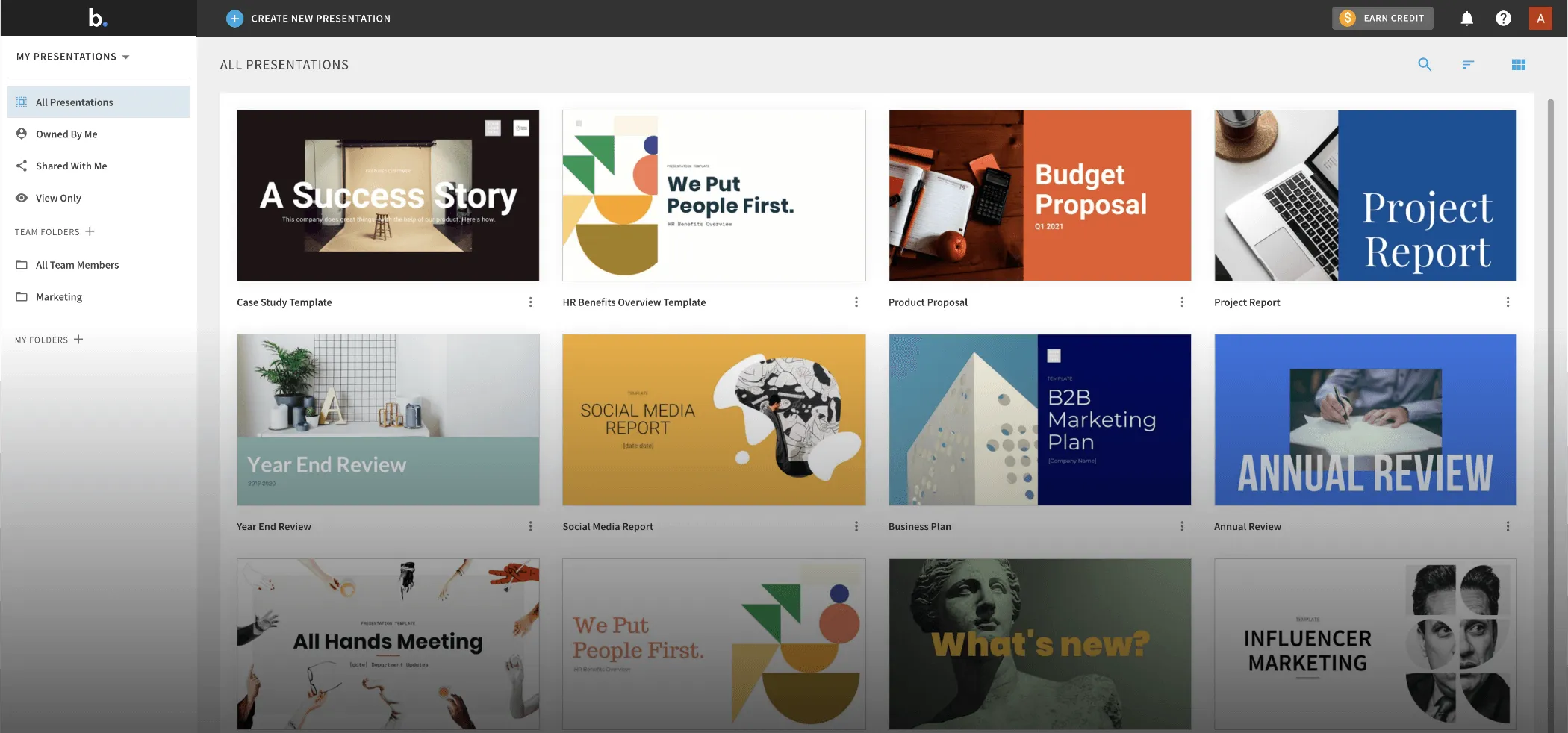
Beautiful.ai was one of the first companies to introduce "smart" slide design. Instead of manually moving elements, you add content and the slide automatically adjusts itself based on design rules. This ensures that your deck always looks professional, regardless of your design skills. In 2026, their AI generation has improved to allow for more complex slide creation from simple text descriptions.
The tool is very restrictive, which is actually its greatest strength. It prevents you from making "ugly" slides by locking elements into place based on professional design principles. For a comparison of design-focused tools, check out our beautiful-ai vs canva breakdown.
Key Features:
- Smart templates that resize and reformat automatically.
- Designer-level output without manual effort.
- Brand control features to lock in corporate styles.
- Professional animation and transition library.
Pricing: No free tier. Starting price is $12 per month.
Who it is best for: Non-designers who need client-facing decks that look like they were made by a professional agency.
Verdict: Beautiful.ai is the safest choice for anyone who wants a guaranteed professional look without spending time on design.
5. Pitch.com: Best for Team Collaboration
Pitch is built for teams. While its AI generation is capable, its real strength lies in the collaboration infrastructure. It offers real-time editing, deep version history, and a sophisticated commenting system. It feels more like a modern productivity suite than a simple slide maker.
The AI assistant helps with drafting and layout, but the focus remains on human collaboration. It is excellent for larger marketing or sales teams where multiple people need to contribute to a single deck.
Key Features:
- Superior real-time collaboration and commenting.
- Excellent version history and project management.
- Professional template library.
- Strong brand kit management for large teams.
Pricing: Free tier available. Pro plans start at $8 per month.
Who it is best for: Collaborative teams that need a centralized place for all company presentations.
Verdict: Pitch is the best option for groups that prioritize workflow and team communication over pure AI generation speed.
6. Canva Magic Design: Best for Visual Content
Canva is a household name in design, and its Magic Design AI is a powerful addition to the platform. It leverages Canva's massive library of millions of assets, including photos, icons, and videos. When you generate a presentation, Canva can pull from these resources to create a highly visual and engaging deck.
It is particularly useful for marketers who need to repurpose their presentation content into social media posts or videos. However, the AI can sometimes feel a bit generic compared to research-focused tools like NextDocs.
Key Features:
- Access to a massive asset and template library.
- Multi-format exports for social media and video.
- Strong free tier with basic AI features.
- Brand kit support for Pro users.
Pricing: Free tier available. Pro plans start at $13 per month.
Who it is best for: Marketers, social media managers, and creative professionals.
Verdict: Canva is the king of assets. If your presentation needs to be highly visual and creative, Canva is the right choice.
7. Copilot for PowerPoint: Best for Microsoft Enterprise
Microsoft Copilot is the standard for large organizations already using the Microsoft 365 ecosystem. Its greatest strength is its ability to access your internal company data. It can read your Word documents, Outlook emails, and Excel spreadsheets to build a presentation that is contextually aware of your business.
However, it is one of the most expensive options on this list and the design output is often quite conservative. It is built for internal corporate meetings rather than high-stakes creative pitches. You can see how it stacks up against the market leader in our copilot powerpoint vs nextdocs 2026 review.
Key Features:
- Deep integration with Microsoft 365 data.
- Enterprise-grade security and compliance.
- Automated speaker notes and summaries.
- One-click conversion from Word to PowerPoint.
Pricing: No free tier. Costs $30 per user per month.
Who it is best for: Large enterprise employees who need to summarize internal documents.
Verdict: Copilot is an essential tool for the enterprise, but its high price and rigid design make it less appealing for individuals or small startups.
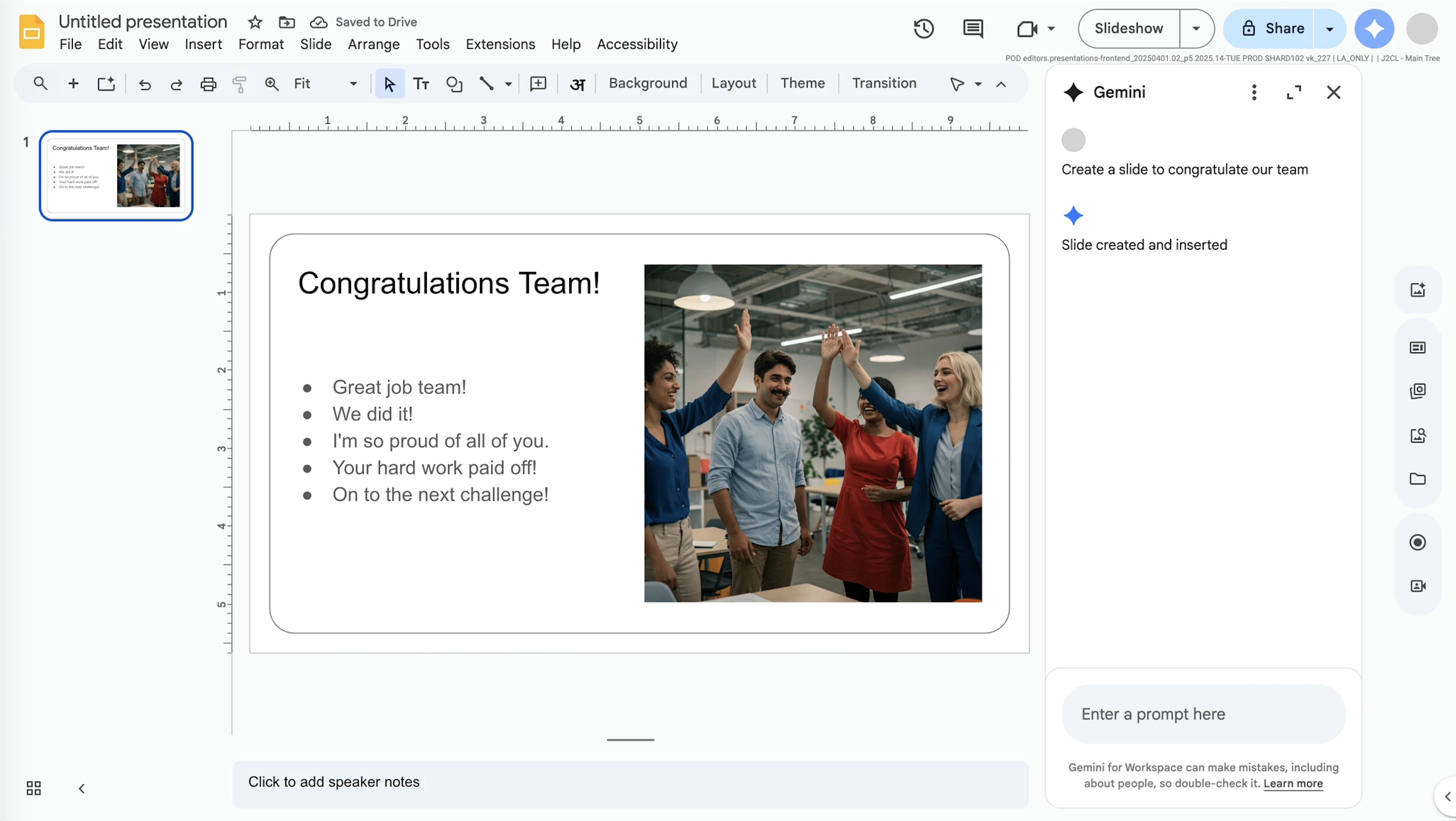
8. Gemini for Google Slides: Best for Workspace Integration
Gemini is Google's answer to Copilot. It is integrated directly into Google Slides and is often included at no extra cost for Workspace subscribers. It is excellent for quick drafts and basic image generation. Like Copilot, it can pull information from your Google Drive and Gmail to help build slides.
While it is convenient, the design quality is currently behind competitors like NextDocs or Beautiful.ai. It is best used as a starting point for internal meetings. For more options in this ecosystem, explore these 2026 gemini google slides alternatives.
Key Features:
- Native Google Workspace integration.
- Direct access to Drive and Gmail content.
- Built-in AI image generation.
- No additional cost for many Workspace tiers.
Pricing: Free tier available. Paid tiers start around $20 per month for advanced features.
Who it is best for: Dedicated Google Workspace users who want a simple, no-cost AI assistant.
Verdict: Gemini is a convenient, budget-friendly option for Google users, though it lacks the design sophistication of standalone platforms.
9. MagicSlides: Best for Content Repurposing
MagicSlides is a specialized tool that excels at taking content from other places and turning it into slides. One of its unique features is the ability to turn a YouTube video URL into a presentation. It can also ingest long PDFs or Word documents and summarize them into a slide format.
It is a simpler tool than many others on this list, focusing on the conversion of content rather than high-end design. If you need to explore other options, check our list of magicslides alternatives.
Key Features:
- YouTube-to-slides conversion.
- Document-to-presentation automation.
- Simple Google Slides add-in interface.
- Affordable entry price.
Pricing: Free tier available. Paid plans start at $8 per month.
Who it is best for: Educators, content creators, and trainers who need to repurpose existing material.
Verdict: MagicSlides is a great utility tool for content conversion, even if it lacks the professional design depth of its competitors.
10. SlidesAI: Best for Quick Drafts
SlidesAI is a straightforward Google Slides add-in that focuses on speed. You paste in a block of text, choose a general style, and the AI generates a deck. It is very affordable and easy to use, making it popular with students and people who need a quick first draft for an internal presentation.
The design output is relatively basic, so you will likely need to do some manual polishing before presenting to a client. It is a good entry-point for those new to AI. You can read a head-to-head comparison in our plus ai vs slidesai 2026 article.
Key Features:
- Fast generation from text inputs.
- Simple interface within Google Slides.
- Very affordable pricing plans.
- Multi-language support.
Pricing: Free tier available. Paid plans start at $10 per month.
Who it is best for: Students and professionals who need a low-cost way to get a basic draft on paper.
Verdict: SlidesAI is a reliable, budget-friendly tool for simple tasks, though it does not offer the advanced research or design features of higher-ranked tools.
Decision Guide: Which Tool is Right for You?
Choosing the best AI presentation builder depends on your specific needs and current software ecosystem. If you are a professional who needs the highest quality output and the ability to export to any format, NextDocs is the clear winner. Its multi-variant generation and deep research capabilities set it apart from tools that simply create generic layouts.
If you are a power user of Microsoft 365 or Google Workspace and do not want to learn a new interface, Plus AI or Copilot are your best bets. They allow you to stay where you are most productive while still gaining the benefits of generative AI.
For those on a tight budget who want a modern look, Gamma offers the best free experience and a very affordable pro tier. It is perfect for sharing digital-first content that looks great on any screen.
Finally, if you are not a designer and you are terrified of making a bad-looking presentation, Beautiful.ai is worth the investment. Its smart templates act as a professional designer standing over your shoulder, ensuring everything is perfectly aligned and styled.
Conclusion
The year 2026 has brought us tools that genuinely save time and improve the quality of our work. We no longer have to settle for basic templates or spend hours on manual formatting. By choosing the right AI presentation builder, you can focus on what actually matters, which is your message and your audience.
While every tool on this list has its strengths, NextDocs remains our top recommendation for its versatility and professional-grade features. It solves the most common frustrations with AI design and provides a workflow that fits almost any professional environment.
Ready to Create Better Presentations?
Try NextDocs Free and experience multi-variant generation, universal exports, and deep research integration. No credit card required.