

Era Baru Presentasi Perusahaan
Lanskap korporasi tahun 2026 tampak sangat berbeda dari beberapa tahun yang lalu. Hari-hari format slide manual, penyempurnaan poin-poin secara pixel-perfect, dan pencarian ikon resolusi tinggi sudah menjadi masa lalu. Pembuat presentasi AI telah berkembang dari sekadar fitur teks-ke-slide menjadi platform canggih tingkat perusahaan yang mampu menangani riset kompleks, kepatuhan merek, dan ekspor multi-format.
Bagi tim perusahaan, taruhannya lebih tinggi dibandingkan pengguna individu. Sebuah deck pitch untuk putaran Seri A atau laporan dewan kuartalan membutuhkan lebih dari sekadar template yang menarik. Dokumen ini memerlukan akurasi data, pengetahuan institusional, dan kepatuhan ketat terhadap pedoman merek. Alat modern harus dapat terintegrasi dengan alur kerja yang ada sambil menyediakan lapisan kecerdasan yang melampaui teks generatif dasar.
Dalam rangkuman ini, kami menilai 10 pembuat presentasi AI terbaik secara khusus dari sudut pandang kebutuhan perusahaan. Kami menguji alat-alat ini berdasarkan kemampuannya menangani penyebaran skala besar, kebutuhan keamanan, dan tuntutan spesifik profesional yang tidak mampu menyajikan konten yang tidak akurat atau desain yang buruk.
Pembuat Presentasi AI Terbaik Sekilas
| Peringkat | Alat | Terbaik Untuk | Harga Awal |
|---|---|---|---|
| 1 | NextDocs | Secara keseluruhan, Deck Berat Riset, Kebutuhan Multi-Format | $15/bulan |
| 2 | Plus AI | Integrasi PowerPoint dan Google Slides secara Native | $10/bulan |
| 3 | Copilot untuk PowerPoint | Ekosistem Microsoft 365 dan Data Internal | $30/bulan |
| 4 | Beautiful.ai | Non-Desainer yang Membutuhkan Kualitas Visual Tinggi | $12/bulan |
| 5 | Gamma | Format Web-Native dan Berbagi Cepat | $8/bulan |
| 6 | Pitch.com | Alur Kerja Tim Kolaboratif | $8/bulan |
| 7 | Gemini untuk Google Slides | Pengguna Power Google Workspace | $0/bulan (Dasar) |
| 8 | Canva Magic Design | Pemasaran dan Konten Berbasis Visual | $13/bulan |
| 9 | MagicSlides | Penggunaan Ulang Video dan Konten Panjang | $8/bulan |
| 10 | SlidesAI | Draft Internal Sederhana dan Pelajar | $10/bulan |
Bagaimana Kami Menilai Alat Perusahaan
Untuk memberikan peringkat yang benar-benar objektif, kami menjalani setiap platform melalui proses pengujian yang ketat. Kami menggunakan prompt benchmark standar: "Buat deck pitch 10 slide untuk startup SaaS B2B bernama DataFlow yang membantu perusahaan menengah mengotomatisasi pipeline data mereka. Sertakan: pernyataan masalah, gambaran solusi, ukuran pasar, model bisnis, lanskap kompetitif, slide tim, traksi/ metrik, dan permintaan. Target audiens: investor Seri A."
Kami menilai hasil berdasarkan enam dimensi spesifik:
- Kesesuaian Alur Kerja: Apakah alat cocok dengan tumpukan perusahaan yang ada? Dapatkah diekspor ke PDF, PPTX, dan Google Slides secara andal?
- Akurasi Konten: Apakah AI mengada-ada data, atau memberikan riset yang dapat diverifikasi?
- Fleksibilitas Desain: Dapatkah alat menangani kit merek, font kustom, dan palet warna tertentu?
- Pilihan dan Iterasi: Apakah alat memberi satu opsi, atau memungkinkan eksplorasi berbagai varian?
- Keamanan dan Kepatuhan: Apakah alat siap untuk standar privasi data perusahaan?
- Kegunaan: Dapatkah eksekutif sibuk atau konsultan menggunakan alat dengan pelatihan minimal?
1. NextDocs — Pembuat AI Perusahaan Terbaik Secara Keseluruhan
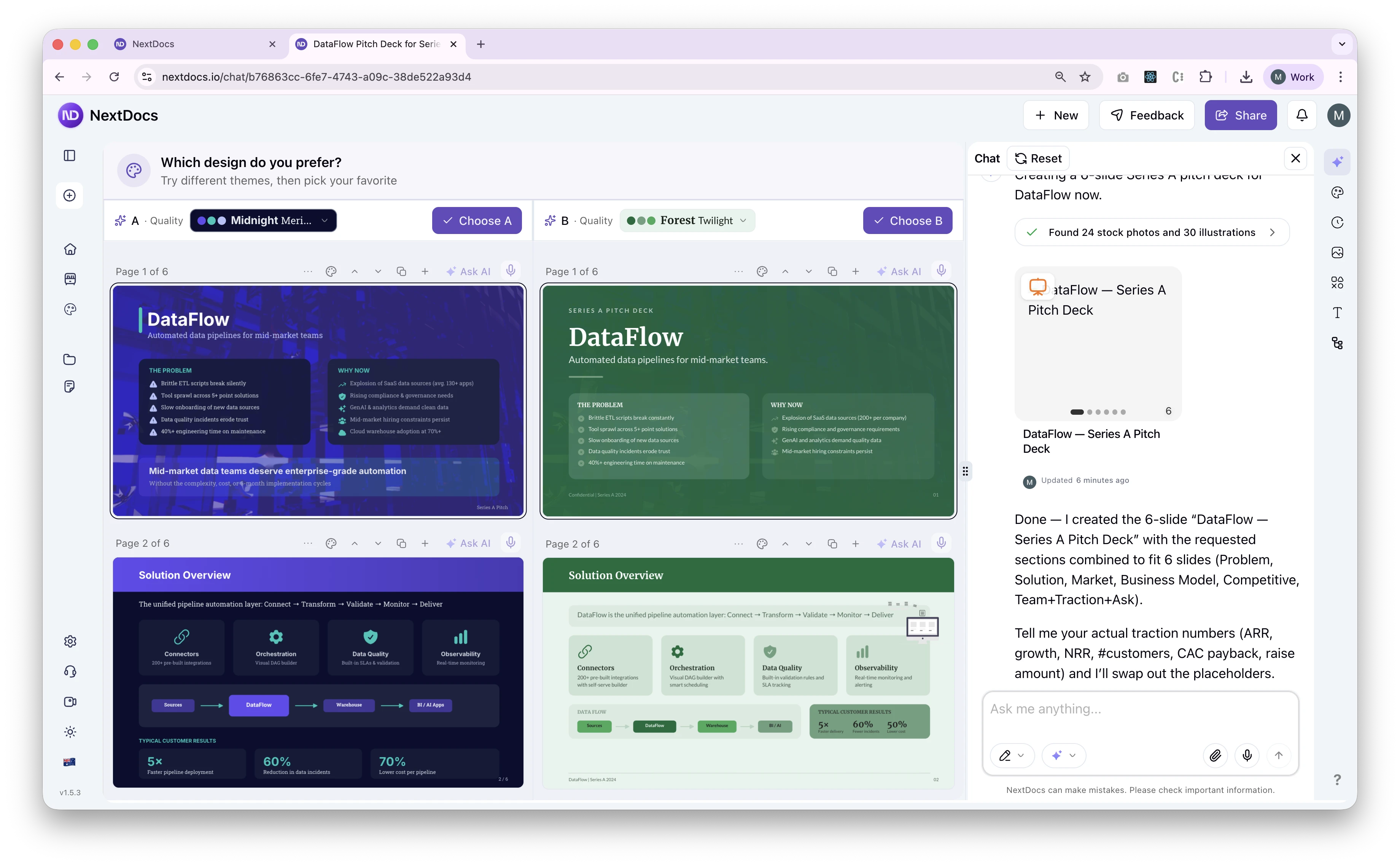
NextDocs berada di puncak daftar kami karena mengatasi frustrasi paling umum dengan alat AI: kurangnya pilihan. Sementara sebagian besar pembuat menghasilkan satu versi deck, NextDocs menggunakan mesin generasi multi-varian. Ini menciptakan beberapa versi berbeda dari presentasi Anda dari satu prompt. Ini memungkinkan pengguna memilih struktur, nada, dan arah visual yang paling sesuai kebutuhan mereka.
Bagi pengguna perusahaan, keuntungan terbesar adalah integrasi riset mendalam. Berbeda dengan alat yang menghasilkan statistik yang meyakinkan tetapi palsu, NextDocs dapat menarik data waktu nyata dengan kutipan. Ini menjadikannya pilihan utama bagi konsultan dan pendiri yang perlu mendukung klaim mereka dengan angka pasar aktual. Selain itu, kemampuan ekspor universal memastikan Anda dapat memindahkan pekerjaan secara mulus antara PDF, PowerPoint, Google Slides, dan bahkan Google Docs.
Fitur Utama:
- Generasi multi-varian untuk opsi tata letak yang beragam.
- Integrasi riset mendalam dengan kutipan yang dapat diverifikasi.
- Ekspor universal ke semua format utama tanpa kehilangan format.
- Styling merek lengkap dan dukungan multi-model.
- Editor native AI yang menyeimbangkan otomatisasi dan kontrol manual.
Harga: Tingkat gratis tersedia. Paket Pro mulai dari $15 per bulan.
Terbaik Untuk: Penggunaan perusahaan secara umum, deck berat riset, konsultan, dan pendiri.
Keputusan: NextDocs adalah alat paling lengkap di pasar. Ia menyelesaikan masalah riset dan ekspor secara bersamaan, menjadikannya tak tergantikan untuk presentasi berisiko tinggi. Untuk gambaran lebih dalam tentang perbandingannya dengan pemain lama, lihat perbandingan kami beautiful-ai-vs-nextdocs.
2. Plus AI — Terbaik untuk Integrasi Alur Kerja Native
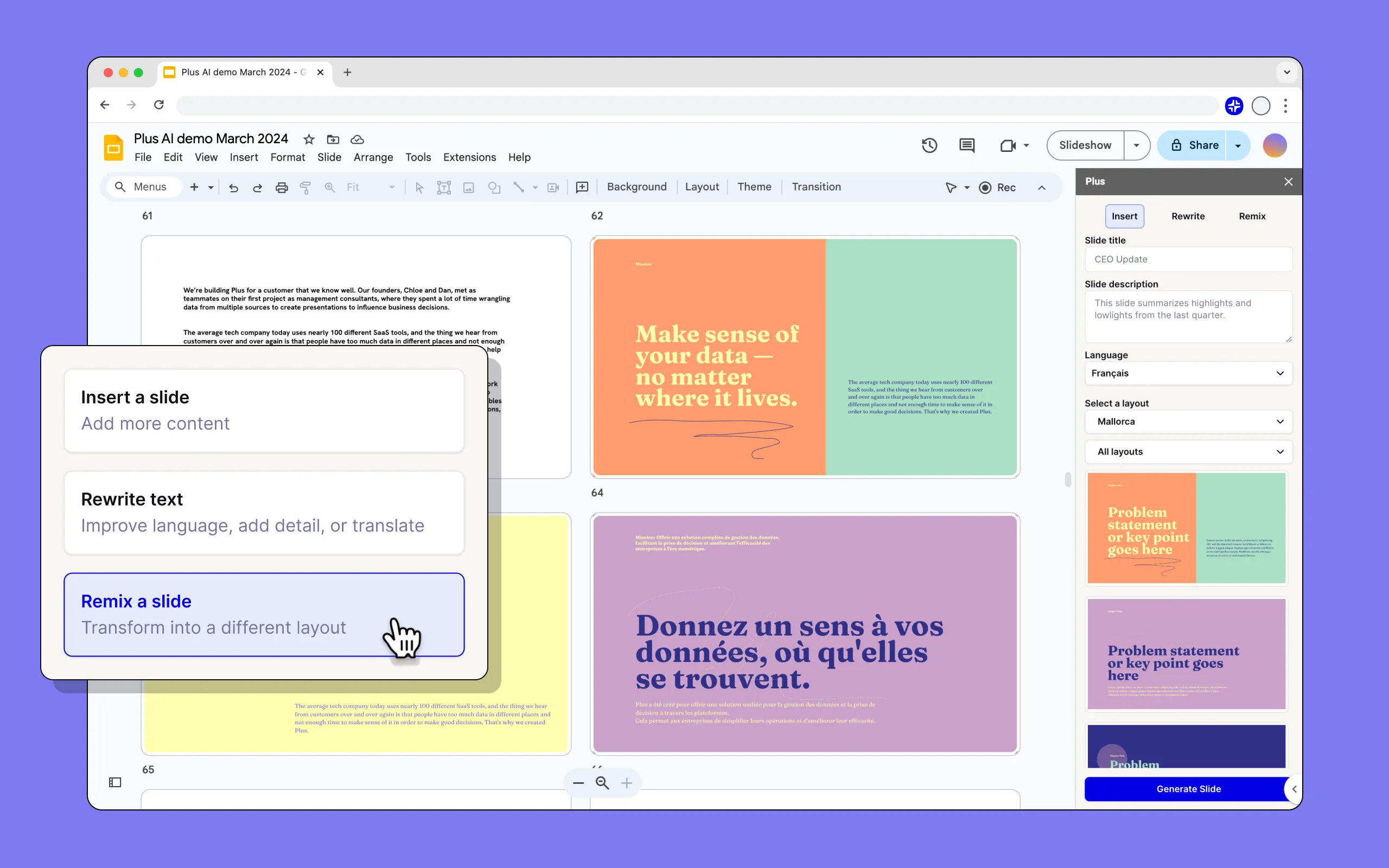
Plus AI adalah add-in khusus yang langsung berada di dalam Google Slides dan Microsoft PowerPoint. Bagi banyak tim perusahaan, gagasan beralih ke platform mandiri baru bisa menjadi penghalang. Plus AI mengatasi ini dengan membawa kemampuan AI ke perangkat lunak yang sudah digunakan tim Anda setiap hari.
Alat ini unggul dalam "meng-remix" konten yang ada. Anda dapat mengambil catatan berantakan atau presentasi lama dan meminta Plus AI untuk menulis ulang ke dalam format profesional tertentu. Ia mempertahankan template dan master slide yang ada, yang penting untuk menjaga konsistensi merek di seluruh organisasi besar. Untuk detail lebih lengkap tentang perbandingannya dengan alat native Google, baca panduan kami di gemini-google-slides-vs-plus-ai.
Fitur Utama:
- Integrasi native sebagai sidebar di PowerPoint dan Google Slides.
- Preservasi template yang menghormati master slide yang ada.
- Fitur remix untuk mengubah konten yang ada menjadi tata letak baru.
- Pengeditan AI real-time untuk slide individu.
Harga: Tidak ada tingkat gratis. Mulai dari $10 per bulan.
Terbaik Untuk: Pengguna PowerPoint dan Google Slides yang tidak ingin meninggalkan lingkungan mereka.
Keputusan: Jika prioritas Anda adalah keberlanjutan alur kerja, Plus AI adalah pesaing terkuat. Ini adalah utilitas yang kuat yang meningkatkan alat yang sudah Anda gunakan daripada mencoba menggantinya.
3. Copilot untuk PowerPoint — Terbaik untuk Pengguna Microsoft 365
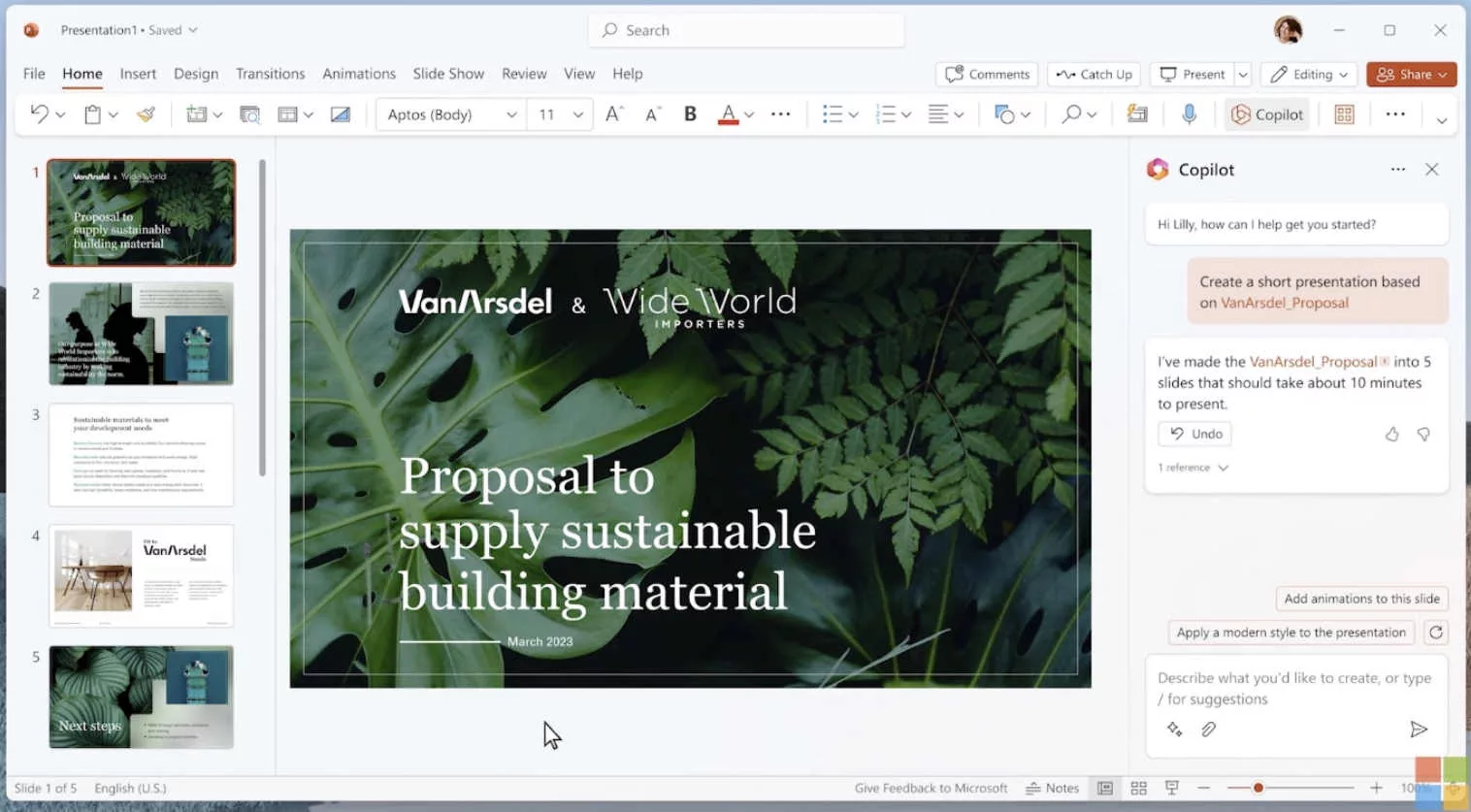
Microsoft Copilot untuk PowerPoint adalah pilihan perusahaan bagi organisasi yang sudah sepenuhnya berkomitmen pada ekosistem Microsoft 365. Kekuatan utamanya adalah akses ke Microsoft Graph. Ini memungkinkan AI merujuk ke dokumen internal, email, dan spreadsheet Excel untuk membangun konteks presentasi.
Meskipun kemampuan desainnya agak konservatif dibandingkan pembuat AI mandiri, keamanan dan integrasinya tak tertandingi. Ia dapat merangkum laporan Word panjang menjadi deck 10 slide dalam hitungan detik, lengkap dengan catatan pembicara. Untuk melihat perbandingannya dengan add-in lain, lihat analisis kami di copilot-powerpoint-vs-plus-ai.
Fitur Utama:
- Integrasi mendalam dengan tenant Microsoft 365 dan data organisasi.
- Kemampuan menghasilkan presentasi langsung dari dokumen Word.
- Pembuatan otomatis catatan pembicara lengkap.
- Keamanan dan privasi data tingkat perusahaan.
Harga: Tidak ada tingkat gratis. Membutuhkan lisensi Copilot $30 per pengguna per bulan di atas langganan 365.
Terbaik Untuk: Perusahaan besar yang menggunakan Microsoft 365 untuk pelaporan internal dan presentasi berbasis data.
Keputusan: Copilot adalah standar emas untuk keamanan dan integrasi ekosistem, meskipun kurang kreativitas dibandingkan pesaing mandiri.
4. Beautiful.ai — Terbaik untuk Otomatisasi Desain
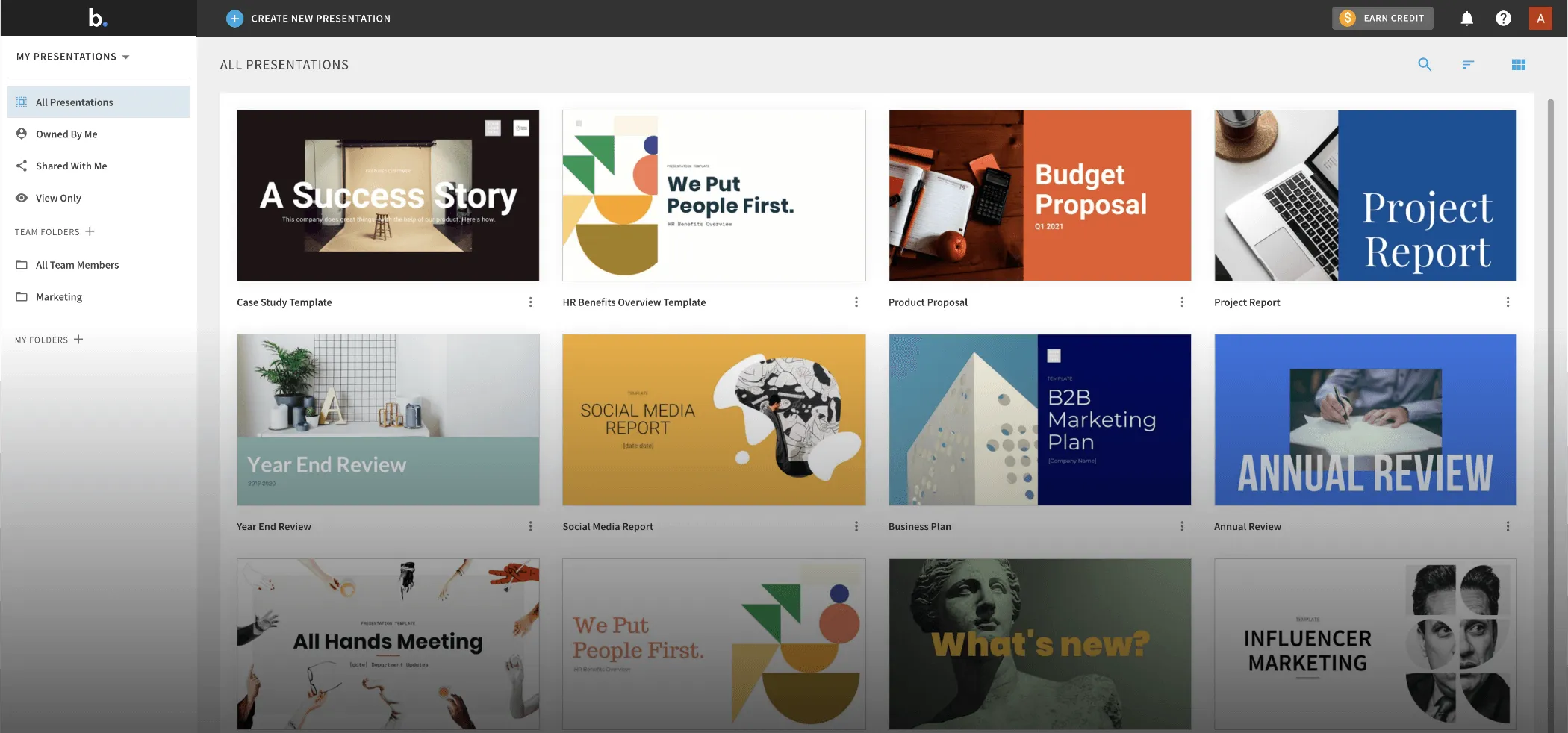
Beautiful.ai adalah salah satu alat pertama yang fokus pada "template pintar." Alih-alih memberi pengguna kanvas kosong, ia menyediakan slide yang secara otomatis menyesuaikan tata letak saat Anda menambahkan konten. Jika Anda menambahkan poin keempat, tiga lainnya secara otomatis menyesuaikan untuk menjaga keseimbangan visual.
Alat ini sempurna untuk non-desainer yang perlu menghasilkan deck klien yang tampak seperti dibuat oleh agensi profesional. Meskipun fitur generasi AI-nya telah diperbarui, kekuatan utamanya tetap pada mesin tata letaknya. Bagi banyak orang, ini tetap pilihan utama untuk estetika visual.
Fitur Utama:
- Template slide pintar yang menangani semua format otomatis.
- Kit merek terpusat untuk konsistensi seluruh perusahaan.
- Perpustakaan animasi dan transisi berkualitas tinggi.
- Ruang kerja kolaboratif untuk review desain.
Harga: Tidak ada tingkat gratis. Mulai dari $12/bulan.
Terbaik Untuk: Non-desainer, konsultan, dan tim yang mengutamakan estetika visual.
Keputusan: Beautiful.ai adalah pilihan terbaik bagi pengguna yang menginginkan pendekatan "pengaman" terhadap desain. Membuatnya hampir tidak mungkin membuat slide yang buruk.
5. Gamma — Terbaik untuk Berbagi Web-Native
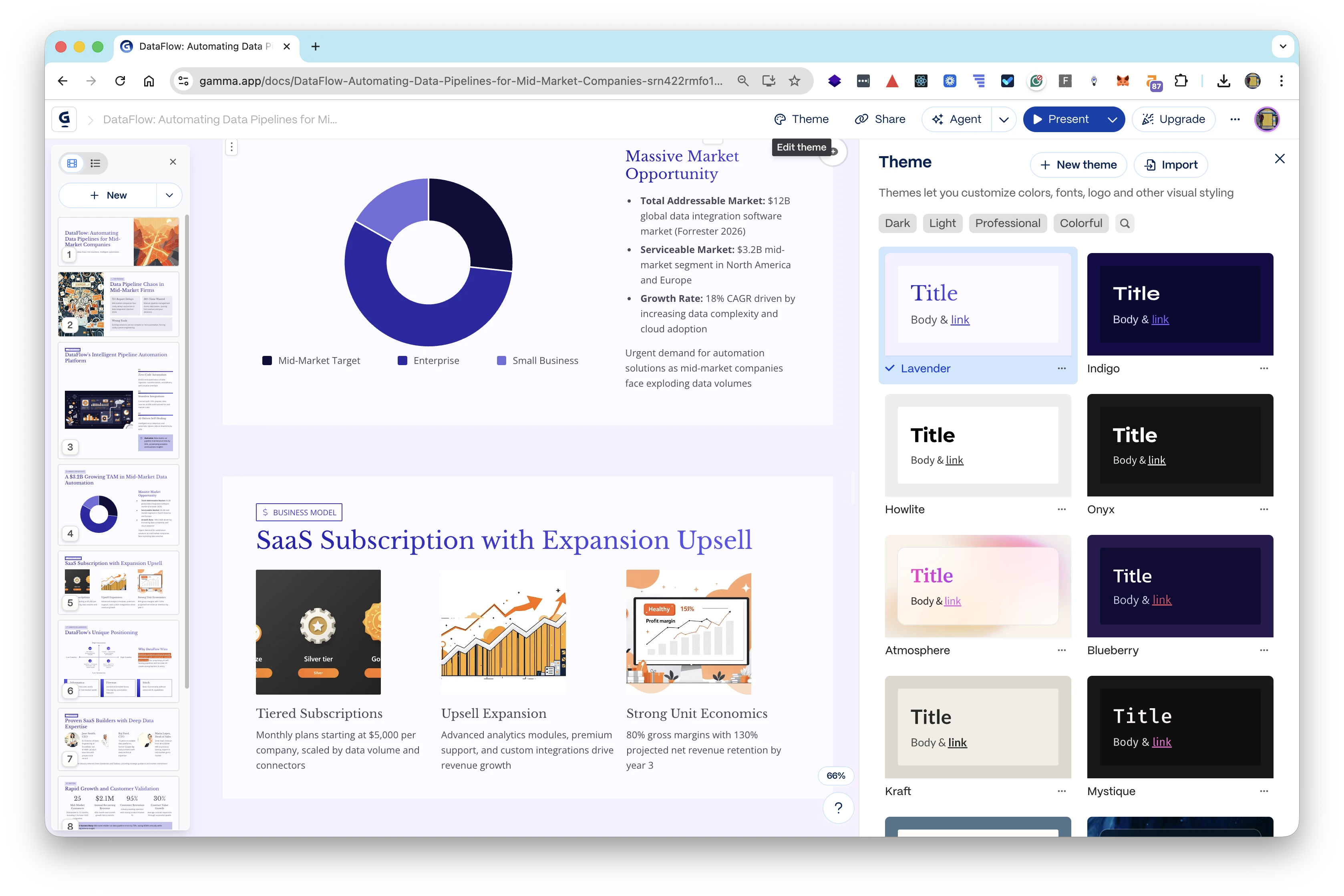
Gamma telah membayangkan ulang apa itu presentasi. Alih-alih mengikuti rasio aspek slide tradisional 4:3 atau 16:9, Gamma menciptakan "kartu" yang hidup dalam format web-native. Deck ini dapat dibagikan sebagai tautan dan dilihat seperti situs web interaktif, membuatnya sangat efektif untuk pitch penjualan modern dan pembaruan internal.
Gamma menawarkan tingkat gratis yang sangat besar, yang menjadikannya favorit di kalangan startup dan tim dengan anggaran terbatas. Ia sangat cepat, sering menghasilkan deck lengkap dalam waktu kurang dari enam puluh detik. Bagi yang mencari sesuatu yang berbeda dari pengalaman PowerPoint tradisional, Gamma adalah udara segar.
Fitur Utama:
- "Kartu" web-native yang memungkinkan gulir vertikal dan konten bersarang.
- Tema satu klik yang mengubah tampilan seluruh deck secara instan.
- Kemampuan menyematkan grafik langsung, video, dan elemen interaktif.
- Mesin generasi cepat berbasis prompt.
Harga: Tingkat gratis tersedia. Paket Pro mulai dari $8/bulan.
Terbaik Untuk: Startup, pembaruan internal cepat, dan presentasi yang dibagikan melalui tautan.
Keputusan: Gamma adalah alat paling inovatif dalam format. Jika Anda tidak perlu mencetak slide atau menyajikannya secara offline tradisional, Gamma adalah pilihan yang sangat baik.
6. Pitch.com — Terbaik untuk Kolaborasi Tim
Pitch.com sudah lama menjadi favorit bagi tim yang perlu bekerja sama pada deck berisiko tinggi. Ia menggabungkan editor tingkat profesional dengan fitur kolaborasi yang kuat seperti komentar waktu nyata, riwayat versi, dan penugasan tugas.
Pada 2026, Pitch telah mengintegrasikan AI untuk membantu tahap penyusunan awal, meskipun nilai utamanya tetap terletak pada alur kerja kolaboratif. Ia lebih terasa seperti alat desain modern daripada suite kantor lama. Jika Pitch tidak memenuhi kebutuhan Anda, Anda bisa menjelajahi beberapa alternatif pitch.
Fitur Utama:
- Kolaborasi waktu nyata dan manajemen proyek yang luar biasa.
- Perpustakaan template premium yang dikurasi oleh desainer profesional.
- Integrasi dengan sumber data seperti ChartMogul dan Google Analytics.
- Riwayat versi dan kontrol izin granular.
Harga: Tingkat gratis tersedia. Paket Pro mulai dari $8/bulan.
Terbaik Untuk: Tim kolaboratif, agensi kreatif, dan startup dengan banyak pemangku kepentingan.
Keputusan: Pitch adalah pilihan terbaik untuk tim yang menghargai proses kolaborasi sebanyak hasil akhirnya.
7. Gemini untuk Google Slides — Terbaik untuk Integrasi Workspace
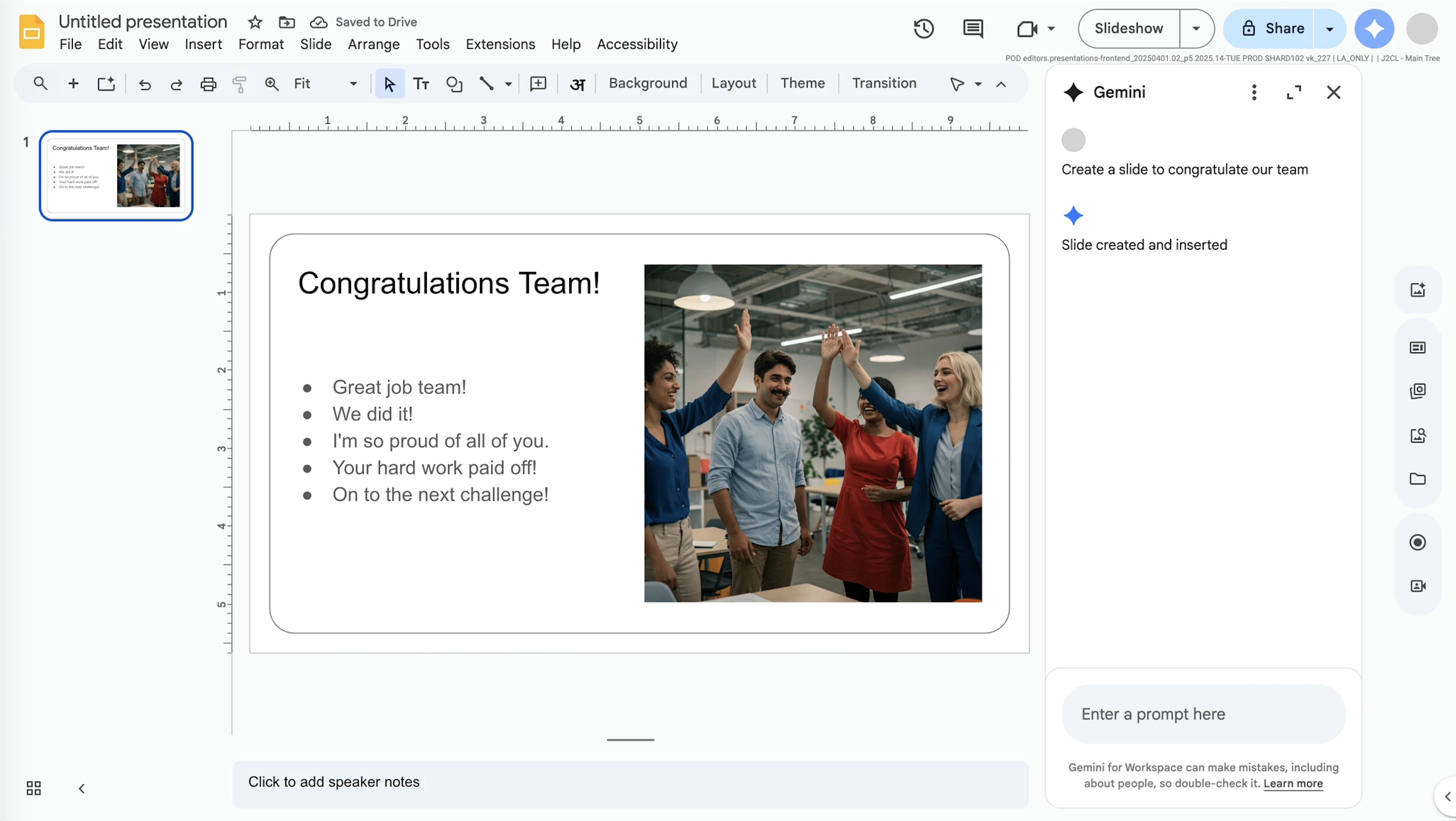
Bagi organisasi yang aktif di Google Drive, Gemini untuk Google Slides adalah pembuat AI yang paling mudah diakses. Ia dibangun langsung ke dalam antarmuka Google Workspace, memungkinkan pengguna menghasilkan gambar dan teks untuk slide mereka tanpa membuka tab baru.
Meskipun saat ini kurang canggih dibandingkan alat mandiri seperti NextDocs, ia dengan cepat berkembang. Kemampuannya menarik informasi dari Google Drive pribadi atau bersama menjadikannya pilihan kuat untuk presentasi internal. Untuk memahami perbandingannya dengan pasar yang lebih luas, lihat ringkasan kami di blogs/best-ai-presentation-builders-2026.
Fitur Utama:
- Integrasi native dengan Google Workspace dan Google Drive.
- Generasi gambar AI bawaan untuk visual kustom.
- Bantuan sidebar untuk menulis ulang dan merangkum teks.
- Tidak perlu instalasi perangkat lunak tambahan untuk pengguna Workspace.
Harga: Tingkat gratis tersedia. Fitur lanjutan mulai dari $0 per bulan dengan beberapa paket Workspace.
Terbaik Untuk: Pengguna Google Workspace yang membutuhkan draft cepat dan presentasi internal.
Keputusan: Gemini adalah alat yang nyaman dan "cukup baik" untuk kebanyakan tugas harian dalam ekosistem Google.
8. Canva Magic Design — Terbaik untuk Asset Visual
Canva telah bertransformasi dari alat desain grafis sederhana menjadi suite kantor lengkap. AI Magic Design-nya memungkinkan pengguna mengubah prompt teks menjadi presentasi lengkap menggunakan perpustakaan besar Canva berisi foto stok, ilustrasi, dan video.
Canva sangat kuat untuk tim pemasaran yang perlu membuat presentasi yang berat secara visual. Kemampuannya mengekspor ke berbagai format, termasuk posting media sosial dan video, menjadikannya pilihan serbaguna untuk kampanye multi-channel. Jika Anda mencari opsi lain di kategori ini, cek daftar canva-alternatives.
Fitur Utama:
- Akses ke perpustakaan besar aset dan template premium.
- Fitur Magic Switch untuk mengubah presentasi menjadi jenis konten lain.
- Antarmuka drag-and-drop yang sederhana tanpa keahlian desain.
- Manajemen kit merek yang kuat untuk pengguna Pro.
Harga: Tingkat gratis tersedia. Paket Pro mulai dari $13/bulan.
Terbaik Untuk: Pemasar, manajer media sosial, dan presentasi berbasis visual.
Keputusan: Canva adalah raja variasi visual. Ini adalah alat terbaik untuk presentasi yang perlu tampak seperti brosur pemasaran daripada laporan perusahaan.
9. MagicSlides — Terbaik untuk Penggunaan Ulang Konten
MagicSlides adalah alat khusus yang dirancang untuk mengubah konten yang ada menjadi presentasi. Apakah Anda memiliki video YouTube panjang, PDF rinci, atau artikel panjang, MagicSlides dapat memparsing informasi tersebut dan membuat deck slide yang merangkum poin-poin utama.
Ini adalah alat yang tak ternilai bagi pendidik, pelatih, dan pembuat konten yang perlu mengubah ulang karya mereka untuk audiens berbeda. Meskipun kualitas desainnya lebih dasar dibandingkan alat lain, kecepatan konversi konten sangat mengesankan. Cari lebih banyak alat serupa di panduan magicslides-alternatives.
Fitur Utama:
- Konversi YouTube ke Slides.
- Dukungan untuk teks panjang dan unggahan dokumen.
- Antarmuka add-on Google Slides yang sederhana.
- Dukungan lebih dari 100 bahasa.
Harga: Tingkat gratis tersedia. Mulai dari $8/bulan.
Terbaik Untuk: Pembuat konten, pelatih, dan siapa saja yang mengubah ulang media panjang yang sudah ada.
Keputusan: MagicSlides adalah alat niche yang melakukan satu hal dengan sangat baik: mengubah konten yang ada menjadi slide. Ini adalah penghemat waktu besar untuk alur kerja tertentu.
10. SlidesAI — Terbaik untuk Draft Cepat
SlidesAI adalah add-in Google Slides yang sederhana yang fokus pada kecepatan. Ia dirancang untuk pengguna yang memiliki blok teks dan perlu mengubahnya menjadi presentasi secepat mungkin. Ia tidak memiliki fitur desain canggih seperti Beautiful.ai atau kemampuan riset seperti NextDocs, tetapi dapat diandalkan dan mudah digunakan.
Bagi pelajar atau profesional yang perlu membuat presentasi internal sederhana tanpa repot, SlidesAI adalah pilihan tingkat pemula yang solid. Cara yang bagus untuk mengatasi masalah "halaman kosong".
Fitur Utama:
- Generasi teks-ke-presentasi yang sederhana.
- Integrasi dengan Google Slides.
- Harga terjangkau untuk tingkat pemula.
- Dukungan untuk banyak bahasa.
Harga: Tingkat gratis tersedia. Mulai dari $10/bulan.
Terbaik Untuk: Draft cepat, rapat internal, dan pelajar.
Keputusan: SlidesAI adalah alat tanpa embel-embel yang sempurna bagi mereka yang menginginkan cara sederhana dan terjangkau untuk mengotomatisasi draft awal presentasi.
Panduan Pengambilan Keputusan Strategis: Memilih Alat yang Tepat
Memilih pembuat presentasi AI untuk lingkungan perusahaan memerlukan keseimbangan beberapa prioritas yang bersaing. Tidak ada solusi satu-ukuran-untuk-semua, tetapi Anda dapat mempersempit pilihan dengan menanyakan beberapa pertanyaan kunci tentang alur kerja Anda.
Arsitektur: Mandiri vs. Add-in
Salah satu keputusan pertama adalah apakah Anda menginginkan platform mandiri atau add-in.
Platform mandiri seperti NextDocs, Gamma, dan Beautiful.ai menawarkan fitur AI yang lebih kuat karena mereka mengendalikan seluruh kanvas. Mereka tidak terbatas oleh arsitektur lama PowerPoint atau Google Slides. Misalnya, generasi multi-varian di NextDocs hanya mungkin karena platform native AI.
Di sisi lain, add-in seperti Plus AI dan Copilot lebih cocok untuk tim yang memiliki ribuan slide yang ada dan ingin mempertahankan alur kerja saat ini. Jika tim Anda enggan belajar perangkat lunak baru, add-in adalah pilihan yang lebih aman.
Konten: Berat Riset vs. Berat Desain
Jika presentasi Anda digunakan untuk pengambilan keputusan penting, seperti pitch investor atau analisis pasar, Anda membutuhkan alat yang mengutamakan data. NextDocs adalah pemimpin di sini karena integrasi riset mendalamnya. Sebagian besar alat AI lain hanya akan menghasilkan teks "lorem ipsum" atau statistik yang terdengar meyakinkan tetapi palsu. Untuk melihat bagaimana AI umum dibandingkan dengan alat khusus, lihat chatgpt-vs-nextdocs-2026.
Jika tujuan Anda adalah mengesankan klien dengan pengalaman yang indah dan bermerk, Beautiful.ai atau Canva adalah pilihan yang lebih baik. Mereka menyediakan pengaman visual yang diperlukan untuk memastikan setiap slide tampak profesional, bahkan jika pengguna tidak memiliki latar belakang desain.
Kebutuhan Ekspor: Universal vs. Native
Akhirnya, pertimbangkan ke mana presentasi Anda akan berakhir. Jika Anda hanya akan menyajikan melalui Google Slides, maka Gemini atau Plus AI sangat cocok. Namun, jika Anda adalah konsultan yang perlu mengirim PDF ke satu klien, file PowerPoint ke yang lain, dan tautan Google Slides ke yang ketiga, Anda memerlukan alat dengan ekspor universal. NextDocs saat ini satu-satunya alat yang menangani transisi ini tanpa merusak tata letak slide Anda.
Masa Depan Presentasi AI
Seiring berjalannya 2026, kesenjangan antara "baik" dan "hebat" dalam pembuat presentasi AI semakin melebar. Alat terbaik tidak lagi hanya menghasilkan teks. Mereka bertindak sebagai asisten riset, mitra desain, dan otomatisator alur kerja.
Perpindahan menuju generasi multi-varian dan integrasi riset mendalam mewakili frontier berikutnya. Profesional tidak lagi puas dengan satu draft AI yang dihasilkan. Mereka menginginkan opsi, akurasi, dan kemampuan mengedit draft tersebut dengan presisi yang sama seperti deck manual.
Kesimpulan
Pasar perusahaan untuk pembuat presentasi AI sangat beragam dan berkembang pesat. Untuk sebagian besar pengguna profesional, NextDocs menawarkan paket yang paling menarik dengan menggabungkan pilihan multi-varian, riset mendalam, dan kemampuan ekspor universal. Ia memenuhi kebutuhan inti pendiri, konsultan, dan tim penjualan yang tidak bisa berkompromi pada kualitas atau akurasi.
Namun, bagi yang sangat terikat pada ekosistem Microsoft atau Google, alat seperti Plus AI dan Copilot menawarkan tingkat kenyamanan dan keamanan yang sulit diabaikan. Sementara itu, Beautiful.ai dan Gamma terus mendorong batasan apa yang bisa dilakukan sebuah presentasi.
Apa pun alat yang Anda pilih, tujuannya sama: mengurangi waktu untuk mekanisme pembuatan slide dan lebih banyak waktu untuk strategi dan storytelling yang benar-benar mendorong bisnis Anda maju.
Siap Membuat Presentasi Lebih Baik?
Daftar NextDocs Gratis dan rasakan generasi multi-varian, ekspor universal, serta integrasi riset mendalam. Tidak perlu kartu kredit.