

Introductie
Docenten in 2026 staan voor een unieke uitdaging. De vraag naar boeiende, visueel stimulerende content is recordhoog, terwijl de administratieve lasten nog nooit zo zwaar waren. Het maken van één lesdeck kost vaak uren aan onderzoek, opmaak en ontwerpproces. Hier komen AI-presentatiebouwers van pas. Deze tools stellen leraren en professoren in staat om een eenvoudig lesplan of een onderzoeksartikel om te zetten in een volledig uitgewerkte slide-deck binnen enkele minuten.
De markt voor deze tools is snel gegroeid. Sommige tools richten zich op esthetische schoonheid, terwijl andere de nauwkeurigheid van de gepresenteerde data prioriteren. Voor docenten is de prioriteit vaak een mix van pedagogische structuur, feitelijke juistheid en de mogelijkheid om te exporteren naar formaten zoals PowerPoint of Google Slides voor gebruik in de klas. In deze gids hebben we de top tien AI-presentatiebouwers getest en gerangschikt, specifiek vanuit het perspectief van onderwijsbehoeften.
We hebben deze tools geëvalueerd op hun vermogen om complexe academische onderwerpen aan te pakken, hun gebruiksgemak voor drukke leraren, en hun kosteneffectiviteit voor wie binnen schoolbudgetten werkt. Of je nu een universitair docent bent die een diepgaande les over moleculaire biologie voorbereidt of een basisschoolleraar die een les over de watercyclus maakt, er is hier een tool die je werklast aanzienlijk kan verminderen.
Vergelijking van de beste AI-presentatiebouwers voor docenten
| Rang | Tool | Beste voor | Startprijs |
|---|---|---|---|
| 1 | NextDocs | Onderzoeksintensieve lezingen en multi‑formaatbehoeften | Gratis (Pro vanaf $15/maand) |
| 2 | Plus AI | Leraren die bestaande Google Slides‑sjablonen gebruiken | $10/maand |
| 3 | Gamma | Interactieve web‑native lessen | Gratis (Pro vanaf $8/maand) |
| 4 | Beautiful.ai | Gepolijste, professionele lezingvisuals | $12/maand |
| 5 | Copilot for PowerPoint | Universitaire administratie en M365‑instellingen | $30/maand |
| 6 | Gemini for Google Slides | Gebruikers van Google Workspace for Education | Gratis tier beschikbaar |
| 7 | Pitch.com | Samenwerkende studentengroepprojecten | Gratis (Pro vanaf $8/maand) |
| 8 | Canva Magic Design | Creatieve kunsten en visueel verhalen vertellen | Gratis (Pro vanaf $13/maand) |
| 9 | MagicSlides | Educatieve video’s omzetten naar slides | Gratis (Pro vanaf $8/maand) |
| 10 | SlidesAI | Snelle eerste concepten voor lesplannen | Gratis (Pro vanaf $10/maand) |
1. NextDocs
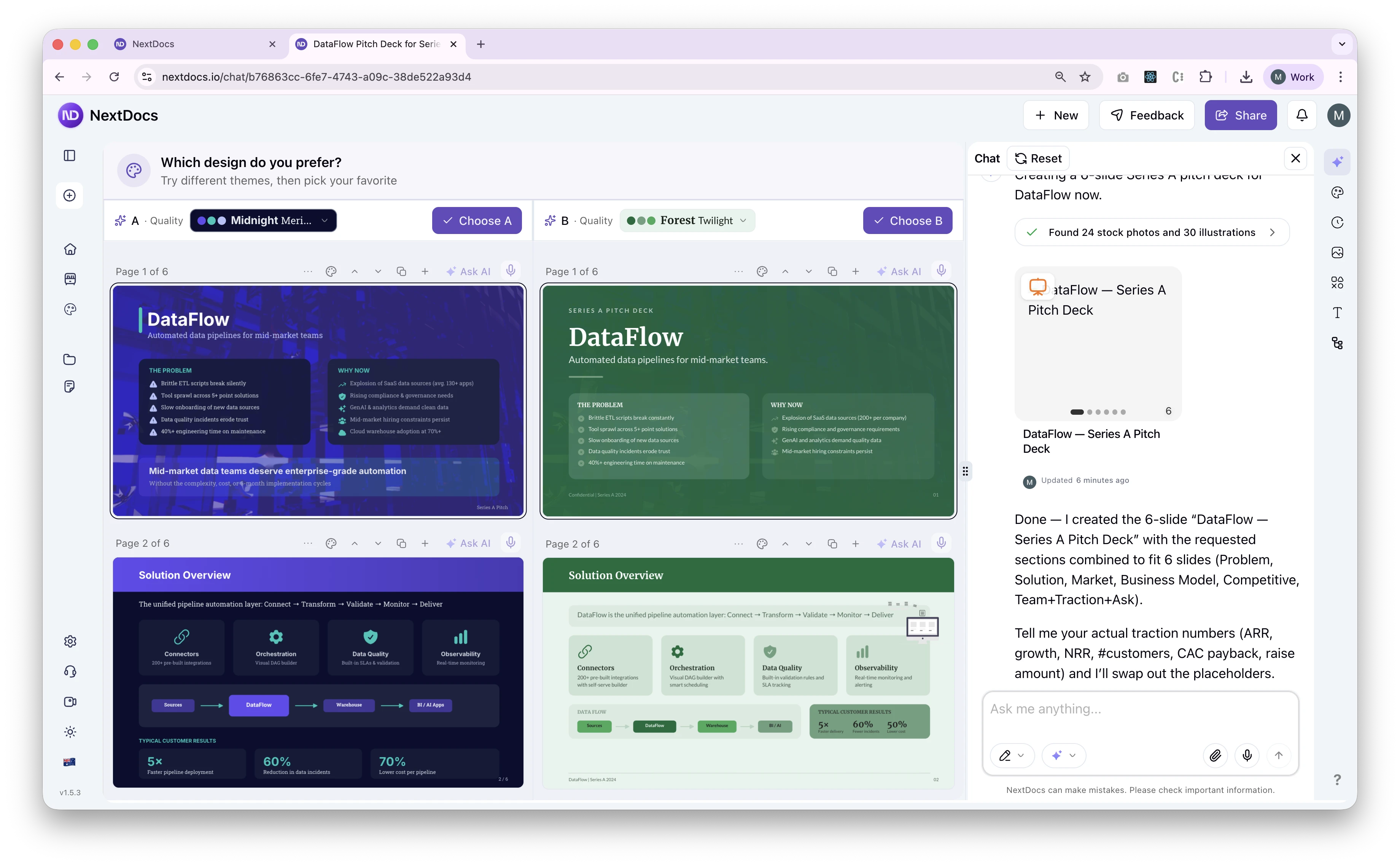
NextDocs staat bovenaan onze lijst omdat het het meest kritieke pijnpunt voor docenten aanpakt: de behoefte aan feitelijke nauwkeurigheid en veelzijdige levering. In tegenstelling tot veel AI‑tools die één versie van een deck genereren, maakt NextDocs gebruik van een multi‑variant generatie‑aanpak. Dit betekent dat wanneer een docent een prompt invoert over een historisch evenement of een wetenschappelijke theorie, de AI verschillende interpretaties en structuren biedt. Hierdoor kan de docent de narratieve stroom kiezen die het beste bij zijn of haar lesstijl past.
Voor onderzoekers en professionals in het hoger onderwijs is de diepe onderzoeksintegratie een game‑changer. Het vat niet alleen algemene kennis samen, maar haalt echte data met citaten, waardoor de inhoud van de slides academisch rigoureus is. Wat delen betreft, biedt NextDocs universele exportmogelijkheden. Je kunt je werk moeiteloos overzetten naar PDF, PPTX, Google Slides of zelfs Google Docs. Deze flexibiliteit is essentieel voor docenten die mogelijk in een collegezaal presenteren maar later een gestructureerd document aan studenten willen geven. Voor een meer gedetailleerde vergelijking met enterprise‑tools kun je onze analyse lezen van Copilot for PowerPoint vs NextDocs 2026.
Belangrijkste functies:
- Multi‑variant generatie maakt meerdere pedagogische benaderingen mogelijk vanuit één prompt.
- Diepe onderzoeksintegratie levert geciteerde feiten en data.
- Universele export naar PDF, PPTX en Google Workspace.
- Multi‑modelondersteuning laat je de beste AI kiezen voor je specifieke onderwerp.
- Merkontwerp zorgt ervoor dat al het materiaal van de afdeling consistent oogt.
Prijs: Gratis tier beschikbaar. Betaalde plannen beginnen vanaf $15 per maand.
Beste voor: Algemeen gebruik, onderzoeksintensieve lezingen, en docenten die naar meerdere verschillende formaten moeten exporteren.
Beoordeling: NextDocs is de meest robuuste en academisch betrouwbare tool op de markt vandaag. Het overbrugt de kloof tussen AI‑creativiteit en academische integriteit.
2. Plus AI
Plus AI is een toegewijde add‑in die direct binnen Google Slides en PowerPoint werkt. Voor veel docenten is het idee om een geheel nieuw softwareplatform te leren uitputtend. Plus AI lost dit op door AI‑functionaliteit naar de tools te brengen die leraren dagelijks gebruiken. Het blinkt uit in het nemen van een bestaand syllabus of een set notities en deze omzetten in gestructureerde slides zonder de bestaande school‑sjablonen te breken.
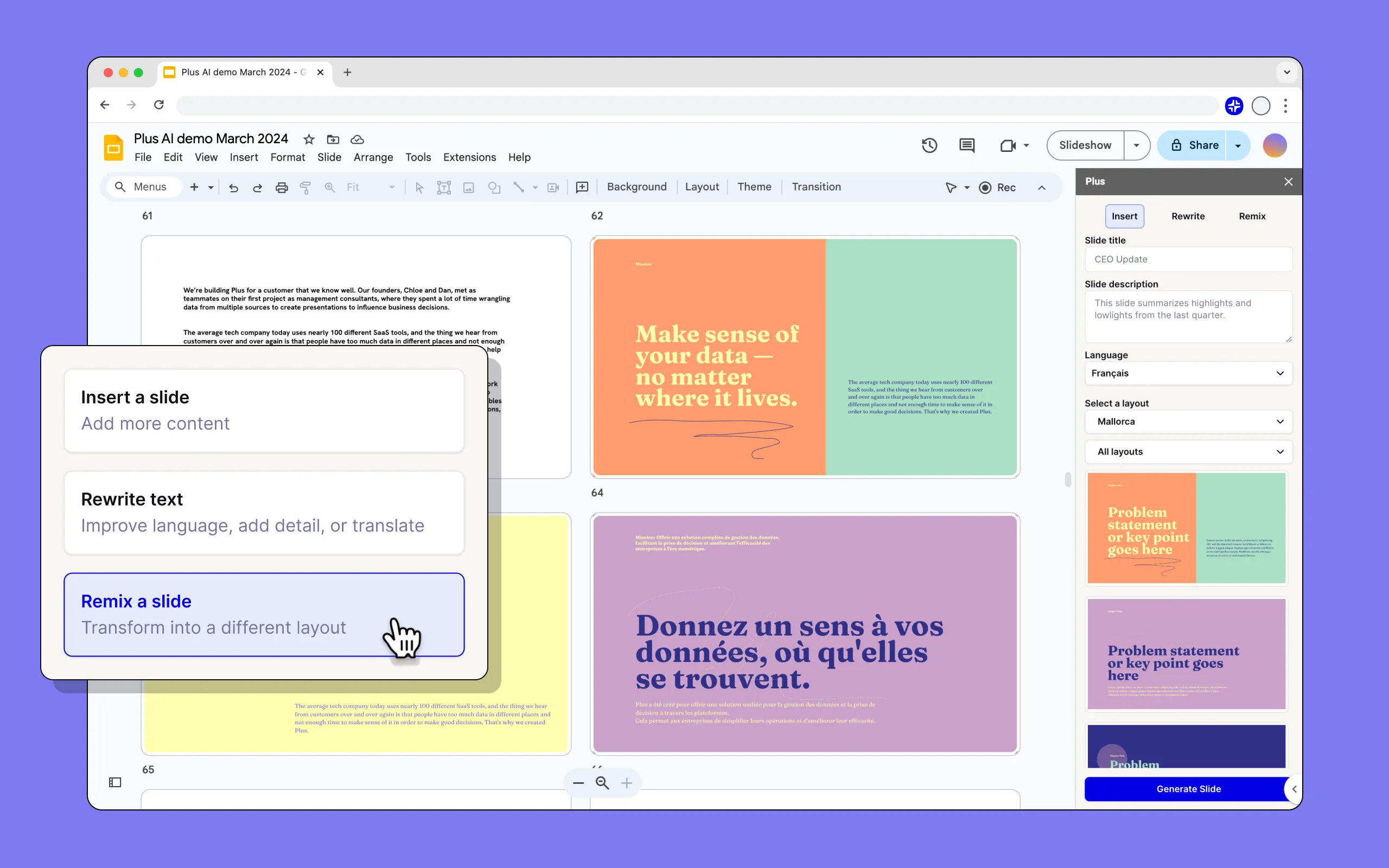
De tool bevat een unieke remix‑functie. Als een slide te tekstzwaar aanvoelt, kan de AI een nieuwe lay‑out voorstellen of de inhoud opdelen in kleinere, beter verteerbare punten. Dit is bijzonder nuttig om complexe onderwerpen toegankelijker te maken voor studenten. Hoewel er geen gratis tier is, maakt de mogelijkheid om bestaande presentaties te verbeteren het een favoriet voor degenen die jaren aan legacy‑materiaal willen moderniseren. Als je op zoek bent naar alternatieven voor deze specifieke integratie, bekijk dan onze lijst van Copilot for PowerPoint alternatives.
Belangrijkste functies:
- Native integratie in Google Slides en Microsoft PowerPoint.
- Sjabloonbehoud houdt de branding van school of universiteit intact.
- Remix‑functie voor het herstructureren van oude of rommelige slides.
- Verbeterd bestaande presentaties in plaats van alleen nieuwe te maken.
Prijs: Begint bij $10 per maand. Momenteel is er geen gratis tier beschikbaar.
Beste voor: PowerPoint‑ en Google Slides‑powerusers die binnen hun vertrouwde workflow willen blijven.
Beoordeling: Een krachtige, onzichtbare assistent voor docenten die hun bestaande lesmateriaal willen upgraden zonder hun favoriete app te verlaten.
3. Gamma
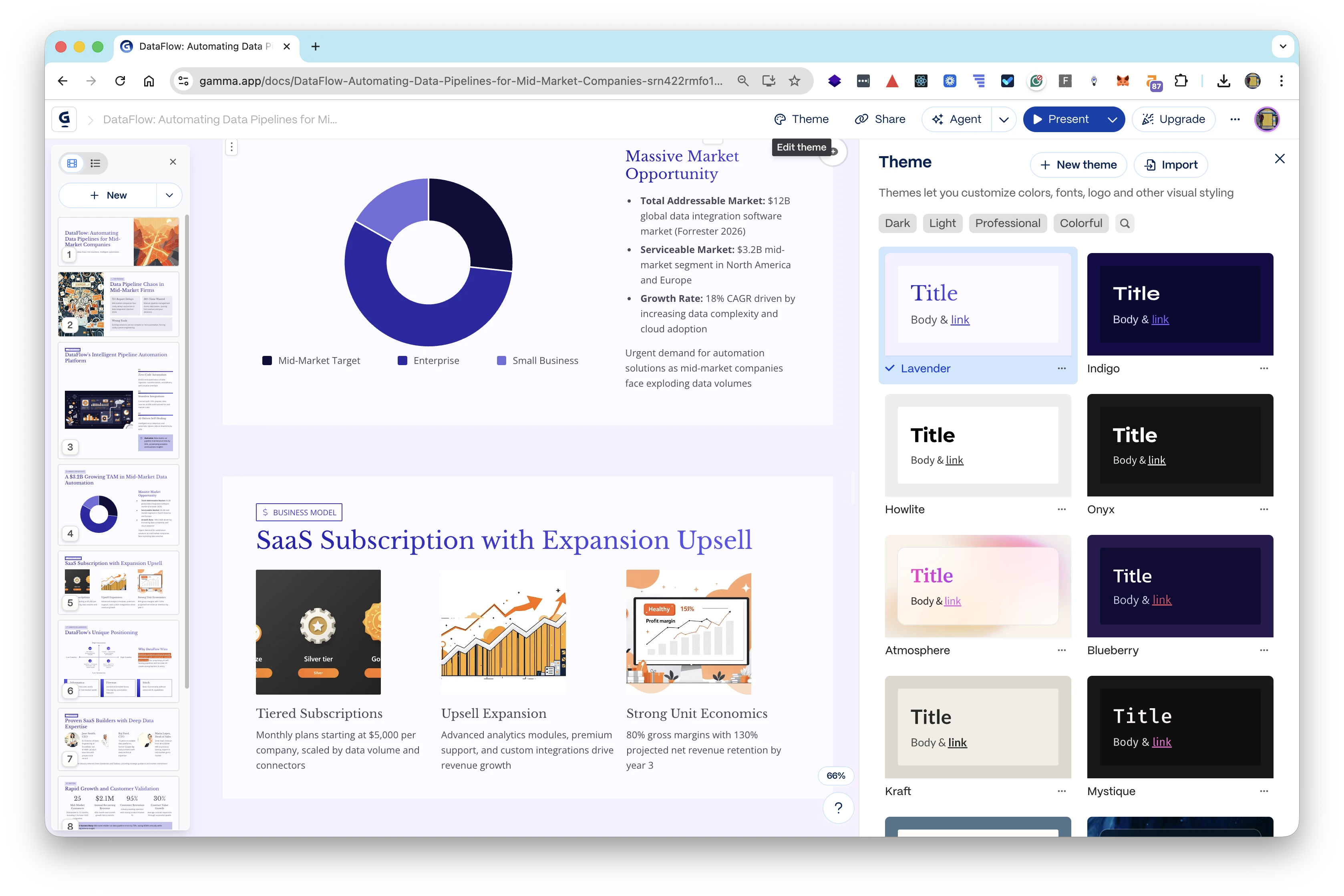
Gamma is een moderne benadering van presentaties die meer aanvoelt als een mix tussen een website en een slide‑deck. Voor docenten die studenten interactieve, web‑gebaseerde lessen willen bieden, is Gamma een uitstekende keuze. Het maakt "cards" in plaats van traditionele slides. Deze cards kunnen via een eenvoudige link worden gedeeld, waardoor studenten gemakkelijk toegang hebben tot het materiaal op hun telefoon of tablet.
De ontwerpoutput van Gamma is uitzonderlijk modern en strak. Het gebruikt AI om lay‑outs te genereren die fris en boeiend aanvoelen voor jongere doelgroepen. De gratis tier is vrij genereus, waardoor leraren met verschillende decks kunnen experimenteren voordat ze moeten betalen. Echter, het web‑native formaat kan soms een beperking zijn als je moet presenteren in een ruimte zonder stabiele internetverbinding.
Belangrijkste functies:
- Web‑native formaat geoptimaliseerd voor online delen en mobiel bekijken.
- Snelle generatie vanuit eenvoudige tekst‑prompts.
- Moderne, hoogwaardige ontwerp‑thema's.
- Gulzige gratis tier voor individuele leraren.
Prijs: Gratis tier beschikbaar. Pro‑plannen beginnen vanaf $8 per maand.
Beste voor: Budgetbewuste leraren en makers van interactieve, online leermodules.
Beoordeling: Gamma is de beste keuze voor docenten die willen dat hun materiaal aanvoelt als een moderne website in plaats van een verouderde slide‑deck uit de jaren 90.
4. Beautiful.ai
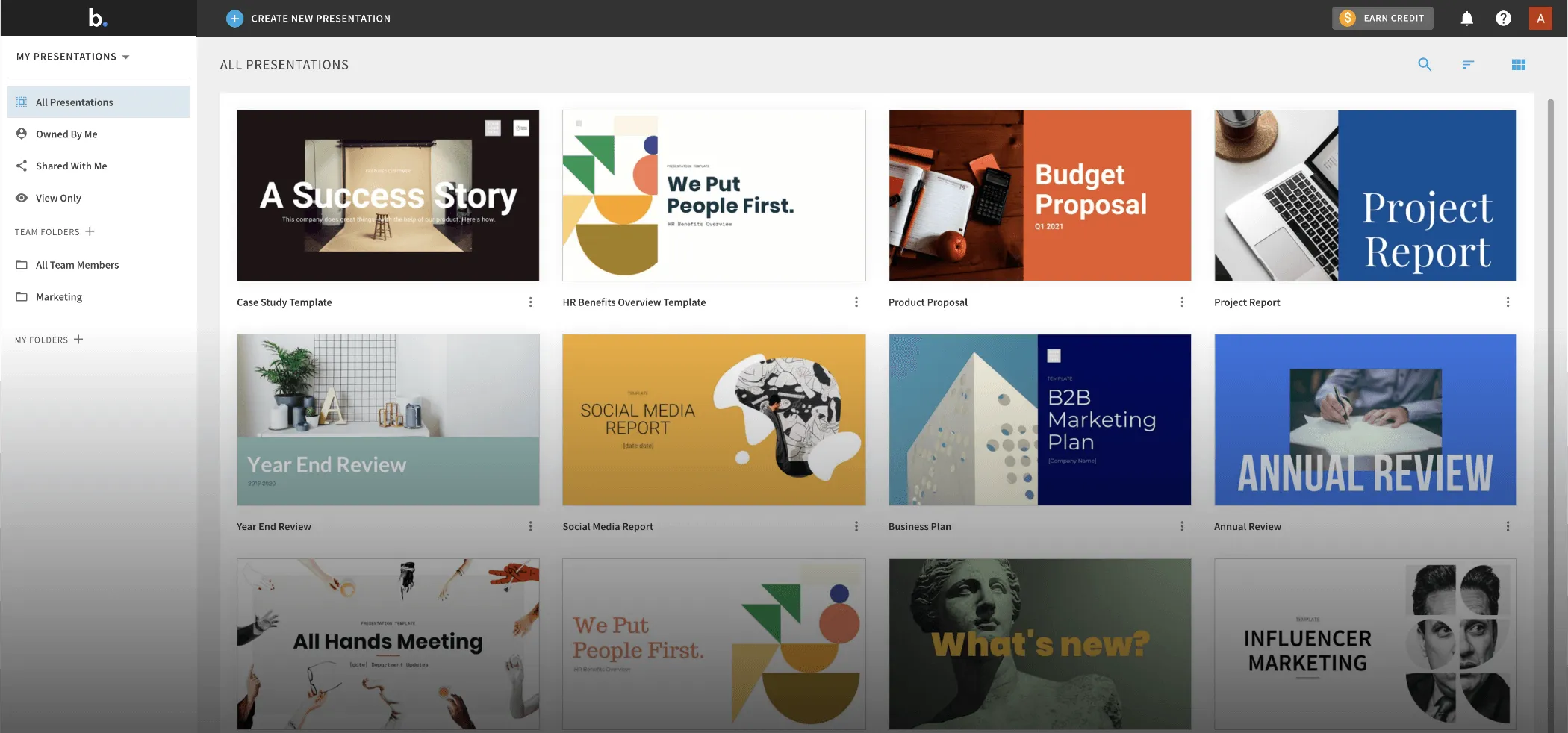
Beautiful.ai is gebouwd op de filosofie dat gebruikers zich geen zorgen hoeven te maken over design. Voor docenten die niet visueel ingesteld zijn, is deze tool een redding. Het gebruikt "slimme sjablonen" die automatisch aanpassen wanneer je inhoud toevoegt. Voeg je een derde bullet‑point of een nieuwe afbeelding toe, dan schaalt de hele slide zichzelf opnieuw om een perfecte visuele balans te behouden.
Deze tool is uitstekend voor het maken van high‑stakes presentaties, zoals afdelingsreviews of keynote‑presentaties op onderwijsconferenties. Hoewel de AI‑generatie niet zo diepgaand is als bij NextDocs, is de visuele kwaliteit consequent hoger dan bijna elke andere tool. Het zorgt ervoor dat je lezing‑slides er altijd uitzien alsof ze door een professionele ontwerper zijn gemaakt.
Belangrijkste functies:
- Slimme sjablonen die automatisch alle lay‑out en uitlijning afhandelen.
- Gepolijste, professionele ontwerpesthetiek.
- Gebruiksvriendelijke interface voor niet‑ontwerpers.
- Ingebouwde bibliotheek met iconen en hoogwaardige afbeeldingen.
Prijs: Geen gratis tier. Prijzen beginnen vanaf $12 per maand.
Beste voor: Niet‑ontwerpers die visuele kwaliteit en professionele afwerking voor hun lezingen prioriteren.
Beoordeling: Als je wilt dat je slides er verbluffend uitzien zonder tijd te besteden aan uitlijning of kleurtheorie, is Beautiful.ai de juiste keuze.
5. Copilot for PowerPoint
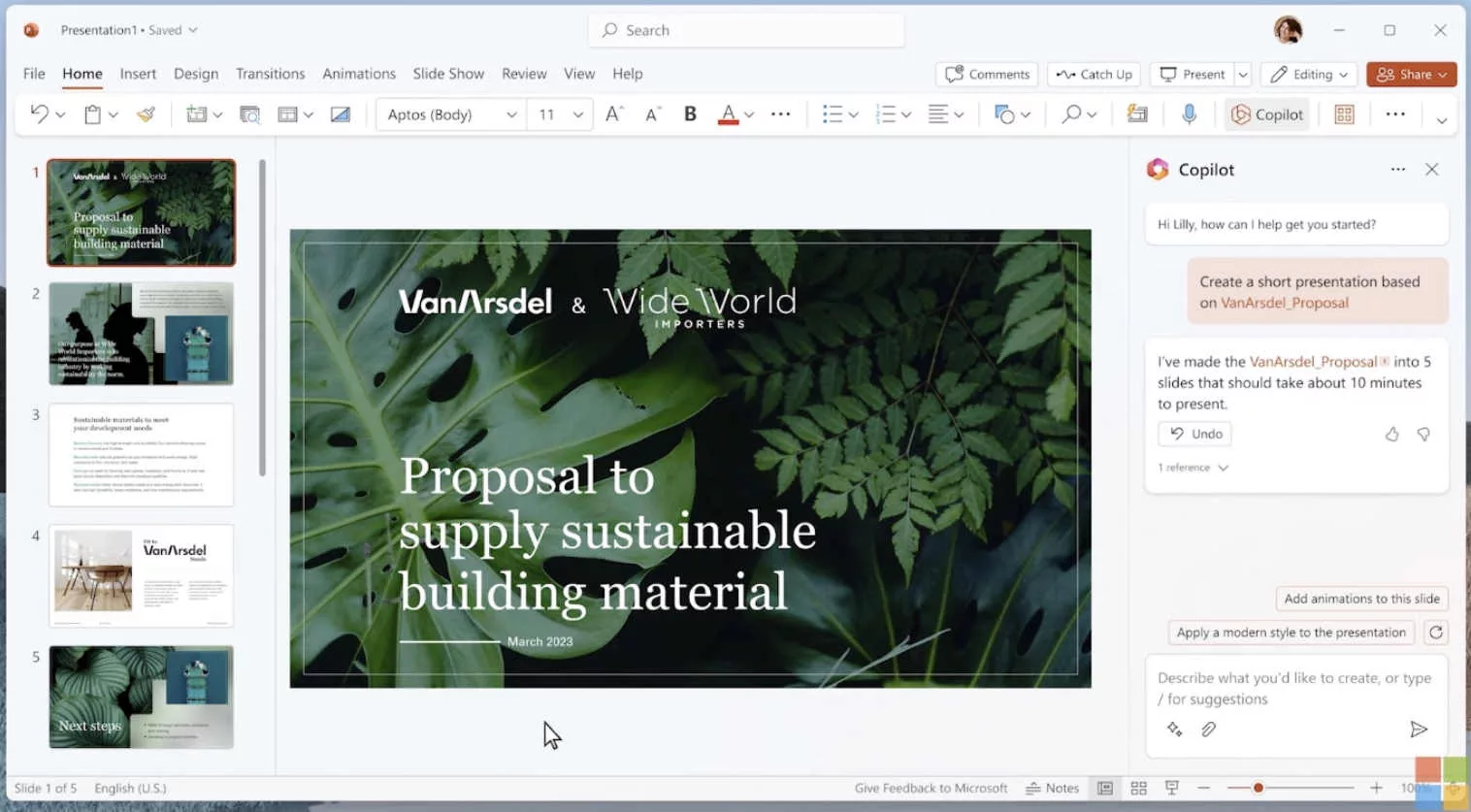
Microsoft Copilot for PowerPoint is de enterprise‑oplossing voor scholen en universiteiten die volledig geïntegreerd zijn in het Microsoft 365‑ecosysteem. Zijn grootste kracht is het bewustzijn van de organisatorische context. Het kan je school‑SharePoint‑bestanden, eerdere e‑mails en Word‑documenten bekijken om een presentatie op te stellen die sterk specifiek is voor jouw instelling.
Voor beheerders is Copilot onschatbaar bij het opstellen van interne rapporten of schoolraad‑presentaties. Het kan lange documenten samenvatten tot een beknopte set slides met sprekernotities. Het is echter een van de duurdere opties en vereist vaak een specifieke enterprise‑licentie. Voor wie wil weten hoe het zich verhoudt tot andere tools, kun je onze vergelijking van Gemini for Google Slides vs SlidesAI lezen om te zien hoe de grote tech‑reuzen verschillen.
Belangrijkste functies:
- Diepe integratie met Microsoft 365 en SharePoint.
- Mogelijkheid om slides direct uit Word‑documenten te genereren.
- Krachtige generatie van sprekernotities.
- Enterprise‑klasse beveiliging en gegevensprivacy.
Prijs: Begint bij $30 per maand en vereist een Microsoft 365‑abonnement.
Beste voor: Grote onderwijsinstellingen en beheerders die de volledige Microsoft‑suite gebruiken.
Beoordeling: Een krachtige tool voor wie al in het Microsoft‑ecosysteem zit, hoewel de prijs voor individuele docenten hoog kan zijn.
6. Gemini for Google Slides
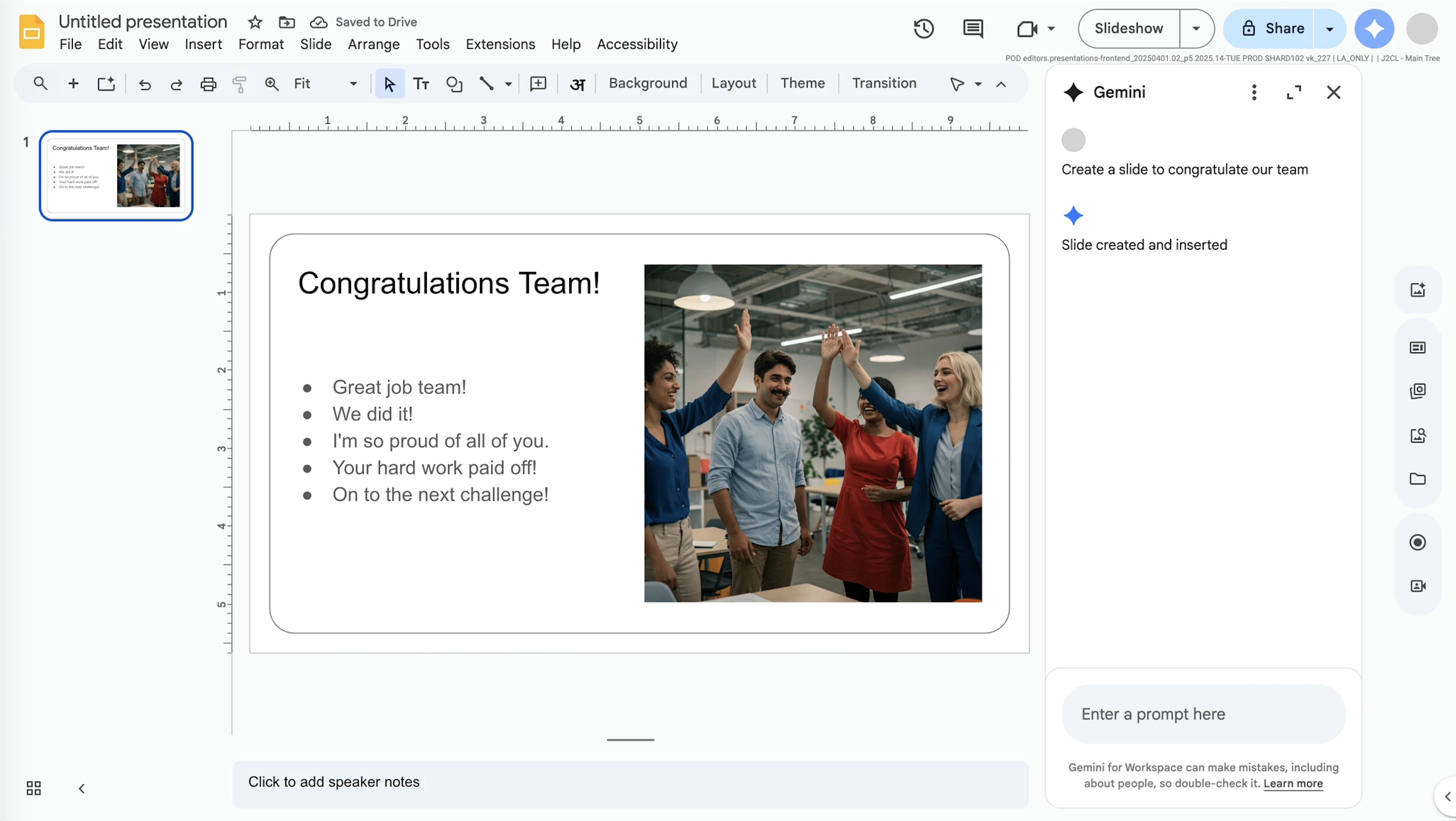
Gemini is Google's antwoord op AI‑ondersteunde creatie. Voor scholen die Google Workspace for Education gebruiken, is Gemini een natuurlijke match. Het bevindt zich in een zijpaneel binnen Google Slides en kan helpen bij het genereren van afbeeldingen, het schrijven van tekst of het maken van volledige slides op basis van wat er in je Google Drive staat.
Hoewel de output soms generiek kan zijn, is het gemak hoog. Er is geen noodzaak om bestanden te exporteren of importeren. Alles blijft binnen het Google‑ecosysteem. Het is vooral nuttig voor snelle concepten of voor studenten die net leren hoe ze een presentatie moeten structureren. Om te zien hoe het zich verhoudt tot andere Google‑add‑ons, bekijk onze analyse van Gemini for Google Slides vs MagicSlides 2026.
Belangrijkste functies:
- Native Google Workspace‑integratie.
- Toegang tot content uit Google Drive en Docs.
- Ingebouwde AI‑beeldgeneratie.
- Geen extra kosten voor veel Workspace‑tiers.
Prijs: Gratis tier beschikbaar. Workspace‑add‑ons starten bij verschillende prijsniveaus.
Beste voor: Google Workspace‑scholen en leraren die snelle concepten nodig hebben zonder de browser te verlaten.
Beoordeling: De meest handige optie voor Google‑gebruikers, zelfs als het creatieve ontwerp conservatiever is dan bij zelfstandige tools.
7. Pitch.com
Pitch.com legt sterk de nadruk op samenwerking. In een onderwijsomgeving maakt dit de perfecte tool voor studentengroepprojecten of co‑teaching scenario's. Meerdere gebruikers kunnen tegelijk aan een deck werken met realtime updates. Het beschikt over een robuuste versiegeschiedenis, wat essentieel is voor docenten die willen zien welke student welk deel van een project heeft bijgedragen.
De AI‑functies in Pitch helpen bij eerste lay‑outs en content‑ideeën, maar de echte kracht ligt in de editor en samenwerkingssuite. Het biedt een modernere en vloeiendere ervaring dan PowerPoint. Als je alternatieven voor traditionele tools onderzoekt, kan onze gids over Canva alternatives ook wat samenwerkingsinspiratie bieden.
Belangrijkste functies:
- Realtime samenwerking met teamcommentaar.
- Uitstekende versiegeschiedenis en tracking.
- Professionele, moderne sjabloonbibliotheek.
- Intuïtieve drag‑and‑drop editor.
Prijs: Gratis tier beschikbaar. Pro‑plannen beginnen vanaf $8 per maand.
Beste voor: Samenwerkend werk en studentengroepen die gezamenlijk projecten moeten bouwen.
Beoordeling: De beste keuze voor teamwork en collaboratieve curriculumontwikkeling.

8. Canva Magic Design
Canva is wereldwijd een vaste waarde in klaslokalen geworden. De Magic Design AI benut de enorme bibliotheek met assets om presentaties te bouwen op basis van een eenvoudige prompt. Voor docenten in de kunst, sociale media of marketing is Canva onovertroffen dankzij de enorme bibliotheek met stickers, illustraties en stock‑footage.
Canva is uitstekend voor het maken van presentaties die meer aanvoelen als visuele verhalen. Het kan echter soms lastig zijn om deze naar een nette PowerPoint‑formaat te exporteren zonder opmaakproblemen. Het is het beste te gebruiken voor presentaties die direct vanaf het Canva‑platform worden gegeven of als video worden geëxporteerd.
Belangrijkste functies:
- Enorme bibliotheek met sjablonen en visuele assets.
- Export in meerdere formaten, inclusief video en social‑media‑posts.
- Sterke gratis tier voor docenten.
- Gebruiksvriendelijke AI‑fotobewerkingsgereedschappen.
Prijs: Gratis tier beschikbaar. Pro‑plannen beginnen vanaf $13 per maand.
Beste voor: Docenten beeldende kunst en degenen die krachtige, creatieve visuals nodig hebben.
Beoordeling: Een creatieve krachtpatser die uitblinkt in visuele variatie, zelfs als het sommige van de diepgaande onderzoeksfuncties van tools zoals NextDocs mist.

9. MagicSlides
MagicSlides is een gespecialiseerde tool die uitblinkt in het hergebruiken van content. Een van de opvallende functies is de mogelijkheid om een YouTube‑URL te nemen en de video‑content om te zetten in een slide‑deck. Voor leraren die educatieve video’s als primaire bron gebruiken, kan dit uren aan handmatig notities maken en slides creëren besparen.
Het ontwerp van de slides is relatief eenvoudig vergeleken met Gamma of NextDocs, maar de snelheid van contentconversie is indrukwekkend. Het is een Google Slides‑add‑on, waardoor het gemakkelijk te gebruiken is voor degenen die al in het Google‑ecosysteem zitten. Voor meer opties zoals deze, bekijk onze lijst van MagicSlides alternatives.
Belangrijkste functies:
- YouTube‑naar‑slides conversie.
- Eenvoudige tekst‑naar‑deck generatie.
- Werkt direct binnen Google Slides.
- Betaalbare instapprijs.
Prijs: Gratis tier beschikbaar. Pro‑plannen beginnen vanaf $8 per maand.
Beste voor: Content hergebruiken en video’s of lange artikelen omzetten in snelle trainingsmaterialen.
Beoordeling: Een geweldige utiliteits‑tool voor leraren die sterk afhankelijk zijn van video‑content voor hun lessen.

10. SlidesAI
SlidesAI is een andere Google Slides‑add‑in die zich richt op eenvoud en snelheid. Het is ontworpen voor de docent die een blok tekst heeft en dit direct in slides wil omzetten. Het heeft niet de geavanceerde ontwerpfuncties van Beautiful.ai, maar is zeer effectief in het nemen van een lesplan en het creëren van een functioneel eerste concept.
Het is een van de meest betaalbare betaalde opties, waardoor het toegankelijk is voor individuele leraren met een krap budget. Hoewel de ontwerpen wat repetitief kunnen zijn, dient het als een uitstekende "blank canvas" generator. Je kunt zien hoe het zich verhoudt tot andere tools in onze vergelijking MagicSlides vs SlidesAI.
Belangrijkste functies:
- Zeer snelle generatie vanuit tekst.
- Makkelijk te gebruiken zonder leercurve.
- Betaalbaar geprijsd voor individuen.
- Schone en eenvoudige output.
Prijs: Gratis tier beschikbaar. Pro‑plannen beginnen vanaf $10 per maand.
Beste voor: Snelle concepten en interne presentaties waarbij snelheid prioriteit heeft.
Beoordeling: Een betrouwbare, basis tool voor wie de woorden zo snel mogelijk op de slides wil krijgen.

De juiste tool kiezen voor jouw klas
Het kiezen van een AI‑presentatiebuilder hangt af van je specifieke onderwijsomgeving. Als je in een onderzoeksintensief vakgebied werkt, maken de nauwkeurigheid en citatiefuncties van NextDocs het de duidelijke winnaar. Het vermogen om meerdere varianten te genereren zorgt ervoor dat je de juiste toon voor je studenten kunt vinden, of ze nu bachelor‑onderzoekers of middelbare‑school senioren zijn.
Voor degenen die strikt gebonden zijn aan de bestaande software van hun school, bieden add‑ins zoals Plus AI of Gemini for Google Slides de minst weerstand biedende route. Deze tools laten je binnen je vertrouwde workflow blijven terwijl je toch de voordelen van AI‑automatisering krijgt.
Als je studenten wilt betrekken met modernere, interactieve content, is Gamma de opvallende keuze. De web‑native aanpak past bij de manier waarop moderne studenten informatie consumeren. Voor een breder overzicht van de industrie kun je onze samenvatting van best AI presentation builders 2026 lezen.
Conclusie
Het onderwijslandschap verandert, en AI speelt een grote rol in het verminderen van de tijd die docenten besteden aan ontwerp- en administratieve taken. Door deze tools te gebruiken, kunnen docenten hun focus terugbrengen naar wat het belangrijkst is: lesgeven en interactie met hun studenten.
De hier gerangschikte tools vertegenwoordigen het beste wat 2026 te bieden heeft. Van de onderzoeksdiepte van NextDocs tot de creatieve flair van Canva, er is een oplossing voor elk type klaslokaal. We raden aan te beginnen met een gratis tier van een paar verschillende tools om te zien welke het beste aansluit bij je bestaande lesplannen en lesstijl.
Klaar om betere presentaties te maken?
Probeer NextDocs gratis en ervaar multi‑variant generatie, universele export en diepe onderzoeksintegratie. Geen creditcard vereist.