

The Search for Better AI Presentations in 2026
The landscape of artificial intelligence has moved rapidly since the first presentation generators hit the market. While SlidesAI established itself as a pioneer in the space, users in 2026 are increasingly looking for more sophisticated solutions. The initial appeal of SlidesAI was its simplicity and its integration with Google Slides. It allowed users to paste text and generate a quick draft, which was a significant improvement over manual creation. However, as professional requirements have evolved, the limitations of basic add-ins have become more apparent.
Modern professionals, from consultants to startup founders, now require tools that do more than just arrange text on a slide. They need design consistency, deep research capabilities, and the ability to export to multiple formats without losing formatting. This has led many to seek out SlidesAI alternatives that offer a more comprehensive feature set.
Why Users Look for SlidesAI Alternatives
While SlidesAI remains a viable option for students or quick internal drafts, several common limitations drive power users toward other platforms.
One primary concern is inconsistent design. Because SlidesAI often relies on basic templates, the visual output can feel repetitive or unpolished. For a high stakes investor meeting or a client pitch, a generic look can undermine the credibility of the presenter. Users often find themselves spending as much time fixing the AI generated design as they would have spent creating it from scratch.
Another major factor is limited customization. SlidesAI operates primarily within the constraints of an add-in, which means it lacks the deep, canvas level control found in standalone AI native platforms. When you want to move beyond simple bullet points or basic layouts, the tool can feel restrictive.
Finally, the lack of deep research integration is a significant hurdle. Most basic AI slide makers generate content based on general knowledge, which can lead to "hallucinations" or outdated statistics. In 2026, professionals expect their AI tools to pull real data, provide citations, and understand the nuance of their specific industry. For those exploring their options, checking out the best AI presentation builders for 2026 is the first step toward a better workflow.
1. NextDocs: The Best Overall Alternative
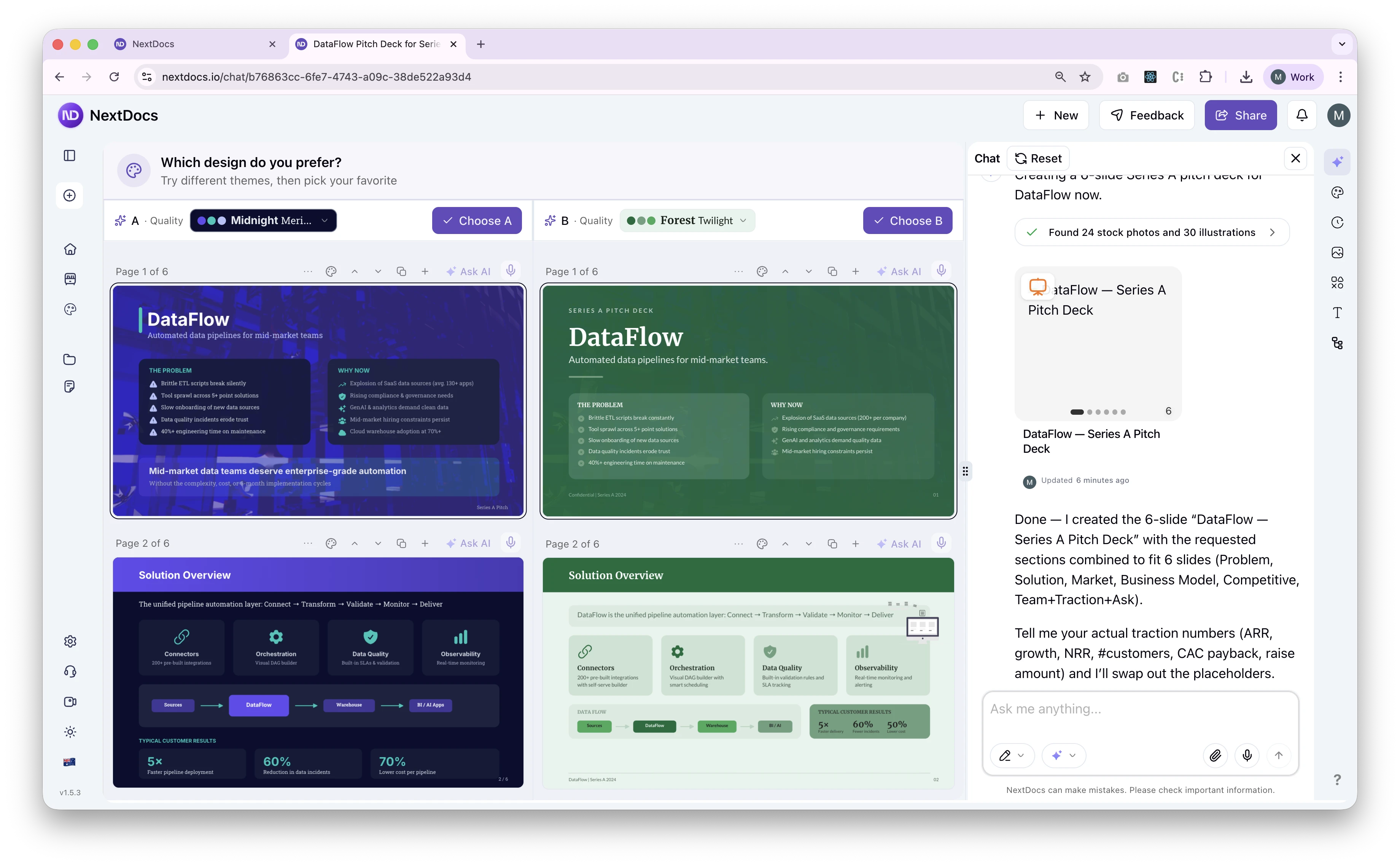
NextDocs represents the next generation of AI presentation software. Unlike basic add-ins, NextDocs is a standalone, AI-native platform designed to handle the entire lifecycle of a presentation. It positions itself as the top alternative to SlidesAI by solving the "one-shot" problem. Most AI tools give you a single output and expect you to like it. NextDocs uses multi-variant generation to provide several different interpretations of your prompt. This allows you to choose the structure, tone, and visual style that best matches your vision.
The platform is particularly strong for research-heavy decks. It features built-in deep research capabilities that pull actual figures and citations from the web, ensuring that your content is grounded in fact rather than AI-generated filler. For consultants and founders, this feature alone saves hours of manual work. Furthermore, NextDocs offers universal exports. You can create a presentation and instantly export it to PDF, PowerPoint, Google Slides, or even a Google Doc. This flexibility ensures you are never locked into a single ecosystem. If you are debating between tools, you might want to look at the NextDocs vs SlidesAI 2026 comparison for a detailed breakdown.
2. Plus AI: Best for Native Integration
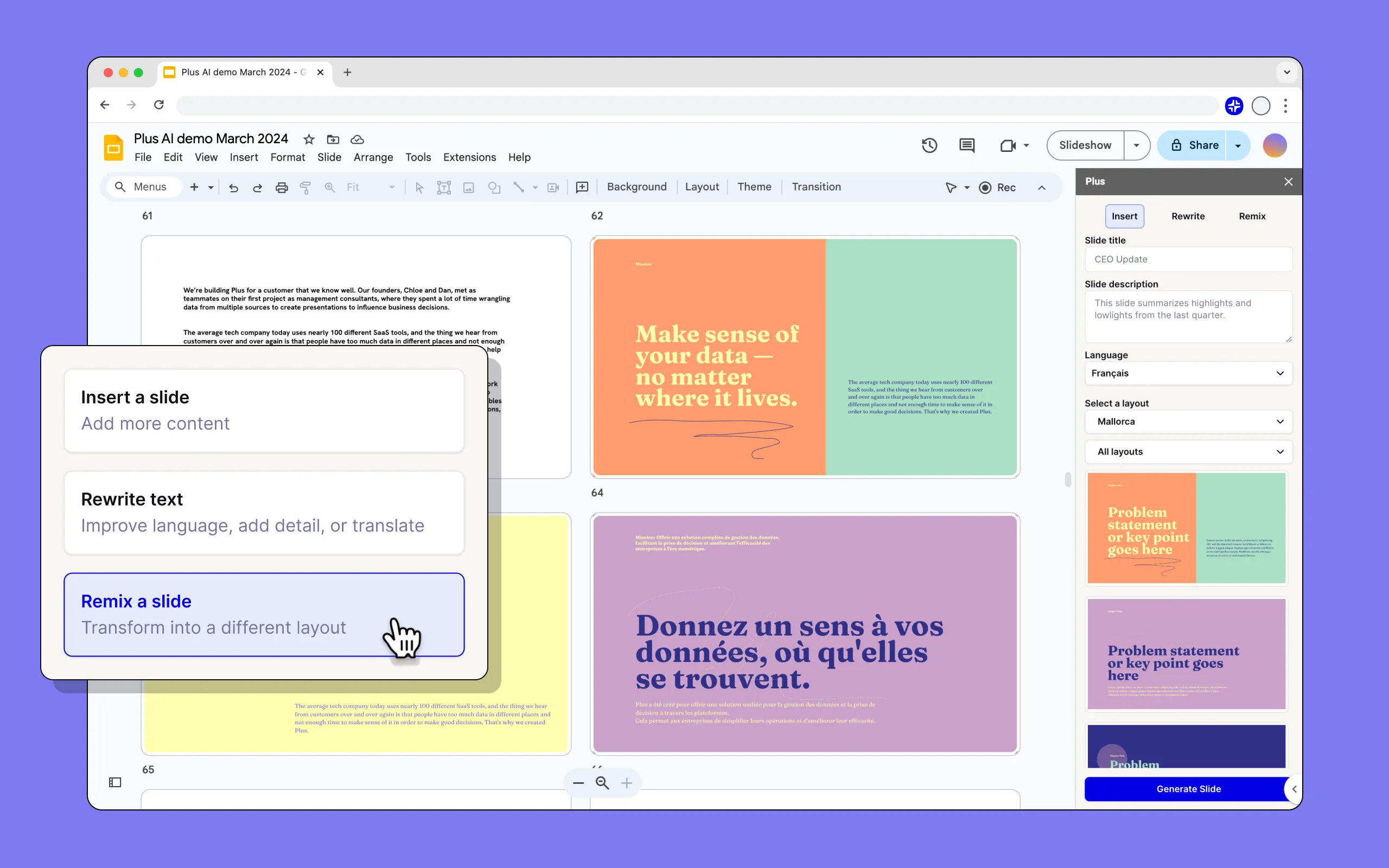
For those who want to stay within the familiar environments of Google Slides or PowerPoint, Plus AI is a robust alternative. It functions as a sophisticated add-in that focuses on template preservation and existing presentation enhancement. Unlike SlidesAI, which often struggles with complex formatting, Plus AI is designed to respect your organization's existing brand styles.
One of its standout features is the "Remix" tool. This allows you to take an existing slide and ask the AI to rewrite it, change the layout, or add new content while keeping the style consistent with the rest of the deck. It is an excellent choice for enterprise teams who already have established slide masters and do not want to start from zero. You can see how it stacks up in our Plus AI vs SlidesAI 2026 review.
3. Microsoft Copilot for PowerPoint: Best for Enterprise
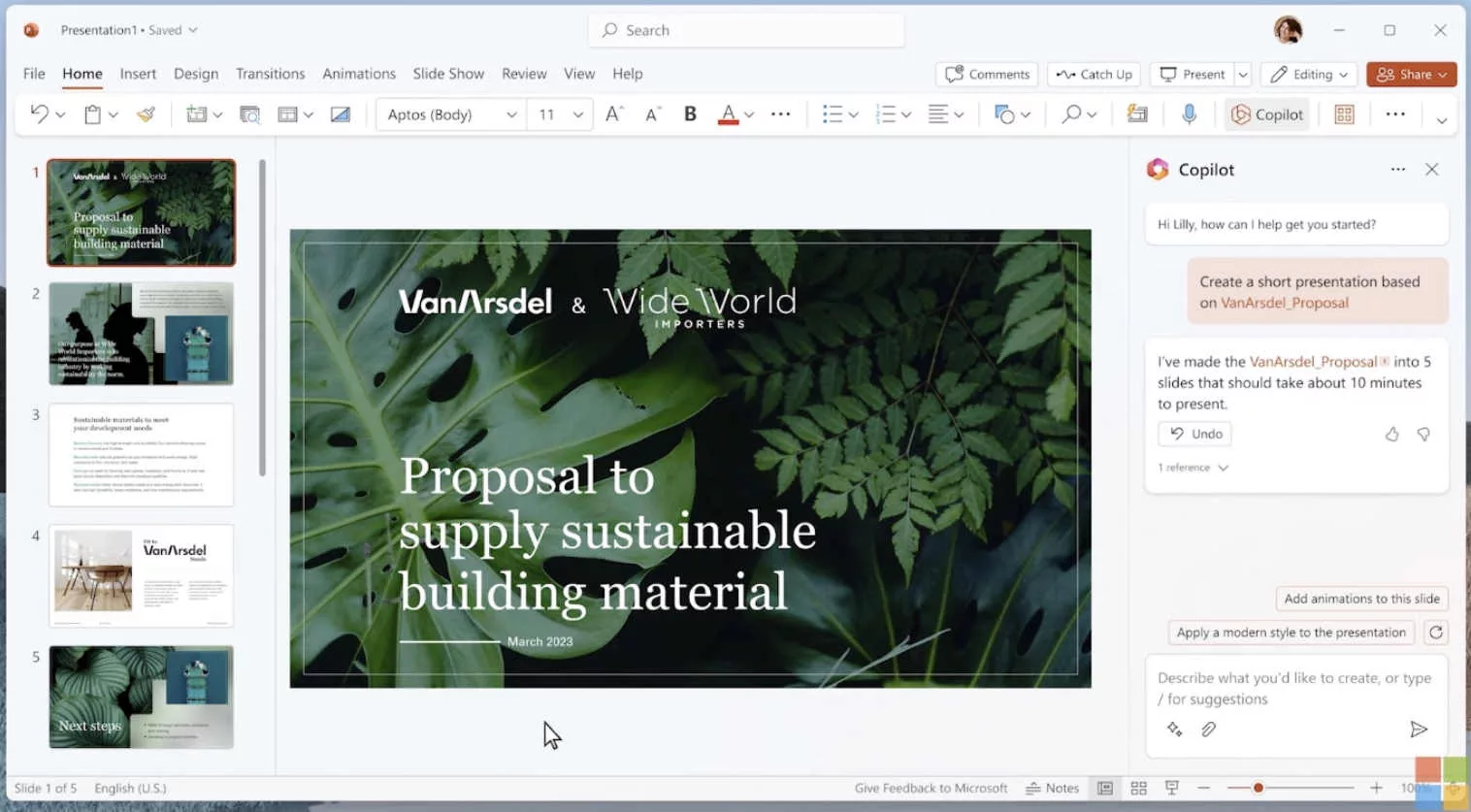
If your workflow is entirely built around Microsoft 365, Copilot is the most logical alternative to SlidesAI. Its strength lies in its organizational context awareness. Copilot can pull data from your Teams chats, Outlook emails, and Word documents to create a presentation that is highly relevant to your specific project.
While it is more expensive than most other options, the enterprise grade security and deep integration with the Microsoft ecosystem make it a favorite for large corporations. It excels at creating speaker notes and summarizing long presentations, though its design output tends to be more conservative and traditional compared to creative standalone platforms. It is widely considered one of the top AI slide makers for corporate environments.
4. Gemini for Google Slides: The Native Google Choice
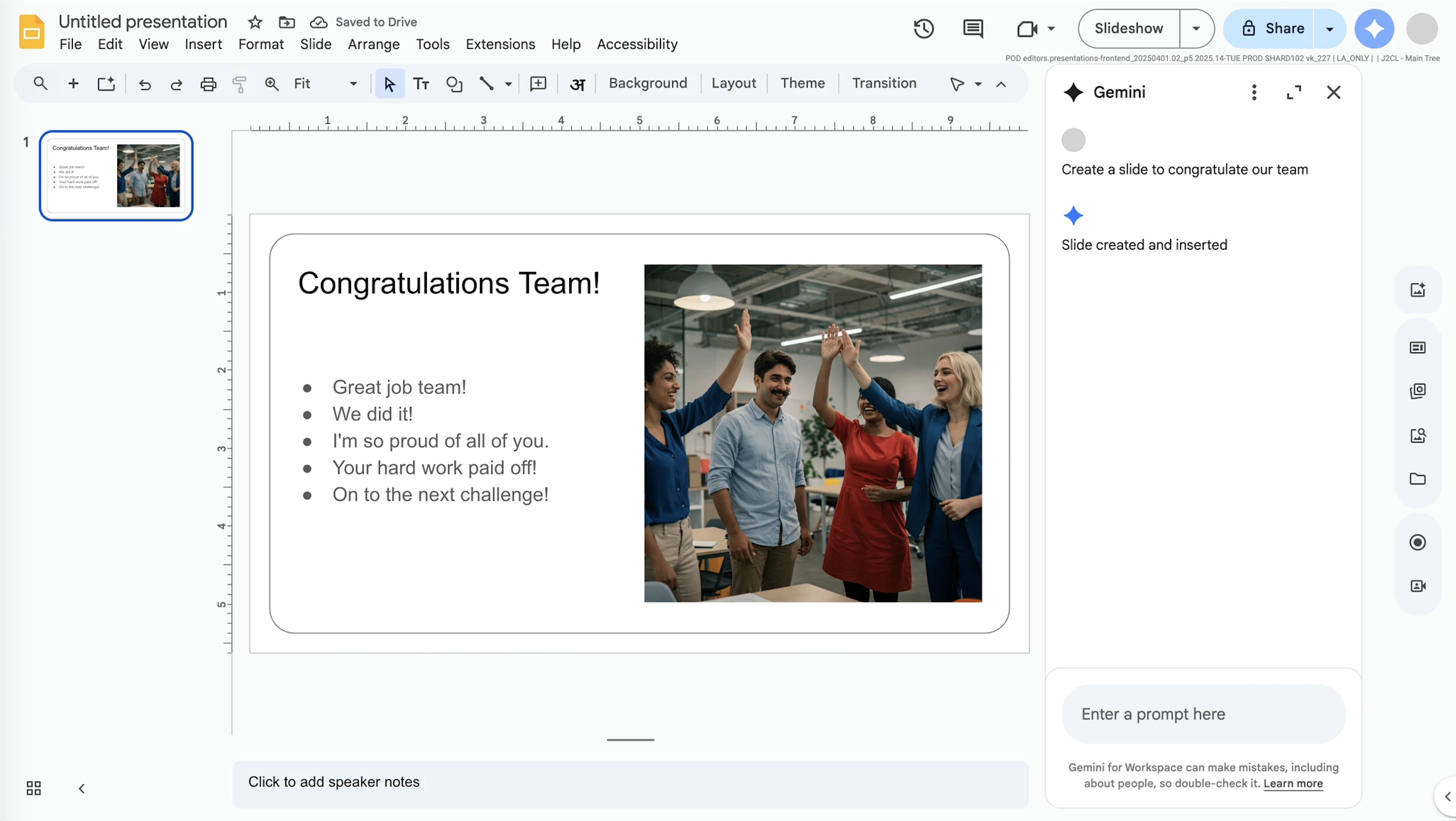
Google has integrated its Gemini AI directly into Google Workspace, providing a seamless alternative for SlidesAI users who do not want to install third party add-ons. Gemini can generate images, write slide content, and even reference files within your Google Drive.
The primary advantage here is cost and convenience. For many Workspace subscribers, Gemini is already included or available for a small uplift. While its design capabilities are currently more basic than specialized tools like NextDocs, its ability to pull content directly from your personal or company data in Drive is a major plus. For a side-by-side look, check out Gemini for Google Slides vs SlidesAI.
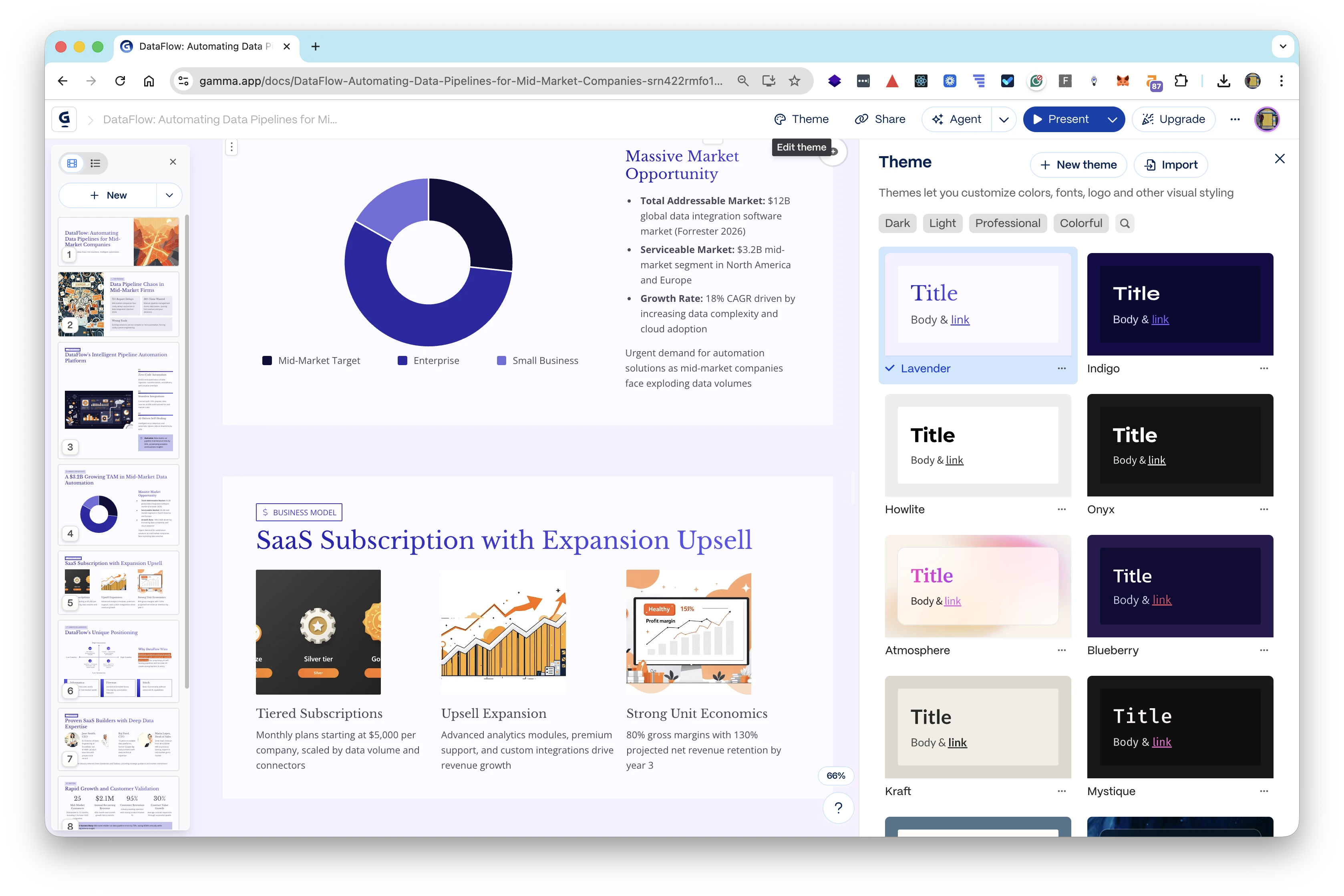
5. Gamma: Best for Web-Native Presentations
Gamma has gained a massive following by moving away from the traditional "slide" format. It creates web-native presentations that look like a cross between a document and a website. This makes it an ideal choice for internal updates, landing pages, or pitch decks that will be shared via a link rather than projected on a screen.
Gamma offers a very generous free tier, making it one of the best free AI presentation tools in 2026. Its AI generation is incredibly fast, and the default themes are modern and aesthetically pleasing. However, the web-native format can be a limitation if you are required to submit a standard PPTX file for a conference or a formal meeting, as the exports sometimes lose the "magic" of the web version.
6. Beautiful.ai: Best for Non-Designers
Beautiful.ai is built on the philosophy that users should not have to worry about alignment, font sizes, or color palettes. It uses "smart templates" that automatically adjust as you add content. If you add a fourth item to a list, the other three items automatically resize to fit the slide perfectly.
While its AI generation features have expanded, its core strength remains its design constraints. It prevents users from making "ugly" slides. This makes it a great alternative to SlidesAI for professionals who need high-quality visuals but lack the time or skill to design them manually. The trade-off is a lack of total creative freedom, as you must work within their predefined smart layouts.
7. Pitch.com: Best for Collaborative Teams
Pitch.com focuses heavily on the collaborative aspect of presentation building. While it includes AI features to help generate content and layouts, its real value lies in its workflow tools. It offers real-time collaboration, version history, and integrated commenting that feels much smoother than traditional office suites.
For teams that need to work together on a single deck, Pitch.com is a superior alternative to SlidesAI. It provides a library of professionally designed templates that are much more modern than the standard options found in Google Slides. It is a favorite among startups and creative agencies that prioritize a sleek, cohesive brand look.
8. Canva Magic Design: Best for Visual Assets
Canva is a design powerhouse, and its Magic Design AI brings that expertise to presentations. The biggest advantage of using Canva as a SlidesAI alternative is the sheer volume of assets available. You get access to millions of stock photos, icons, videos, and illustrations directly within the editor.
Canva's AI can take a simple text prompt and turn it into a multi-page presentation with consistent styling. It is particularly effective for marketing presentations and social media-heavy decks. However, the output can sometimes feel a bit "too designed" for formal corporate environments, and the PowerPoint export can occasionally be tricky to edit once downloaded.
9. MagicSlides: Best for Content Repurposing
MagicSlides is another Google Slides add-on, but it distinguishes itself by its ability to repurpose content. It can take a YouTube video URL or a long PDF and summarize it into a series of slides. This is a specific use case where it often outperforms SlidesAI.
If your goal is to turn a webinar or a research paper into a quick presentation for a team meeting, MagicSlides is a highly efficient tool. However, much like SlidesAI, the design output is relatively basic and usually requires a fair amount of manual polishing to reach professional standards. When comparing MagicSlides vs SlidesAI, the choice often comes down to the specific source material you are using.
Quick Comparison Table
| Tool | Category | Best For | Key Strength |
|---|---|---|---|
| NextDocs | Standalone | Founders & Consultants | Multi-variant generation & deep research |
| Plus AI | Add-in | Google Slides/PPT Users | Preserving existing brand templates |
| Copilot | Add-in | Microsoft 365 Users | Pulling data from the MS ecosystem |
| Gemini | Add-in | Google Workspace Users | Native integration with Google Drive |
| Gamma | Standalone | Fast Web Sharing | Modern, web-native scrolling decks |
| Beautiful.ai | Standalone | Non-Designers | Smart templates that auto-format |
| Pitch.com | Standalone | Team Collaboration | Real-time editing & version control |
| Canva | Standalone | Visual Marketing | Massive library of stock assets |
| MagicSlides | Add-in | Repurposing Content | YouTube-to-Slides conversion |
Choosing the Right Alternative for Your Workflow
Selecting the right tool depends largely on your specific needs and the environment in which you work. If you are a power user who creates high-stakes decks for investors or clients, you likely need a tool that offers more than just a quick text-to-slide conversion.
For those who prioritize accuracy and variety, a platform like NextDocs is the clear winner. The ability to see multiple versions of a presentation allows for a creative process that feels more like a partnership with the AI rather than a simple automated task. The deep research capabilities also solve the biggest problem with AI content: the need for factual reliability.
On the other hand, if you are an enterprise employee who spends eight hours a day in Excel and Word, Microsoft Copilot or Plus AI will provide the least amount of friction. These tools allow you to stay where you are while adding a layer of intelligence to your existing workflow.
If you are just starting out and want to explore the world of AI-assisted design without spending money, Gamma and Canva offer excellent free tiers that provide a glimpse into the future of visual communication. You can find more details on these in our guide to top AI slide makers.
Conclusion: The Evolution of Slide Creation
By 2026, the novelty of AI-generated slides has worn off, and the focus has shifted toward quality, reliability, and integration. SlidesAI served as a great introduction to the technology, but the alternatives now available offer significantly more power. Whether you need the research-backed depth of NextDocs, the design guardrails of Beautiful.ai, or the collaborative environment of Pitch.com, there is a tool designed for your specific challenges.
Moving away from basic add-ins toward more robust, AI-native platforms allows you to focus on what really matters: your message and your audience. Instead of fighting with layouts or worrying about the accuracy of your data, you can let the AI handle the heavy lifting while you provide the strategic direction.
Ready to Create Better Presentations?
Try NextDocs Free and experience multi-variant generation, universal exports, and deep research integration. No credit card required.