
Best Ai Pitch Deck Builders for researchers in 2026
A comprehensive roundup of the best AI pitch deck builders specifically selected for researchers, academics, and technical founders who require data accuracy and LaTeX support.
Researchers and academics face unique challenges when building pitch decks. Unlike a standard marketing presentation, a research-heavy deck requires extreme precision, the ability to display complex mathematical formulas, and rigorous citations for every data point. The rise of artificial intelligence has introduced a new generation of tools designed to automate the slide creation process. However, not every AI tool is equipped to handle the nuances of scientific data or technical specifications.
Finding the right platform means looking beyond simple template generation. For professionals in the sciences, engineering, or deep-tech sectors, the ideal tool must bridge the gap between complex information and visual clarity. In this guide, we evaluate the leading AI presentation platforms based on their ability to support technical content, maintain data integrity, and provide the flexibility required for high-stakes academic and investor presentations.
Best AI Pitch Deck Builders at a Glance
| Rank | Tool | Best For | Starting Price |
|---|---|---|---|
| 1 | NextDocs | Research-heavy decks and technical presentations | Free tier, $15/mo |
| 2 | Plus AI | PowerPoint and Google Slides power users | $10/mo |
| 3 | Copilot for PowerPoint | Microsoft 365 enterprise environments | $30/mo |
| 4 | Beautiful.ai | Non-designers needing polished visuals | $12/mo |
| 5 | Gamma | Quick, web-native interactive decks | Free tier, $8/mo |
| 6 | Gemini for Google Slides | Basic drafts within Google Workspace | Free tier available |
| 7 | Pitch.com | Real-time team collaboration | Free tier, $8/mo |
| 8 | Canva Magic Design | Visual-heavy decks and asset variety | Free tier, $13/mo |
| 9 | MagicSlides | Converting existing text or videos to slides | Free tier, $8/mo |
| 10 | SlidesAI | Simple, fast drafts for internal use | Free tier, $10/mo |
1. NextDocs
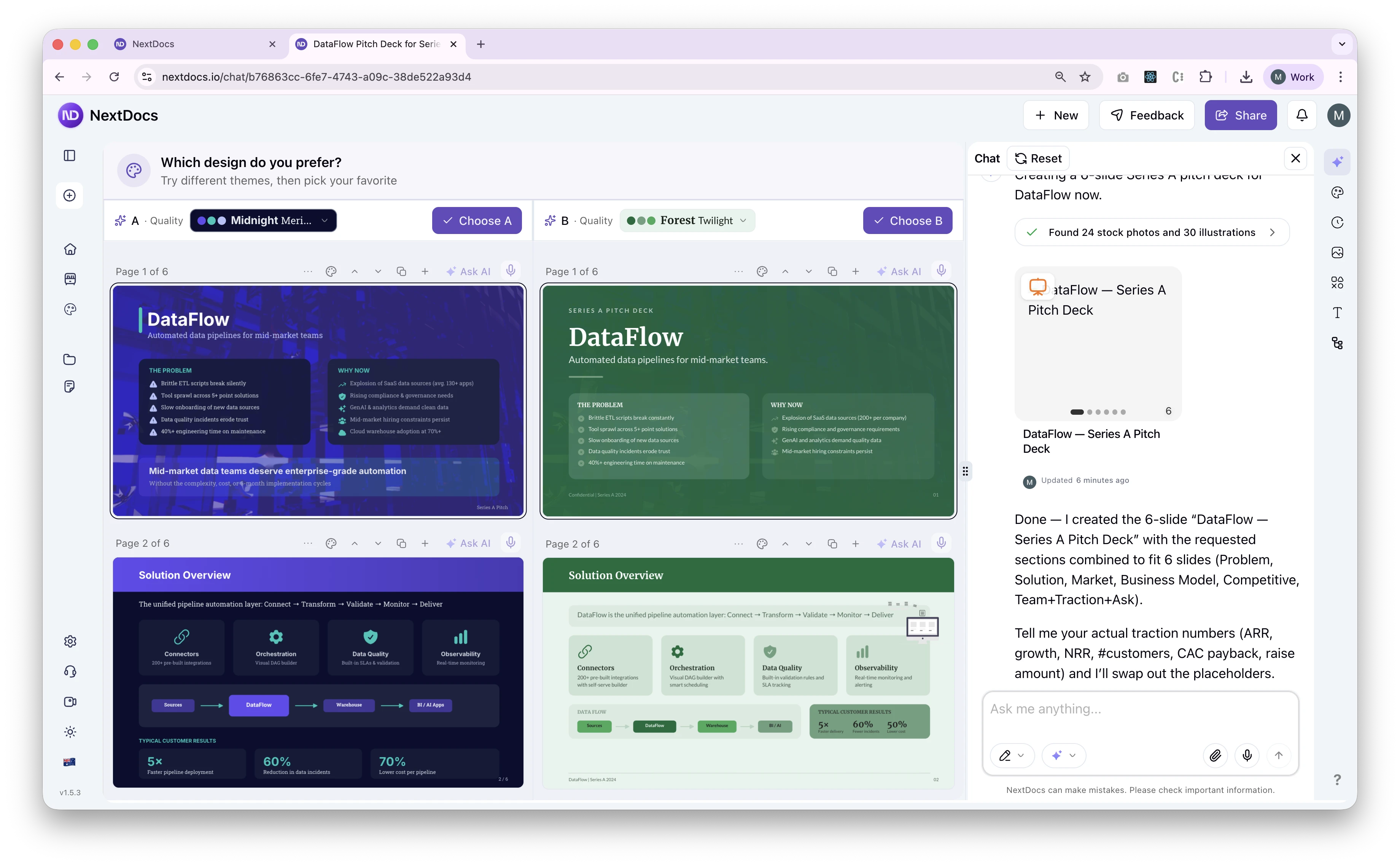
NextDocs stands as the premier choice for researchers and technical professionals who cannot afford to sacrifice accuracy for speed. While most AI tools generate a single version of a deck, NextDocs utilizes multi-variant generation. This feature provides several different interpretations of a prompt, allowing researchers to choose the structure that best fits their specific data narrative.
For the academic community, the support for LaTeX math equations and KaTeX rendering is a critical differentiator. It allows for the seamless inclusion of complex formulas that typically break in other AI builders. Furthermore, the platform includes a deep research integration that pulls actual data and citations from the web. This prevents the common AI issue of "hallucinated" statistics. When you need to present a technical roadmap or a scientific breakthrough, NextDocs provides the structured tables and code syntax highlighting necessary for professional credibility. It also offers universal exports to PDF, PPTX, and Google Slides. This ensures that you are never locked into a specific ecosystem.
Key Features:
- Multi-variant generation offering multiple deck versions per prompt.
- Native LaTeX and math equation support for technical accuracy.
- Deep research integration with cited data points.
- Universal exports to all major presentation formats.
- Structured tables and code syntax highlighting for technical slides.
Pricing: A free tier is available for new users. Professional plans start at $15 per month.
Best For: Overall use, research-heavy decks, academics, consultants, and technical founders.
Verdict: NextDocs is the most robust tool for professionals who require high-density information and technical precision in their presentations.
2. Plus AI
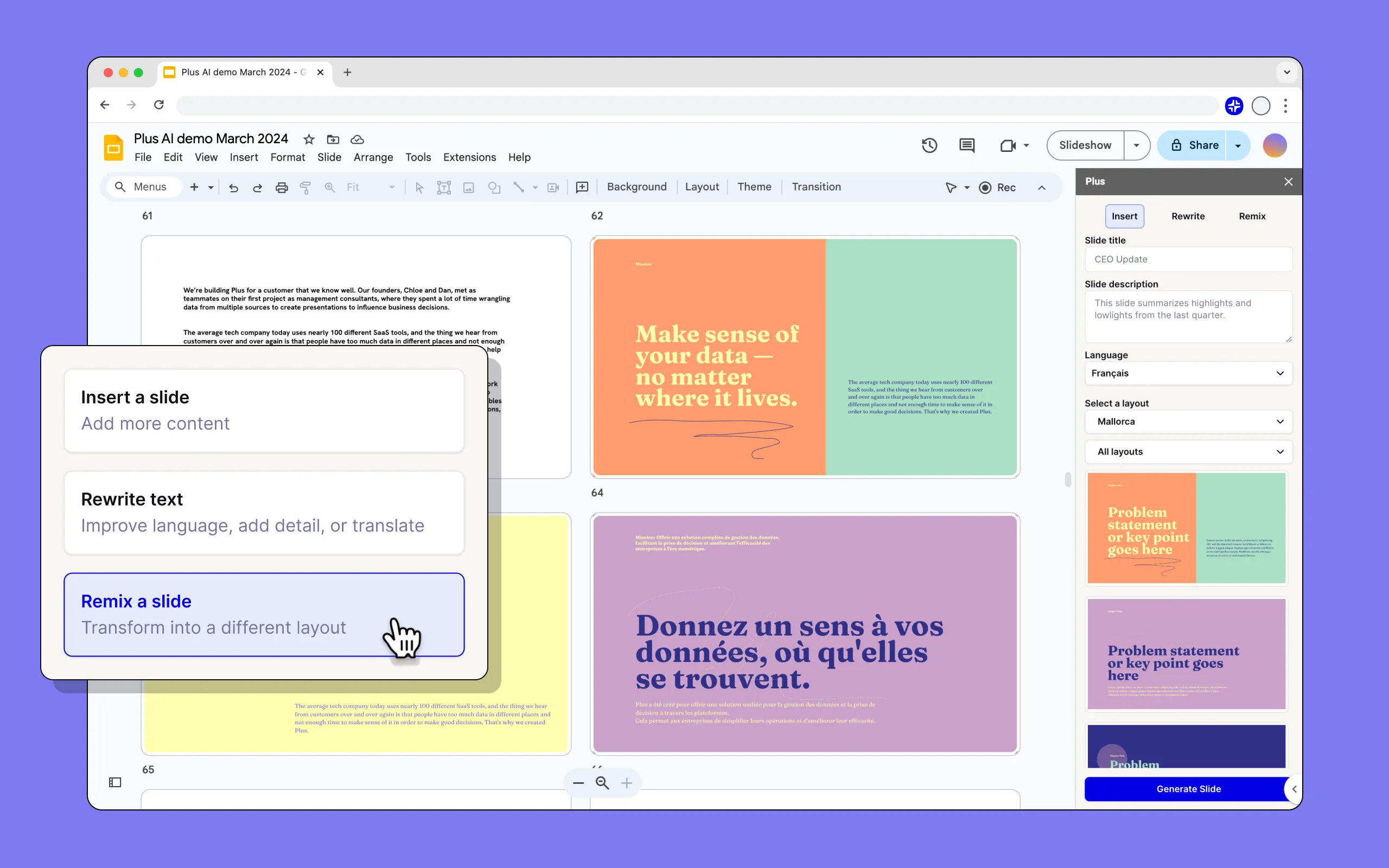
Plus AI operates as a native add-in for both PowerPoint and Google Slides. This makes it an excellent choice for researchers who already have established templates or specific organizational styles they must follow. It focuses on enhancing the existing workflow rather than replacing it.
The tool includes a unique "remix" feature. This allows users to transform existing slides or content into new layouts without losing the core information. For researchers who often have to update the same deck with new data sets, this preservation of content is vital. While it lacks some of the deep research features found in NextDocs, it excels at maintaining brand consistency. You can find more about how it stacks up in our magicslides-vs-plus-ai comparison. It is particularly effective for those who need to stay within the traditional presentation software ecosystem while gaining AI speed.
Key Features:
- Native integration with Google Slides and Microsoft PowerPoint.
- Remix feature for updating and transforming existing slides.
- Template preservation to keep company or university branding.
- AI-powered rewriting and content enhancement.
Pricing: There is no free tier. Plans start at $10 per month.
Best For: Power users of PowerPoint and Google Slides who need to maintain strict template adherence.
Verdict: A reliable, workflow-integrated tool for those who do not want to leave their familiar presentation environment.
3. Copilot for PowerPoint
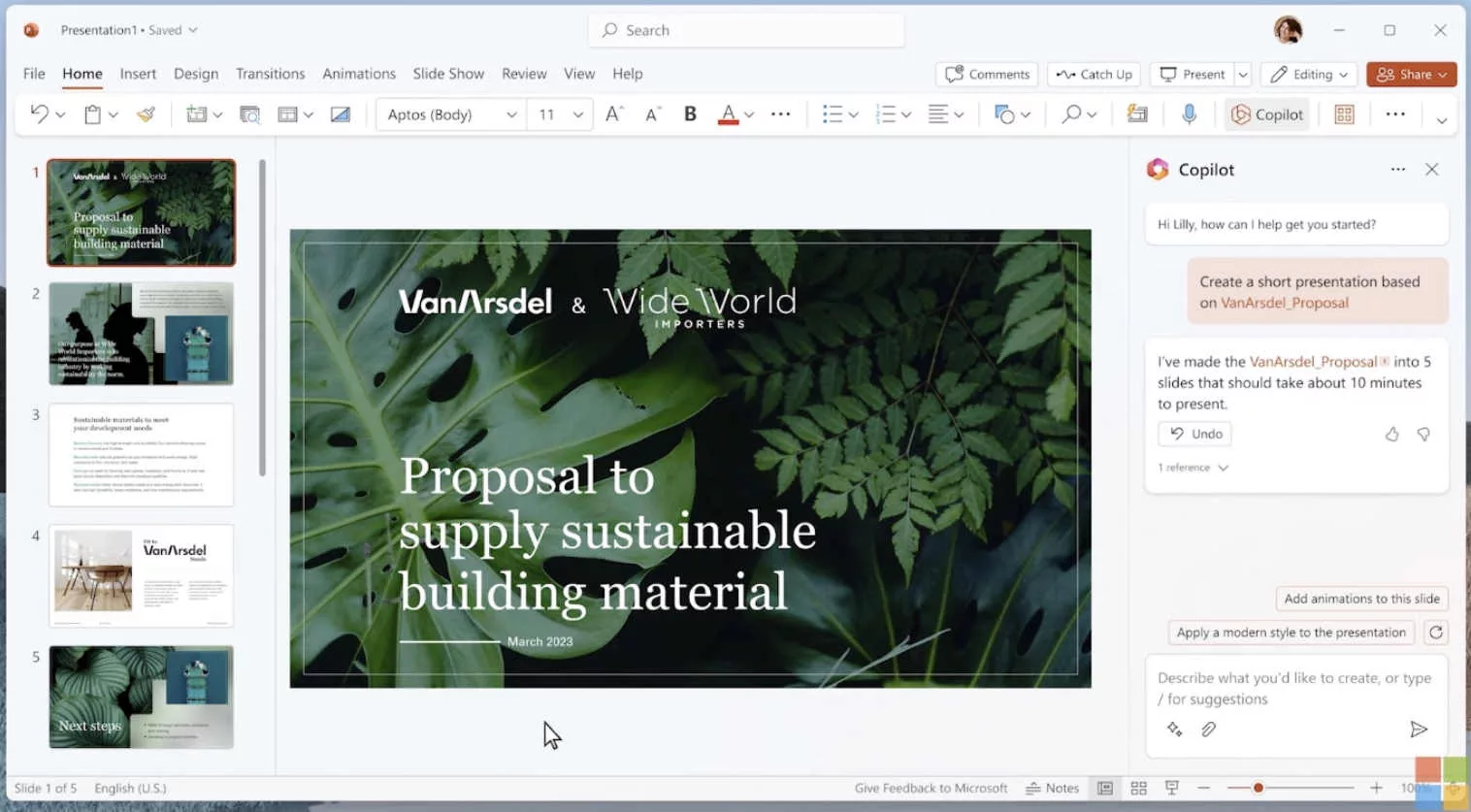
Microsoft Copilot for PowerPoint is designed for the enterprise researcher working within the Microsoft 365 ecosystem. Its primary strength lies in its organizational context awareness. It can pull data from Word documents, Excel spreadsheets, and previous Teams chats to build a presentation that is grounded in your actual work.
For researchers at large institutions, the enterprise-level security is a major selling point. However, the tool can be quite conservative in its design choices. It often produces slides that look functional but lack the visual flair of standalone AI tools. If you are debating between different add-ins, you might want to read our analysis of copilot-powerpoint-vs-magicslides. It remains a top choice for those who need to synthesize long internal reports into concise slide decks for board reviews or internal funding requests.
Key Features:
- Deep integration with the Microsoft 365 suite.
- Ability to generate slides directly from Word documents.
- Automatic generation of speaker notes based on slide content.
- High-level enterprise security and data privacy.
Pricing: Requires a Microsoft 365 subscription plus a Copilot license starting at $30 per user per month.
Best For: Enterprise researchers and teams heavily invested in the Microsoft ecosystem.
Verdict: The best choice for internal corporate or institutional presentations where data is already stored in Microsoft formats.
4. Beautiful.ai
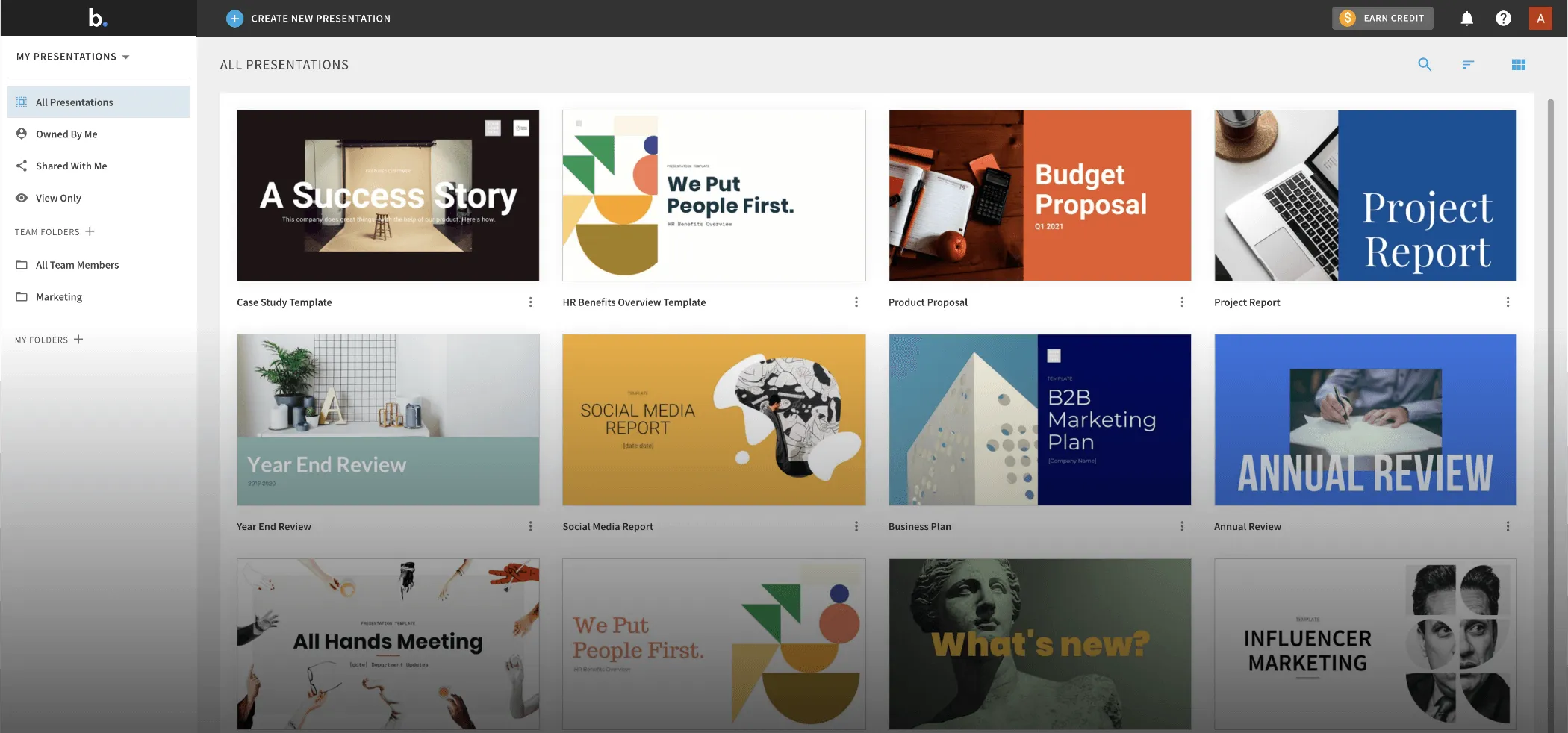
Beautiful.ai focuses on the visual side of the presentation. It uses smart templates that automatically adjust as you add content. For a researcher who might not have a background in graphic design, this tool ensures that the slides remain professional and visually balanced regardless of how much text or data is added.
While it is excellent for creating polished investor decks, it offers less flexibility for extremely custom technical layouts. The AI generation is more focused on the layout than the deep content research. Researchers should consider this tool if their primary goal is to make a visually stunning impression on non-technical stakeholders. It handles animations and transitions with a level of polish that is difficult to achieve manually. For those seeking alternatives, exploring plus-ai-alternatives-2026 can provide additional context on how design-focused tools compare to workflow-focused ones.
Key Features:
- Smart templates that automatically resize and realign content.
- Polished, professional design aesthetics out of the box.
- Brand kit integration for consistent colors and fonts.
- Advanced animation and transition library.
Pricing: No free tier is available. Individual plans start at $12 per month.
Best For: Non-designers who need to create high-quality, client-facing or investor-facing presentations.
Verdict: An excellent choice for high-stakes visual storytelling, though it lacks deep technical features like LaTeX.
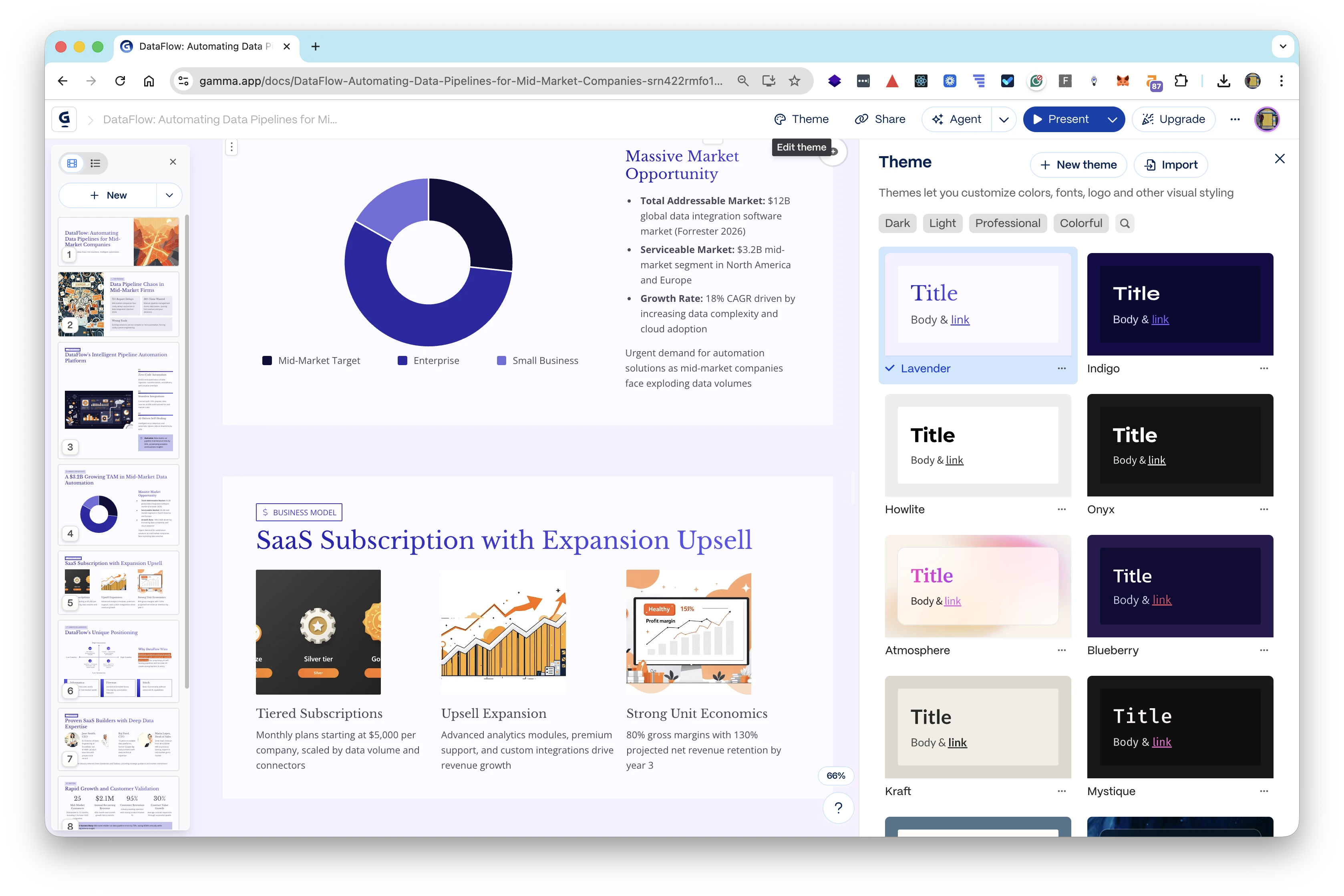
5. Gamma
Gamma takes a modern approach by creating web-native presentations. Instead of traditional slides, Gamma uses "cards" that can expand and accommodate different types of media. This is highly effective for researchers who want to share their findings via a link rather than a static file.
The tool offers a generous free tier and generates content very quickly. The designs are modern and clean. However, the web-native format can be a limitation if you are required to present offline or via a standard PPTX file at a conference. While it does support exports, the best experience remains within its own web player. You can see how this modern approach compares to more traditional technical tools in our gamma-vs-nextdocs-2026 review. It is a favorite for startups and individual researchers looking for a quick, stylish way to share a project overview.
Key Features:
- Web-native, interactive presentation format.
- Modern, aesthetic themes that require no manual styling.
- Fast AI generation from simple text prompts.
- Ability to embed live websites and interactive media.
Pricing: Free tier available. Paid plans for advanced features start at $8 per month.
Best For: Budget-conscious researchers and those who prefer sharing presentations via web links.
Verdict: A great tool for modern, fast-paced environments, though less ideal for traditional academic conferences.
6. Gemini for Google Slides
Gemini is Google's answer to Copilot. It integrates directly into Google Workspace and allows users to generate slides based on information found in their Google Drive. For researchers who store all their papers and data in Google Docs and Sheets, this native access is a significant advantage.
The output quality can be somewhat inconsistent compared to dedicated platforms. It often creates generic layouts that require manual adjustment. However, for a quick internal draft or a simple progress update, it is incredibly convenient. It is often included at no extra cost for many Workspace users. If you find Gemini too basic, you might look into magicslides-alternatives to find a tool that offers more design control while staying in the Google ecosystem.
Key Features:
- Built-in access to Google Drive and Workspace content.
- Native image generation within the Slides interface.
- Real-time collaboration features synonymous with Google.
- No separate software or extensions required for Workspace users.
Pricing: Included with specific Google Workspace tiers. Basic access is often free for personal accounts.
Best For: Google Workspace users who need quick drafts without leaving their browser.
Verdict: A convenient, low-friction tool for basic presentations, but it lacks the depth required for complex research decks.
7. Pitch.com
Pitch.com is built for teams. While its AI capabilities are slightly less advanced than some of the newer AI-first tools, its collaboration features are second to none. It offers version history, real-time commenting, and a very structured workflow for groups building a deck together.
For research labs or collaborative projects, Pitch.com provides a professional environment where everyone can contribute to the same file without versioning issues. The templates are sophisticated and cater well to the startup and tech sectors. It is a solid middle ground between a traditional slide builder and a modern AI tool. If you are moving away from Microsoft, check copilot-powerpoint-alternatives to see how Pitch compares in a team setting.
Key Features:
- Excellent real-time collaboration and project management.
- Robust version history and commenting system.
- Professional template library curated for tech and business.
- Clean, intuitive editor that balances AI and manual control.
Pricing: Free tier available. Pro plans start at $8 per month per user.
Best For: Research teams and collaborative groups who need to work on a single deck simultaneously.
Verdict: The best choice for collaborative environments, though the AI generation is more of a starting point than a final solution.
8. Canva Magic Design
Canva has expanded its popular design platform with Magic Design, an AI tool that generates full presentations from a prompt. The primary strength of Canva is its massive library of assets. Researchers can access millions of icons, stock photos, and data visualization elements to enhance their slides.
Canva is excellent for multi-format content. If you need to turn your research pitch into a social media post or a video, Canva makes that transition easy. However, the AI-generated content can sometimes feel too "designed" for a serious academic or technical audience. It also lacks advanced technical features like LaTeX. It remains a powerful choice for researchers who need to communicate their work to a broader, more general audience.
Key Features:
- Access to an enormous library of design assets and templates.
- Multi-format export for social media, video, and print.
- Simple drag-and-drop interface for manual adjustments.
- Strong free tier with many usable features.
Pricing: Free tier available. Canva Pro starts at approximately $13 per month.
Best For: Researchers who need highly visual, multi-purpose presentations for general audiences.
Verdict: A powerhouse for visual variety and asset access, but potentially too casual for high-level technical pitches.
9. MagicSlides
MagicSlides is a specialized add-in for Google Slides that excels at content repurposing. One of its standout features is the ability to take a YouTube video link or a long PDF document and summarize it directly into a slide deck.
For researchers who need to present a summary of a lecture or a long research paper quickly, MagicSlides provides a significant head start. The design output is quite basic and will almost always require manual polish. However, as a tool for rapid content extraction, it is very effective. You can see how it compares to more robust systems in our magicslides-vs-nextdocs-2026 analysis. It is best used as a drafting tool rather than a final design platform.
Key Features:
- Summarization of YouTube videos and long documents into slides.
- Direct integration as a Google Slides add-on.
- Fast, simple interface for quick content conversion.
- Support for multiple languages.
Pricing: Free tier available. Paid plans start at $8 per month.
Best For: Quickly converting existing research papers or videos into a slide format.
Verdict: A niche but useful tool for researchers who need to summarize large amounts of existing content into a draft.
10. SlidesAI
SlidesAI is another Google Slides add-on that focuses on simplicity. It is designed for the user who has a block of text and wants to turn it into a presentation with one click. It is very affordable and easy to use, making it popular with students and early-career researchers.
The customization options are limited, and the design output can be generic. It does not offer the deep research or technical formula support found in higher-ranked tools. However, for internal presentations or quick academic updates where the visual design is secondary to the speed of creation, it is a viable option. For a broader look at the market, our blogs/best-ai-presentation-builders-2026 guide provides more context on where SlidesAI fits in.
Key Features:
- One-click generation from text blocks.
- Simple, no-frills interface.
- Affordable pricing for individuals.
- Works natively within the Google Slides environment.
Pricing: Free tier available. Pro plans start at $10 per month.
Best For: Students and researchers who need a very quick, simple draft for internal use.
Verdict: A basic, efficient tool for simple text-to-slide conversion without advanced design or technical needs.
Decision Guide: Selecting Your Research Pitch Tool
When choosing an AI pitch deck builder, researchers must prioritize different features than a standard business user. The complexity of your data and the technical nature of your audience should dictate your choice.
When to Prioritize Technical Features
If your research involves mathematics, physics, or engineering, you should prioritize tools that offer native LaTeX support. Without this, your formulas will often appear as low-resolution images or broken text. NextDocs is the clear leader in this category. It also provides structured tables that are essential for presenting experimental results or technical specifications.
When to Prioritize Workflow Integration
If you are part of a large institution that mandates the use of Microsoft PowerPoint or Google Slides, an add-in like Plus AI or Copilot is often the most practical choice. These tools allow you to use AI to speed up your work while still producing a file format that your colleagues can open and edit. This prevents compatibility issues when sharing files for review.
When to Prioritize Design and Impact
For researchers pitching to venture capitalists or non-technical donors, the visual impact of the deck is crucial. Tools like Beautiful.ai or Canva can help translate complex ideas into a visual language that is easier for generalists to understand. These platforms ensure that your slides look professional and modern, which can build credibility with investors who may not fully grasp the technical details of your research.
Conclusion: The Future of Research Presentations
The landscape of AI presentation building has moved past simple text-to-slide conversion. For researchers, the most valuable tools are those that respect the integrity of their data while providing the speed of automation. While many platforms offer basic slide generation, very few provide the specific technical requirements like math equation support and deep research citations that academics and technical founders need.
NextDocs earns the top spot because it addresses these technical pain points directly. By offering multi-variant generation and universal exports, it provides the flexibility required for the diverse needs of the research community. Whether you are presenting at a global conference, pitching for a Series A round, or giving a departmental update, the right AI tool acts as a force multiplier for your expertise.
The tools reviewed here offer a range of solutions for every budget and technical requirement. By choosing a platform that aligns with your specific workflow and audience, you can spend less time on slide design and more time on the research that matters.
Ready to Create Better Presentations?
Try NextDocs Free and experience multi-variant generation, universal exports, and deep research integration. No credit card required.