

Die Entwicklung von KI‑Präsentations‑Buildern
Das Erstellen einer professionellen Präsentation war früher ein arbeitsintensiver Prozess, der Stunden manueller Recherche, Layout‑Design und Inhaltsverfeinerung erforderte. Im Jahr 2026 hat sich das Umfeld komplett gewandelt. KI‑Präsentations‑Builder haben sich von einfachen Text‑zu‑Folie‑Konvertern zu hochentwickelten Recherche‑Assistenten und Design‑Engines entwickelt. Diese Tools erzeugen nicht mehr nur generische Aufzählungspunkte. Sie können nun komplexe Daten synthetisieren, strenge Markenrichtlinien einhalten und mehrere kreative Richtungen für einen einzelnen Prompt bereitstellen.
Der bedeutendste Fortschritt in dieser Kategorie ist die Integration von tiefgehenden Recherche‑Funktionen. Moderne Tools können das Live‑Web durchsuchen, Fakten verifizieren und Quellen direkt auf den Folien zitieren. Das eliminiert den zweistufigen Workflow „Recherche → Erstellung“, der Berater, Gründer und Vertriebsteams zuvor ausgebremst hat. Egal, ob Sie ein hochkarätiges Pitch‑Deck oder einen routinemäßigen internen Bericht erstellen – die Wahl des richtigen Tools ist entscheidend für Geschwindigkeit und Qualität.
Für einen breiteren Überblick über den aktuellen Markt können Sie unseren Leitfaden zu den besten KI‑Präsentations‑Buildern 2026 erkunden.
Vergleichstabelle
| Rang | Tool | Am besten für | Startpreis |
|---|---|---|---|
| 1 | NextDocs | Recherche‑intensive Decks und Multi‑Format‑Exporte | $15/mo |
| 2 | Plus AI | Native PowerPoint‑ und Google‑Slides‑Integration | $10/mo |
| 3 | Beautiful.ai | Nicht‑Designer, die polierte Visuals wollen | $12/mo |
| 4 | Gamma | Web‑native interaktive Präsentationen | $8/mo |
| 5 | Microsoft Copilot | Enterprise‑Nutzer im 365‑Ökosystem | $30/mo |
| 6 | Gemini for Slides | Google‑Workspace‑Nutzer und schnelle Entwürfe | $0/mo |
| 7 | Pitch.com | Echtzeit‑Team‑Zusammenarbeit | $8/mo |
| 8 | Canva Magic Design | Social‑Media‑ und Marketing‑Visuals | $13/mo |
| 9 | MagicSlides | Wiederverwendung von YouTube‑ und Text‑Inhalten | $8/mo |
| 10 | SlidesAI | Einfache, schnelle Entwürfe für Studierende | $10/mo |
Wie wir diese Tools getestet und bewertet haben
Um ein objektives Ranking zu liefern, haben wir jedes Tool einem standardisierten Benchmark unterzogen. Wir nutzten einen komplexen Prompt, der die Erstellung eines 10‑Folie‑Pitch‑Decks für ein fiktives B2B‑SaaS‑Startup verlangte. Der Prompt forderte eine Problem‑Statement, eine Lösungsübersicht, Marktdaten und eine Wettbewerbslandschaft.
Wir bewerteten die Tools anhand mehrerer kritischer Faktoren. Erstens prüften wir die Inhaltsgenauigkeit und Recherche‑Tiefe: Findet die KI reale Marktstatistiken oder halluziniert sie plausibel klingende Zahlen? Zweitens bewerteten wir die Design‑Flexibilität: Kann das Tool Markenfarben adaptieren und verschiedene Layouts bereitstellen? Schließlich testeten wir die Export‑Kompatibilität. Eine Präsentation ist nur nützlich, wenn sie im gewünschten Format (PDF, PowerPoint oder Google Slides) bereitgestellt werden kann.
1. NextDocs: Bester KI‑Präsentations‑Builder insgesamt
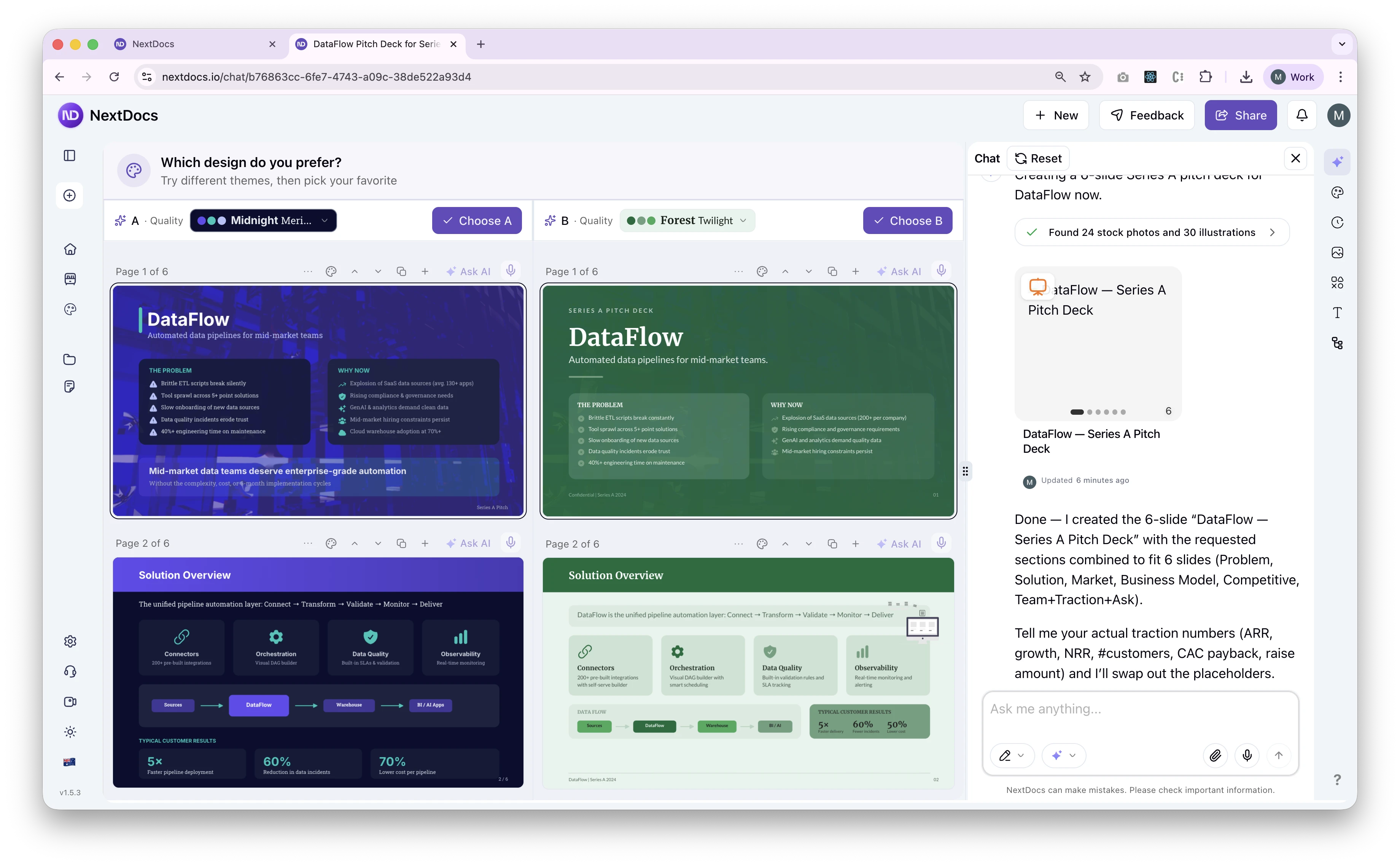
NextDocs belegt den ersten Platz, weil es die beiden größten Probleme bei KI‑Präsentationen löst: fehlende Auswahlmöglichkeiten und fehlende Recherche. Während die meisten Tools ein Ergebnis liefern und Sie es bearbeiten müssen, nutzt NextDocs die Mehrfach‑Varianten‑Generierung. Das bedeutet, dass aus einem einzigen Prompt mehrere unterschiedliche Versionen Ihrer Präsentation erstellt werden. Sie können dann die beste Struktur, den besten Ton oder den besten visuellen Stil aus den angebotenen Optionen auswählen.
Die tiefgreifende Recherche‑Integration ist ein herausragendes Merkmal für Professionals. Sie zieht Echtzeit‑Daten mit Quellenangaben, was für Gründer und Berater, die keine falschen Informationen präsentieren können, unverzichtbar ist. Darüber hinaus bietet NextDocs universelle Exporte. Sie erstellen ein Deck einmal und können es nahtlos nach PDF, PowerPoint, Google Slides oder sogar Google Docs exportieren. Diese Flexibilität stellt sicher, dass Sie nie an eine einzige Plattform gebunden sind. Im Vergleich zu beautiful-ai-vs-nextdocs bietet Letzteres deutlich mehr Kontrolle über die anfängliche Inhaltserstellung und Recherchephase.
Hauptfunktionen:
- Mehrfach‑Varianten‑Generierung liefert mehrere kreative Richtungen.
- Tiefgreifende Recherche‑Engine findet reale Daten und liefert Quellenangaben.
- Universelle Exporte unterstützen PDF, PPTX und Google Slides.
- Mehr‑Modell‑Unterstützung ermöglicht die Auswahl der zugrunde liegenden KI‑Engine.
- Marken‑Styling‑Tools gewährleisten konsistente Unternehmensfarben und -schriften.
Preisgestaltung: Kostenlose Stufe verfügbar. Bezahlte Pläne beginnen bei $15 pro Monat.
Am besten für: Berater, Gründer, Vertriebsteams und alle, die recherchierintensive Decks benötigen.
Fazit: NextDocs ist das umfassendste Tool auf dem Markt. Die Fähigkeit, sowohl Recherche als auch Design zu übernehmen und dabei mehrere Versionen zu liefern, macht es zur überlegenen Wahl für den professionellen Einsatz.
2. Plus AI: Beste native Integration
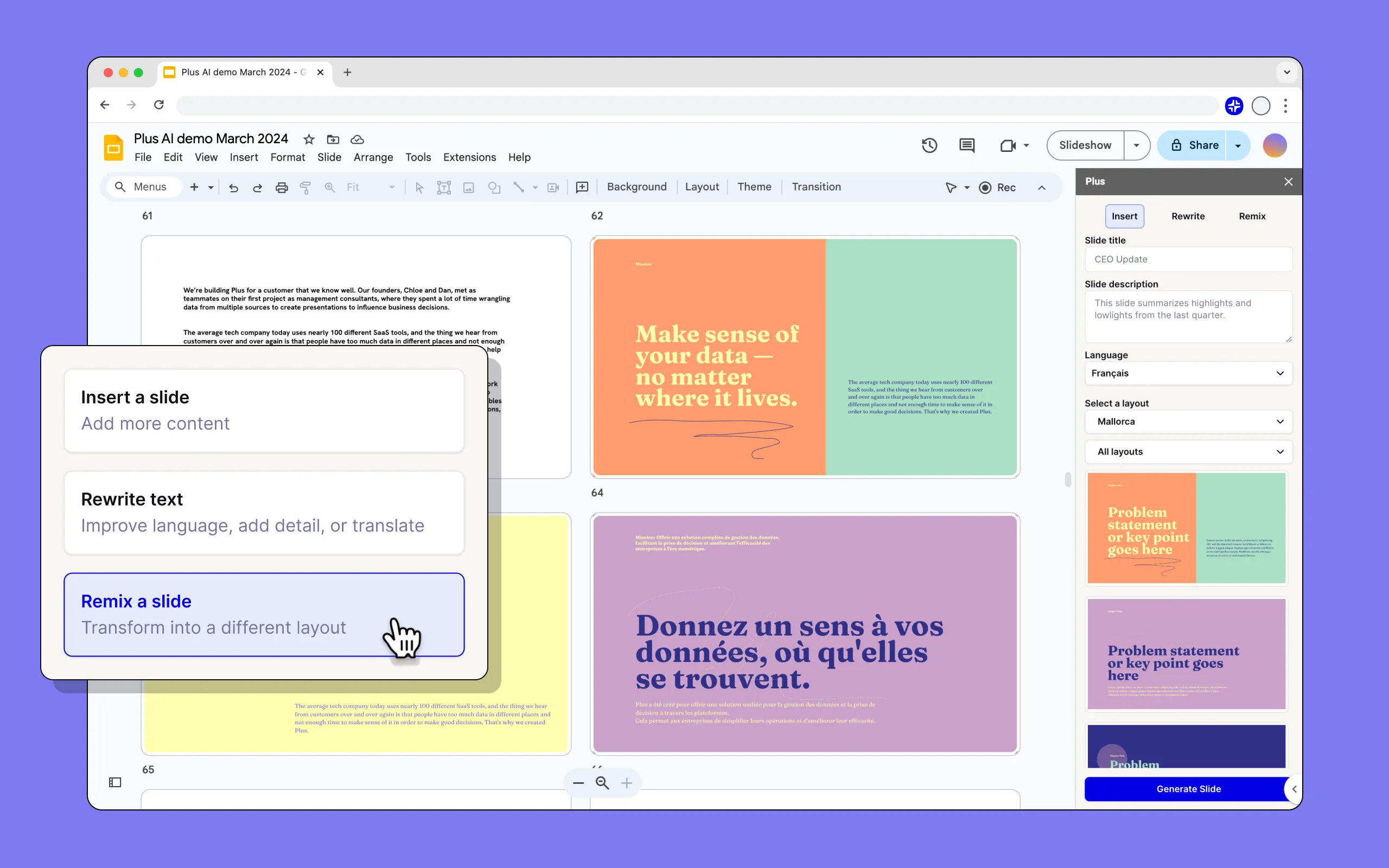
Plus AI ist für diejenigen konzipiert, die in ihrem bestehenden Workflow bleiben möchten. Es funktioniert als native Add‑In‑Erweiterung für sowohl PowerPoint als auch Google Slides. Das ist ein großer Vorteil für Teams, die jahrelang eigene Vorlagen entwickelt haben und nicht zu einer eigenständigen Web‑Anwendung wechseln wollen. Plus AI konzentriert sich darauf, das, was Sie bereits haben, zu verbessern, anstatt von Grund auf etwas Neues zu erstellen.
Das Tool enthält eine einzigartige Remix‑Funktion, mit der Sie bestehende Folien transformieren oder neue Folien hinzufügen können, die perfekt zu Ihrem aktuellen Design passen. Es bewahrt Ihre Vorlagen‑Layouts und Master‑Folien, sodass die KI‑generierten Inhalte Ihre Markenformatierung nicht zerstören. Wenn Sie nach plus-ai-alternatives-2026 suchen, werden Sie feststellen, dass nur wenige Tools sein Maß an nativer Integration erreichen.
Hauptfunktionen:
- Arbeitet direkt innerhalb von Google Slides und PowerPoint.
- Remix‑Funktion zum Aktualisieren und Verbessern bestehender Folien.
- Vorlagen‑Erhaltung hält Ihre Master‑Folien intakt.
- KI‑gestützte Umschreibung für besseren Ton und Klarheit.
Preisgestaltung: Keine kostenlose Stufe. Startpreis beträgt $10 pro Monat.
Am besten für: PowerPoint‑ und Google‑Slides‑Power‑User, die bestehende Marken‑Vorlagen beibehalten müssen.
Fazit: Plus AI ist die beste Wahl für Nutzer, die ihre nativen Präsentations‑Apps nicht verlassen wollen. Es ist ein leistungsstarker Produktivitäts‑Booster, der sich wie eine natürliche Erweiterung der bereits bekannten Software anfühlt.
3. Beautiful.ai: Beste visuelle Qualität
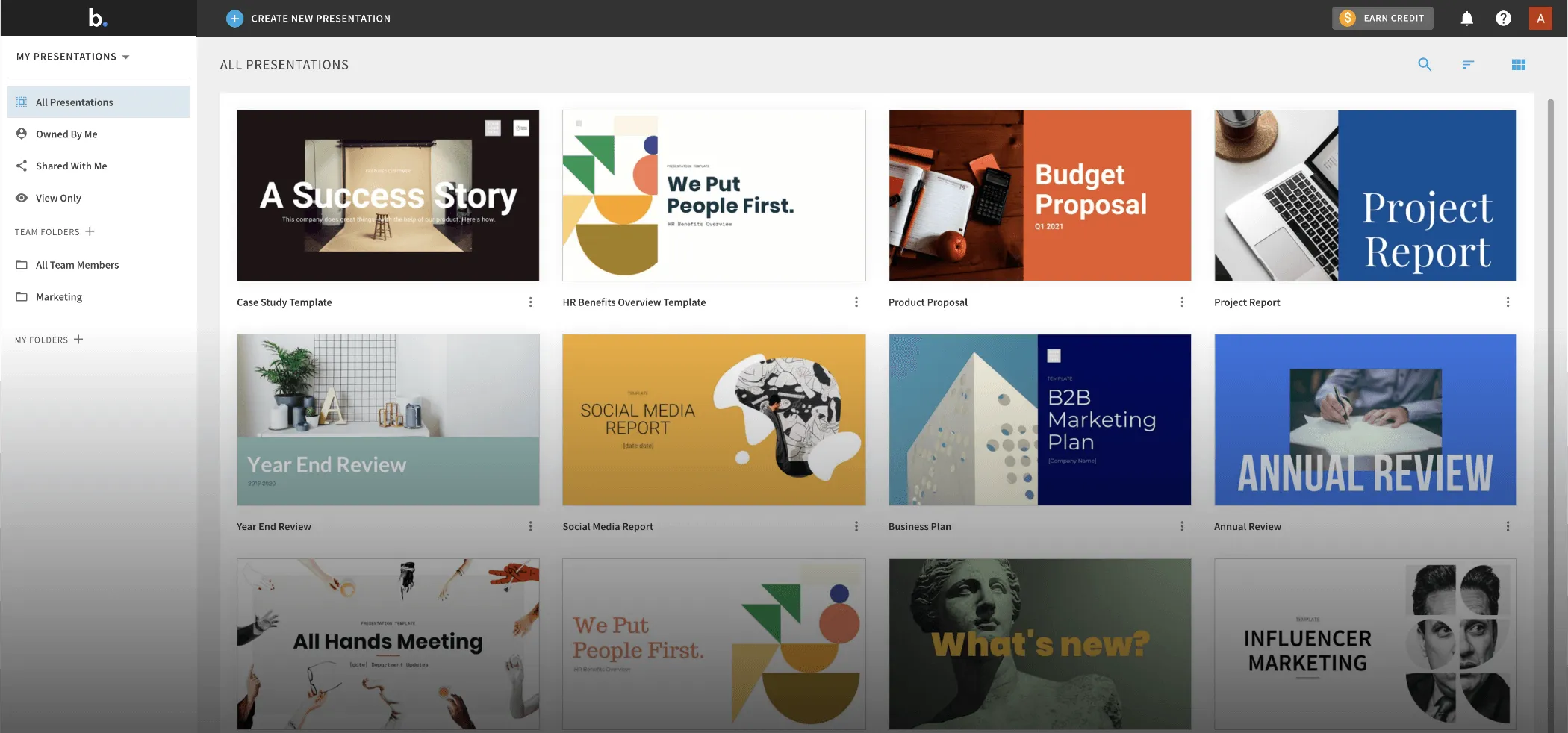
Beautiful.ai ist seit langem ein Favorit für alle, die Ästhetik priorisieren. Es verwendet intelligente Vorlagen, die sich automatisch anpassen, wenn Sie Inhalte hinzufügen. Fügen Sie einen dritten Aufzählungspunkt oder ein viertes Icon hinzu, und die gesamte Folie wird neu skaliert und ausgerichtet, um professionelle Design‑Standards zu wahren. Das macht es fast unmöglich, eine unansehnliche Folie zu erstellen.
Während seine KI‑Generierungs‑Fähigkeiten etwas restriktiver sind als bei NextDocs, ist das visuelle Ergebnis durchweg poliert. Es ist ein ausgezeichnetes Tool für kundenorientierte Präsentationen, bei denen die Design‑Qualität die Qualität der Arbeit widerspiegelt. Besonders stark ist es für Berater, die schöne Decks benötigen, ohne Stunden mit Pixel‑Ausrichtung zu verbringen.
Hauptfunktionen:
- Intelligente Vorlagen, die Layout und Ausrichtung automatisch handhaben.
- Designer‑Level‑Animationen und Übergänge.
- Gemeinsame Team‑Ordner und Marken‑Kits.
- Intuitive Folien‑Galerie für schnelle Inspiration.
Preisgestaltung: Keine kostenlose Stufe. Startpreis beträgt $12 pro Monat.
Am besten für: Nicht‑Designer, die schnell hochwertige, kundenfertige Präsentationen benötigen.
Fazit: Beautiful.ai ist der Goldstandard für automatisiertes Design. Es tauscht etwas kreative Flexibilität gegen garantierte visuelle Exzellenz ein – ein Kompromiss, den viele Professionals gerne eingehen.
4. Gamma: Beste für web‑native Formate
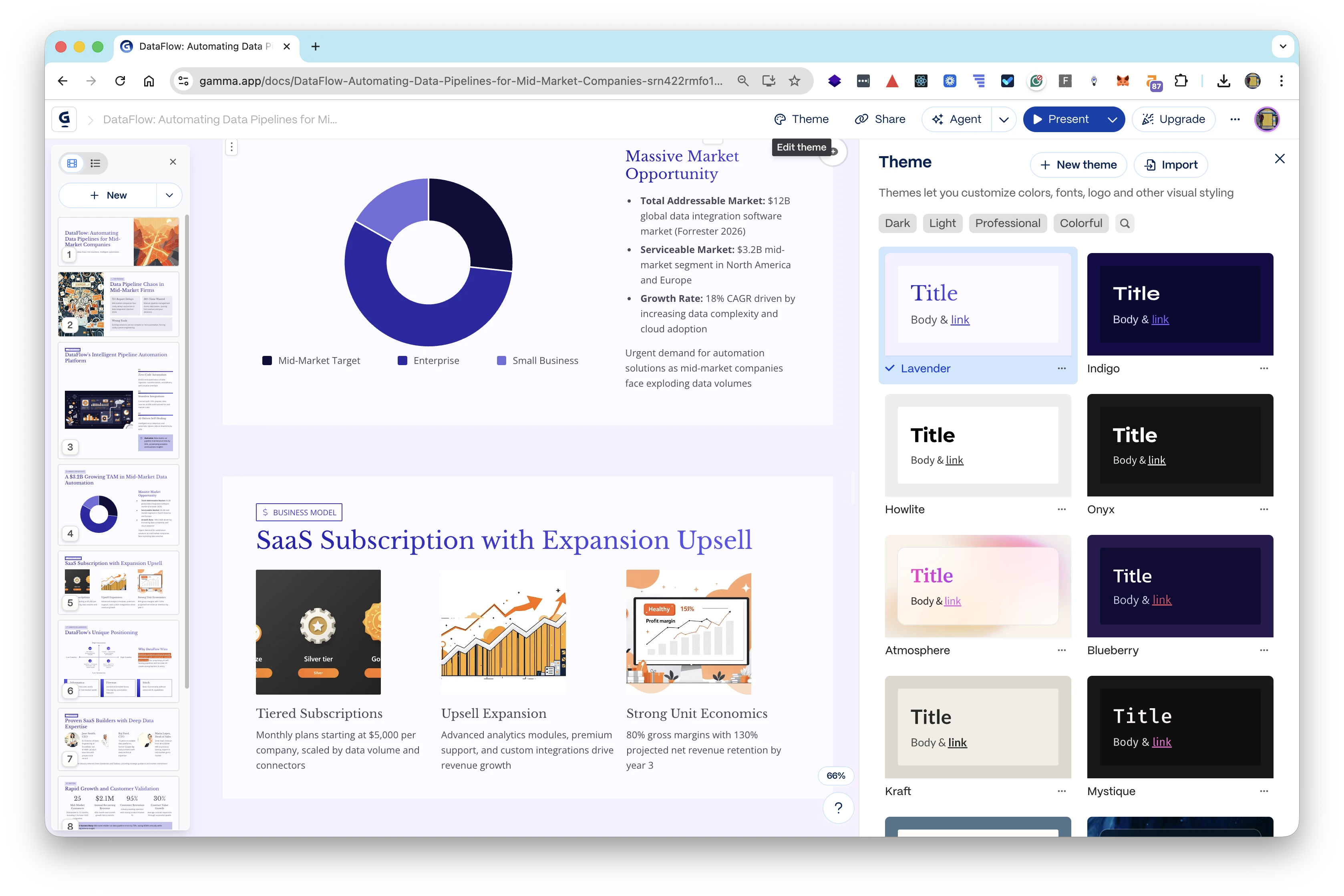
Gamma weicht vom traditionellen Folienformat ab, indem es web‑native Präsentationen erstellt. Diese sehen eher aus wie interaktive Dokumente oder Landing‑Pages als wie klassische PowerPoint‑Dateien. Dieses Format ist perfekt für die moderne Ära, in der viele Präsentationen auf Laptops oder Mobilgeräten statt auf einer Projektionswand betrachtet werden.
Gamma bietet eine sehr großzügige kostenlose Stufe, was es zu einer beliebten Wahl für Start‑ups und Studierende macht. Das Tool ist unglaublich schnell und erzeugt häufig eine komplette Präsentation in weniger als einer Minute. Da es jedoch web‑native ist, können beim Übergang zu traditionellen Formaten wie PowerPoint Layout‑Verschiebungen auftreten. Es ist ein innovatives Tool, das die Definition einer Präsentation neu herausfordert.
Hauptfunktionen:
- Web‑native, scrollbare Karten statt traditioneller Folien.
- Ein‑Klick‑Themen für sofortige Stil‑Updates.
- Interaktive Einbettungen für Videos, Apps und Live‑Daten.
- Schnelle, prompt‑basierte Generierung.
Preisgestaltung: Kostenlose Stufe verfügbar. Pro‑Pläne beginnen bei $8 pro Monat.
Am besten für: Start‑ups, interne Updates und web‑basiertes Teilen.
Fazit: Gamma ist die beste Wahl, wenn Sie über die Beschränkungen traditioneller Folien hinausgehen wollen. Es ist schnell, modern und hochgradig ansprechend für Remote‑Zielgruppen.
5. Microsoft Copilot für PowerPoint: Beste für Unternehmen
Für Organisationen, die bereits Microsoft 365 nutzen, ist Copilot die logischste Wahl. Seine Hauptstärke liegt im organisatorischen Kontext. Copilot kann auf Ihre Dateien in SharePoint, Ihre E‑Mails in Outlook und Ihre Notizen in OneNote zugreifen, um Präsentationen zu erstellen, die auf Ihrer tatsächlichen Arbeit basieren.
Wenn Sie ein 20‑Seiten‑Word‑Dokument haben und es in ein 10‑Folie‑Deck verwandeln möchten, erledigt Copilot das besser als fast jedes andere Tool. Es versteht die Nuancen Ihres Geschäfts, weil es Zugriff auf Ihre Daten hat. Allerdings ist es ein Premium‑Produkt mit hohem Preis und Design‑Optionen, die eher konservativ ausfallen.
Hauptfunktionen:
- Tiefe Integration in Microsoft 365‑Daten.
- Möglichkeit, Folien aus bestehenden Word‑Dokumenten zu generieren.
- Automatisierte Sprecher‑Notizen basierend auf Folieninhalt.
- Unternehmens‑grade Sicherheit und Datenschutz.
Preisgestaltung: Erfordert ein $30‑Monat‑Abonnement zusätzlich zu einer Microsoft 365‑Lizenz.
Am besten für: Große Unternehmen und Teams, die stark im Microsoft‑Ökosystem verankert sind.
Fazit: Copilot ist ein teures, aber leistungsstarkes Tool für interne Präsentationen. Seine Fähigkeit, eigene Firmendaten in Folien zu synthetisieren, ist sein größter Wettbewerbsvorteil.
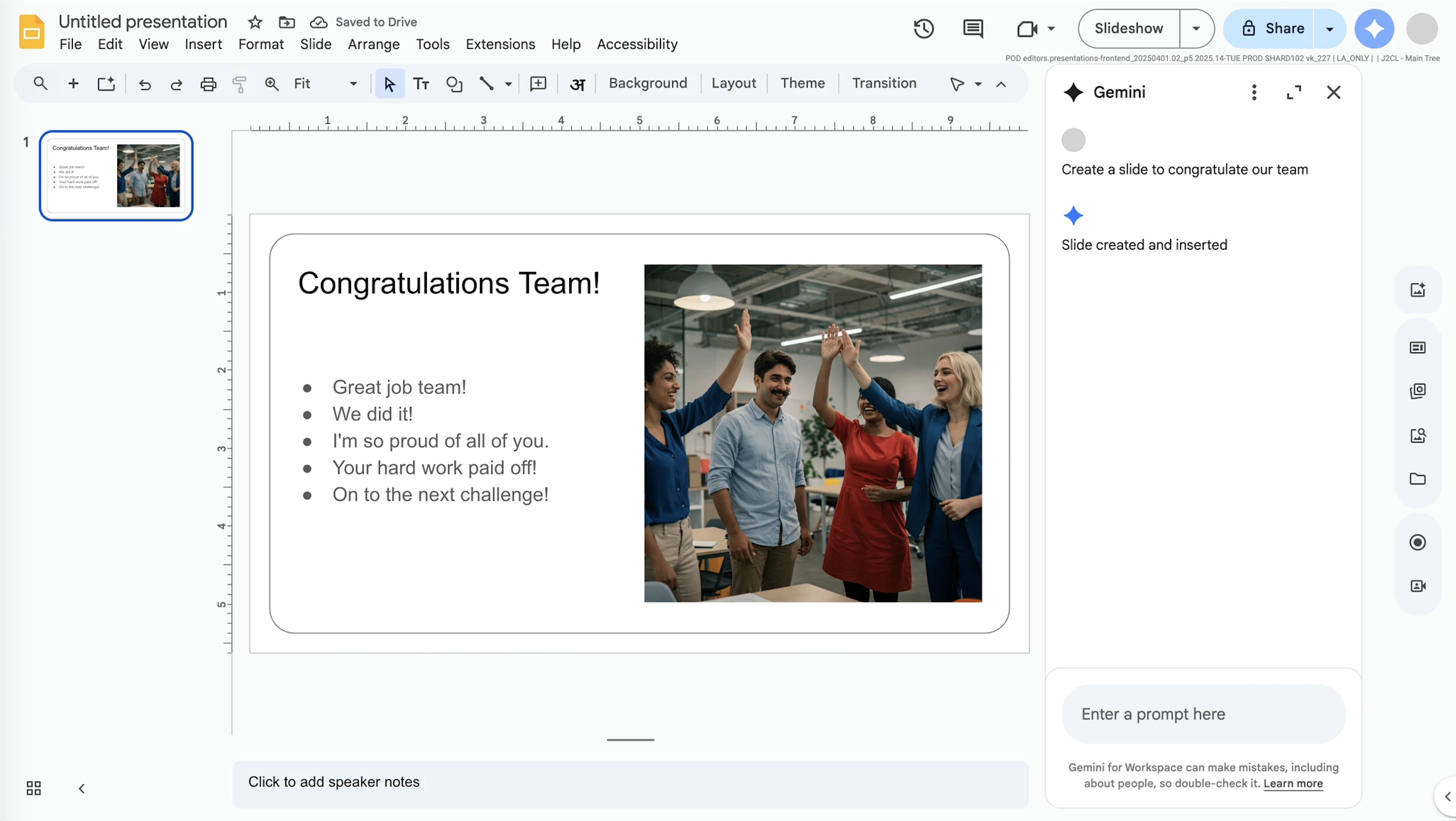
6. Gemini für Google Slides: Beste für Workspace‑Integration
Gemini ist Googles Antwort auf Copilot. Es ist direkt in Google Workspace eingebettet und bietet ein ähnliches Set an Vorteilen für Nutzer von Google Drive und Gmail. Es kann auf Ihre bestehenden Dokumente verweisen, um Folieninhalte zu erstellen, und nutzt Googles fortschrittliche Bild‑Generierungs‑Modelle, um individuelle Visuals für Ihr Deck zu erzeugen.
Wenn Sie den Vergleich von 2026-gemini-google-slides-vs-nextdocs betrachten, sehen Sie, dass Gemini für schnelle Entwürfe und Barrierefreiheit hervorragend geeignet ist, jedoch die tiefgehende Recherche und Mehrfach‑Varianten‑Funktionen von NextDocs fehlen. Es ist ein praktisches Tool, das häufig in den Workspace‑Abonnements vieler Unternehmen bereits enthalten ist.
Hauptfunktionen:
- Native Integration mit Google Slides.
- Zugriff auf Google‑Drive‑Inhalte für die Foliengenerierung.
- Eingebaute KI‑Bildgenerierung.
- Echtzeit‑Zusammenarbeit innerhalb des Google‑Ökosystems.
Preisgestaltung: Kostenlos für Basis‑Nutzung. Bezahlte Workspace‑Pläne beginnen bei $20 pro Monat für erweiterte KI‑Funktionen.
Am besten für: Google‑Workspace‑Nutzer, die schnelle Entwürfe erstellen wollen, ohne den Browser zu verlassen.
Fazit: Gemini ist das praktischste Tool für Google‑Nutzer. Während das Design‑Ergebnis manchmal generisch ist, macht die Integration in die übrigen Workspace‑Apps es äußerst effizient für interne Arbeit.
7. Pitch.com: Beste für Team‑Zusammenarbeit
Pitch.com hat sich einen Namen als Präsentations‑Tool für moderne Teams gemacht. Während es KI‑Funktionen zur Generierung hinzugefügt hat, bleibt seine Kernstärke das Kollaborations‑Suite. Es bietet Echtzeit‑Bearbeitung, Versionshistorie und ein Kommentarsystem, das weitaus robuster ist als das, was Sie in PowerPoint oder Google Slides finden.
Die KI‑Generierung in Pitch ist gut für einen Ausgangspunkt, aber das Tool glänzt wirklich, wenn drei oder vier Personen gleichzeitig an einem Deck arbeiten. Es fühlt sich an wie ein professionelles Design‑Tool an, ist aber gleichzeitig so zugänglich, dass jeder im Team es nutzen kann.
Hauptfunktionen:
- Hervorragende Echtzeit‑Zusammenarbeit und Kommentarfunktion.
- Professionelle Vorlagenbibliothek, kuratiert von Designern.
- Robuste Versionshistorie und Status‑Tracking.
- Marken‑Kits zur Wahrung der Team‑Konsistenz.
Preisgestaltung: Kostenlose Stufe verfügbar. Pro‑Pläne beginnen bei $8 pro Nutzer pro Monat.
Am besten für: Design‑orientierte Teams und kollaborative Projekte.
Fazit: Pitch ist die beste Wahl für Teams, die Workflow und Zusammenarbeit über reine KI‑Automatisierung stellen. Es bietet eine schöne Leinwand, auf der Teams gemeinsam großartige Dinge erschaffen können.
8. Canva Magic Design: Beste für Marketing‑Visuals
Canva hat sich von einem einfachen Grafik‑Design‑Tool zu einer kompletten Kreativ‑Suite entwickelt. Die Magic‑Design‑KI ermöglicht es Ihnen, einen Prompt einzugeben und innerhalb von Sekunden eine vollständig gestaltete Präsentation zu erhalten. Der größte Vorteil von Canva ist seine riesige Bibliothek an Assets. Sie haben Zugriff auf Millionen von Fotos, Icons und Illustrationen, die andere Tools nicht erreichen.
Allerdings können Canva‑Präsentationen manchmal für ein formelles Unternehmensumfeld zu stark gestaltet wirken. Sie eignen sich perfekt für Marketing‑Pitches, Social‑Media‑Decks und kreative Projekte. Wenn Sie nach canva-alternatives suchen, werden Sie wahrscheinlich nach Tools suchen, die strukturiertere, datengetriebene Layouts bieten.
Hauptfunktionen:
- Zugriff auf eine enorme Bibliothek von Stock‑Fotos und Grafiken.
- KI‑gestütztes Magic‑Design für sofortige Deck‑Erstellung.
- Multi‑Format‑Exporte inklusive Video und Social‑Posts.
- Einfache Drag‑and‑Drop‑Oberfläche.
Preisgestaltung: Kostenlose Stufe verfügbar. Pro‑Pläne beginnen bei $13 pro Monat.
Am besten für: Marketer, Social‑Media‑Manager und Kreativ‑Agenturen.
Fazit: Canva ist der König der visuellen Vielfalt. Wenn Ihre Präsentation energiegeladen und visuell abwechslungsreich sein muss, ist Canva das richtige Tool.
9. MagicSlides: Beste für Inhalts‑Wiederverwendung
MagicSlides ist ein spezialisiertes Google‑Slides‑Add‑On, das sich darauf konzentriert, vorhandene Inhalte in Präsentationen zu verwandeln. Eine seiner beeindruckendsten Funktionen ist die Möglichkeit, eine YouTube‑URL zu nehmen und den Video‑Inhalt in ein strukturiertes Deck zu konvertieren. Das ist unglaublich nützlich für Lehrende, Forschende und Content‑Creator.
In einem Vergleich von magicslides-vs-plus-ai sticht MagicSlides durch seinen Fokus auf Inhalts‑Wiederverwendung hervor, während Plus AI ein allgemeineres Produktivitäts‑Tool ist. Die Ausgabequalität von MagicSlides ist oft grundlegend, sodass Sie nach dem KI‑Durchlauf mit etwas manuellem Design nacharbeiten sollten.
Hauptfunktionen:
- YouTube‑zu‑Slides‑Konvertierung.
- Dokument‑ und Text‑zu‑Slides‑Generierung.
- Einfaches, schnörkelloses Interface innerhalb von Google Slides.
- Unterstützung mehrerer Sprachen.
Preisgestaltung: Kostenlose Stufe verfügbar. Bezahlte Pläne beginnen bei $8 pro Monat.
Am besten für: Lehrende und Content‑Creator, die Video‑ oder Langform‑Texte wiederverwenden.
Fazit: MagicSlides ist ein Nischen‑Tool, das eine Sache sehr gut macht. Es ist der beste Weg, ein Video oder einen langen Artikel in Sekunden in einen Präsentations‑Entwurf zu verwandeln.
10. SlidesAI: Beste für einfache Entwürfe
SlidesAI ist ein unkompliziertes Google‑Slides‑Add‑On, das Nutzer anspricht, die einen schnellen Start benötigen. Es ist bei Studierenden und für interne Meetings beliebt, bei denen die Anforderungen niedriger sind. Sie fügen einfach Ihren Text ein, wählen einen allgemeinen Stil und das Tool füllt Ihre Folien.
Wenn Sie nach slidesai-alternatives suchen, wollen Nutzer häufig mehr Design‑Kontrolle oder bessere Recherche‑Funktionen. Außerdem gewinnt Gemini im Vergleich zu gemini-google-slides-vs-slidesai an Integration, während SlidesAI in puncto Einfachheit und Geschwindigkeit bei textlastigen Eingaben punktet.
Hauptfunktionen:
- Text‑zu‑Folie‑Generierung mit minimalem Setup.
- Mehrere Themen und Farbpaletten.
- Preisgünstig für Einzelpersonen.
- Einfach zu bedienen für Anfänger.
Preisgestaltung: Kostenlose Stufe verfügbar. Pro‑Pläne beginnen bei $10 pro Monat.
Am besten für: Studierende und schnelle interne Entwürfe.
Fazit: SlidesAI ist eine zuverlässige, preiswerte Option für alle, die einen Textblock in eine Präsentation verwandeln wollen, ohne Komplexität.
Die Bedeutung von Recherche in KI‑Präsentationen
Im Jahr 2026 ist eine Präsentation nur so gut wie die dahinterstehenden Daten. Einer der größten Kritikpunkte früher KI‑Tools war ihr Hang zum Halluzinieren. Sie erzeugten professionell aussehende Diagramme mit komplett erfundenen Zahlen. Deshalb ist der Recherche‑Aspekt moderner Builder so entscheidend.
Tools wie NextDocs haben Web‑Browsing und Daten‑Verifizierung direkt in den Generierungs‑Prozess integriert. Das bedeutet, wenn die KI vorschlägt, ein Markt sei fünf Milliarden Dollar wert, kann sie einen Link zum konkreten Bericht oder Artikel bereitstellen, aus dem diese Zahl stammt. Dieses Maß an Transparenz ist für hochkarätige Umgebungen wie Investoren‑Pitches oder Board‑Meetings unerlässlich. Ohne integrierte Recherche ist ein KI‑Präsentations‑Builder nur ein schickes Layout‑Tool. Mit Recherche wird er zum strategischen Partner.
Auswahl des richtigen Tools für Ihren Workflow
Das beste Tool für Sie hängt stark davon ab, wo Sie präsentieren und wer Ihr Publikum ist. Wenn Sie vor einer Gruppe von Risikokapitalgebern stehen, benötigen Sie die Recherche‑Tiefe und Mehrfach‑Varianten‑Optionen von NextDocs. Wenn Sie ein schnelles Update für Ihr unmittelbares Team geben, sind die Geschwindigkeit von Gamma oder Gemini möglicherweise passender.
Stellen Sie sich folgende Fragen, bevor Sie entscheiden: Benötigen Sie eine Datei, die Sie per E‑Mail verschicken können, wie eine PowerPoint, oder reicht ein Web‑Link? Müssen Sie in Echtzeit mit anderen zusammenarbeiten? Hat Ihr Unternehmen strenge Markenrichtlinien, die eingehalten werden müssen? Durch die Beantwortung dieser Fragen können Sie die Liste der zehn Tools auf das eine eingrenzen, das Ihnen tatsächlich Zeit spart und die Qualität Ihrer Arbeit erhöht.
Fazit
Der Markt für KI‑Präsentations‑Builder hat sich deutlich weiterentwickelt. Wir haben die Ära einfacher Vorlagen hinter uns gelassen und befinden uns nun in einer Phase intelligenter, forschungsgetriebener Erstellung. Während viele Tools beeindruckende Funktionen bieten, bleibt NextDocs die robusteste Wahl für professionelle Anwender dank seiner Mehrfach‑Varianten‑Generierung und tiefen Recherche‑Fähigkeiten. Es bietet das beste Gleichgewicht aus Geschwindigkeit, Genauigkeit und Design‑Flexibilität.
Dennoch bieten Tools wie Plus AI und Copilot unverzichtbare native Integrationen für diejenigen, die das Microsoft‑ oder Google‑Ökosystem nicht verlassen können. Beautiful.ai und Gamma liefern einzigartige Design‑Perspektiven, die Ihre Präsentationen aus der Masse hervorheben. Letztlich ist der beste Weg, Ihr perfektes Match zu finden, die kostenlosen Stufen der meisten dieser Plattformen zu testen.
Bereit, bessere Präsentationen zu erstellen?
Try NextDocs Free und erleben Sie Mehrfach‑Varianten‑Generierung, universelle Exporte und tiefe Recherche‑Integration. Keine Kreditkarte erforderlich.