

معرفی چشمانداز ارائه هوش مصنوعی
روشی که حرفهایها دکهای اسلایدی را میسازند، تغییرات عظیمی را تجربه کرده است. در سال 2026، دیگر فقط به دنبال ابزارهایی نیستیم که کلیپآرت بهتر پیشنهاد دهند یا تنظیمات را اصلاح کنند. ما به دنبال سیستمهایی هستیم که بتوانند با حداقل مداخله انسانی فکر کنند، تحقیق کنند و طراحی کنند. این امر منجر به ظهور دو دستهٔ متمایز ابزار شده است: سازندگان ارائه هوش مصنوعی مستقل و عوامل هوش مصنوعی خودکار.
NextDocs و Genspark نمایانگر این دو فلسفهٔ متفاوت هستند. NextDocs یک پلتفرم تخصصی و مستقل است که برای مدیریت جریان کار انتها به انتهای یک ارائهدهندهٔ حرفهای ساخته شده است. این پلتفرم بر انتخاب، انعطافپذیری خروجی و استانداردهای طراحی حرفهای تمرکز دارد. از سوی دیگر، Genspark یک عامل هوش مصنوعی است. این ابزار طوری طراحی شده که به عنوان یک پژوهشگر دیجیتال عمل کند و بتواند بهصورت خودکار وظایف را اجرا، دادهها را از سراسر وب جمعآوری و در قالبهای مختلف از جمله ارائهها ترکیب کند.
انتخاب بین این دو نیازمند درک نیازهای خاص شماست. آیا به ابزاری قابل اعتماد نیاز دارید که گزینههای طراحی متعددی به شما بدهد و با نرمافزارهای موجود شما کار کند؟ یا به عاملی خودکار نیاز دارید که بتواند برای شما به عمقهای پژوهشی بپردازد؟ در این راهنما، نحوهٔ مقایسهٔ این ابزارها از نظر عملکرد، طراحی و کاربرد حرفهای را بررسی خواهیم کرد. برای نگاهی گستردهتر به بازار، میتوانید راهنمای ما دربارهٔ بهترین سازندگان ارائه هوش مصنوعی برای سال 2026 را نیز مرور کنید.
مرور کلی بر NextDocs
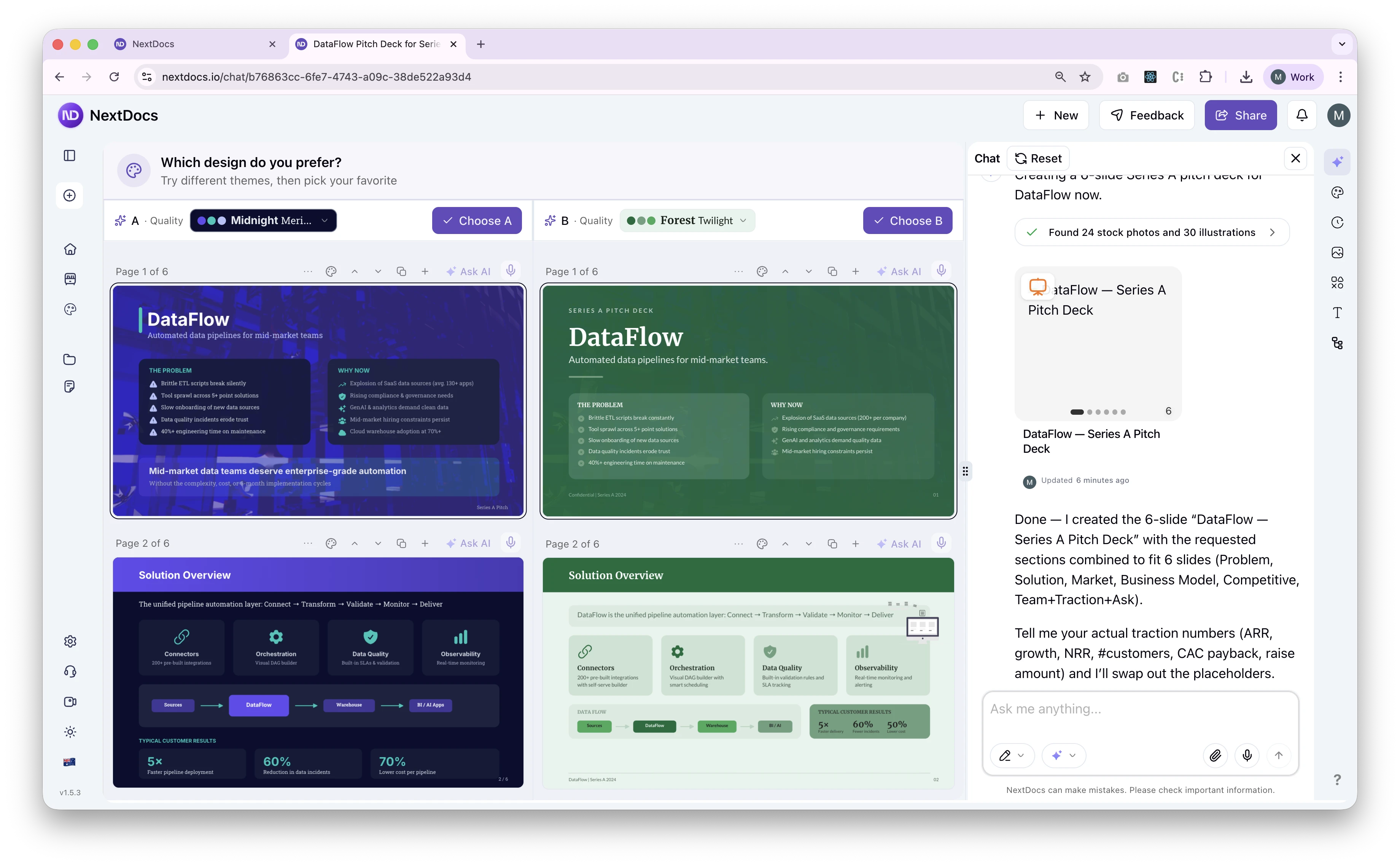
NextDocs برای حرفهایای ساخته شده است که نمیتواند یک دک عمومی و بیخاصیت داشته باشد. چه شما یک بنیانگذار باشید که به سرمایهگذاران ارائه میدهد، چه یک مشاور که استراتژی را ارائه میکند، یا یک سرپرست فروش که معاملهای را نهایی میکند، NextDocs بر «هوش مصنوعی با دقت بالا» تمرکز دارد.
ویژگی برجستهٔ NextDocs تولید چندین نسخهٔ متنوع است. اکثر ابزارهای هوش مصنوعی یک نتیجه بر اساس درخواست شما ارائه میدهند. اگر آن را دوست نداشتید، باید دوباره درخواست کنید. NextDocs بهصورت همزمان ۳ تا ۴ نسخهٔ متمایز از ارائهٔ شما تولید میکند. این امکان را به شما میدهد که بلافاصله زوایای روایتی مختلف، سبکهای بصری متفاوت و رویکردهای ساختاری گوناگون را ببینید.
فراتر از تولید اولیه، NextDocs طوری طراحی شده است که در جریان کار واقعی یک حرفهای جای بگیرد. این ابزار از خروجیهای جهانی پشتیبانی میکند، به این معنی که میتوانید محتوای تولید شده توسط هوش مصنوعی را مستقیماً به PDF، PowerPoint، Google Slides یا حتی Google Docs منتقل کنید بدون اینکه قالببندی از دست برود. این ویژگی آن را به گزینهٔ برتر برای کسانی تبدیل میکند که به دنبال جایگزینهای Copilot PowerPoint با آزادی خلاقانه بیشتر هستند.
مرور کلی بر Genspark
Genspark یک ابزار ارائه به معنای سنتی نیست. این یک عامل هوش مصنوعی است که برای «اجرای خودکار» طراحی شده است. در حالی که ابزاری مانند NextDocs در هر مرحله منتظر دستورهای شماست، Genspark طوری ساخته شده که هدفی کلی را بگیرد و جزئیات را کشف کند.
اگر از Genspark بخواهید یک ارائه دربارهٔ وضعیت فعلی بازار انرژیهای تجدیدپذیر در جنوبشرق آسیا ایجاد کند، فقط به یک پایگاه دادهٔ ثابت نگاه نمیکند. این ابزار با استفاده از قابلیتهای عاملی خود، وب را مرور میکند، گزارشهای اخیر را پیدا میکند، نقاط داده را تأیید میکند و سپس آن اطلاعات را به یک «صفحهٔ Spark» یا قالب ارائه تبدیل میسازد.
Genspark برای پروژههای پژوهشی عمیق و تجزیه و تحلیل سیستماتیک عالی است. با این حال، چون یک عامل است که سعی میکند همزمان کارهای متعددی انجام دهد، میتواند بهطور قابلتوجهی کندتر از یک سازندهٔ اختصاصی باشد. این ابزار برای ترکیب دادهها قدرتمند است، اما اغلب فاقد کنترلهای دقیق طراحی است که یک پلتفرم ارائهٔ اختصاصی فراهم میکند. اگر در حال بررسی گزینههای مختلف هستید، ممکن است مفید باشد که به سایر جایگزینهای SlidesAI نگاهی بیندازید تا ببینید ابزارهای عاملی چگونه با افزونههای سنتی هوش مصنوعی مقایسه میشوند.
تفاوتهای کلیدی بین NextDocs و Genspark
تفاوت اصلی بین این دو ابزار در هویت اصلی آنهاست: یکی یک سازنده است و دیگری یک عامل.
1. سرعت تولید و جریان کار
NextDocs برای سرعت و تکرار ساخته شده است. شما یک درخواست وارد میکنید و در عرض چند ثانیه، چندین نسخه برای انتخاب دارید. این یک فرآیند خطی، سریع و بسیار قابل کنترل است.
Genspark یک عامل خودکار است. وقتی به آن یک وظیفه میدهید، ممکن است چند دقیقه طول بکشد تا «فکر کند» و تحقیق کند. این ابزار چندین وبسایت را مرور میکند، اطلاعات را مقایسه میکند و سپس خروجی را ترکیب میسازد. اگرچه این کار زمان شما را در تحقیق صرفهجویی میکند، تولید واقعی اسلایدها بسیار کندتر از NextDocs است.
2. انتخاب خروجی و کنترل
NextDocs تولید چندین نسخه را فراهم میکند. این یک مزیت حیاتی برای حرفهایهاست. گاهی تفسیر اولیه هوش مصنوعی دقیق نیست، اما نسخهٔ سوم کامل است. داشتن این گزینهها در کنار هم نیاز به درخواستهای مکرر را کاهش میدهد.
Genspark عموماً به سمت یک خروجی ترکیبی واحد کار میکند. اگرچه تحقیق عمیقتر است، اما کنترل کمتری بر «جهتگیری هنری» اسلایدها در مرحلهٔ تولید اولیه دارید.
3. انعطافپذیری خروجی
NextDocs به دلیل قابلیتهای خروجی جهانی خود در محیطهای حرفهای برتری دارد. اکثر حرفهایها هنوز نیاز به ارائه یک فایل .pptx یا PDF دارند. NextDocs اطمینان میدهد که انتقال از ویرایشگر بومی هوش مصنوعی به نرمافزارهای سنتی بهصورت بدون درز باشد.
Genspark عمدتاً یک تجربه مبتنی بر وب است. اگرچه میتواند محتوایی تولید کند که شبیه اسلایدها باشد، تمرکز آن بر «صفحهٔ Spark» بومی وب است. خروجی این محتوا به قالب حرفهای PowerPoint میتواند چالشبرانگیزتر و کمتر صیقلی باشد نسبت به خروجیهای بومی موجود در NextDocs.
4. قابلیتهای پژوهش
در اینجا است که Genspark میدرخشد. چون یک عامل است، میتواند نقاط دادهٔ خاص و تخصصی را از وب پیدا کند که یک مدل زبانی استاندارد ممکن است بهصورت تخیلی ارائه دهد.
NextDocs نیز یکپارچهسازی پژوهش عمیق را ارائه میدهد، اما تمرکز آن بر فراهم کردن دادههایی است که برای ساخت یک دک جذاب نیاز دارید. این ابزار اعداد واقعی و ارجاعات را استخراج میکند و اطمینان میدهد که ارائههای تیم فروش شما با حقایق معتبر پشتیبانی میشوند.
جدول مقایسه ویژگیها
| ویژگی | NextDocs | Genspark |
|---|---|---|
| دستهبندی | سازندهٔ مستقل هوش مصنوعی | عامل هوش مصنوعی / پژوهشگر |
| نقطه قوت اصلی | تولید چندین نسخه | پژوهش وب خودکار |
| سرعت | بسیار سریع (ثانیهها) | کند (دقیقهها به دلیل پژوهش) |
| فرمتهای خروجی | PDF، PPTX، Google Slides، Docs | وبمحور، خروجیهای محدود |
| سبک پژوهش | دادههای یکپارچه با ارجاعات | عاملهای مرور وب خودکار |
| کنترل طراحی | بالا (کیتهای برند و استایل) | متوسط (طرحهای استاندارد) |
| پشتیبانی چندمدل | بله (انتخاب مدل هوش مصنوعی) | خیر (استفاده از منطق داخلی عامل) |
| بهترین برای | بنیانگذاران، مشاوران، فروش | |
| بهترین برای | پژوهشگران، تحلیلگران داده |
بررسی عمیق: طراحی و سازگاری برند
برای کاربران سازمانی، سازگاری طراحی اغلب مهمتر از خود هوش مصنوعی است. اگر ابزاری نتواند فونتها، رنگها و لوگوهای شرکت شما را تطبیق دهد، برای جلسات خارجی مفید نیست.
NextDocs با استایل برند بهعنوان یک ستون اصلی ساخته شده است. میتوانید کیت برند خود را بارگذاری کنید و هوش مصنوعی این استایلها را در تمام نسخههای تولید شده اعمال میکند. این ویژگی آن را به یکی از بهترین سازندگان اسلاید هوش مصنوعی سازمانی برای تیمهایی که نیاز به حفظ برند بدون تنظیمات دستی دارند، تبدیل میکند.
Genspark بیشتر بر معماری اطلاعات تمرکز دارد. طراحیهای آن تمیز و مدرن هستند، اما تمایل به کلیگرایی دارند. این ابزار برای بهاشتراکگذاری دانش داخلی یا گزارشهای پر از داده که در آن «ظاهر و حس» ثانویه نسبت به «حقایق و ارقام» است، عالی است. اگر دانشجو یا کسبوکار کوچکی باشید که به دنبال سازندگان ارائه هوش مصنوعی رایگان در سال 2026 هستید، دسترسی رایگان فعلی Genspark یک جذابیت بزرگ است، اگرچه عدم وجود کنترلهای برند ممکن است برای استفادهٔ حرفهای مانعی باشد.
مقایسه قیمتها
قیمتگذاری NextDocs
NextDocs یک رویکرد لایهبندی شده ارائه میدهد که برای رشد همراه با نیازهای شما طراحی شده است.
- سطح رایگان: به شما امکان میدهد تولید چندین نسخه و ویرایشگر پایه را آزمایش کنید.
- سطح حرفهای: از ۱۵ دلار در ماه شروع میشود. این سطح خروجیهای جهانی، ویژگیهای پژوهش عمیق و یکپارچهسازی کیت برند را فعال میکند.
- سازمانی: قیمتگذاری سفارشی برای تیمهایی که به امنیت پیشرفته و داراییهای برند مشترک نیاز دارند.
قیمتگذاری Genspark
Genspark در حال حاضر در مرحلهای است که بخش زیادی از عملکردهای آن بهصورت رایگان یا از طریق سیستم مبتنی بر اعتبار در دسترس است.
- سطح رایگان: دسترسی قابلتوجه به عوامل پژوهشی و تولید صفحه.
- گزینههای پرداختی: اگرچه سطوح ماهانهٔ خاص در حال تحول هستند، تمرکز بر دسترسی مبتنی بر استفاده برای وظایف پژوهشی سنگین باقی میماند.
مزایا و معایب
NextDocs
مزایا:
- تولید چندین نسخه گزینههای خلاقانهٔ فوری را فراهم میکند.
- خروجیهای جهانی آن را با PowerPoint و Google Slides سازگار میکند.
- یکپارچهسازی پژوهش عمیق ارجاعات و دادههای دنیای واقعی را فراهم میکند.
- استایل برند تضمین میکند که هر دک بهصورت حرفهای بهنظر برسد.
- از چندین مدل هوش مصنوعی برای نیازهای محتوایی مختلف پشتیبانی میکند.
معایب:
- ویژگیهای پیشرفته برای کاربران جدید کمی منحنی یادگیری دارند.
- برای بهترین ویژگیهای خروجی نیاز به اشتراک دارد.
Genspark
مزایا:
- عوامل خودکار میتوانند پژوهش وب پیچیده انجام دهند.
- برای ترکیب حجم زیادی از دادهها از منابع متعدد عالی است.
- سطح رایگان قوی برای پروژههای پژوهشی سنگین.
- قالب منحصر بهفرد «صفحهٔ Spark» برای اشتراکگذاری بومی وب عالی است.
معایب:
- تولید نسبت به سازندگان مستقل کند است.
- کیفیت متغیر در طراحی و سازگاری بصری.
- خروجی به فرمتهای سنتی (مانند PPTX) هدف اصلی نیست.
- ممکن است برای وظایف سادهٔ ارائه بیش از حد باشد.
حکم نهایی: کدامیک را باید انتخاب کنید؟
انتخاب بین NextDocs و Genspark به هدف خروجی شما بستگی دارد.
اگر به دنبال NextDocs هستید وقتی به یک ارائهٔ حرفهای نیاز دارید که بتوانید در یک جلسه هیئت مدیره ارائه دهید، بهصورت PDF به سرمایهگذار بفرستید یا در PowerPoint ویرایش کنید. اگر به طراحی، سازگاری برند و داشتن گزینههای متعدد اهمیت میدهید، NextDocs ابزار برتر است. این ابزار بهطور خاص برای قالب «ارائه» بهینهسازی شده است و انتخاب بهتری برای بنیانگذاران، تیمهای فروش و مشاورانی است که به نتایج با دقت بالا و سریع نیاز دارند.
اگر به دنبال Genspark هستید وقتی هدف اصلی شما پژوهش است. اگر نیاز به تهیه یک گزارش ۲۰ صفحهای دربارهٔ موضوعی پیچیده دارید و میخواهید هوش مصنوعی کار سنگین مرور وب و یافتن دادهها را انجام دهد، Genspark یک دارایی شگفتانگیز است. این یک ابزار پژوهشی است که اسلاید نیز تولید میکند، در حالی که NextDocs یک سازنده اسلاید است که پژوهش را انجام میدهد.
در دنیای پرسرعت سال ۲۰۲۶، بسیاری از حرفهایها در واقع برای هر دو ابزار جایگاهی مییابند. آنها ممکن است از Genspark برای جمعآوری دادهها و بینشهای خام یک موضوع پیچیده استفاده کنند و سپس از NextDocs برای تبدیل آن بینشها به یک ارائهٔ صیقلی، سازگار با برند و قابل خروجی بهره ببرند.
آمادهاید تا ارائههای بهتری بسازید؟
NextDocs را بهصورت رایگان امتحان کنید و تجربهٔ تولید چندین نسخه، خروجیهای جهانی و یکپارچهسازی پژوهش عمیق را داشته باشید. نیازی به کارت اعتباری نیست.