
Best Ai Presentation Builders (with-code-blocks) in 2026
A comprehensive roundup of the best AI presentation builders in 2026, featuring tools that support code blocks, math equations, and technical workflows for modern professionals.
The Evolution of AI Presentation Design
The landscape of professional presentations has shifted dramatically. In 2026, a simple slide deck is no longer enough for technical teams, founders, and researchers. Professionals now require tools that handle complex data, render mathematical equations, and provide clean code blocks with syntax highlighting. The era of manual formatting is ending, replaced by intelligent systems that understand the context of your work.
Finding the right tool involves balancing design quality, technical features, and workflow integration. Whether you are a developer presenting an API architecture, a consultant delivering a market analysis, or a student organizing research, the choice of platform determines your efficiency. We have tested numerous platforms to identify the leaders in this space, focusing specifically on their ability to handle technical content and professional requirements.
For a deeper look at the current landscape, you can explore our comprehensive best AI presentation builders 2026 guide. This roundup focuses on the top ten performers that deliver reliable results for modern users.
Summary Comparison Table
| Rank | Tool | Best For | Starting Price |
|---|---|---|---|
| 1 | NextDocs | Technical Decks and Research | $15/mo |
| 2 | Plus AI | Google Slides and PowerPoint Users | $10/mo |
| 3 | Copilot for PowerPoint | Microsoft 365 Enterprise Teams | $30/mo |
| 4 | Gemini for Google Slides | Google Workspace Power Users | $0/mo |
| 5 | Gamma | Modern Web-Native Presentations | $8/mo |
| 6 | Beautiful.ai | Non-Designers Seeking Polish | $12/mo |
| 7 | Pitch.com | Real-Time Team Collaboration | $8/mo |
| 8 | Canva Magic Design | Visual and Social Media Content | $13/mo |
| 9 | MagicSlides | Repurposing Content and YouTube | $8/mo |
| 10 | SlidesAI | Quick Internal Drafts | $10/mo |
1. NextDocs
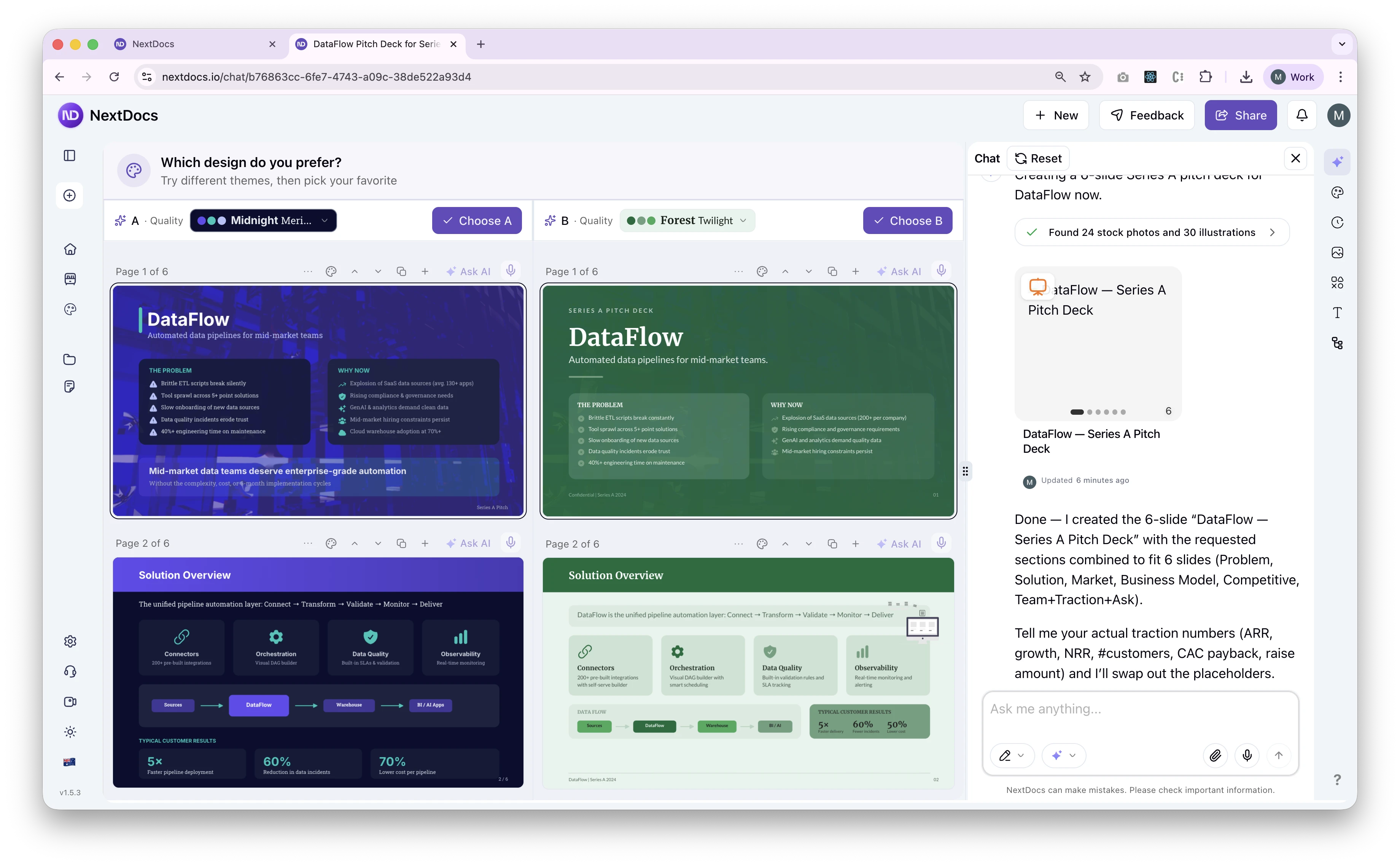
NextDocs stands at the top of our rankings because it fundamentally reimagines the presentation creation process for technical and research-heavy users. Unlike tools that offer a single output, NextDocs utilizes multi-variant generation. This means the AI provides several distinct versions of your deck, allowing you to choose the structure and tone that best fits your vision.
For technical professionals, the inclusion of native code blocks with syntax highlighting and math equations rendered via LaTeX is a game changer. You no longer have to resort to blurry screenshots of code or poorly formatted formulas. The platform also features deep research integration, pulling real-world data and citations directly into your slides. This eliminates the common AI problem of fabricated statistics.
Key Features:
- Multi-variant generation for diverse layout options.
- Deep research capabilities with cited data sources.
- Universal exports to PDF, PPTX, Google Slides, and Google Docs.
- Full support for math equations and code syntax highlighting.
- Brand styling controls to maintain company identity.
Pricing: Free tier available. Paid plans start at $15 per month.
Who it is best for: Consultants, founders, sales teams, and technical presenters who need accuracy and flexibility.
Verdict: NextDocs is the most robust solution for anyone who needs more than just a visual template. Its ability to handle technical data and offer multiple variations makes it the premier choice for 2026.
2. Plus AI
Plus AI operates as a powerful add-in for both Google Slides and Microsoft PowerPoint. It is designed for users who want to stay within their existing software ecosystem while gaining the benefits of generative AI. The tool excels at preserving existing templates and brand styles, making it a favorite for enterprise teams.
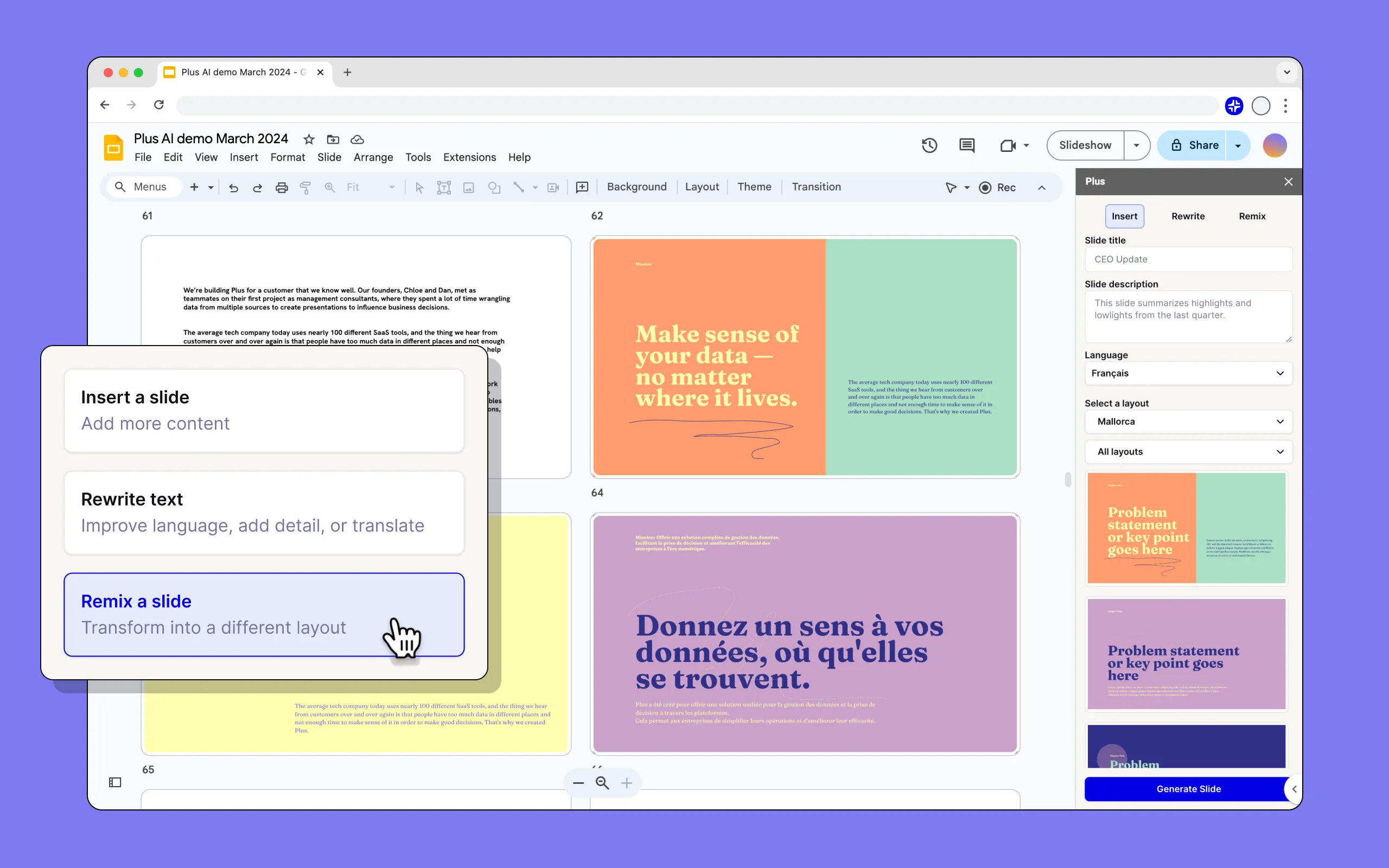
The remix feature is particularly useful. It allows you to take an existing slide and transform its layout or content without starting from scratch. While it lacks the standalone power of some competitors, its native integration ensures that your workflow remains uninterrupted. Users often compare it to other add-ins, as seen in our MagicSlides vs SlidesAI comparison.
Key Features:
- Seamless integration with Google Slides and PowerPoint.
- Remix feature for updating existing presentations.
- Template preservation for consistent branding.
- Prompt-based slide generation.
Pricing: No free tier. Plans start at $10 per month.
Who it is best for: Power users of traditional presentation software who need an AI assistant.
Verdict: Plus AI is the best choice for those who refuse to leave PowerPoint or Google Slides but want to accelerate their content creation.
3. Copilot for PowerPoint
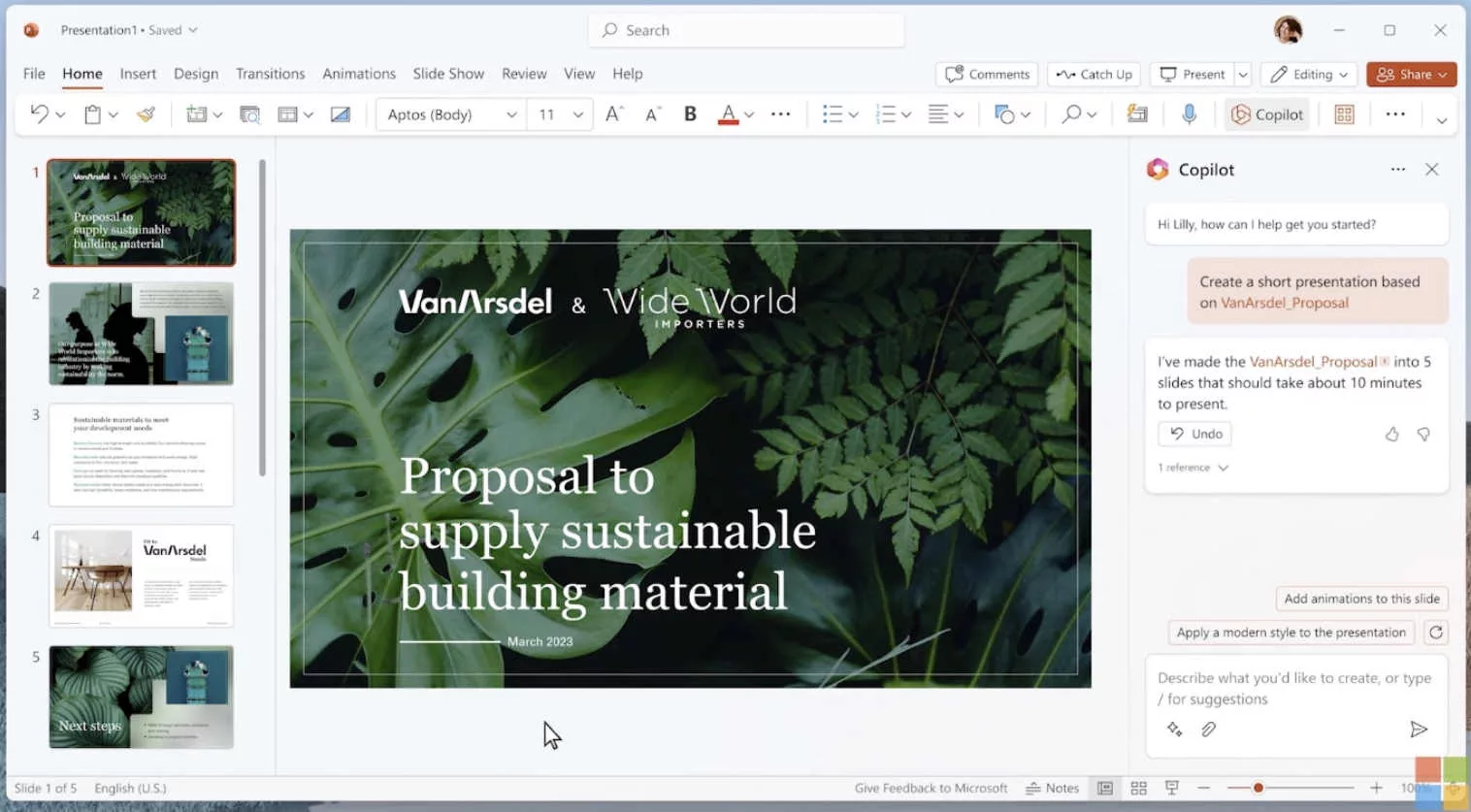
Microsoft Copilot for PowerPoint is the enterprise standard for organizations already using the Microsoft 365 suite. Its primary strength lies in its organizational context awareness. Copilot can pull information from your emails, Word documents, and Teams chats to build presentations that are grounded in your company's actual data.
While its design aesthetic tends to be conservative and traditional, its ability to generate accurate speaker notes and summarize long decks is unmatched. It provides a level of security and compliance that most standalone startups cannot yet offer.
Key Features:
- Integration with the full Microsoft 365 ecosystem.
- Content generation from existing internal documents.
- Advanced speaker notes and summary features.
- Enterprise-grade security.
Pricing: No free tier. Requires a $30 per month subscription per user.
Who it is best for: Large enterprises and teams heavily invested in Microsoft 365.
Verdict: If your company lives in the Microsoft ecosystem, Copilot is the most logical, albeit expensive, choice.
4. Gemini for Google Slides
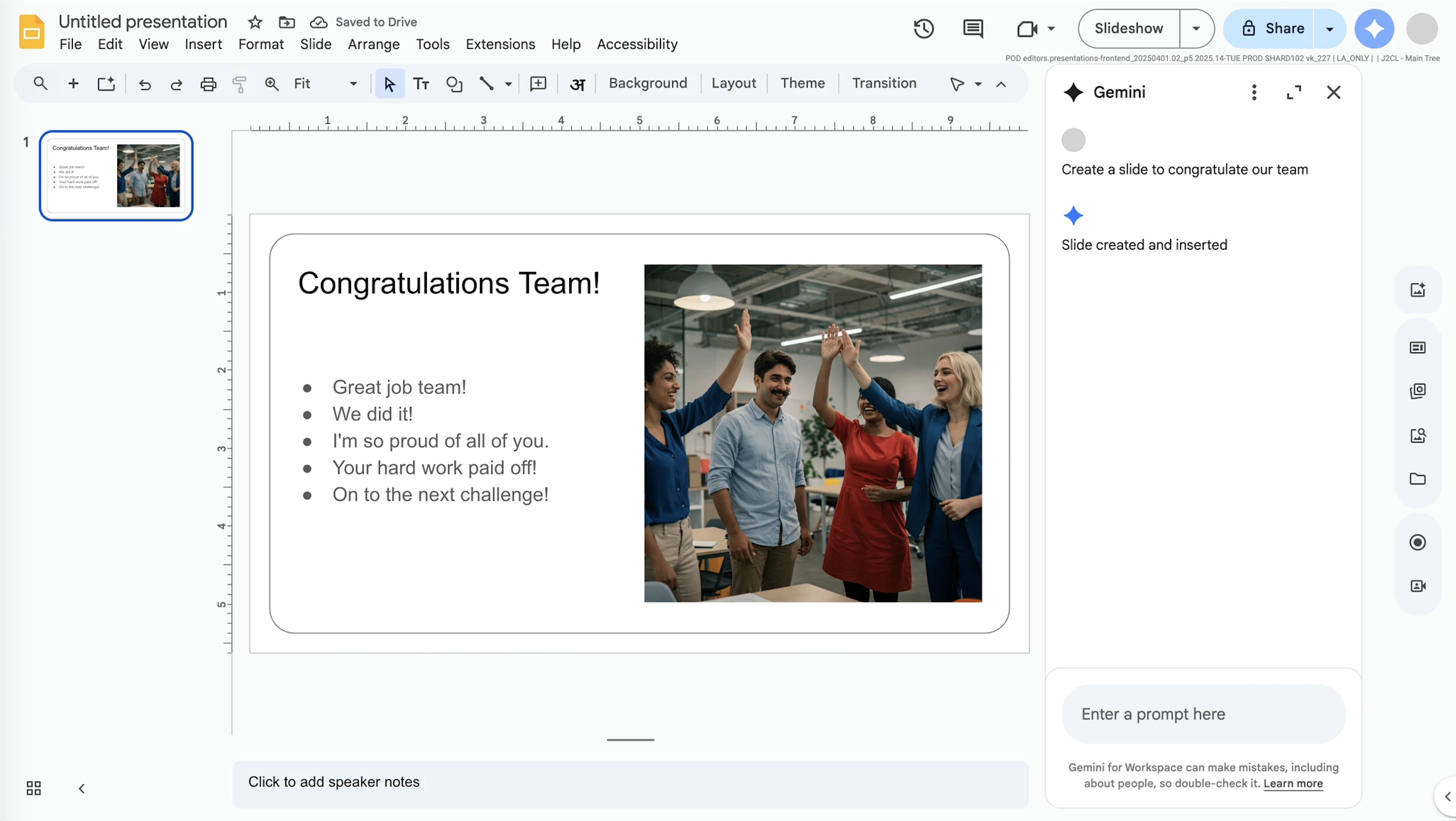
Gemini is Google's answer to the AI presentation surge. It is integrated directly into Google Workspace, allowing users to generate slides and images without leaving their browser tab. It leverages Google's massive data processing power to reference content across your Google Drive.
While it is convenient, the output quality can sometimes be inconsistent compared to dedicated tools. However, for quick internal updates or drafts, it is an excellent resource. For those seeking more specialized features, checking out 2026 Gemini Google Slides alternatives might be beneficial.
Key Features:
- Native integration with Google Workspace.
- Built-in AI image generation.
- Access to Google Drive content for context.
- Simple, prompt-based interface.
Pricing: Free tier available. Professional features start at $0 per month depending on your Workspace plan.
Who it is best for: Google Workspace users who need fast, free, and simple slide generation.
Verdict: Gemini is a solid entry-level tool for Google users, though it lacks the deep technical features of NextDocs or the design polish of Beautiful.ai.
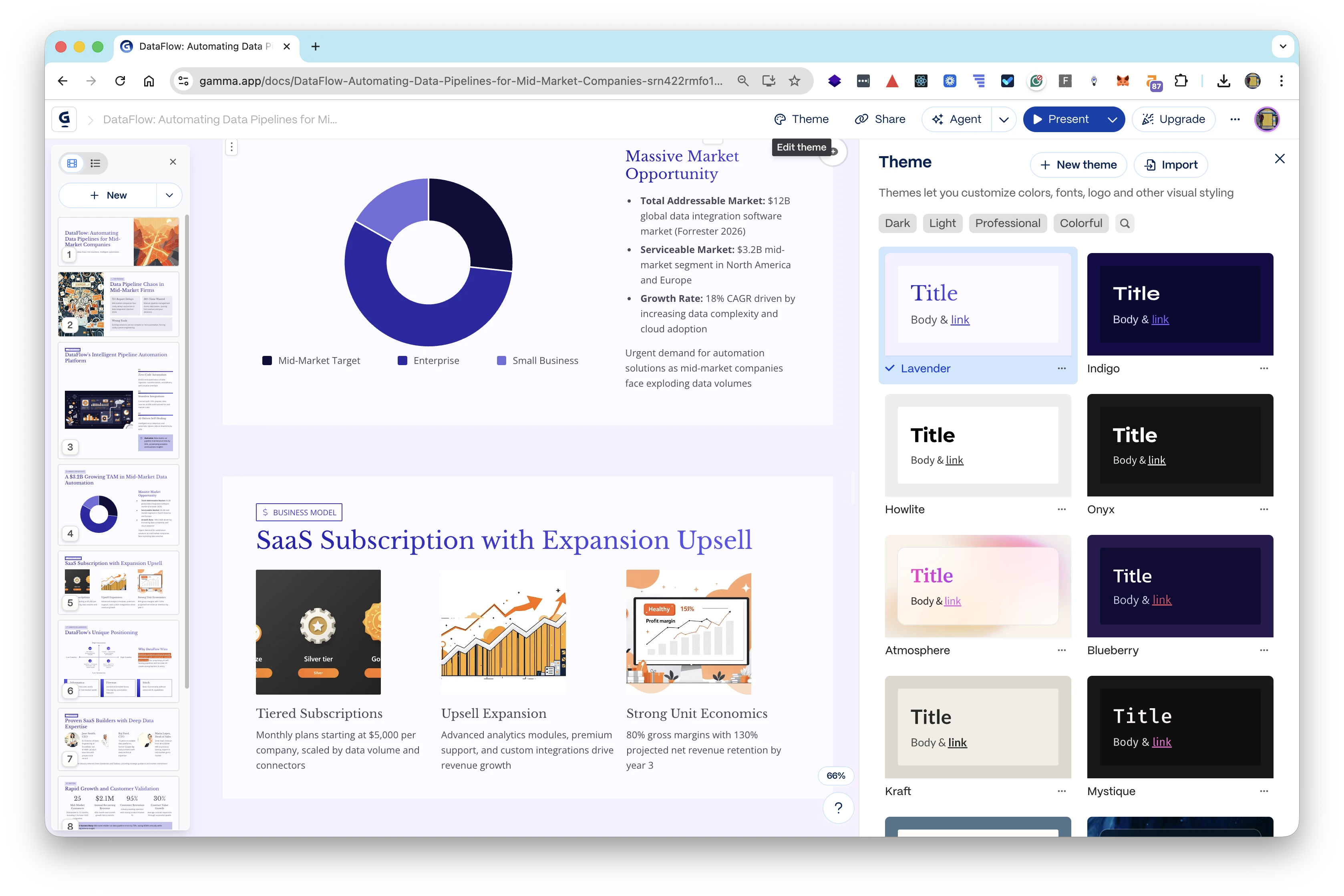
5. Gamma
Gamma has gained popularity by moving away from the traditional slide format and focusing on web-native "cards." These presentations feel more like interactive websites or documents, which is ideal for modern screen-sharing. It offers a very generous free tier, making it accessible for students and startups.
Gamma is known for its speed and modern design aesthetic. However, its customization options can be limited for users with strict brand guidelines. If you find its features too restrictive, you might consider Gamma alternatives 2026 for more traditional deck building.
Key Features:
- Web-native, scrollable presentation format.
- Fast AI generation with modern themes.
- Interactive elements like embeds and videos.
- Easy sharing via web links.
Pricing: Free tier available. Pro plans start at $8 per month.
Who it is best for: Startups, students, and anyone creating content for web consumption.
Verdict: Gamma is a refreshing take on presentations, though its export capabilities to PPTX can sometimes lead to formatting issues.
6. Beautiful.ai
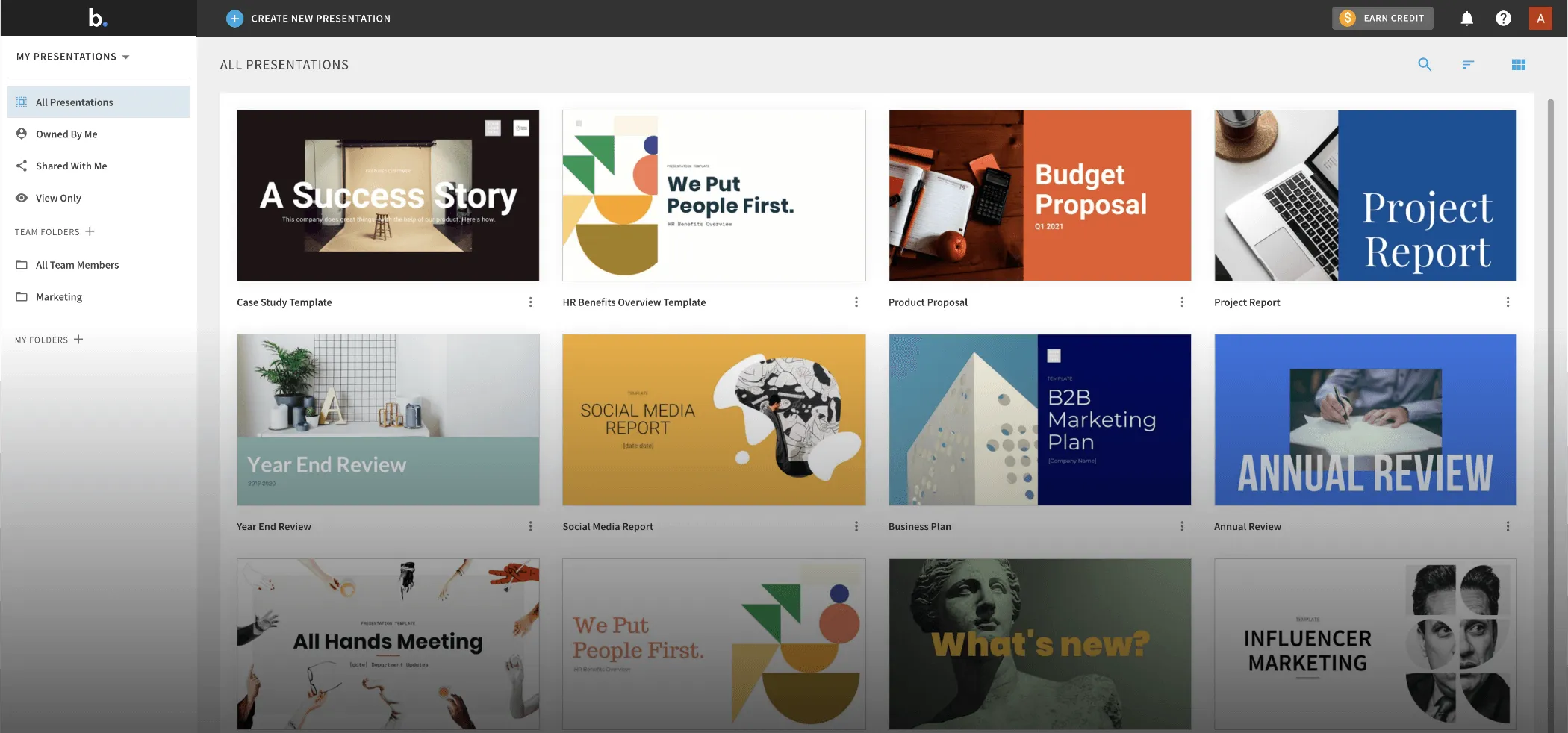
Beautiful.ai focuses on the "smart template" philosophy. Instead of a blank canvas, you use templates that automatically adjust their layout as you add content. This ensures that your slides remain visually balanced regardless of how much text or data you include.
While its AI generation features have improved, its core value remains in its design constraints. It prevents users from making "ugly" slides. You can see how it stacks up against other modern platforms in our Beautiful.ai vs Gamma comparison.
Key Features:
- Smart templates that resize and reformat automatically.
- High-quality animation and transition effects.
- Brand kit integration for team-wide consistency.
- Polished, professional design library.
Pricing: No free tier. Plans start at $12 per month.
Who it is best for: Non-designers who need high-stakes client presentations.
Verdict: Beautiful.ai is the gold standard for visual polish, though it lacks the deep technical research capabilities of NextDocs.
7. Pitch.com
Pitch.com is built for collaboration. While it includes AI generation features, its primary strength is the way it allows teams to work together in real-time. It features robust version history, commenting, and a very sleek, modern interface.
Pitch is often compared to other design-forward tools, and you can learn more in our Beautiful.ai vs Pitch breakdown. It is an excellent middle ground between a creative design tool and a structured presentation builder.
Key Features:
- Real-time team collaboration and commenting.
- Excellent version history and project tracking.
- High-quality, modern template library.
- Smooth AI-assisted drafting.
Pricing: Free tier available. Pro plans start at $8 per month.
Who it is best for: Collaborative teams and agencies who prioritize workflow and design.
Verdict: Pitch is the best choice for teams that need to build decks together without the clunkiness of legacy software.
8. Canva Magic Design
Canva has expanded its design empire into AI-powered presentations with Magic Design. It leverages Canva's massive library of assets, icons, and templates. It is incredibly easy to use and offers a wide range of export formats, including video.
However, for professional business decks, Canva can sometimes feel too "creative" or informal. Its AI quality is generally good for visual slides but may struggle with complex technical data. For users looking for more traditional alternatives, checking out MagicSlides alternatives might provide a better fit for structured data.
Key Features:
- Access to millions of design assets.
- Multi-format exports including social media and video.
- Simple AI-powered design suggestions.
- Strong collaboration tools.
Pricing: Free tier available. Pro plans start at $13 per month.
Who it is best for: Marketers, social media managers, and small business owners.
Verdict: Canva is the king of visual variety, though it may lack the professional gravitas required for board meetings or technical pitches.
9. MagicSlides
MagicSlides is a niche tool that excels at repurposing content. One of its standout features is the ability to turn a YouTube video or a long-form article into a summarized slide deck. It is a Google Slides add-on that focuses on content conversion rather than high-end design.
While the output often requires significant manual cleanup, the time saved in the initial drafting phase is substantial. You can see how it performs against its closest rival in our Gemini for Google Slides vs SlidesAI analysis.
Key Features:
- YouTube to slides conversion.
- Document and text-to-presentation generation.
- Simple, lightweight interface.
- Direct integration with Google Slides.
Pricing: Free tier available. Paid plans start at $8 per month.
Who it is best for: Educators, content creators, and trainers who need to repurpose video content.
Verdict: MagicSlides is a specialized tool that is excellent for content summaries but less effective for building decks from scratch.
10. SlidesAI
SlidesAI is another popular Google Slides add-on that focuses on speed. It is one of the most affordable options on the market and is designed to take a block of text and turn it into a structured presentation in seconds.
The designs are often basic, but for internal meetings or student projects, it gets the job done quickly. It is a no-frills solution for those who prioritize speed over advanced features like code blocks or deep research.
Key Features:
- Fast text-to-slide generation.
- Simple interface within Google Slides.
- Support for multiple languages.
- Very affordable pricing.
Pricing: Free tier available. Paid plans start at $10 per month.
Who it is best for: Students and professionals who need quick internal drafts.
Verdict: SlidesAI is a reliable, budget-friendly option for simple presentations, though it cannot compete with the feature sets of higher-ranked tools like NextDocs.
Technical Requirements: The Importance of Code Blocks and Math
In 2026, the definition of a "good" presentation has evolved. For the technical community, the ability to present code and data accurately is non-negotiable. Most AI presentation builders treat slides as a collection of text boxes and images. This approach fails when you need to present a Python script, a complex SQL query, or a scientific formula.
NextDocs has addressed this by building a native editor that understands these elements. When you generate a technical deck, the AI identifies code snippets and applies syntax highlighting automatically. This ensures readability and professionalism. Similarly, the support for LaTeX allows for the crisp rendering of mathematical equations, which is essential for academic and engineering presentations.
For a comprehensive comparison of how different tools handle these technical needs, you can revisit our MagicSlides vs SlidesAI comparison or explore the broader list of best AI presentation builders 2026.
How to Choose the Right AI Tool
Selecting the right builder depends on your specific output requirements. If you are a founder preparing a Series A pitch, you need a tool that provides research and multiple layout variants to find the perfect narrative. NextDocs is the clear winner in this category.
If you are an enterprise employee who must stay within company-approved software, Plus AI or Microsoft Copilot are your best bets. They provide the security and integration your IT department requires.
For those focused on creative or web-first content, Gamma and Canva offer the most flexibility. They allow you to break away from the traditional 4:3 or 16:9 aspect ratios and create something truly unique for the digital age.
Conclusion
The transition from manual slide design to AI-assisted generation is the biggest shift in presentation technology in decades. Tools like NextDocs are leading the way by offering features that were previously impossible, such as deep research integration and native code block support. By choosing a tool that aligns with your technical needs and workflow, you can save hours of labor while producing higher-quality results.
Whether you need the collaborative power of Pitch, the design guardrails of Beautiful.ai, or the technical depth of NextDocs, the tools available in 2026 are more than capable of helping you tell your story effectively.
Ready to Create Better Presentations?
Try NextDocs Free and experience multi-variant generation, universal exports, and deep research integration. No credit card required.