

The Evolution of AI Presentations in 2026
The landscape of professional presentations has shifted dramatically over the last few years. In the past, creating a deck meant hours of manual labor, hunting for icons, and wrestling with alignment tools. Today, AI slide makers have matured into sophisticated assistants that can handle everything from deep market research to complex data visualization. However, one requirement remains constant for professionals: the need for flexibility.
Most users still require their AI-generated content to be compatible with industry-standard platforms. While many new tools offer sleek web-based interfaces, the ability to export to Google Slides remains a top priority for teams that rely on collaborative editing and cloud-based storage. A tool that locks you into a proprietary format is often a liability in a fast-paced corporate environment.
In this roundup, we have tested and ranked the top ten AI slide makers that provide high-quality output and reliable Google Slides export capabilities. We evaluated these tools based on their narrative logic, design aesthetics, and the accuracy of the content they generate. Whether you are a startup founder preparing for a Series A or a consultant building a quarterly report, this guide will help you find the right tool for your workflow.
Summary Comparison Table
| Rank | Tool | Best For | Starting Price |
|---|---|---|---|
| 1 | NextDocs | Overall, Research-Heavy Decks | Free (Pro from $15/mo) |
| 2 | Plus AI | Native Google Slides Add-in | $10/mo |
| 3 | Gemini for Google Slides | Google Workspace Integration | Free ($0/mo) |
| 4 | Gamma | Modern Web-Native Presentations | Free (Pro from $8/mo) |
| 5 | Beautiful.ai | Automated Design Quality | $12/mo |
| 6 | Pitch.com | Real-Time Team Collaboration | Free (Pro from $8/mo) |
| 7 | Canva Magic Design | Visual and Social Media Styles | Free (Pro from $13/mo) |
| 8 | Copilot for PowerPoint | Microsoft 365 Enterprise Users | $30/mo |
| 9 | MagicSlides | Content Repurposing | Free (Pro from $8/mo) |
| 10 | SlidesAI | Quick Internal Drafts | Free (Pro from $10/mo) |
1. NextDocs
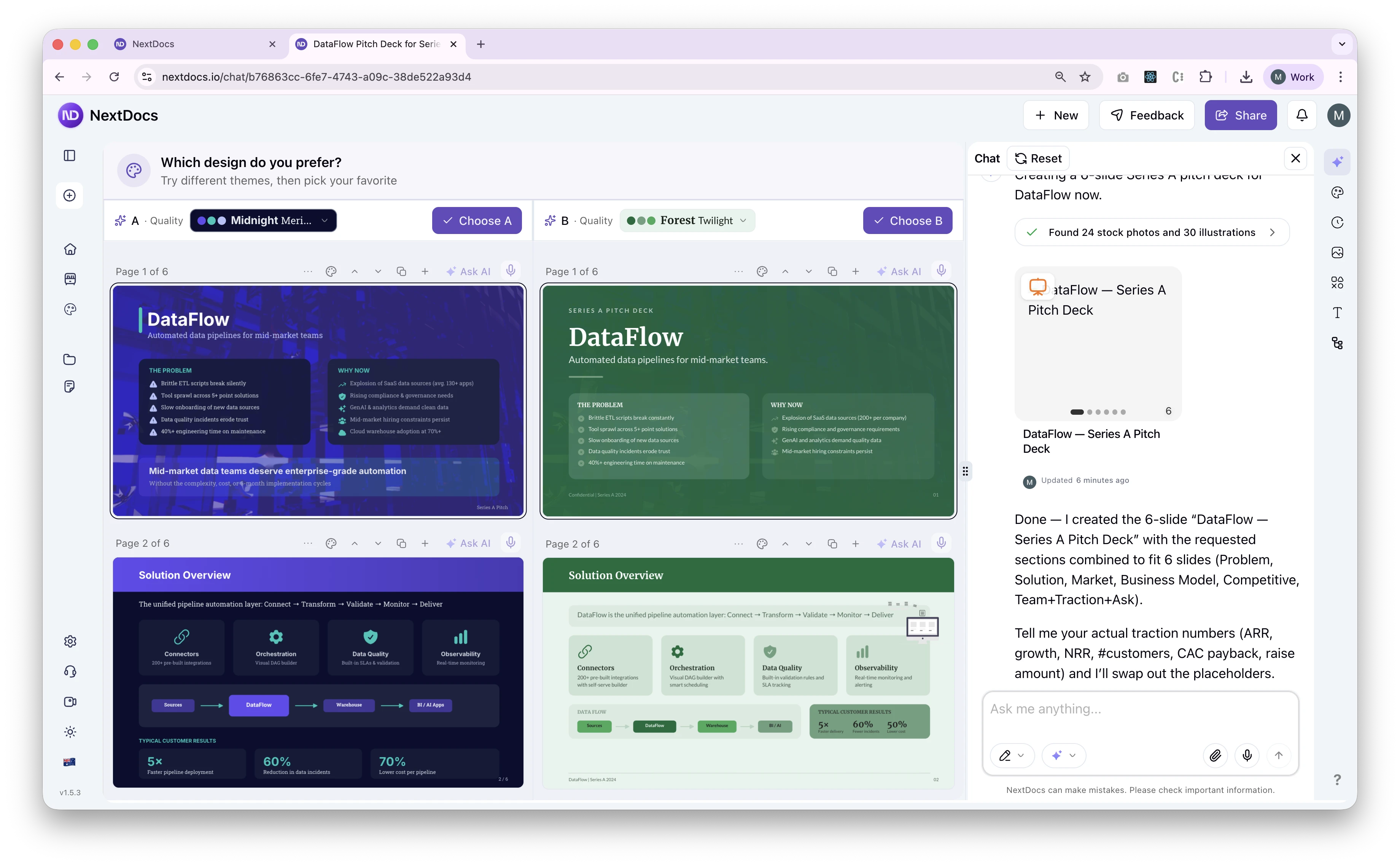
NextDocs stands as the most sophisticated AI presentation builder on the market today. Unlike traditional tools that generate a single version of a deck and leave the user to fix the mistakes, NextDocs utilizes a multi-variant generation engine. This approach creates several distinct versions of your presentation based on a single prompt. This allows you to choose the narrative structure and visual style that best fits your specific goals. It is currently the top choice for professionals who need high-stakes decks that require more than just generic text.
The platform excels at deep research. It does not just generate plausible-sounding text. It pulls actual data points and includes citations, which is critical for consultants and founders. For those coming from academic or technical backgrounds, NextDocs provides native support for math equations via LaTeX and code syntax highlighting. This makes it a superior choice for technical presentations compared to general-purpose tools. For a deeper look at the landscape, check out our best AI presentation builders 2026 roundup.
Key Features:
- Multi-variant generation provides multiple interpretations of every prompt.
- Universal export options include Google Slides, PowerPoint, PDF, and Google Docs.
- Deep research integration pulls real figures and citations from the web.
- Advanced formatting includes LaTeX math equations and code syntax highlighting.
- Brand styling ensures consistent colors and fonts across all exports.
Pricing: A free tier is available for new users. Pro plans start at $15 per month.
Who it is best for: Consultants, founders, sales teams, and technical professionals who require research-heavy, high-quality decks.
Verdict: NextDocs is the most robust and flexible tool available. Its ability to provide multiple variants and universal exports makes it the clear winner for professional use.
2. Plus AI
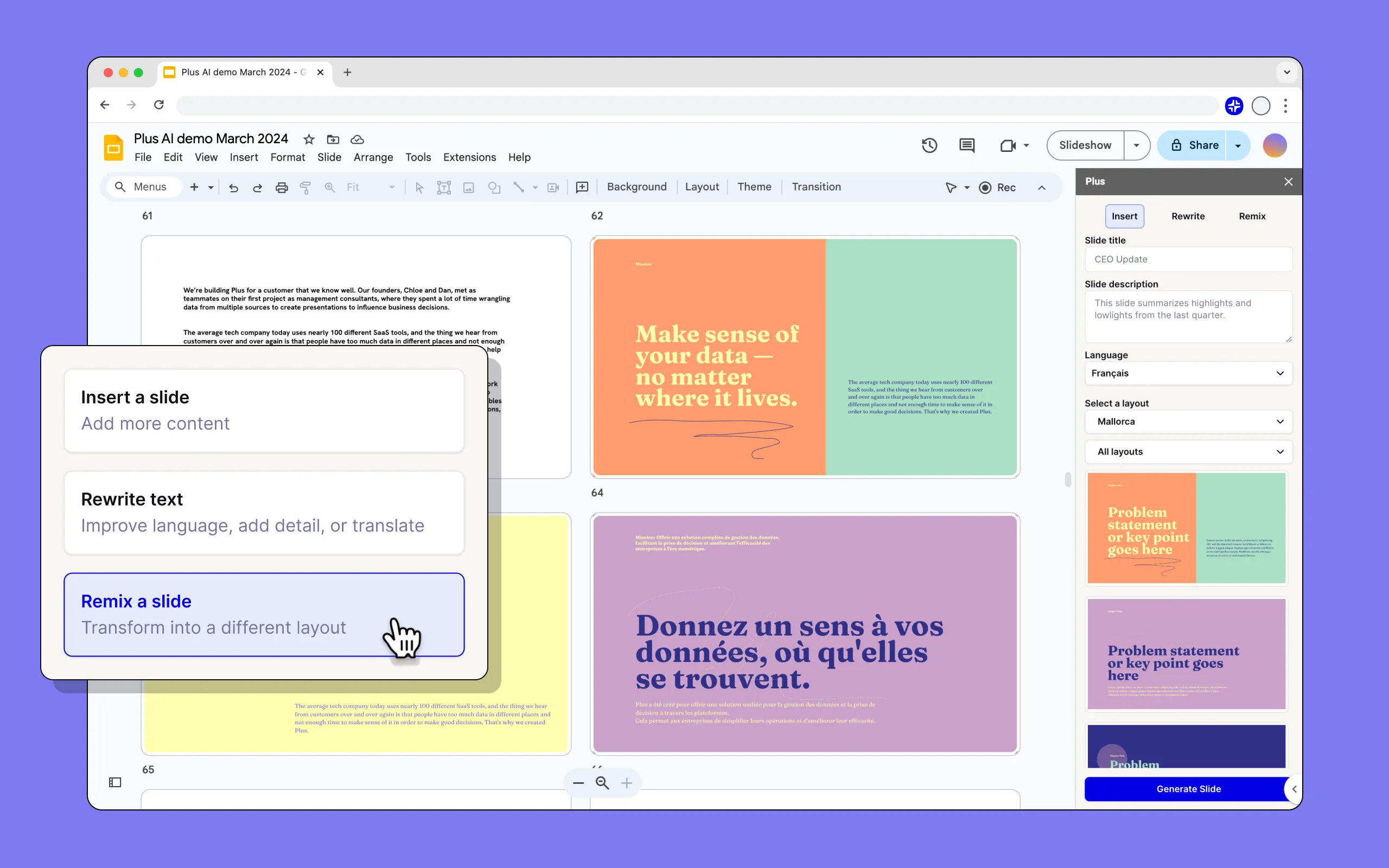
Plus AI is built specifically as an add-in for Google Slides and PowerPoint. This means you do not have to learn a new interface or leave your existing workflow. It lives directly inside your Google Slides sidebar. You can use it to generate entire presentations, add new slides to an existing deck, or rewrite specific sections of text. It is a highly efficient choice for those who are already comfortable with the Google Workspace ecosystem.
One of its standout features is the "Remix" tool. This allows you to take an existing slide and transform its layout or content using AI. While it lacks the deep research capabilities of some standalone platforms, its convenience is hard to beat. When comparing MagicSlides vs Plus AI, Plus AI generally offers more polished design outputs and better template preservation.
Key Features:
- Native integration as a Google Slides add-in.
- Template preservation keeps your existing company branding intact.
- Remix feature allows for instant slide layout changes.
- AI-powered rewriting and content enhancement.
Pricing: There is no permanent free tier. Pricing starts at $10 per month.
Who it is best for: Enterprise teams and power users who want to stay within the Google Slides interface.
Verdict: Plus AI is the best add-in for users who want to enhance their current Google Slides workflow without switching to a new platform.
3. Gemini for Google Slides
Gemini is Google’s own AI integrated directly into Workspace. It is the most accessible option for many because it is often included in existing Workspace subscriptions. Gemini can reference documents in your Google Drive to pull information for your slides. This creates a bridge between your text documents and your visual presentations.
While it is convenient, the design output is often more conservative than specialized tools. It is excellent for creating a quick draft or an internal presentation, but it might require manual polishing for a high-stakes client meeting. If you find the features too basic, you might want to look into Gemini Google Slides alternatives that offer more creative control.
Key Features:
- Seamless integration with Google Drive and other Workspace apps.
- Built-in image generation to create custom visuals.
- AI-driven drafting based on simple text prompts.
- No additional software installation required.
Pricing: Free tiers are available for Workspace users. Premium features start at $0 per month depending on your Workspace plan.
Who it is best for: Students and internal corporate users who need quick drafts within the Google ecosystem.
Verdict: It is the most convenient tool for Google users, though it lacks the sophisticated design and research depth of NextDocs.
4. Gamma
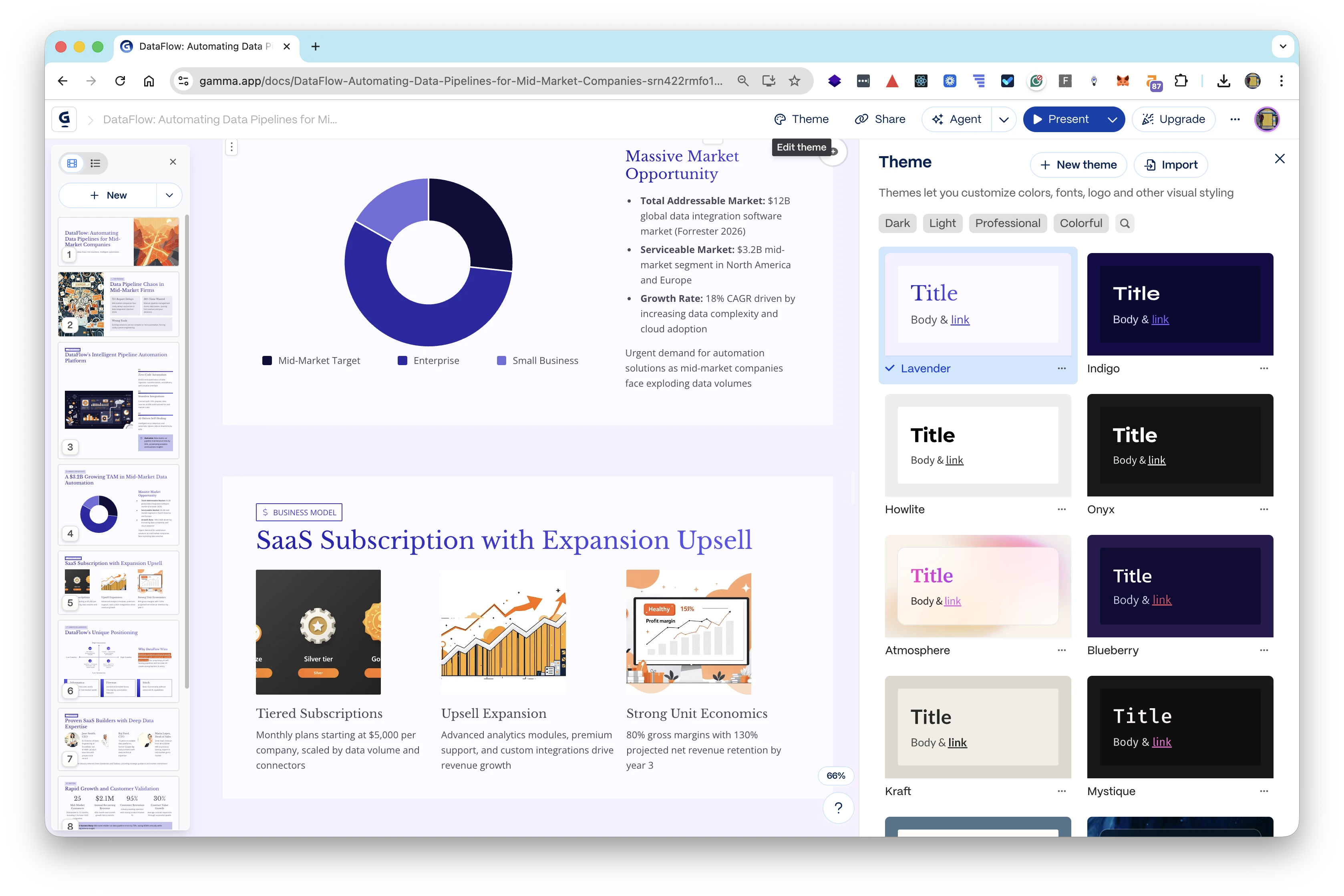
Gamma has gained popularity for its web-native approach to presentations. Instead of traditional slides, Gamma creates "cards" that can be viewed as a scrolling page or a standard deck. This makes it perfect for sharing via a link. However, it also includes a robust export feature for those who need a Google Slides or PowerPoint file.
The generation speed is impressive. Gamma can produce a visually stunning deck in under a minute. It uses a modern aesthetic that appeals to startups and creative agencies. While it is fast, the brand customization options are somewhat basic compared to professional-grade tools. When looking at research-heavy workflows, comparing Manus vs NextDocs 2026 shows that dedicated research tools often provide more depth than Gamma’s quick-generation model.
Key Features:
- Web-native format that works beautifully on mobile and desktop.
- Fast AI generation with modern, clean themes.
- Flexible cards that can hold embedded videos and interactive elements.
- Easy export to PDF and PowerPoint formats.
Pricing: A generous free tier is available. Pro plans start at $8 per month.
Who it is best for: Startups, students, and anyone who needs a modern look with minimal effort.
Verdict: Gamma is the best budget-friendly option for users who want a stylish, modern presentation without a steep learning curve.
5. Beautiful.ai
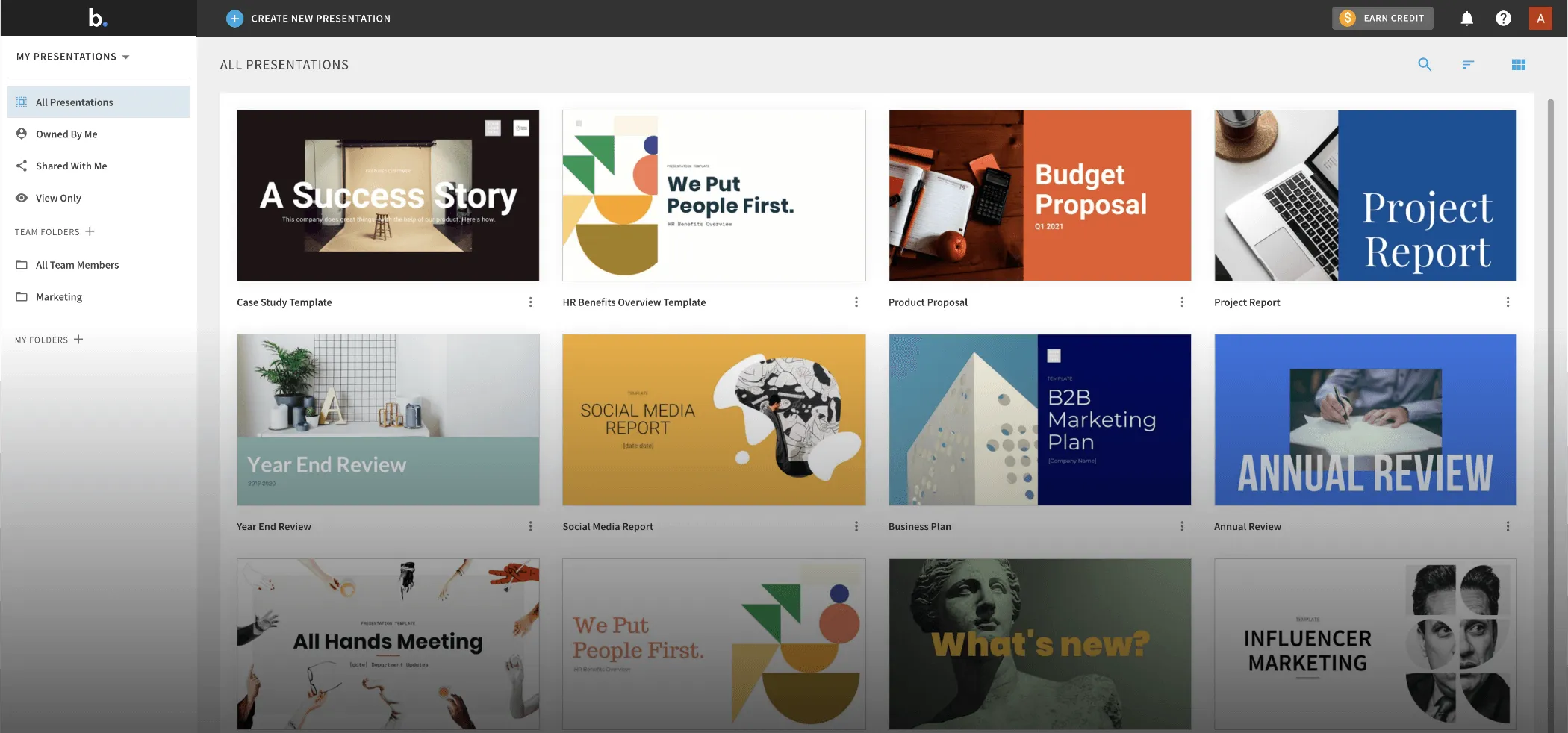
Beautiful.ai focuses on the "smart" side of design. It uses a constraint-based system where the slides adjust themselves as you add content. If you add a new bullet point, the other elements on the slide move automatically to maintain a perfect layout. This prevents the common problem of "ugly" slides created by non-designers.
The AI features include a slide designer that can generate layouts based on your text. While the AI is not as conversational as NextDocs or Gemini, the resulting visual quality is consistently high. If you find its templates too restrictive, you can explore various Beautiful.ai alternatives that offer more free-form editing.
Key Features:
- Smart templates that automatically adjust to content changes.
- Polished, professional-grade animations and transitions.
- Brand kit integration for consistent corporate identity.
- Huge library of icons and stock photography.
Pricing: No free tier is available. Pricing starts at $12 per month.
Who it is best for: Non-designers who need to produce high-quality, client-facing decks.
Verdict: This is the gold standard for visual polish. It is ideal for those who prioritize aesthetics over deep AI content generation.
6. Pitch.com
Pitch.com is a collaboration-first platform. It was designed to replace the messy process of emailing PowerPoint files back and forth. Its AI features allow you to generate a draft quickly, which your team can then edit together in real time. It offers excellent version history and commenting features.
The AI generation in Pitch is reliable but slightly less advanced than the multi-variant approach found in other platforms. It focuses more on providing a solid starting point that a human team can then refine. It is a favorite among tech startups that value speed and teamwork.
Key Features:
- Real-time collaboration with live cursors and comments.
- Professional template library curated by world-class designers.
- AI-driven deck generation and content suggestions.
- Strong version control to track every change.
Pricing: Free tier available for individuals. Pro plans start at $8 per user per month.
Who it is best for: Remote teams and startups that collaborate heavily on every presentation.
Verdict: Pitch is the best choice for team-based workflows where collaboration is just as important as the AI generation itself.
7. Canva Magic Design
Canva is a household name in design, and its Magic Design tool brings AI to its presentation suite. It leverages Canva's massive library of assets, including millions of icons, photos, and videos. The AI can take a short prompt and turn it into a full deck with layouts that match your brand.
Canva is excellent for presentations that need to be visually loud or social-media friendly. However, its export to Google Slides can sometimes be inconsistent with formatting. It is often better to present directly from Canva or export as a PDF. It remains a top contender for marketers and small business owners.
Key Features:
- Access to the world's largest library of design assets.
- Magic Switch allows you to turn a presentation into a blog post or social video.
- AI image and text generation built directly into the editor.
- High-quality brand kit management for multiple clients.
Pricing: A very strong free tier is available. Canva Pro starts at $13 per month.
Who it is best for: Marketers, social media managers, and creative professionals.
Verdict: Canva is the king of assets. If you need a presentation with heavy visual flair, this is the tool for you.
8. Copilot for PowerPoint
Microsoft Copilot is the enterprise answer to AI presentations. It is deeply integrated into the Microsoft 365 ecosystem. While this article focuses on Google Slides export, many users operate in a hybrid environment where they might start in PowerPoint and move to Google Slides. Copilot can turn a Word document into a full presentation instantly.
It is particularly strong at understanding organizational context. It can pull data from your Excel sheets or reference internal company documents. However, it is the most expensive tool on this list and requires a significant commitment to the Microsoft stack. If you find the cost too high, consider Copilot for PowerPoint alternatives that offer similar enterprise features at a lower price point.
Key Features:
- Deep integration with Word, Excel, and Teams.
- Enterprise-grade security and data privacy.
- Automated speaker notes generation.
- Capable of summarizing long presentations into key takeaways.
Pricing: Requires a Microsoft 365 subscription plus a $30 per month Copilot license.
Who it is best for: Large enterprise organizations already using Microsoft 365.
Verdict: It is the most powerful tool for internal corporate data, but the high price and conservative design make it less ideal for creative work.
9. MagicSlides
MagicSlides is a Google Slides add-on that focuses on simplicity. It is one of the few tools that offers a dedicated "YouTube to Slides" feature. You can paste a link to a video, and the AI will summarize the content and create a presentation for you. This is incredibly useful for educators and students.
While the design quality is basic, the speed of content repurposing is excellent. When comparing MagicSlides vs NextDocs 2026, MagicSlides is better for quick summaries of existing videos, while NextDocs is far superior for creating original, research-backed content.
Key Features:
- Convert YouTube videos or long-form articles into slides.
- Simple Google Slides sidebar interface.
- Support for over 100 languages.
- Very fast generation for simple topics.
Pricing: Free tier available for limited use. Pro plans start at $8 per month.
Who it is best for: Educators, students, and content creators repurposing video content.
Verdict: A great niche tool for summarizing existing media, though not the best for creating high-end professional decks from scratch.
10. SlidesAI
SlidesAI is another popular Google Slides add-on that prioritizes ease of use. It is designed for users who have a lot of text and need to turn it into slides quickly. You simply paste your text into the tool, and it handles the bullet points and layout.
It is a straightforward tool without many bells and whistles. In the debate of NextDocs vs SlidesAI 2026, SlidesAI is the choice for those who want the absolute simplest experience, while NextDocs is for those who need professional-grade results.
Key Features:
- Text-to-presentation conversion with minimal clicks.
- Built-in citation tool for academic use.
- Simple interface that requires no technical skill.
- Affordable pricing for students.
Pricing: Free tier available. Pro plans start at $10 per month.
Who it is best for: Students and office workers who need to turn reports into slides fast.
Verdict: A reliable, simple tool for quick internal drafts. It is effective but lacks the design and research depth of higher-ranked competitors.
Decision Guide: How to Choose the Best AI Slide Maker
Choosing the right tool depends on your specific goals and your existing workflow. Not all AI slide makers are created equal, and some excel in areas where others struggle.
When to Prioritize Research
If you are building a pitch deck or a market analysis, you cannot afford to have "hallucinated" data. In these cases, tools like NextDocs are essential. Most AI models will generate plausible-sounding numbers that are actually incorrect. NextDocs solves this by performing real-time research and providing citations. This ensures your presentation is not only beautiful but also factually accurate.
When to Prioritize Design
If your presentation is for a creative audience or a brand-heavy client, look toward Beautiful.ai or Canva. These tools prioritize the visual layout above all else. Beautiful.ai ensures that your slides never look cluttered, while Canva gives you the creative freedom to use high-quality graphics and animations.
When to Prioritize Workflow
If you live in Google Slides and do not want to export and import files, an add-on like Plus AI or Gemini is the best choice. These tools allow you to use AI without leaving your current tab. This is ideal for quick edits and collaborative team environments where everyone is already working in a shared Google Drive folder.
Technical and Academic Needs
For technical presenters, the ability to display code and math is a dealbreaker. Most AI slide makers treat code as simple text, which ruins the formatting. NextDocs is the only major player that provides native syntax highlighting and KaTeX rendering for equations. This makes it the only viable choice for engineers, data scientists, and academics.
Conclusion: The State of AI Presentations
The best AI slide makers in 2026 have moved beyond simple text generation. They are now full-featured assistants capable of research, design, and complex formatting. While tools like Plus AI and Gemini offer great convenience for Google Workspace users, NextDocs remains the overall leader due to its multi-variant generation and deep research capabilities.
The ability to export to Google Slides ensures that you are never locked into a single ecosystem. You can use the power of AI to generate your content and then use the collaborative power of Google Slides to finalize it with your team. As AI continues to evolve, the gap between "drafting" and "finalizing" will continue to shrink, allowing professionals to focus on their message rather than their margins.
Ready to Create Better Presentations?
Try NextDocs Free and experience multi-variant generation, universal exports, and deep research integration. No credit card required.