

The Evolution of AI Presentations in 2026
Creating professional presentations used to be a grueling process. Professionals spent hours adjusting bullet points, hunting for high resolution icons, and manually aligning text boxes. Today, the landscape has shifted entirely. AI presentation builders and PowerPoint add-ins have moved from basic text generators to sophisticated design partners.
The primary challenge for modern professionals is no longer creating content, but finding a tool that balances quality, affordability, and workflow compatibility. Many tools promise magic but deliver generic, uninspiring slides that require more time to fix than they saved in the first place.
In this guide, we evaluate the top 10 AI presentation tools available in 2026. We focused on affordability, ease of use, and the ability to produce professional results for consultants, founders, and sales teams. Whether you need a native PowerPoint add-in or a standalone platform with universal export options, this ranking covers the best options currently on the market.
Summary Comparison Table
| Rank | Tool | Best For | Starting Price |
|---|---|---|---|
| 1 | NextDocs | Overall, Research, and Universal Export | $15/mo |
| 2 | Plus AI | Native PowerPoint and Google Slides Integration | $10/mo |
| 3 | Copilot for PowerPoint | Microsoft 365 Enterprise Users | $30/mo |
| 4 | Gemini for Google Slides | Google Workspace Users | $0/mo |
| 5 | Gamma | Budget-Conscious and Web-Native Decks | $8/mo |
| 6 | Beautiful.ai | Non-Designers and Visual Polish | $12/mo |
| 7 | Pitch.com | Collaborative Teams and Version Control | $8/mo |
| 8 | Canva Magic Design | Marketers and Visual Asset Access | $13/mo |
| 9 | MagicSlides | Repurposing YouTube and Documents | $8/mo |
| 10 | SlidesAI | Quick Internal Drafts and Students | $10/mo |
How We Tested the Best AI Presentation Tools
To provide an objective ranking, we used a standardized benchmark prompt across every tool. This prompt was designed to test narrative structure, data handling, and industry specific knowledge.
The Benchmark Prompt: "Create a 10 slide pitch deck for a B2B SaaS startup called DataFlow that helps mid market companies automate their data pipelines. Include a problem statement, solution overview, market size, business model, competitive landscape, team slide, traction metrics, and a final ask. The target audience is Series A investors."
We evaluated the results based on content accuracy, design sophistication, and how much manual editing was required before the deck could be considered investor ready. We also prioritized tools that offer affordable entry points for individual professionals and small teams. For more context on the general market, you can read our best AI presentation builders 2026 roundup.
1. NextDocs
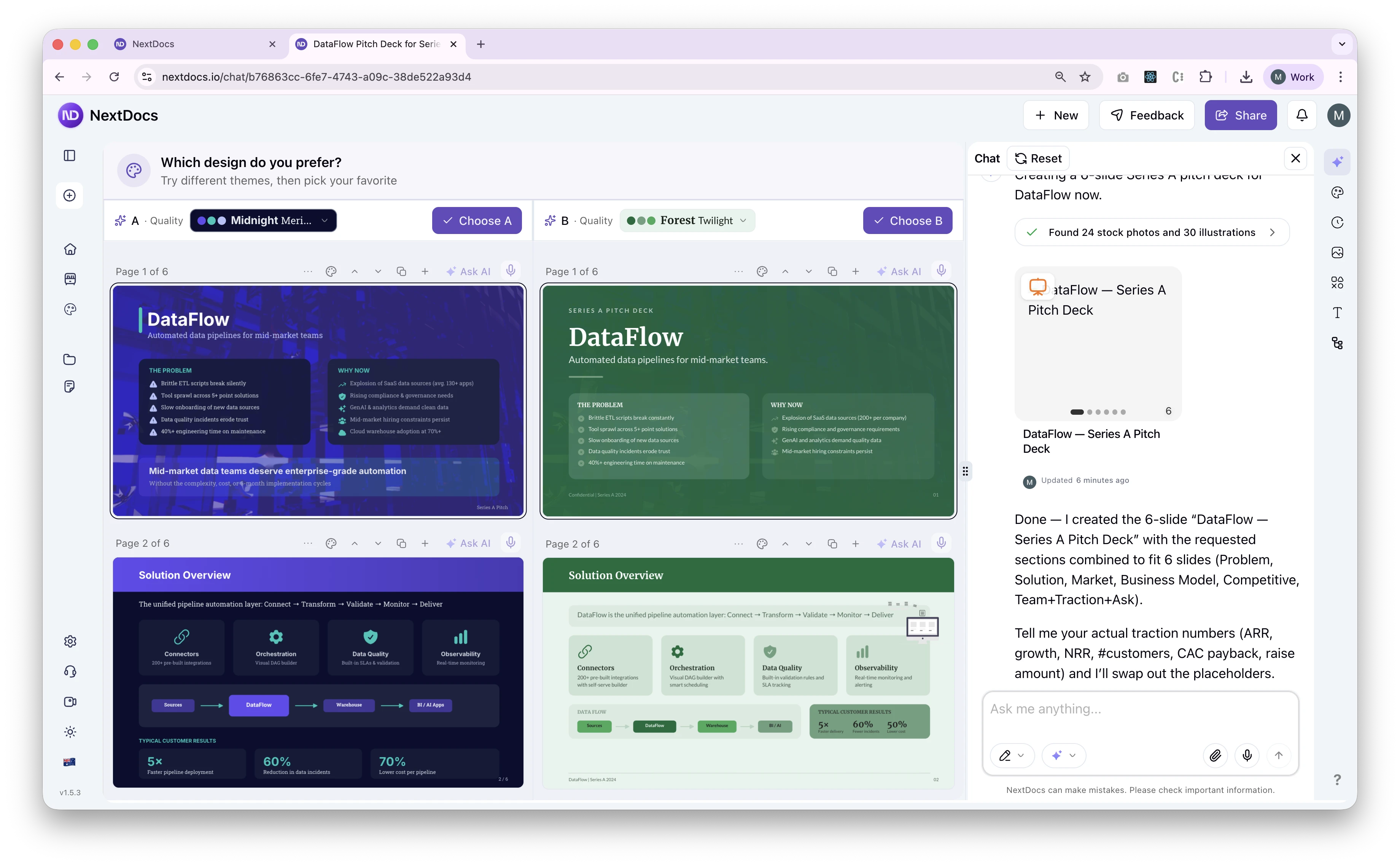
NextDocs is the top choice for professionals who need high quality output without being locked into a single ecosystem. It is an AI native platform that prioritizes choice and research depth. Unlike most tools that provide one single output, NextDocs generates multiple variations for every prompt. This allows users to choose the narrative arc or design style that best fits their vision.
The tool is particularly strong for research heavy decks. It features built in deep research capabilities that pull actual data and citations from the web. This prevents the common AI issue of hallucinated statistics. Once your presentation is ready, NextDocs offers universal exports. You can move your work to PDF, PowerPoint, Google Slides, or even Google Docs with a single click. This flexibility is essential for consultants who may need to provide different formats to different clients. For a deeper look at how it compares to design giants, see our Canva vs NextDocs comparison.
Key Features:
- Multi variant generation creates several versions of a deck simultaneously.
- Deep research integration finds real world data and provides citations.
- Universal export to PPTX, Google Slides, PDF, and Docs.
- Brand kit support ensures consistent colors and fonts across all slides.
- Multi model support allows you to choose between different AI engines for specific tasks.
Pricing: Free tier available. Paid plans start at $15 per month.
Best for: Consultants, founders, and sales teams who need research heavy, professional decks.
Verdict: NextDocs is the most versatile tool on this list. The ability to generate multiple variants and export to any format makes it the best overall value for professional use.
2. Plus AI
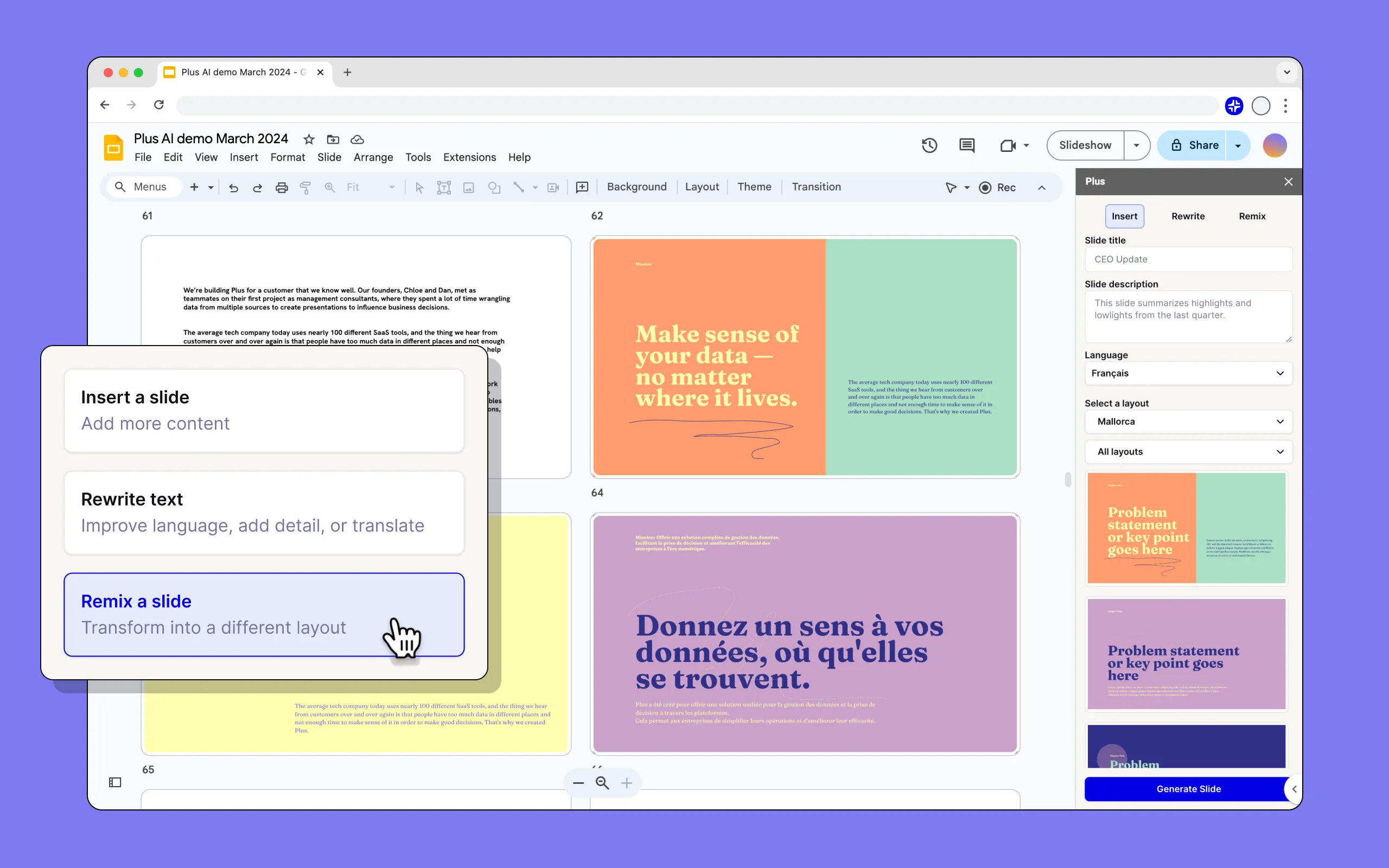
Plus AI is a dedicated add-in that lives directly inside PowerPoint and Google Slides. For users who do not want to learn a new interface, Plus AI is a perfect fit. It focuses on enhancing the tools you already use every day. You can generate new presentations from a prompt or use the Remix feature to transform existing slides into new layouts.
The main advantage of Plus AI is how it preserves your existing templates. If your company has a specific master slide deck, Plus AI can work within those constraints. This makes it a favorite for enterprise teams who must stick to strict brand guidelines. It is often compared to other workspace tools, which we detail in our Gemini for Google Slides vs Plus AI analysis.
Key Features:
- Native integration as a toolbar add-in for PowerPoint and Google Slides.
- Remix feature allows for quick updates to existing slide layouts.
- Preserves existing master slides and company templates.
- AI powered rewriting and content enhancement for drafted slides.
Pricing: No free tier. Starting price is $10 per month.
Best for: Power users of PowerPoint and Google Slides who want AI features within their current workflow.
Verdict: If you refuse to leave the PowerPoint interface, Plus AI is the most seamless add-on available. It is affordable and respects your existing design work.
3. Copilot for PowerPoint
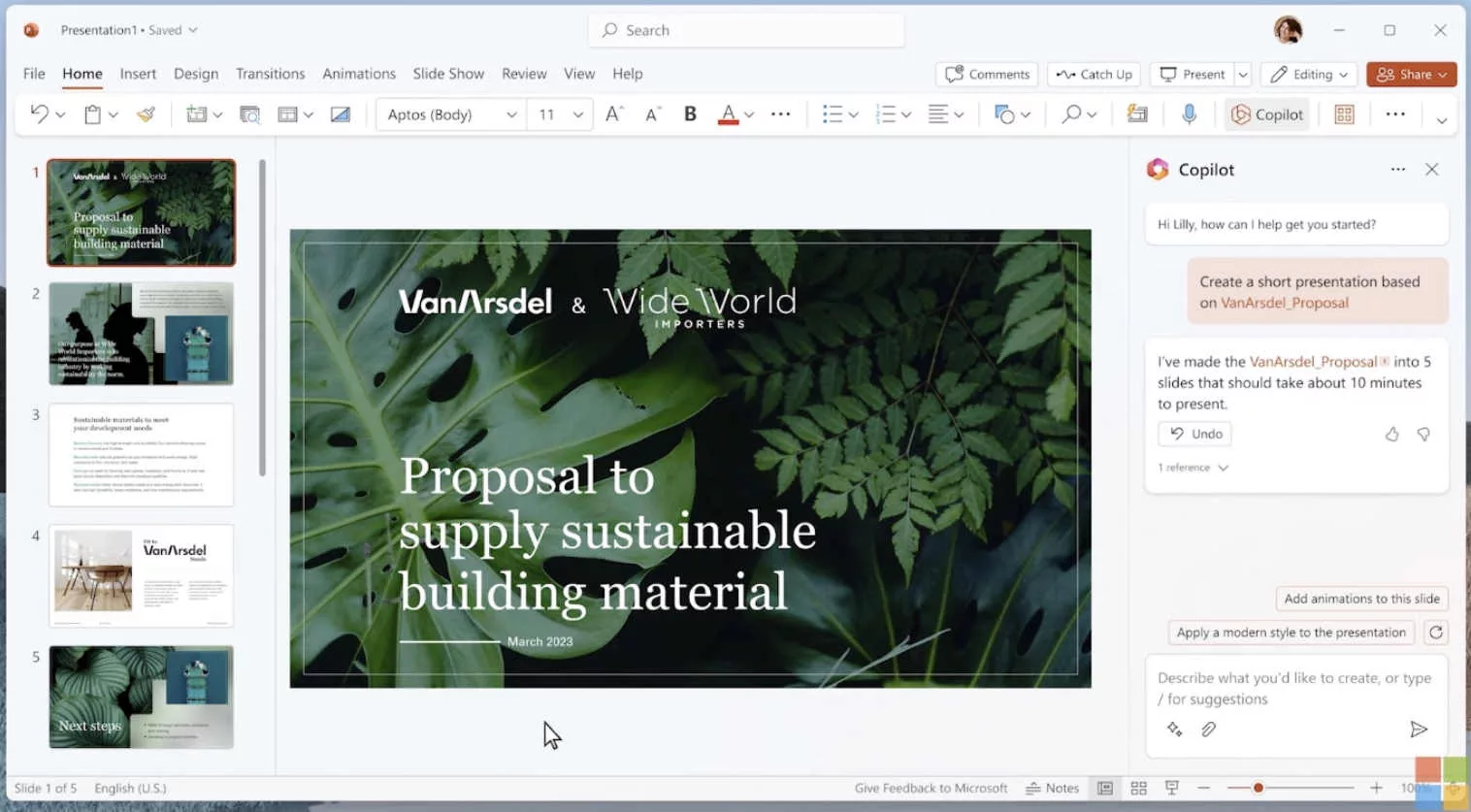
Microsoft Copilot is the official AI assistant for the Microsoft 365 ecosystem. It is designed for enterprise users who need their AI to understand organizational context. Copilot can pull information from Word documents, Excel spreadsheets, and Teams chats to build a presentation.
While it is the most expensive option on this list, its value lies in its security and integration. For a large corporation, the ability to generate a presentation from an internal report while staying within the company's secure tenant is a major benefit. However, for individual users, the design output can feel a bit conservative and generic compared to creative alternatives.
Key Features:
- Deep integration with Microsoft 365 apps and SharePoint data.
- Ability to generate slides directly from Word documents.
- Automatic generation of detailed speaker notes.
- Enterprise grade security and data privacy compliance.
Pricing: No free tier. Requires a $30 per month per user subscription on top of a Microsoft 365 license.
Best for: Large enterprise teams and organizations already fully committed to the Microsoft ecosystem.
Verdict: Copilot is powerful for internal corporate use, but the high price and conservative design layouts make it less ideal for startups or creative agencies.
4. Gemini for Google Slides
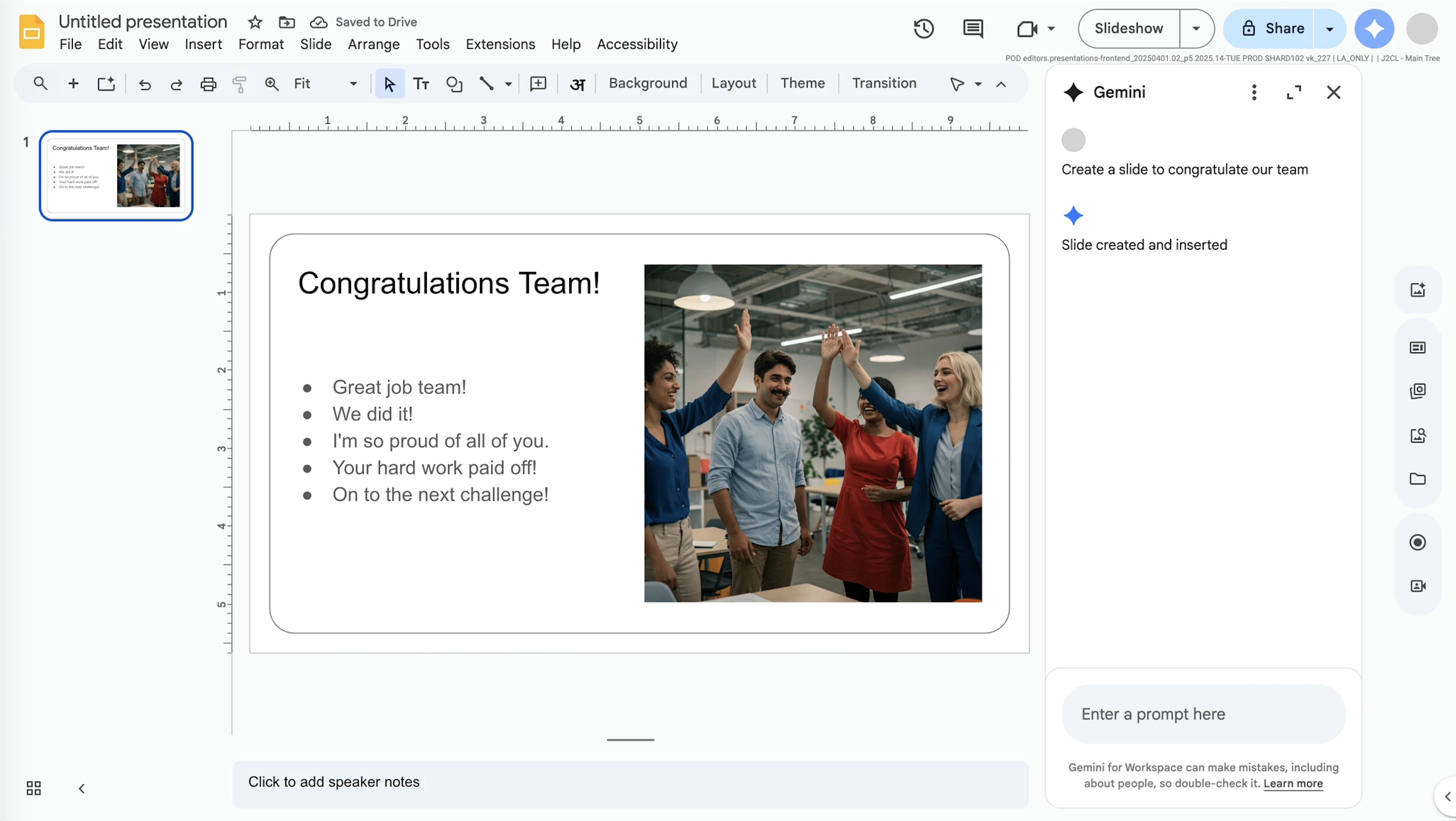
Gemini is Google's answer to AI assisted presentation building. It is built directly into Google Slides and is often included at no extra cost for Workspace subscribers. Gemini excels at quick drafts and basic image generation. It can reference files in your Google Drive, making it easy to pull content from a Google Doc into a slide deck.
The quality of the slides is generally acceptable for internal meetings, but they often lack the visual flair required for high stakes external pitches. It is a solid entry level tool for those who primarily work in the cloud. We compared its capabilities to other add-ins in our MagicSlides vs Plus AI and Gemini overview.
Key Features:
- Seamless integration with Google Workspace and Google Drive.
- Built in AI image generation for custom slide visuals.
- Quick summary features for long presentations.
- Collaboration friendly within the standard Google Slides environment.
Pricing: Free tier available for basic features. Advanced features require a Workspace subscription.
Best for: Google Workspace users who need quick, functional slides for internal updates.
Verdict: Gemini is a convenient, low friction option. While it is not the most sophisticated designer, its price point and integration make it a strong contender for daily tasks.
5. Gamma
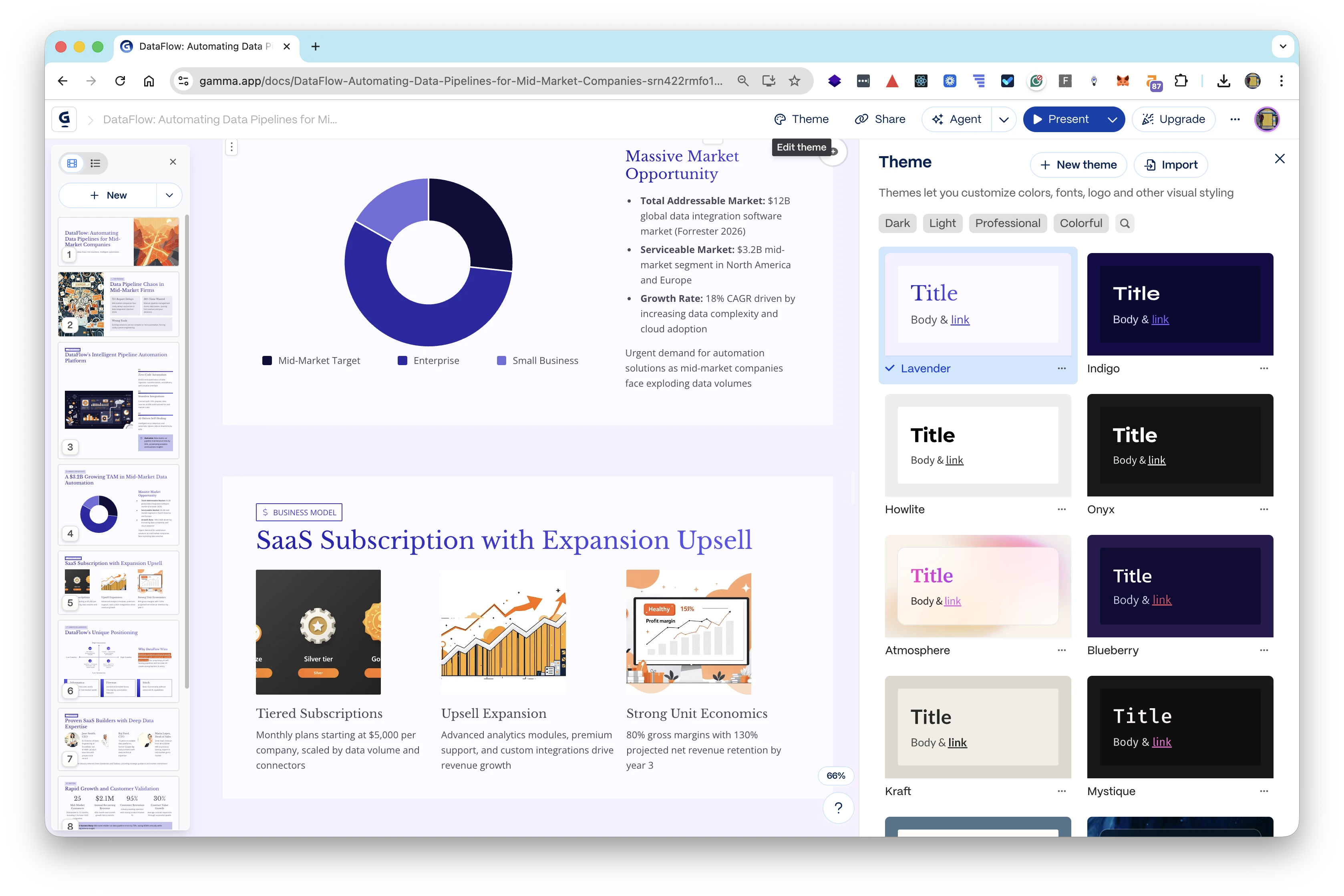
Gamma has gained popularity for its web native approach to presentations. It does not treat a presentation as a series of static slides, but as a fluid, interactive document. This makes Gamma excellent for sharing via a link. The tool uses a generous credit system for its free tier, which makes it very accessible for students and early stage founders.
One downside is that Gamma's unique format can be difficult to convert back into traditional PowerPoint files without losing some of the visual appeal. However, for modern teams that prefer sending a link over an email attachment, Gamma is a top tier choice. If you find its features too limiting, you can explore several Gamma alternatives 2026.
Key Features:
- Web native format that allows for vertical scrolling and interactive embeds.
- Modern, clean aesthetic with excellent default themes.
- One click styling changes that update the entire deck instantly.
- Generous free tier for new users.
Pricing: Free tier available. Paid plans start at $8 per month.
Best for: Startups and individuals looking for a modern, web first presentation style.
Verdict: Gamma is the best choice for those who want a fresh look and don't mind moving away from traditional slide boundaries.
6. Beautiful.ai
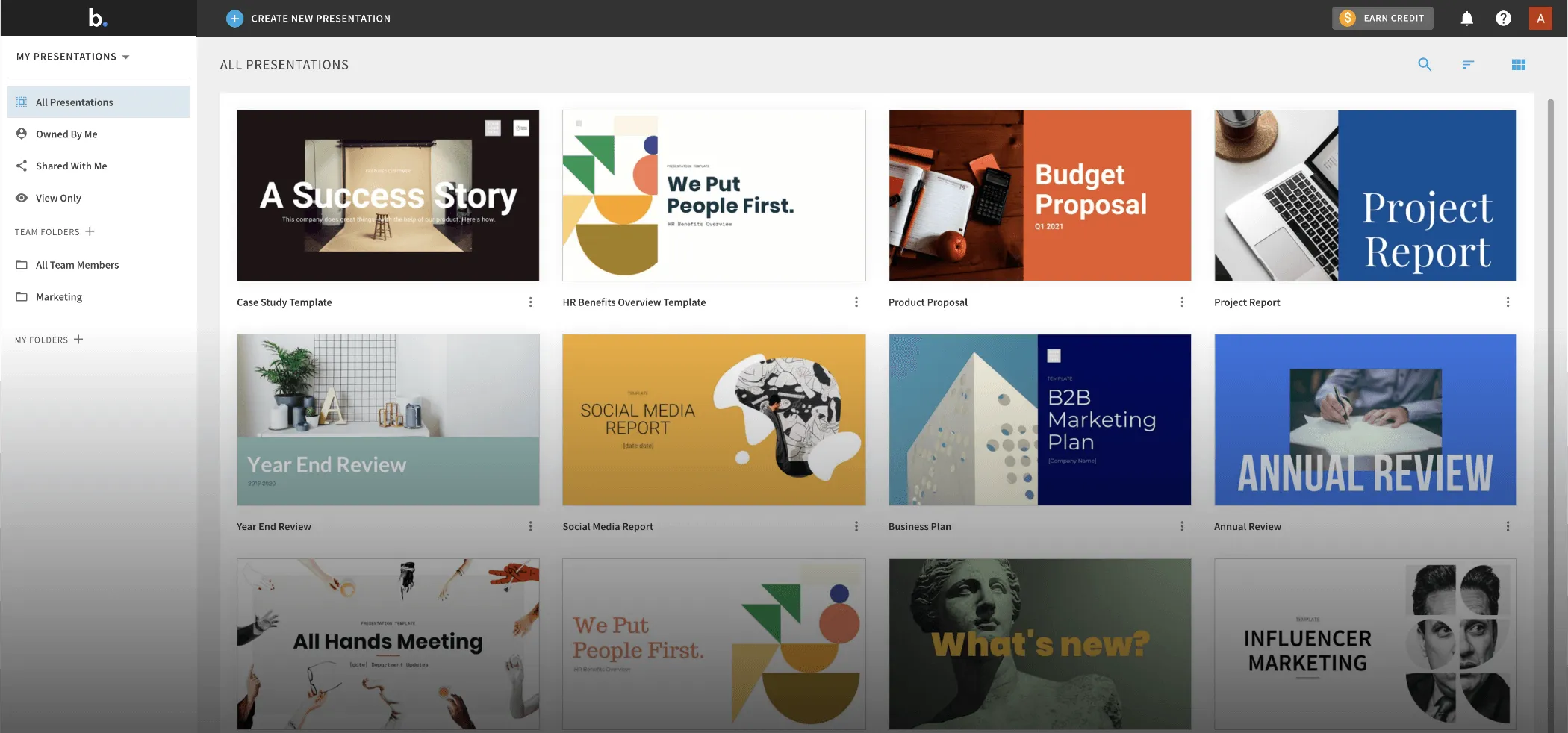
Beautiful.ai focuses on the concept of smart templates. The AI does not just generate content, it enforces design rules. If you add more text to a slide, the elements automatically resize and reposition themselves to maintain a professional look. This makes it nearly impossible to create an ugly presentation.
The platform is standalone, but it offers a PowerPoint add-in for exporting and syncing. While it is highly polished, some users find the templates restrictive. You cannot always move elements exactly where you want them because the AI is constantly trying to maintain design integrity. For those seeking more freedom, looking at Beautiful.ai alternatives might be beneficial.
Key Features:
- Smart templates that automatically adjust as content is added.
- High quality library of professional icons and stock photography.
- Brand control features that lock in colors and logos for teams.
- Smooth animations and transitions that look professional by default.
Pricing: No free tier. Pro plans start at $12 per month.
Best for: Non designers who want guaranteed professional results with minimal effort.
Verdict: Beautiful.ai is the gold standard for visual consistency. It is perfect for those who want to focus on content while the software handles the aesthetics.
7. Pitch.com
Pitch.com is built for collaborative teams. It combines a strong template library with robust version control and commenting features. Their AI assistant helps with drafting the initial structure and finding the right visual assets. Pitch feels more like a modern creative suite than a traditional slide editor.
The collaboration features are where Pitch truly shines. Teams can see who is working on which slide in real time, and the version history is incredibly easy to navigate. While its AI capabilities are slightly less advanced than NextDocs, its workflow features are top notch. We also keep an eye on emerging competitors like Manus vs NextDocs 2026 to see how collaboration evolves.
Key Features:
- Real time collaboration with live cursor tracking and comments.
- Deep version history and the ability to restore previous slide states.
- High quality, curated template gallery for various business needs.
- Quick AI generation for outlines and basic slide content.
Pricing: Free tier available for individuals. Team plans start at $8 per user per month.
Best for: Marketing and product teams that build presentations together.
Verdict: Pitch is the best choice for collaborative work. It balances AI assistance with the best team management tools in the industry.
8. Canva Magic Design
Canva is a household name in design, and its Magic Design AI brings that power to presentations. The biggest strength of Canva is its asset library. You have access to millions of photos, videos, and graphics. The AI can take a simple text prompt and turn it into a multi slide deck using any of Canva's thousands of templates.
While Canva is great for creative and visual decks, it can sometimes struggle with professional business formatting. Elements can often feel a bit too "busy" for a formal board meeting. Additionally, exporting to PowerPoint can sometimes result in broken layouts or uneditable text boxes.
Key Features:
- Massive library of stock assets and pre designed templates.
- Magic Switch allows you to turn a presentation into a social post or video instantly.
- AI powered photo editing and background removal built in.
- Strong free tier with access to many premium features.
Pricing: Free tier available. Canva Pro starts at $13 per month.
Best for: Marketers and social media managers who need highly visual content.
Verdict: Canva is the ultimate tool for visual variety. It is excellent for creative projects, though it may require extra cleanup for formal corporate use.
9. MagicSlides
MagicSlides is a specialized add-in for Google Slides that focuses on content repurposing. One of its standout features is the ability to turn a YouTube video or a long PDF document into a presentation. This is incredibly useful for educators and trainers who need to summarize existing video content into a slide deck.
The design output of MagicSlides is relatively basic. It focuses more on the logic of the content than the beauty of the slides. You will likely need to apply a theme or do some manual styling after the AI finishes its work. It remains a popular choice for those looking for best AI presentation builders that handle specific file types.
Key Features:
- YouTube to Slides conversion feature.
- PDF and document to presentation automation.
- Support for over 100 languages for global teams.
- Simple, no frills interface within Google Slides.
Pricing: Free tier available. Paid plans start at $8 per month.
Best for: Educators, trainers, and content creators repurposing video and text.
Verdict: MagicSlides is a great niche tool. It is the best at what it does—converting existing content—even if its design capabilities are limited.
10. SlidesAI
SlidesAI is another Google Slides add-in that prioritizes speed. It is one of the most affordable options for those who just need a quick draft. You paste your text, select a general style, and the AI populates the slides. It is a favorite among students and for internal company updates where the stakes are lower.
The customization options are fairly minimal compared to tools like NextDocs or Beautiful.ai. However, for the price, it provides a functional starting point that saves a significant amount of typing and manual slide creation. Those who find it too simple often look for SlidesAI alternatives to get more design control.
Key Features:
- Rapid slide generation from long form text.
- Simple integration with Google Slides.
- Affordable subscription tiers for individuals.
- Basic customization of colors and fonts.
Pricing: Free tier available. Paid plans start at $10 per month.
Best for: Students and professionals who need quick, low cost internal drafts.
Verdict: SlidesAI is a reliable, budget friendly option. It does not offer the most advanced features, but it is excellent for overcoming the "blank slide" problem quickly.
Decision Guide: Finding Your Perfect Add-In
When choosing between these tools, consider your primary output format and your design skill level.
If you are a consultant or founder who needs the highest possible quality and the ability to export to any format, NextDocs is the clear winner. Its multi variant generation ensures you are not stuck with a single AI interpretation, and its deep research tools provide a level of credibility that other tools lack.
If you are an enterprise employee who spends all day in PowerPoint, Plus AI or Microsoft Copilot are the most logical choices. They minimize the friction of switching between apps and keep your data within the Microsoft ecosystem.
For those on a strict budget, Gamma and Gemini offer the best free experiences. Gamma provides a modern, web first look, while Gemini offers the convenience of being built directly into Google Workspace.
Finally, if you are a non designer who is terrified of making an ugly deck, Beautiful.ai will act as your automated design department. It ensures that every slide you create is balanced and professional, regardless of how much content you cram into it.
Conclusion
The market for PowerPoint AI add-ins has matured significantly in 2026. Professionals no longer have to choose between spending hours on design or accepting low quality AI results. Tools like NextDocs have bridged the gap by providing high quality, research backed content that can be exported to any professional format.
By choosing the right tool for your specific workflow, you can reclaim hours of your week and focus on the part of the presentation that actually matters: your message and your delivery.
Ready to Create Better Presentations?
Try NextDocs Free and experience multi-variant generation, universal exports, and deep research integration. No credit card required.