

Why Professionals Seek Beautiful.ai Alternatives in 2026
Beautiful.ai has long been a favorite for those who want polished slides without the manual labor of a designer. Its smart templates automatically adjust as you add content, which prevents the common eyesores found in amateur PowerPoint decks. However, as we move through 2026, the landscape of AI presentation builders has evolved significantly. Users are increasingly finding that the tool's core strengths can also be its greatest limitations.
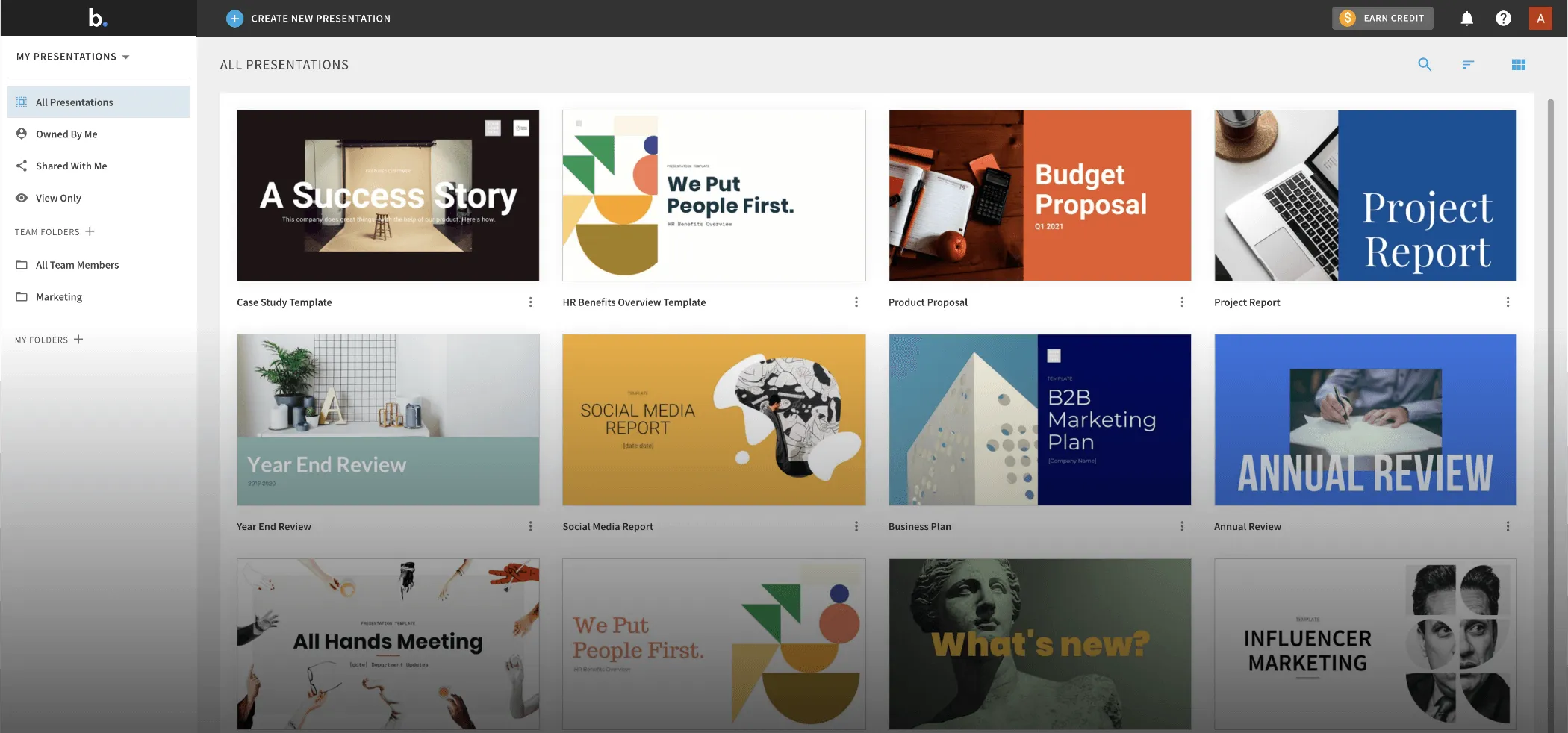
The primary reason users look for alternatives is the lack of flexibility. While the smart templates ensure a professional look, they often force content into rigid boxes. If you have a specific vision for a slide that does not fit a pre-defined layout, you are often out of luck. Furthermore, the AI generation features in Beautiful.ai have stayed relatively conservative compared to newer competitors. Many professionals now expect an AI that does more than just format. They want an assistant that can perform deep research, pull real-time data, and offer multiple creative directions for a single prompt.
Pricing is another significant factor. With no free tier and a starting price of $12 per month, it can be a steep investment for individuals or small teams who only need occasional presentations. When comparing Beautiful.ai vs NextDocs, many find that the ability to export to multiple formats like Google Slides and Docs adds much more value for a similar price point.
Comparison of Top AI Presentation Tools
| Tool | Best For | Pricing | Export Formats |
|---|---|---|---|
| NextDocs | Overall, Research, Multi-variant | Free tier, from $15/mo | PPTX, PDF, Google Slides, Google Docs |
| Plus AI | PowerPoint and Google Slides users | From $10/mo | PPTX, Google Slides |
| Gamma | Web-native decks and startups | Free tier, from $8/mo | PPTX, PDF |
| Pitch.com | Team collaboration | Free tier, from $8/mo | PPTX, PDF |
| Copilot | Microsoft 365 Enterprise users | From $30/mo | PPTX |
| Canva | Marketing and social media | Free tier, from $13/mo | PPTX, PDF, Video, PNG |
| Gemini | Google Workspace users | Free tier, from $0/mo | Google Slides, PPTX, PDF |
1. NextDocs: The Best Overall Alternative
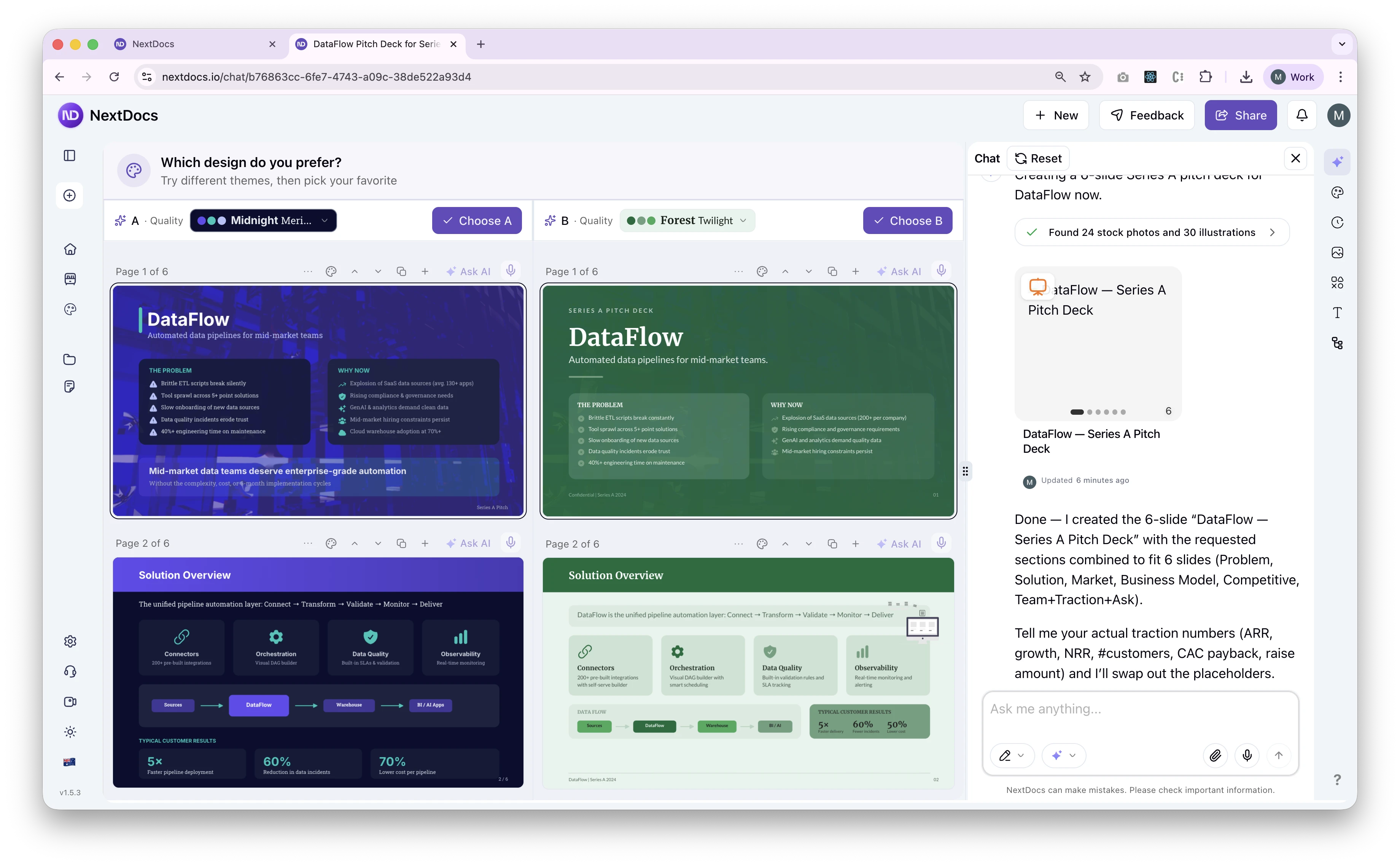
NextDocs represents the next generation of AI presentation software. It addresses the "one-shot" problem that plagues many AI tools. Instead of giving you a single deck and hoping it meets your needs, NextDocs utilizes multi-variant generation. This means it creates several different versions of your presentation from a single prompt, allowing you to choose the narrative flow and visual style that works best for your specific audience.
For consultants and researchers, NextDocs is a massive step up from Beautiful.ai. It features deep research integration that pulls actual figures and citations from the web rather than generating plausible but fake statistics. This is a critical feature for anyone building high-stakes pitch decks or market reports. Furthermore, its universal export capability ensures that you are never locked into a single ecosystem. You can generate a deck and export it to PowerPoint for a client, Google Slides for your internal team, or a Google Doc for a written summary.
2. Plus AI: Best for Native Integration
Plus AI is the premier choice for those who do not want to leave their existing software. It operates as a native add-in for both PowerPoint and Google Slides. This is a major advantage over standalone tools because it allows you to maintain your existing organizational templates and brand styles without any manual migration.
The "remix" feature is a standout capability. It allows you to take an existing slide and ask the AI to rewrite it for a different audience or change its layout while keeping the content intact. This makes it a great tool for enterprise teams who already have years of material stored in traditional slide formats. While there is no free tier, the starting price of $10 per month is competitive for the time it saves power users.
3. Microsoft Copilot for PowerPoint
For those fully immersed in the Microsoft 365 ecosystem, Copilot is the logical choice. Its greatest strength is its organizational awareness. Because it is connected to your company's Microsoft Graph, it can pull information from Word documents, Excel sheets, and even Teams chats to build a presentation that is contextually accurate to your specific business projects.
While the design output tends to be more conservative and corporate than Beautiful.ai, the ability to generate speaker notes and summarize long internal decks is unmatched. It is an expensive option at $30 per month, and it is primarily designed for enterprise environments. However, for internal reporting and project updates, the deep integration with the rest of the Office suite provides a level of efficiency that standalone tools cannot replicate.
4. Gemini for Google Slides
Google's Gemini is the direct competitor to Copilot for those who live in Google Workspace. It is built directly into the Google Slides interface, making it incredibly easy to access. It excels at generating quick drafts and creating custom AI images to accompany your points.
While the output quality can sometimes be inconsistent compared to more specialized tools, it is often included at no extra cost for Workspace subscribers. This makes it an excellent choice for internal presentations or quick brainstorming sessions. If you are looking for more advanced capabilities, you might find that it lacks the sophisticated design controls found in the best AI presentation builders for consultants.
5. Gamma: Best for Modern, Web-Native Decks
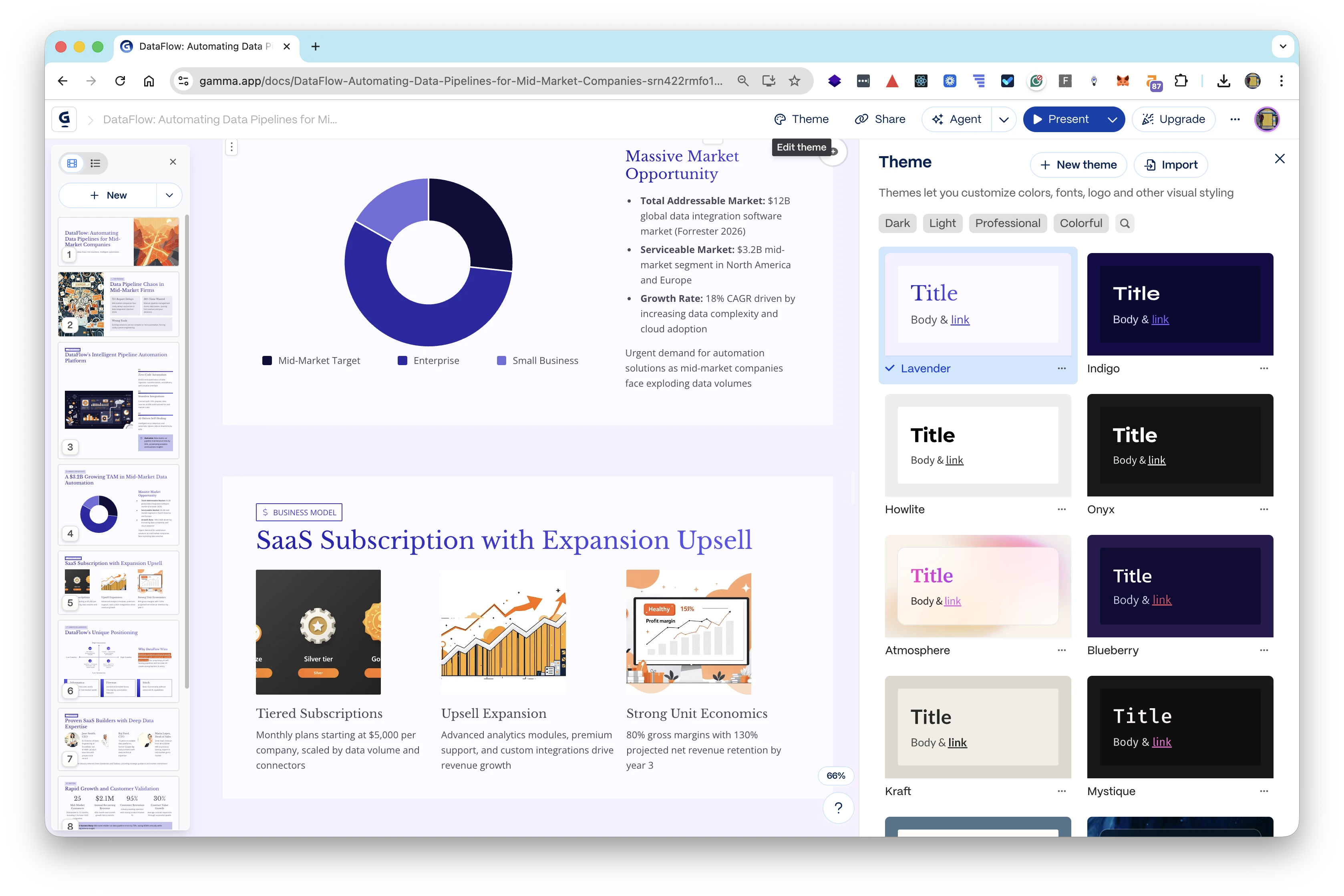
Gamma has gained massive popularity for its unconventional approach to slides. It creates "cards" that feel more like a modern website than a traditional 4:3 PowerPoint slide. This makes Gamma presentations incredibly engaging for viewers on mobile devices or laptops. The tool is fast, and its free tier is one of the most generous in the industry.
When looking at Beautiful.ai vs Gamma, the choice often comes down to the final delivery format. If you need a traditional file to email to a conservative stakeholder, Beautiful.ai is safer. If you want to send a live link that looks stunning and interactive, Gamma is the winner. It is particularly popular among startups and for internal company wikis.
6. Pitch.com: Best for Collaborative Teams
Pitch.com was built with collaboration at its core. While its AI features are solid, its true power lies in its workflow tools. It offers real-time collaboration, version history, and a sophisticated commenting system that makes it easy for large teams to build a deck together.
In the debate of Beautiful.ai vs Pitch, Pitch.com often wins for teams that need to maintain a high level of control over their brand. Its template library is exceptionally professional and modern. While the AI generation is helpful for getting started, the tool is really designed for people who want to put the finishing touches on their work manually.
7. Canva Magic Design
Canva is the undisputed king of visual assets. Its Magic Design AI allows you to turn a prompt into a full presentation using Canva's massive library of stock photos, icons, and fonts. It is a fantastic tool for marketers who need to create social media content and presentations in the same visual style.
The primary drawback is that Canva's designs can sometimes look a bit too "busy" for a professional corporate environment. When comparing Beautiful.ai vs Canva, Beautiful.ai usually offers a more buttoned-up, professional look. However, Canva's multi-format export options, which include video and high-quality images, make it a versatile tool for creative teams.
8. MagicSlides
MagicSlides is a focused Google Slides add-on that specializes in content repurposing. One of its most unique features is the ability to turn a YouTube video or a long PDF document into a summarized slide deck. This makes it a favorite for educators and those who need to create training materials quickly.
The design output is quite basic, and you will likely need to do some manual polishing after the AI finishes its work. However, as a tool for creating a quick first draft from existing content, it is highly effective and affordable. Students who are looking for a quick way to summarize study materials might also find it useful, as noted in our guide on AI presentation builders for students.
9. SlidesAI
SlidesAI is another affordable Google Slides add-on that focuses on text-to-presentation generation. It is designed for users who have a lot of written content and need to visualize it quickly. It is simpler and less feature-rich than NextDocs or Plus AI, but it gets the job done for basic internal presentations.
While the customization options are limited, its ease of use makes it a good entry point for those new to AI presentation tools. It is particularly useful for students or professionals who just need to get their bullet points onto a slide without worrying too much about complex design elements.
How to Choose the Right Alternative
Selecting the right tool depends heavily on your specific role and how you intend to share your work. For a comprehensive overview of the market, you can read our full best AI presentation builders 2026 report.
If you are a consultant or a founder, your needs are likely more complex than what a basic add-on can provide. You need a tool that understands business logic, provides accurate data, and allows for professional formatting. This is where a standalone platform like NextDocs excels. Its multi-variant generation ensures that your pitch deck does not look like a generic template, which is a common complaint with Beautiful.ai.
If you are an enterprise employee who spends eight hours a day in PowerPoint, an add-in like Plus AI or Copilot is the better choice. These tools augment your existing workflow rather than forcing you to learn a new interface. They allow you to stay within the security and compliance boundaries of your organization while still benefiting from AI efficiency.
For those on a tight budget, Gamma and Canva offer the most value in their free tiers. While you may have to deal with watermarks or limited exports, the quality of the designs you can produce for zero dollars is remarkable compared to what was available just a few years ago.
Conclusion
Beautiful.ai remains a strong contender for those who want a simple, design-focused experience. However, the alternatives available in 2026 offer significantly more power, flexibility, and intelligence. Whether you need the deep research and multi-variant options of NextDocs, the native integration of Plus AI, or the web-native creativity of Gamma, there is a tool that fits your specific workflow.
The era of struggling with slide layouts is over. The new challenge is choosing an AI partner that not only makes your slides look good but also makes your content more accurate and your message more persuasive. By moving beyond the limitations of rigid templates, you can create presentations that truly stand out in a crowded professional landscape.
Ready to Create Better Presentations?
Try NextDocs Free and experience multi-variant generation, universal exports, and deep research integration. No credit card required.