10 Best AI Pitch Deck Builders for Educators in 2026
Discover the top AI-powered presentation tools designed to help educators, researchers, and administrators create professional pitch decks and lecture materials in minutes.
The Evolution of Educational Presentations
Educators today face a unique challenge. They must create compelling, data-rich presentations for diverse audiences, including students, grant committees, and school boards. Traditionally, this meant spending hours manually formatting slides and hunting for accurate citations. The rise of AI pitch deck builders has changed this landscape, offering tools that can draft content, design layouts, and even perform research.
For those in academia, a pitch deck is more than just a sales tool. It is a way to secure funding for research, propose new curriculum changes, or present complex data at a conference. This roundup evaluates the best AI pitch deck builders specifically through the lens of an educator, focusing on accuracy, ease of use, and the ability to handle technical content.
Summary Comparison Table
| Rank | Tool | Best For | Starting Price |
|---|---|---|---|
| 1 | NextDocs | Research, STEM, and Professional Decks | Free / $15/mo |
| 2 | Plus AI | PowerPoint and Google Slides Users | $10/mo |
| 3 | Gamma | Interactive Web-Native Presentations | Free / $8/mo |
| 4 | Beautiful.ai | Design-First Visual Presentations | $12/mo |
| 5 | Microsoft Copilot | Enterprise and Large University Teams | $30/mo |
| 6 | Gemini for Slides | Google Workspace Institutions | Free / $20/mo |
| 7 | Pitch.com | Collaborative Department Work | Free / $8/mo |
| 8 | Canva Magic Design | Creative and Multimedia Projects | Free / $13/mo |
| 9 | MagicSlides | Turning YouTube Videos into Lessons | Free / $8/mo |
| 10 | SlidesAI | Quick Classroom Drafts | Free / $10/mo |
1. NextDocs: The Best Overall AI Pitch Deck Builder
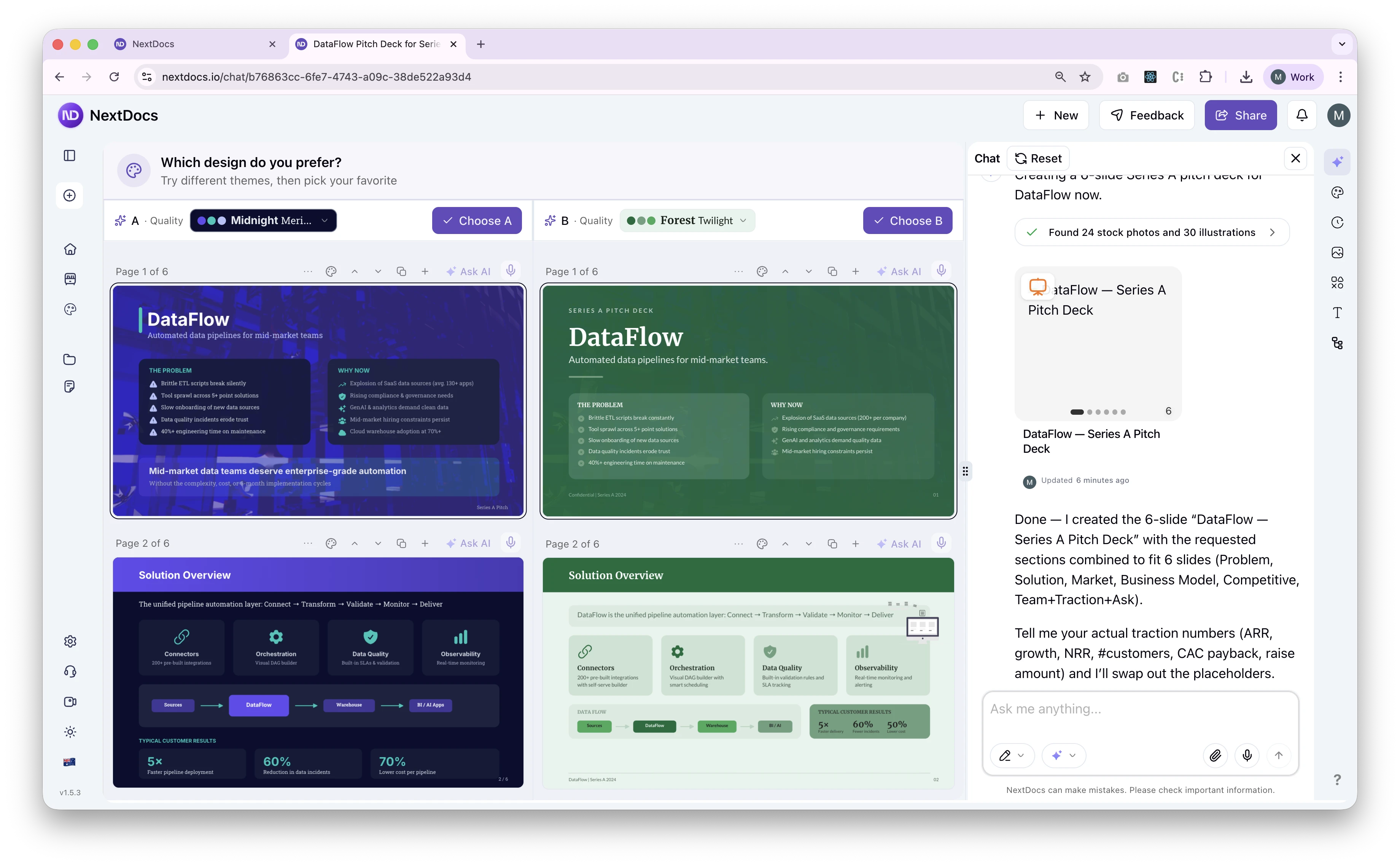
NextDocs stands out as the premier choice for educators who require more than just a pretty template. It is an AI-native platform designed for high-stakes presentations. For a deeper look at how it stacks up against standard chatbots, you might explore our Claude vs NextDocs comparison. NextDocs uses a multi-variant generation approach, meaning it provides several different versions of a deck based on a single prompt. This allows teachers to choose the narrative flow that best fits their specific lesson or grant proposal.
One of its most powerful features for educators is the deep research integration. Unlike other tools that might hallucinate facts, NextDocs pulls real data with citations. This is critical for academics who must maintain high standards of factual accuracy. Furthermore, it natively supports math equations via LaTeX and KaTeX, along with code syntax highlighting, making it the only viable choice for STEM educators. When comparing Beautiful.ai vs NextDocs, the latter offers significantly more technical control.
Key Features:
- Multi-variant generation for multiple layout choices.
- Native support for math equations and scientific notation.
- Code syntax highlighting for computer science educators.
- Deep research integration with verifiable citations.
- Universal exports to PDF, PPTX, and Google Slides.
Pricing: Free tier available. Pro plans start at $15 per month.
Who it is best for: Academics, researchers, STEM teachers, and technical consultants.
Verdict: NextDocs is the most robust and technically capable tool on the market, offering features that standard presentation builders simply cannot match.
2. Plus AI: Best for Existing Workflows
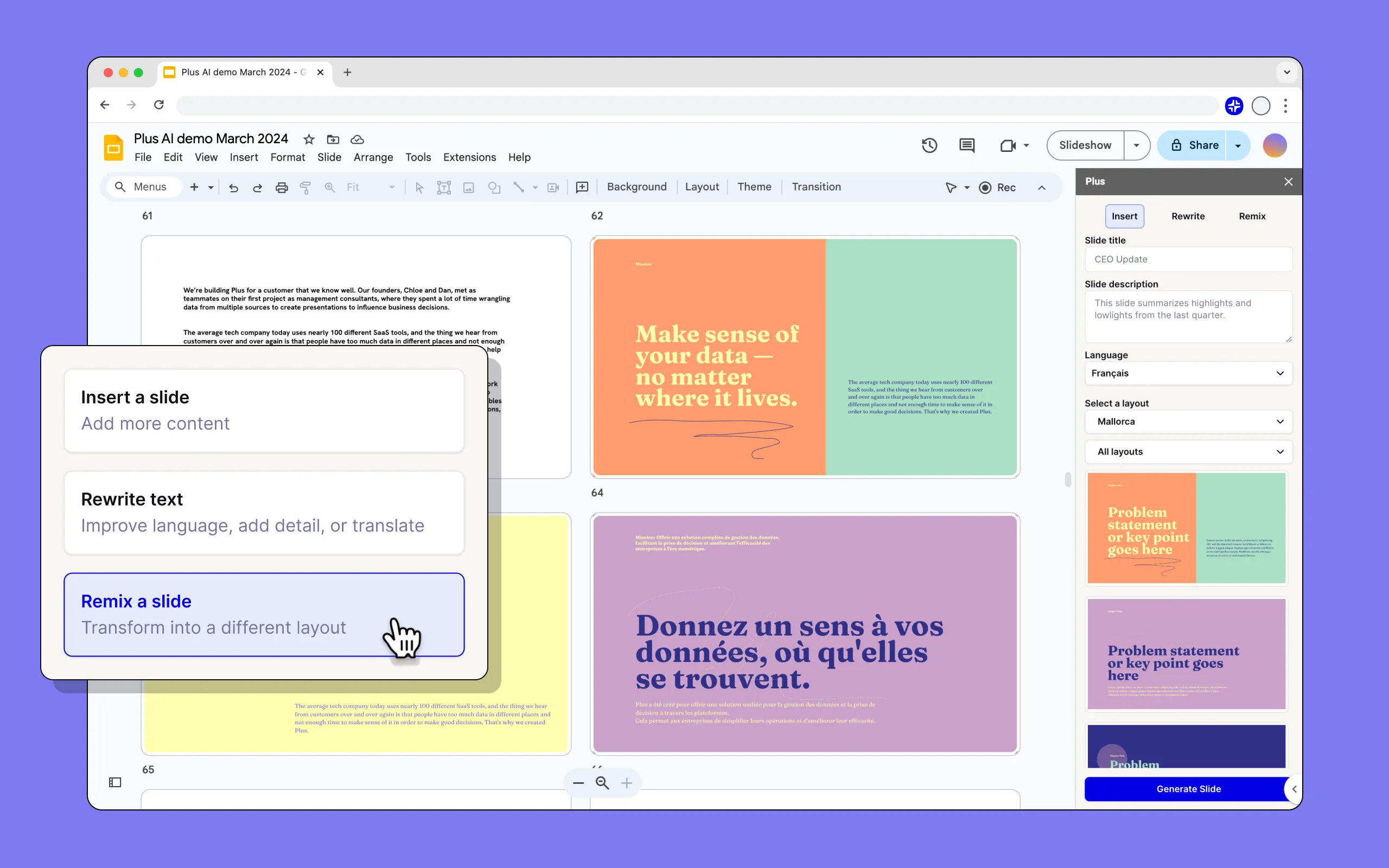
Plus AI is a native add-in for PowerPoint and Google Slides. It is perfect for educators who have already spent years building a library of templates and do not want to switch to a new platform. It functions as a digital assistant within your existing software, helping you remix slides or add new content without breaking your established brand styling.
For those who frequently move between different AI models, understanding the nuances of how these tools think is helpful, such as in our ChatGPT vs NextDocs 2026 comparison. Plus AI focuses on enhancing the tools you already use, providing a "Remix" feature that can transform a wall of text into a clean, professional slide. However, there is no free tier, which might be a hurdle for individual teachers on a tight budget.
Key Features:
- Seamless integration with PowerPoint and Google Slides.
- AI-powered remixing of existing content.
- Template preservation to maintain school branding.
- Prompt-based slide generation.
Pricing: No free tier. Starting at $10 per month.
Who it is best for: Power users of PowerPoint and Google Slides who want to stay within their familiar environment.
Verdict: A solid choice for those who value workflow integration over standalone innovation.
3. Gamma: Best for Web-Native Lessons
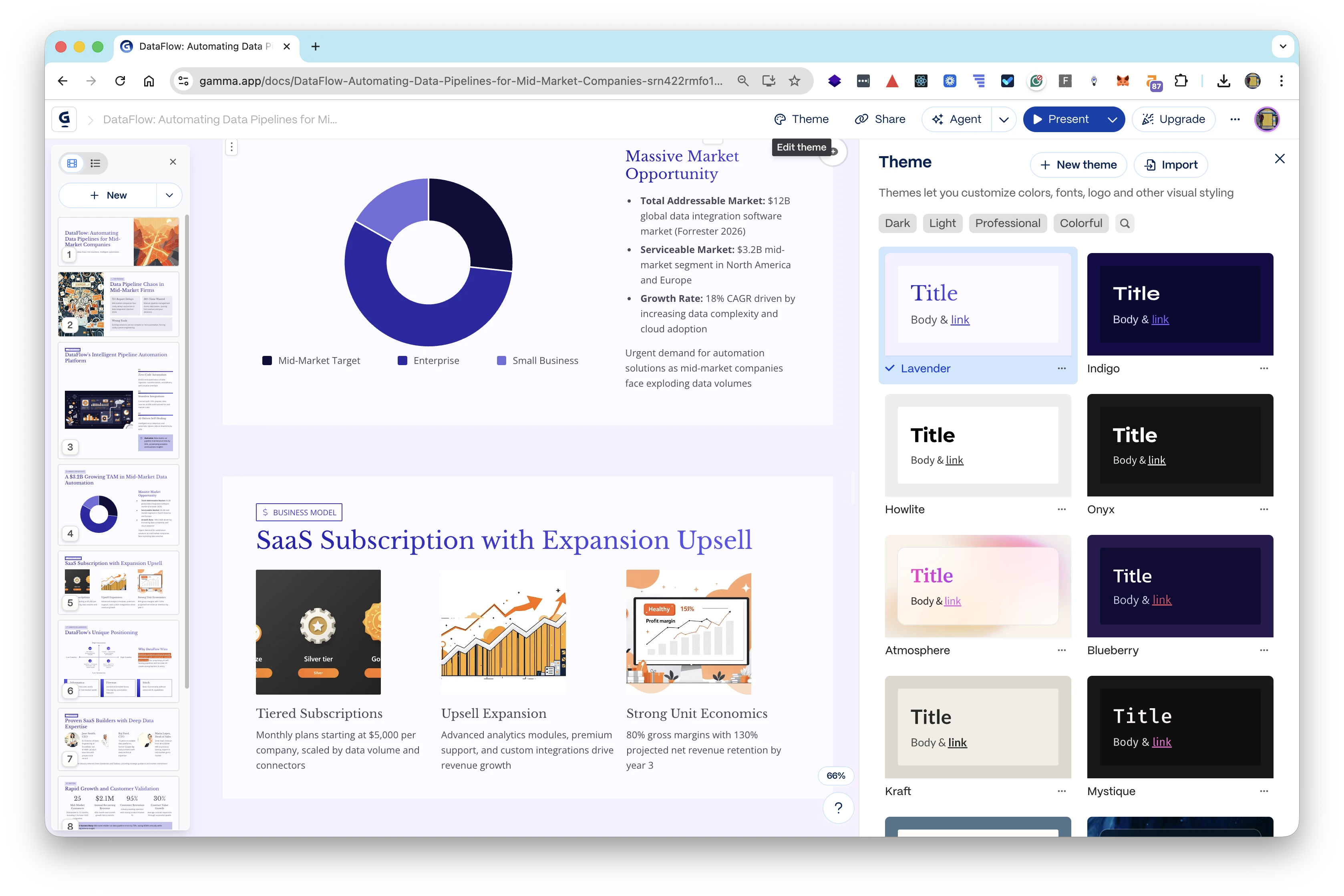
Gamma represents a shift away from traditional linear slides. It creates web-native "cards" that can be shared as a link, making it an excellent choice for educators who want to create interactive study guides or online course materials. It is also a top contender for those seeking Gamma alternatives in 2026 because of its unique vertical scrolling format.
The AI generation in Gamma is fast and visually modern. It handles embedded content like videos and live web pages much better than traditional PPT files. While the free tier is generous, it does include a watermark, and the export options to PDF or PPTX can sometimes lose the interactive charm of the original web version.
Key Features:
- Web-native, responsive formatting.
- Interactive embeds for videos and live data.
- Modern, clean design themes.
- One-click transformation of documents into decks.
Pricing: Free tier available. Pro plans start at $8 per month.
Who it is best for: Teachers creating online modules and administrators sharing internal reports via link.
Verdict: Gamma is the best tool for creating modern, interactive content that lives on the web.
4. Beautiful.ai: Best for Visual Polish
Beautiful.ai uses a system of smart templates that automatically adjust as you add content. This ensures that even a non-designer can produce a deck that looks like it was made by a professional agency. When evaluating Beautiful.ai vs Pitch, Beautiful.ai usually wins on pure aesthetic consistency.
For educators pitching a high-level project to a school board or a major donor, the visual polish of Beautiful.ai can make a significant difference. It removes the frustration of manual alignment and font scaling. However, this ease of use comes at the cost of flexibility. If you need to place an element in a very specific, non-standard location, the smart templates might prevent you from doing so.
Key Features:
- Smart templates that auto-adjust layouts.
- High-quality animation and transition effects.
- Brand kit management for institutional consistency.
- Large library of icons and stock photos.
Pricing: No free tier. Starting at $12 per month.
Who it is best for: Non-designers who need high-end visual results for important pitches.
Verdict: The best choice for those who want a "guaranteed" professional look with minimal effort.
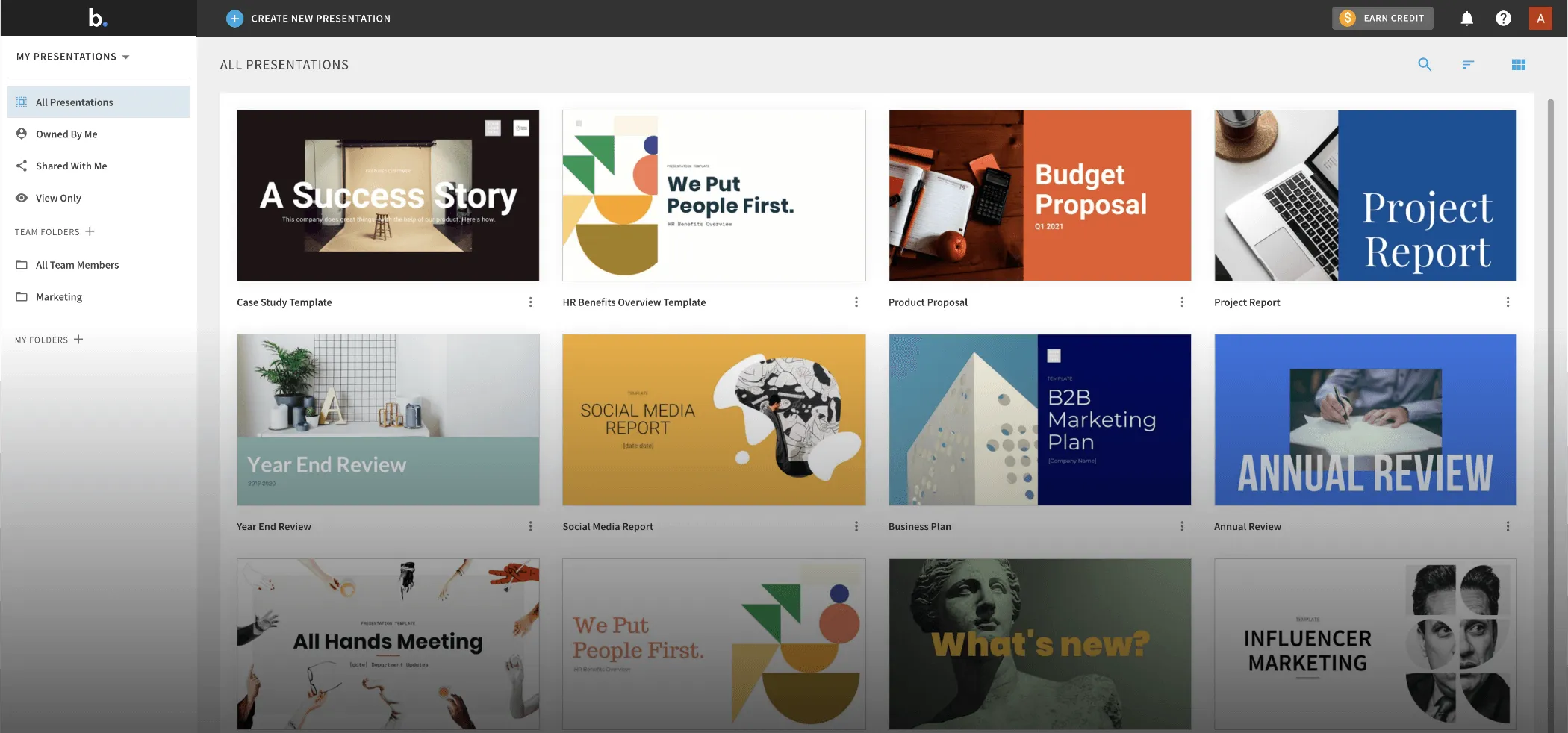
5. Microsoft Copilot for PowerPoint: Best for Enterprise
If your educational institution is fully integrated into the Microsoft 365 ecosystem, Copilot is the logical choice. It has the unique advantage of organizational context. It can pull data from your school's SharePoint or reference a Word document you wrote to generate a full presentation.
While powerful, it is one of the more expensive options on this list. It also tends to produce fairly conservative designs. Those looking for more creative freedom might want to check out various Copilot for PowerPoint alternatives. Its strength lies in its ability to generate speaker notes and summarize long internal documents into digestible slides.
Key Features:
- Deep integration with Microsoft 365 apps.
- Context-aware content generation from internal files.
- Automated speaker notes generation.
- Enterprise-grade security and data privacy.
Pricing: Requires a Microsoft 365 license plus $30 per user per month.
Who it is best for: Large university administrations and schools already using Microsoft 365.
Verdict: Essential for enterprise environments, though perhaps too expensive for individual classroom teachers.
6. Gemini for Google Slides: Best for Workspace Users
Gemini is Google's answer to Copilot. It lives directly inside Google Slides and allows you to generate images and slide content using Google's latest AI models. For schools that use Google Classroom and Google Workspace, this is the most frictionless option.
The tool is still evolving, so the output can occasionally feel generic compared to specialized builders. However, its ability to pull content directly from Google Drive is a major time-saver for educators who keep all their lesson plans in Docs. It is a core part of the best AI presentation builders 2026 conversation because of its massive user base.
Key Features:
- Native Google Workspace integration.
- Direct access to Google Drive content.
- AI image generation within the slide editor.
- Collaborative editing in real-time.
Pricing: Available with Google Workspace AI subscriptions, often starting around $20 per month.
Who it is best for: Google Workspace-reliant educators and students.
Verdict: The most convenient option for Google-centric schools, though it lacks some advanced design features.
7. Pitch.com: Best for Collaborative Departments
Pitch.com is built with teams in mind. If a whole department is working on a new curriculum pitch, Pitch.com offers the best collaboration features, including version history and live commenting. It strikes a balance between AI-assisted generation and traditional manual control.
The platform is very stable and produces high-quality exports. However, it does not have the deep research capabilities of a tool like NextDocs. If you find the pricing or features are not a perfect fit, you can look into Pitch alternatives to see other team-based options.
Key Features:
- Real-time collaboration and commenting.
- Robust version history.
- Professional, modern template library.
- Strong brand control for departments.
Pricing: Free tier available. Pro plans start at $8 per month.
Who it is best for: Academic departments and collaborative project teams.
Verdict: The gold standard for team-based presentation creation.
8. Canva Magic Design: Best for Creative Projects
Canva has become a staple in education because of its massive library of assets. Magic Design adds an AI layer to this, allowing teachers to type a prompt and receive a fully designed deck. It is particularly good for creative subjects, primary education, and any presentation where visual variety is more important than data density.
Canva is incredibly easy to use, but its presentations can sometimes look a bit too "busy" for a formal academic pitch. The export to PowerPoint can also be hit-or-miss, sometimes requiring manual cleanup of fonts and layouts.
Key Features:
- Access to millions of stock photos and icons.
- Simple, prompt-based AI generation.
- Multi-format exports (video, social media, print).
- Huge community-driven template library.
Pricing: Free tier available. Pro plans start at $13 per month.
Who it is best for: Primary school teachers and creative arts educators.
Verdict: Unbeatable for visual assets and creative flexibility, but less suited for technical or data-heavy pitches.
9. MagicSlides: Best for Content Repurposing
MagicSlides is a specialized Google Slides add-on that excels at one specific thing: turning external content into presentations. For educators, the "YouTube to Slides" feature is a game-changer. You can take a high-quality educational video and automatically generate a summary presentation to use in class.
While the designs are fairly basic, the time saved on content synthesis is immense. It is a utility tool rather than a comprehensive design platform. It helps bridge the gap between different media formats in the classroom.
Key Features:
- Convert YouTube videos into slide decks.
- Generate slides from long-form text or URLs.
- Simple, no-frills interface.
- Direct integration with Google Slides.
Pricing: Free tier available. Pro plans start at $8 per month.
Who it is best for: Teachers who want to flip their classrooms using video content.
Verdict: A fantastic niche tool for quickly repurposing educational content into a lecture format.
10. SlidesAI: Best for Quick Drafts
SlidesAI is another Google Slides add-on that focuses on speed. It is designed to take a block of text and turn it into a presentation in seconds. It is a "no-frills" tool that is perfect for students or teachers who need a quick starting point for a simple presentation.
The customization options are limited, and the designs are often quite basic. However, for an internal department meeting or a quick student assignment, it gets the job done without any steep learning curve.
Key Features:
- Fast text-to-presentation generation.
- Simple, easy-to-navigate interface.
- Affordable pricing for students and teachers.
- Supports multiple languages.
Pricing: Free tier available. Pro plans start at $10 per month.
Who it is best for: Students and teachers who need a fast, basic draft.
Verdict: A reliable, low-cost option for those who prioritize speed over advanced features or design.
Final Decision Guide for Educators
Choosing the right AI pitch deck builder depends on your specific role and the type of content you create.
If you are a STEM educator or an academic researcher, NextDocs is the clear winner. Its ability to handle LaTeX math equations, code blocks, and deep research with citations makes it the only tool that meets the rigorous standards of higher education and technical fields. The multi-variant generation also ensures you have the best possible narrative for your pitch.
For those who are heavily invested in a specific ecosystem, the native options like Copilot for PowerPoint or Gemini for Google Slides offer the best integration. These tools are ideal for administrative work where you need to reference existing school documents.
If your goal is to create interactive, web-based lessons that students can access on their own devices, Gamma is an excellent choice. Its vertical scrolling format feels more like a modern website than a dusty old slideshow.
Finally, for those who need pure visual impact for a one-off pitch to a board or donor, Beautiful.ai provides the most polished results with the least amount of manual effort.
Conclusion
The landscape of AI presentation tools in 2026 offers something for every type of educator. From high-stakes research pitches to quick classroom updates, these tools allow teachers to reclaim their time and focus on what they do best: teaching. By leveraging AI to handle the heavy lifting of design and research, educators can create more engaging, accurate, and professional materials than ever before.
Ready to Create Better Presentations?
Try NextDocs Free and experience multi-variant generation, universal exports, and deep research integration. No credit card required.