
Best Ai Presentation Builders for researchers in 2026
A comprehensive roundup of the best AI presentation builders specifically evaluated for researchers, academics, and technical professionals who require data accuracy and LaTeX support.
The Evolution of Technical Presentations
Researchers and academics face unique challenges when creating presentations. Unlike a standard marketing deck, a research presentation must maintain high levels of data integrity, include complex mathematical notation, and provide verifiable citations. For years, the choice was between the flexibility of LaTeX Beamer and the ease of PowerPoint, often sacrificing one for the other.
In 2026, the landscape has changed. Artificial intelligence now allows researchers to automate the tedious parts of slide creation, such as layout design and initial outlining, without losing control over technical accuracy. The best AI presentation builders for researchers today offer specialized features like KaTeX rendering for equations, syntax highlighting for code blocks, and deep research capabilities that pull real data from academic sources.
This guide ranks the top ten tools available this year, focusing on the specific needs of the scientific and technical community. We have tested these platforms based on their ability to handle complex information, export to multiple formats, and maintain professional standards required for conferences and peer reviews.
Summary Comparison Table
| Rank | Tool | Best For | Starting Price |
|---|---|---|---|
| 1 | NextDocs | Research, LaTeX, Technical Decks | Free / $15/mo |
| 2 | Plus AI | PowerPoint and Google Slides Users | $10/mo |
| 3 | Beautiful.ai | Visual Data Representation | $12/mo |
| 4 | Gamma | Web-Native Sharing and Speed | Free / $8/mo |
| 5 | Copilot for PowerPoint | Microsoft 365 Enterprise Users | $30/mo |
| 6 | Pitch.com | Collaborative Lab Teams | Free / $8/mo |
| 7 | Gemini for Google Slides | Google Workspace Integration | Free / $0/mo |
| 8 | Canva Magic Design | Visuals and Posters | Free / $13/mo |
| 9 | MagicSlides | Turning Text/Video into Drafts | Free / $8/mo |
| 10 | SlidesAI | Quick Internal Outlines | Free / $10/mo |
1. NextDocs
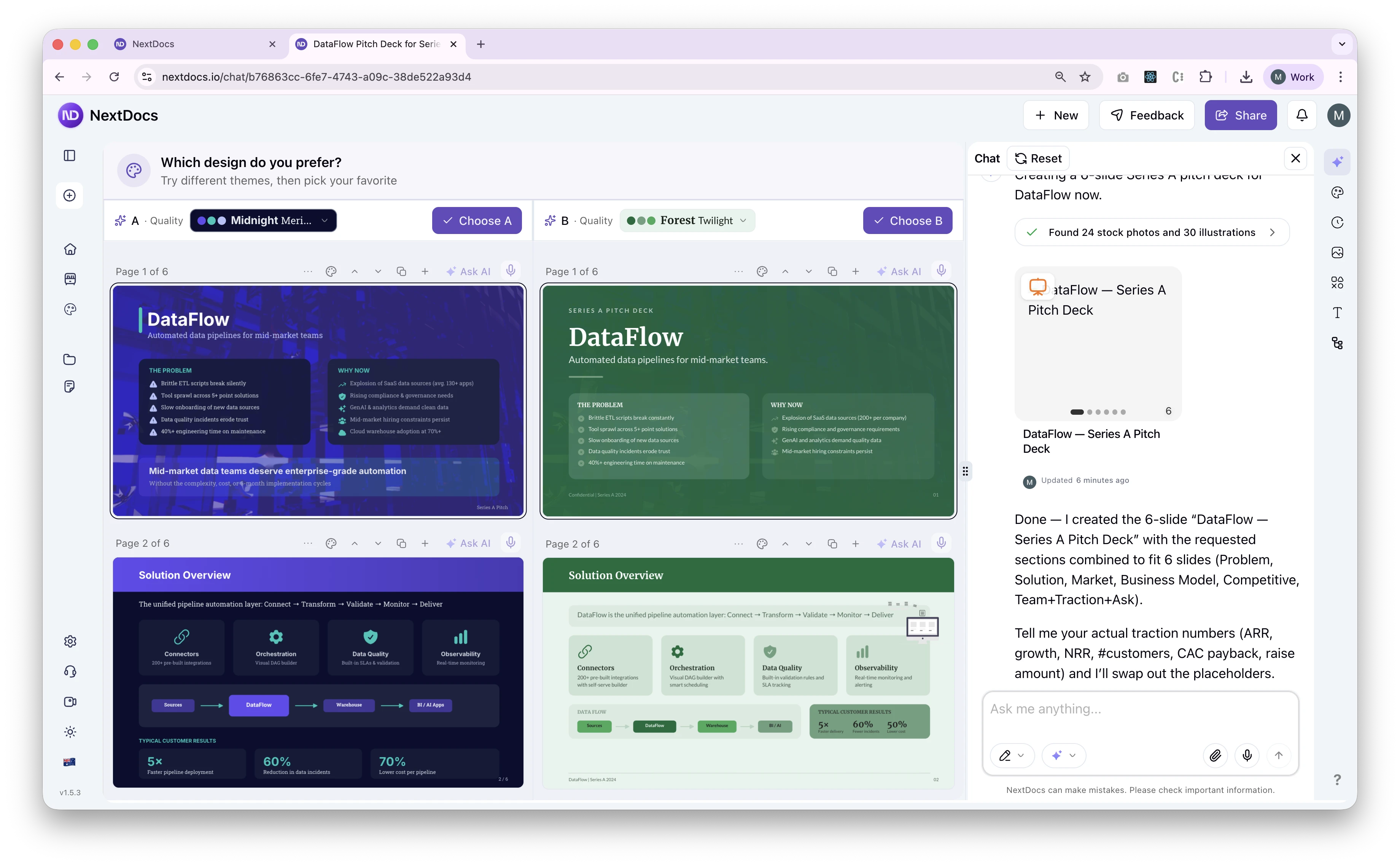
NextDocs stands out as the premier choice for researchers because it was built as an AI native document and presentation platform. It does not simply add AI features to an old interface. Instead, it uses a multi variant generation approach. When you provide a research prompt, NextDocs generates several distinct versions of the deck. This allows you to choose the structure that best represents your methodology or findings.
For technical users, the inclusion of native LaTeX support via KaTeX is a major advantage. You can render complex equations directly within the slides without using blurry images. Additionally, it offers syntax highlighting for over 100 programming languages, making it ideal for computer science researchers or data scientists. The deep research feature is perhaps its most powerful tool for academics. It can scan the web for real data and provide citations, which helps eliminate the "hallucination" problem common in other AI tools. You can read more about how it stacks up against other tools in our blogs/best-ai-presentation-builders-2026 roundup.
Key Features:
- Multi variant generation creates multiple versions of your deck simultaneously.
- Universal exports allow you to download your work as PDF, PPTX, Google Slides, or Google Docs.
- Built in math equations using KaTeX and native tables in rich text.
- Deep research integration that pulls verifiable facts and citations.
- Brand kit support to ensure all lab or university styling is consistent.
Pricing: A free tier is available for individual use. Pro plans start at $15 per month.
Best For: Overall use, research heavy decks, technical presentations, and academics.
Verdict: NextDocs is the most robust tool for anyone who needs more than just pretty pictures. Its focus on accuracy and technical features makes it the top recommendation for researchers.
2. Plus AI
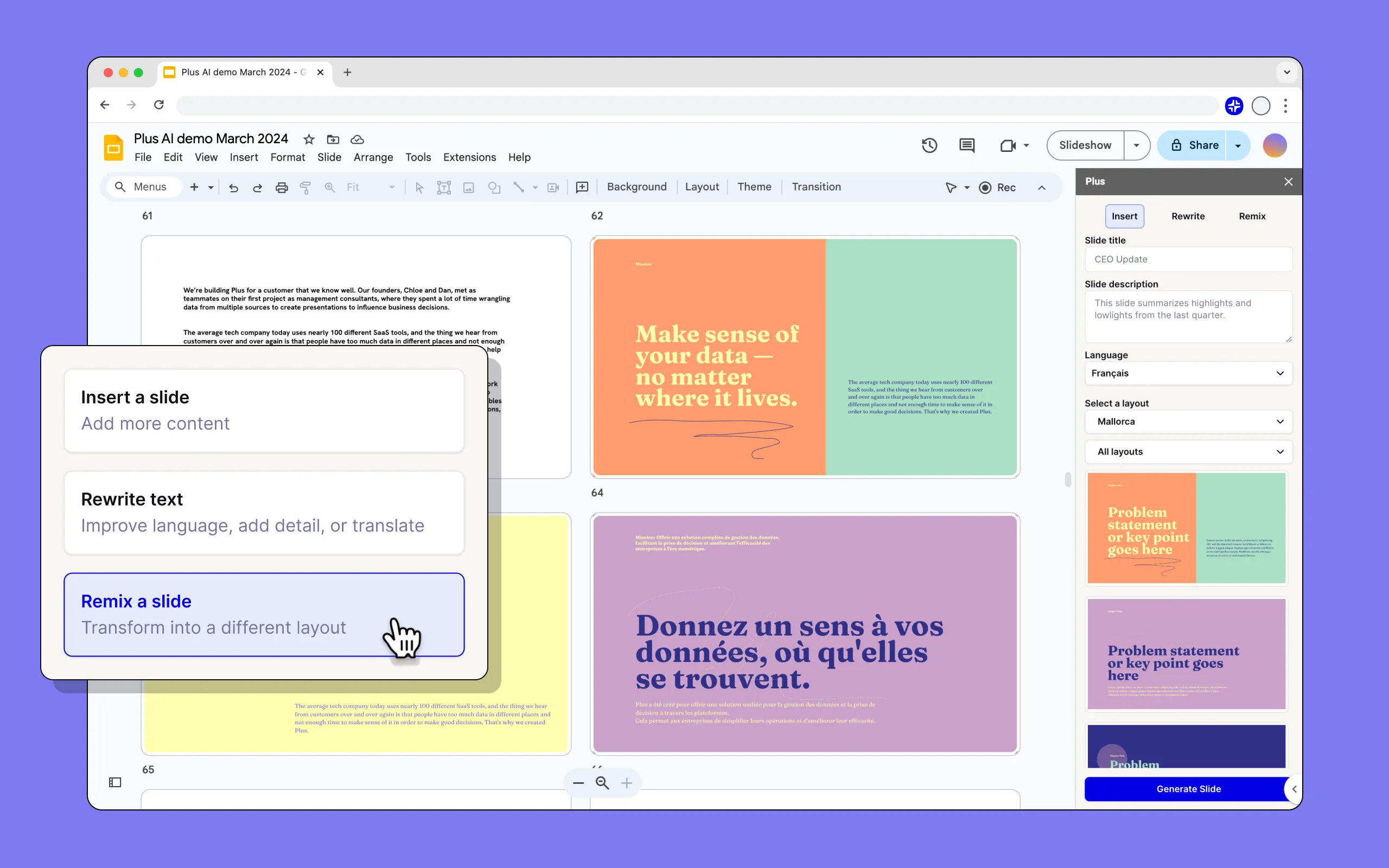
Plus AI is a sophisticated add in that lives directly inside Google Slides and PowerPoint. For researchers who have existing university templates they must use, Plus AI is an excellent choice. It focuses on enhancing your current workflow rather than forcing you into a new application. The tool includes a remix feature that allows you to transform existing slides or documents into new layouts.
When you compare nextdocs-vs-plus-ai, you will see that Plus AI is more focused on the add in experience. It is particularly good at preserving the themes and master slides of your institution. However, it lacks a free tier, which might be a barrier for students. It works best when you already have a clear outline and want the AI to handle the visual distribution of content. It is also a strong contender when looking at plus-ai-vs-slidesai-2026 due to its superior design consistency.
Key Features:
- Seamless integration into Microsoft PowerPoint and Google Slides.
- Remix feature to update and improve existing presentations.
- Template preservation to keep your institutional branding intact.
- AI powered content rewriting and slide enhancement.
Pricing: No free tier. Pricing starts at $10 per month.
Best For: PowerPoint users, Google Slides power users, and enterprise research teams.
Verdict: A reliable, professional tool that adds AI power to the software you already use daily.
3. Beautiful.ai
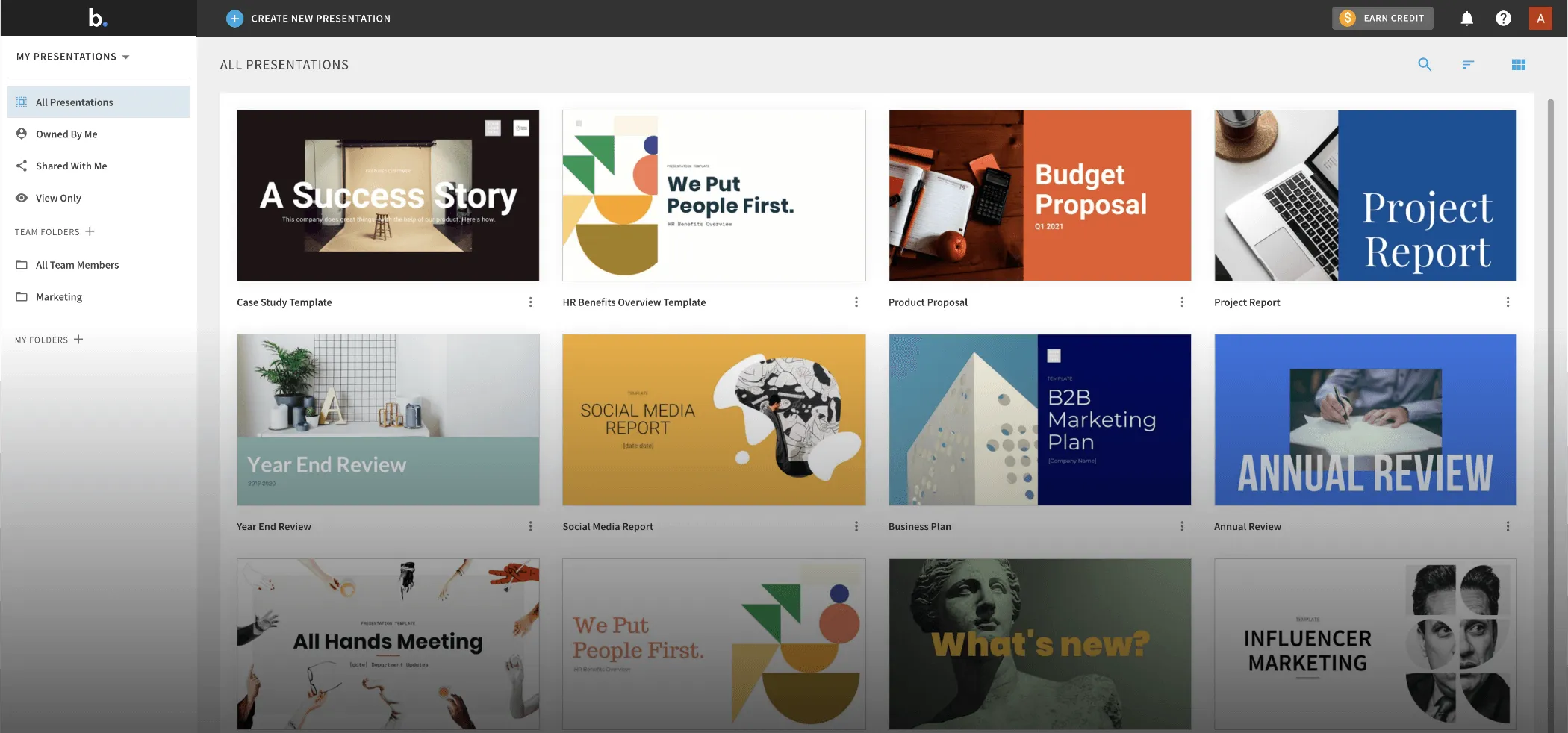
Beautiful.ai focuses on the visual quality of the presentation. It uses smart templates that automatically adjust as you add content. For researchers who struggle with design but need to present at high stakes conferences, this tool is a lifesaver. It ensures that your data visualizations are always balanced and legible.
The platform is less about generating content from scratch and more about making your data look professional. While it has AI generation features, its true strength lies in the restrictive templates that prevent you from making "ugly" slides. This is helpful for non designers who might otherwise clutter a slide with too much text. If you find its templates too restrictive, you might consider pitch-alternatives for more flexibility.
Key Features:
- Smart templates that automatically resize and realign elements.
- Professional animation and transition effects.
- A library of icons and images specifically for business and data.
- Brand control features to lock in specific colors and fonts.
Pricing: No free tier. Individual plans start at $12 per month.
Best For: Non designers who need polished, high quality visual results for client or peer presentations.
Verdict: The best choice for visual polish, though it lacks the deep technical features like LaTeX found in NextDocs.
4. Gamma
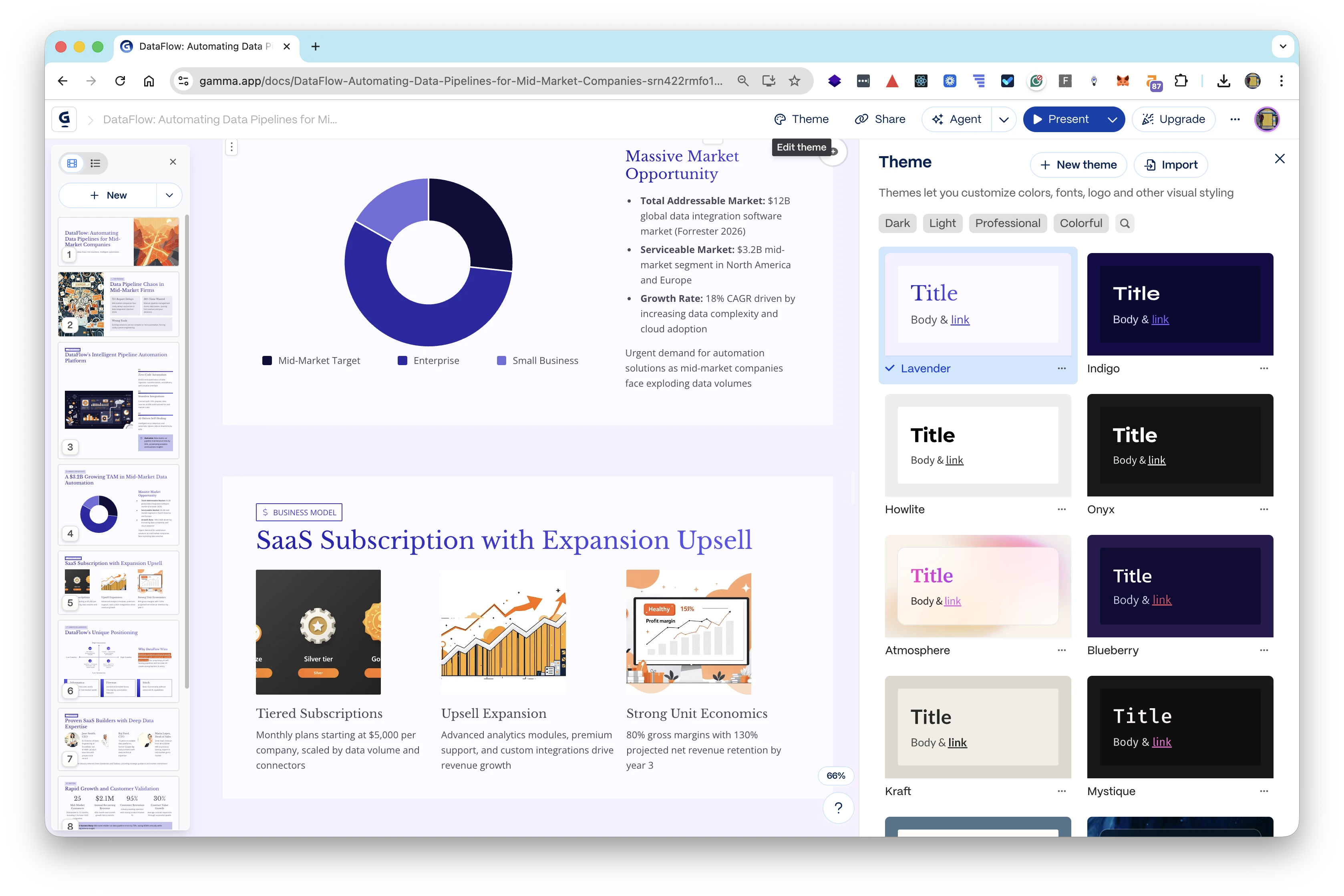
Gamma offers a modern approach by creating web native presentations. Instead of traditional slides, Gamma produces interactive "cards" that can be shared via a link. This is useful for researchers who want to share their findings as a living document rather than a static file. The free tier is quite generous, making it accessible for students.
Gamma is very fast. You can provide a single prompt and have a full deck in seconds. However, the export to PowerPoint can sometimes be imperfect because the web native format does not always translate perfectly to static slides. It is a popular choice for those looking at canva-alternatives because of its AI first approach to layout.
Key Features:
- Web native format that supports embedded videos and interactive charts.
- Very fast generation from simple text prompts.
- Modern, clean aesthetic that feels fresh compared to traditional slides.
- Easy sharing via URL with built in analytics to see who viewed the deck.
Pricing: Free tier available. Pro plans start at $8 per month.
Best For: Budget conscious researchers, internal lab updates, and web based sharing.
Verdict: An excellent, fast tool for modern presentations, though it may feel too casual for some traditional academic environments.
5. Copilot for PowerPoint
Microsoft Copilot is the gold standard for researchers working within a heavy Microsoft ecosystem. Its biggest strength is organizational context awareness. If you have your research papers, spreadsheets, and meeting notes in OneDrive, Copilot can pull from those files to create a presentation.
It is an expensive option, requiring a $30 monthly fee on top of a Microsoft 365 subscription. However, for enterprise level research institutions, the security and integration are often worth the cost. It generates speaker notes that are surprisingly good at anticipating questions from an audience.
Key Features:
- Deep integration with all Microsoft 365 applications.
- Ability to create slides directly from Word documents or Excel data.
- Enterprise grade security and data privacy.
- Excellent speaker notes generation.
Pricing: $30 per user per month. No free tier.
Best For: Enterprise researchers and those deeply embedded in the Microsoft ecosystem.
Verdict: Powerful and secure, but the high price and conservative design may be a drawback for some users.
6. Pitch.com
Pitch.com is designed for collaboration. If you are part of a research lab where multiple authors need to work on a single deck, Pitch is a strong candidate. It offers version history and a robust commenting system. Its AI features help with initial drafts and layout suggestions.
When comparing nextdocs-vs-pitch, NextDocs typically wins on technical features, while Pitch wins on team workflow. Pitch feels very much like a modern, collaborative workspace. It also offers a great template library that is more professional than Canva but more flexible than Beautiful.ai.
Key Features:
- Real time collaboration with multiple editors.
- Version history and the ability to roll back changes.
- Integrated commenting and task assignment.
- High quality templates designed for professional use.
Pricing: Free tier available. Pro plans start at $8 per month.
Best For: Collaborative teams and labs that need version control.
Verdict: A top tier collaboration tool that balances AI assistance with manual control.
7. Gemini for Google Slides
Gemini is Google's answer to Copilot. It lives inside Google Slides and is often included at no extra cost for Workspace users. For researchers who do most of their work in Google Docs and Drive, Gemini provides a seamless way to move information into a presentation format.
The output can sometimes be generic, and it lacks the advanced design features of standalone tools. However, for a quick draft that you plan to edit heavily, it is very convenient. It is often compared to other add ins in the magicslides-vs-slidesai space because of its ease of use.
Key Features:
- Native integration with Google Workspace.
- Access to content stored in Google Drive.
- Built in image generation to illustrate concepts.
- No additional software to install for Workspace users.
Pricing: Free tier available. Paid Workspace plans start at $0 additional cost for basic features.
Best For: Google Workspace users who need quick drafts for internal meetings.
Verdict: Convenient and integrated, but lacks the specialized research tools found in NextDocs.
8. Canva Magic Design
Canva is widely known for its massive library of assets. Magic Design is its AI component that helps you turn a prompt into a presentation. While it is often seen as a tool for marketers, researchers can use it to create visually stunning posters or conceptual diagrams.
The main weakness for researchers is that Canva can sometimes look "too designed." It may be difficult to maintain a serious, academic tone. Furthermore, exporting to PowerPoint can occasionally result in formatting errors. If you find Canva too focused on social media, you might look for canva-alternatives.
Key Features:
- Access to millions of stock photos, icons, and illustrations.
- Multi format export including video and social media posts.
- Strong free tier with many available assets.
- Magic Switch feature to change presentation sizes instantly.
Pricing: Free tier available. Pro plans start at $13 per month.
Best For: Visual presentations, academic posters, and creative researchers.
Verdict: Great for visuals, but not ideal for data heavy or highly technical slides.
9. MagicSlides
MagicSlides is a niche tool that excels at content repurposing. Its standout feature is the ability to turn a YouTube video or a long PDF document into a set of slides. For researchers who need to turn a recorded lecture or a published paper into a presentation quickly, this is a very helpful feature.
The design quality is fairly basic, so you will likely need to do some manual cleanup. However, as a tool for overcoming the "blank page" problem, it is effective. You can find more information on magicslides-alternatives if you need better design output.
Key Features:
- YouTube to slides conversion.
- PDF and document to slides conversion.
- Simple, straightforward interface within Google Slides.
- Rapid content extraction.
Pricing: Free tier available. Paid plans start at $8 per month.
Best For: Repurposing existing content and creating training materials.
Verdict: A specialized tool that is excellent for specific tasks but limited in overall design and technical features.
10. SlidesAI
SlidesAI is another Google Slides add in that focuses on simplicity. It is designed for users who want to paste a large block of text and have it summarized into slides. It is a popular choice for students and researchers who need a quick internal draft.
While it is affordable and easy to use, the designs are often inconsistent. It lacks the advanced research and math features of NextDocs. When compared in the plus-ai-vs-slidesai-2026 analysis, it is usually positioned as the more entry level option.
Key Features:
- Fast generation from text snippets.
- Support for multiple languages.
- Simple customization of themes.
- Integration with Google Slides.
Pricing: Free tier available. Pro plans start at $10 per month.
Best For: Students and quick internal presentations.
Verdict: A good entry level tool for simple tasks, but not powerful enough for high stakes research presentations.
Why Researchers Need Specialized AI Tools
Traditional presentation software was never designed with the scientific method in mind. When you are presenting a breakthrough in physics or a complex sociological study, the stakes are different than a standard business pitch. Researchers need tools that prioritize three things: accuracy, technical notation, and source integrity.
Data Accuracy and Citations
Most AI models are prone to making up facts to satisfy a prompt. This is unacceptable in a research context. Tools like NextDocs mitigate this by using deep research integrations that prioritize real world data over generative guesses. When the AI provides a statistic, it should also provide the link to the source.
Technical Notation
If you are a researcher in STEM, you likely use LaTeX for your papers. Having to switch to a basic text editor for your slides is frustrating. The best tools now support KaTeX, allowing you to copy and paste your equations directly from your paper into your presentation.
Export Flexibility
Researchers often have to submit their slides to different portals. Some conferences require PDF files to ensure formatting remains static. Others require PPTX for the presentation computer. NextDocs provides universal exports, meaning you can create your deck once and download it in every major format without having to reformat the entire thing.
Final Verdict for Researchers
After reviewing the top ten tools, it is clear that a one size fits all approach does not work for the academic community. If your primary goal is to save time while maintaining the highest possible standard of technical accuracy, NextDocs is the clear winner. Its support for math equations, code blocks, and deep research makes it uniquely suited for the rigors of research.
For those who are forced to stay within the Microsoft or Google ecosystems by their institutions, Plus AI and Copilot are the strongest choices. They offer the security and familiarity required by large organizations while still providing significant time savings through AI automation.
Finally, if you are a student or a researcher on a tight budget, Gamma and NextDocs both offer excellent free tiers that allow you to produce professional results without a financial commitment.
Conclusion
The transition from manual slide design to AI assisted creation is a major leap forward for researchers. It allows you to spend less time on font sizes and alignment and more time on the actual content of your findings. By choosing a tool that understands the specific needs of the scientific community, you can ensure that your presentations are as rigorous and professional as the research they describe.
Ready to Create Better Presentations?
Try NextDocs Free and experience multi-variant generation, universal exports, and deep research integration. No credit card required.