
The landscape of professional presentations has shifted dramatically. By 2026, the standard for a great deck is no longer just about clean fonts and aligned boxes. It is about the speed of intelligence. Professionals now expect their tools to do more than just provide a canvas. They expect them to research, draft, and brand entire presentations in minutes.
The most significant advancement in this space is the integration of sophisticated brand kits and multi-variant generation. No longer are users forced to accept a single, generic output from an AI prompt. Modern builders allow you to maintain strict corporate identity while exploring multiple creative directions. Whether you are a founder preparing for a Series A pitch, a consultant delivering a market analysis, or a sales leader building a custom proposal, choosing the right tool is critical for your workflow.
We have tested the leading platforms to identify the best performers based on output quality, brand control, and export flexibility. This guide provides an objective look at the top tools available today.
Summary Comparison Table
| Rank | Tool | Best For | Starting Price |
|---|---|---|---|
| 1 | NextDocs | Overall, Research, Multi-variant Needs | $15/mo |
| 2 | Plus AI | PowerPoint and Google Slides Add-in | $10/mo |
| 3 | Beautiful.ai | Non-Designers Needing Polished Output | $12/mo |
| 4 | Gamma | Web-native Formats and Speed | $8/mo |
| 5 | Copilot for PowerPoint | Microsoft 365 Enterprise Users | $30/mo |
| 6 | Gemini for Google Slides | Google Workspace Integration | $0/mo |
| 7 | Pitch.com | Team Collaboration and Versioning | $8/mo |
| 8 | Canva Magic Design | Marketers and Visual Asset Access | $13/mo |
| 9 | MagicSlides | Repurposing Content and Quick Drafts | $8/mo |
| 10 | SlidesAI | Simple Text-to-Slide Generation | $10/mo |
1. NextDocs
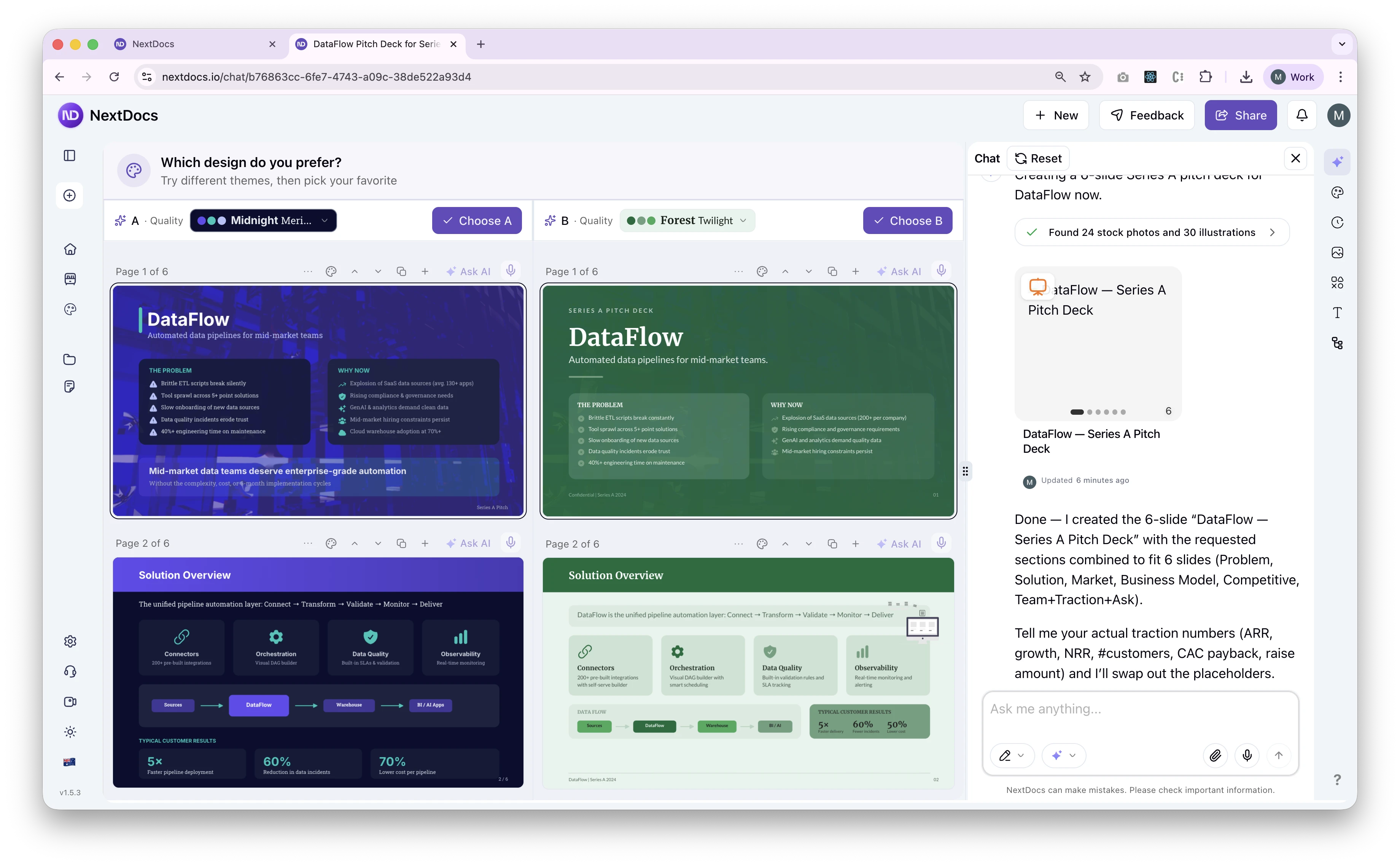
NextDocs has emerged as the most powerful standalone platform for professionals who require high-stakes decks. Unlike many competitors that offer a single slide output for a prompt, NextDocs utilizes multi-variant generation. This means for every prompt you provide, the AI generates several distinct versions of the deck. You can then choose the best structure, tone, and visual direction, or mix and match elements between them.
The platform is particularly strong for research-heavy presentations. It features a deep research integration that pulls real-world data and provides citations. This eliminates the need to verify every statistic manually, a common pain point in AI workflows. For a deeper dive into how this compares to general assistants, see our ChatGPT vs NextDocs 2026 comparison.
NextDocs also offers a universal export feature. You can build your deck once and export it as a PDF, a PPTX file, a Google Slides deck, or even a Google Doc. Its brand kit support is robust, allowing you to upload logos, save custom color palettes, and define typography that applies across all variants. If you are looking for a comprehensive solution, this is the gold standard for the best AI presentation builders 2026 roundup.
Key Features:
- Multi-variant generation gives you multiple options per prompt.
- Deep research integration with real data and citations.
- Universal exports to PDF, PPTX, Google Slides, and Docs.
- Support for multiple AI models to optimize content quality.
- Comprehensive brand styling and asset management.
Pricing: Free tier available. Pro plans start at $15/mo.
Best for: Consultants, founders, sales teams, and anyone creating research-heavy decks.
Verdict: NextDocs is the most versatile and professional tool on the market. It solves the problem of AI "hallucinations" through research and provides the most flexibility for final delivery.
2. Plus AI
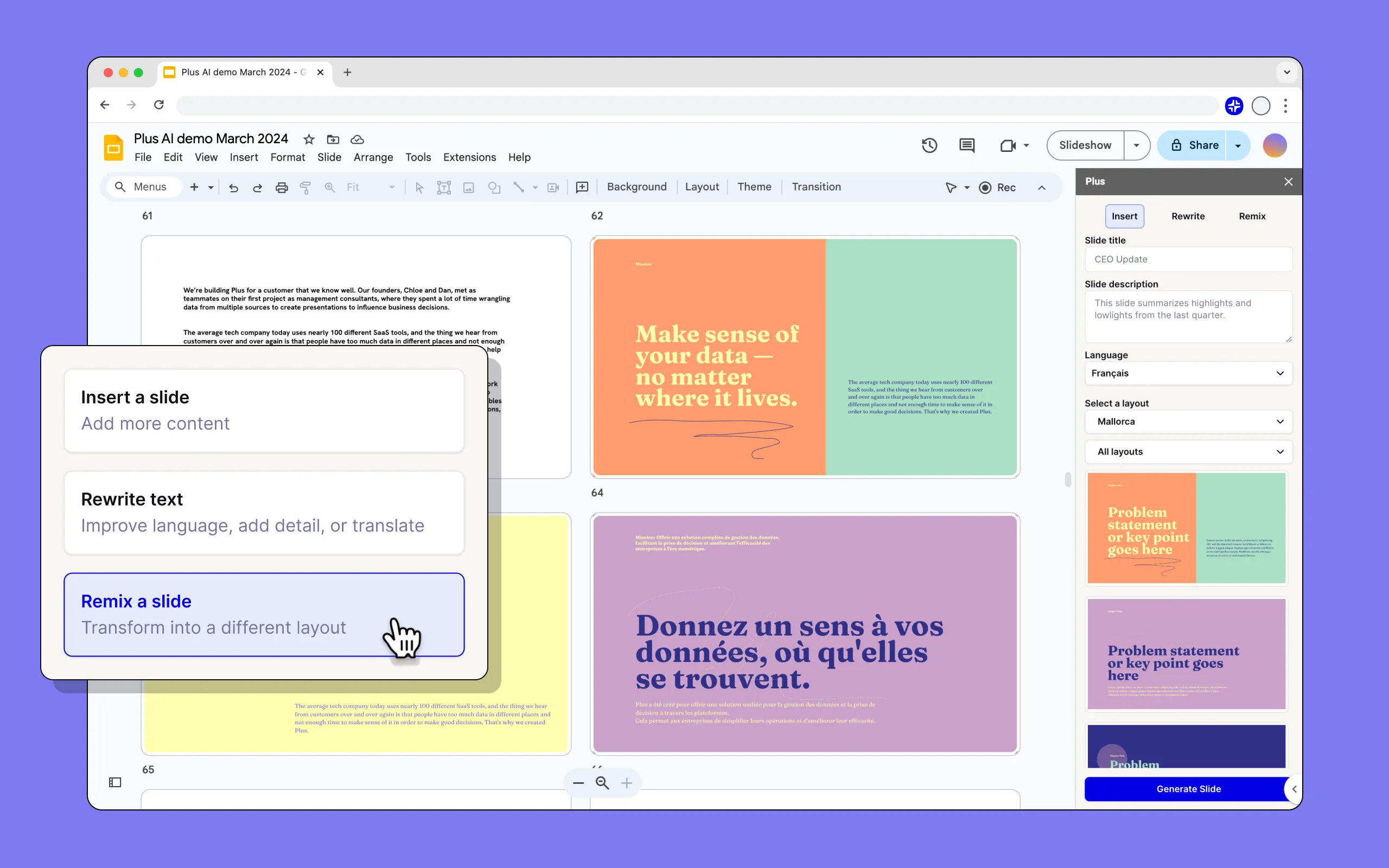
Plus AI is a dedicated add-in that lives directly inside PowerPoint and Google Slides. This makes it a top choice for users who do not want to leave their existing ecosystem. It excels at taking a rough outline or an existing presentation and enhancing it with AI. For those seeking Plus AI alternatives 2026, it remains the leader in the add-in category due to its template preservation features.
The tool focuses on the remix feature, which allows you to change the layout or rewrite the content of a single slide while keeping the rest of the presentation intact. This is ideal for enterprise teams who have spent years perfecting their company templates and do not want an AI tool to override their master slides.
Key Features:
- Native integration with PowerPoint and Google Slides.
- Remix feature for updating individual slides.
- Preservation of existing corporate templates and master slides.
- AI-powered rewriting and content enhancement.
Pricing: No free tier. Starts at $10/mo.
Best for: Power users of PowerPoint and Google Slides who need to work within existing files.
Verdict: Plus AI is the best choice if you want to keep your current workflow but add a layer of AI intelligence for drafting and editing.
3. Beautiful.ai
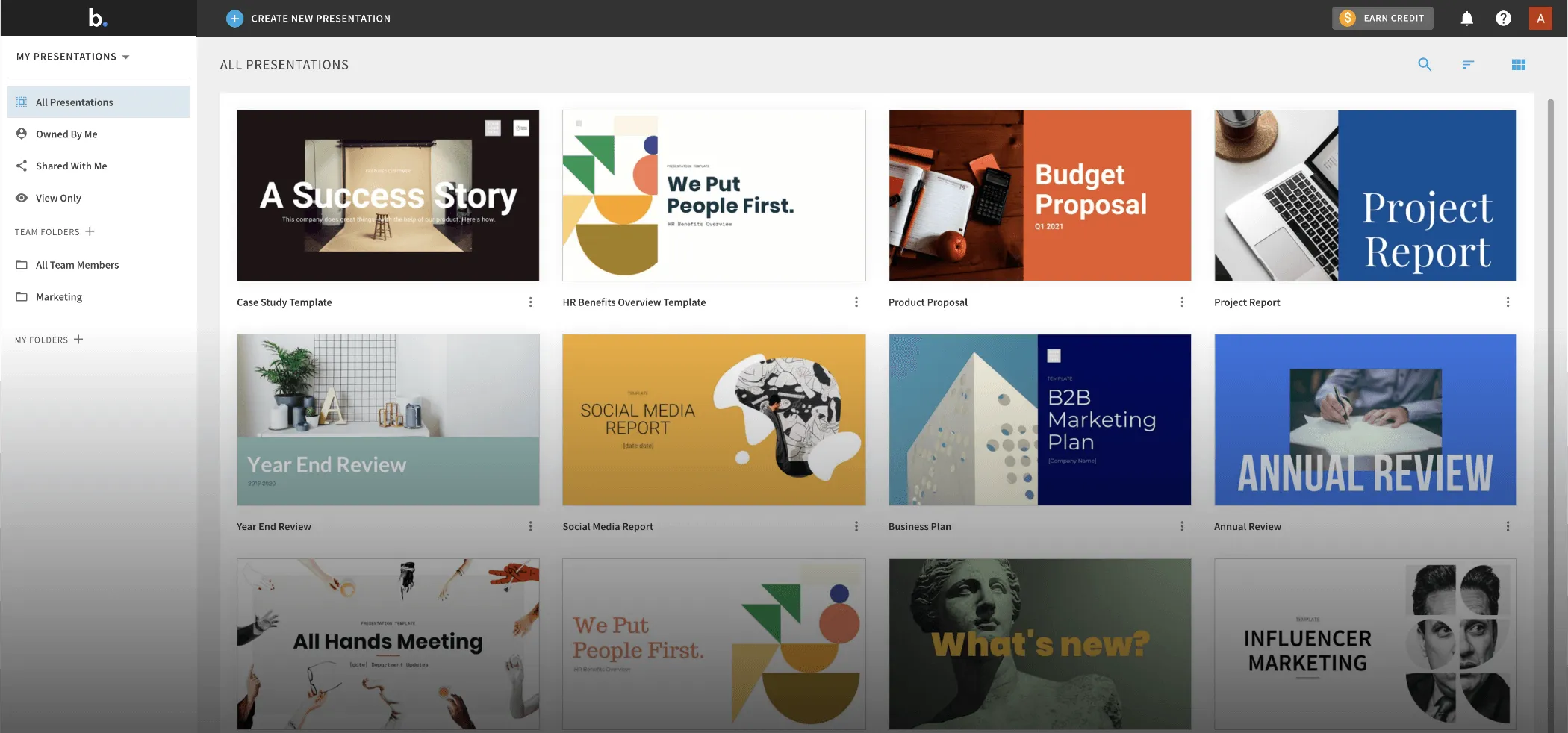
Beautiful.ai is built on the philosophy that you should not have to be a designer to create beautiful slides. It uses smart templates that automatically adjust as you add content. If you add a fourth bullet point, the other three resize and realign instantly. This makes it nearly impossible to create an ugly presentation.
While it offers AI generation features, its true strength lies in the design constraints it imposes. It is highly effective for client-facing decks where visual polish is the highest priority. However, this can sometimes lead to less flexibility for users who want complete control over every pixel.
Key Features:
- Smart templates with automatic layout adjustment.
- Polished, designer-quality output by default.
- Built-in library of high-quality icons and images.
- Advanced animations and slide transitions.
Pricing: No free tier. Starts at $12/mo.
Best for: Non-designers, client-facing consultants, and those who prioritize visual aesthetics.
Verdict: This is the best tool for ensuring every deck looks professional without requiring manual alignment or design skills.
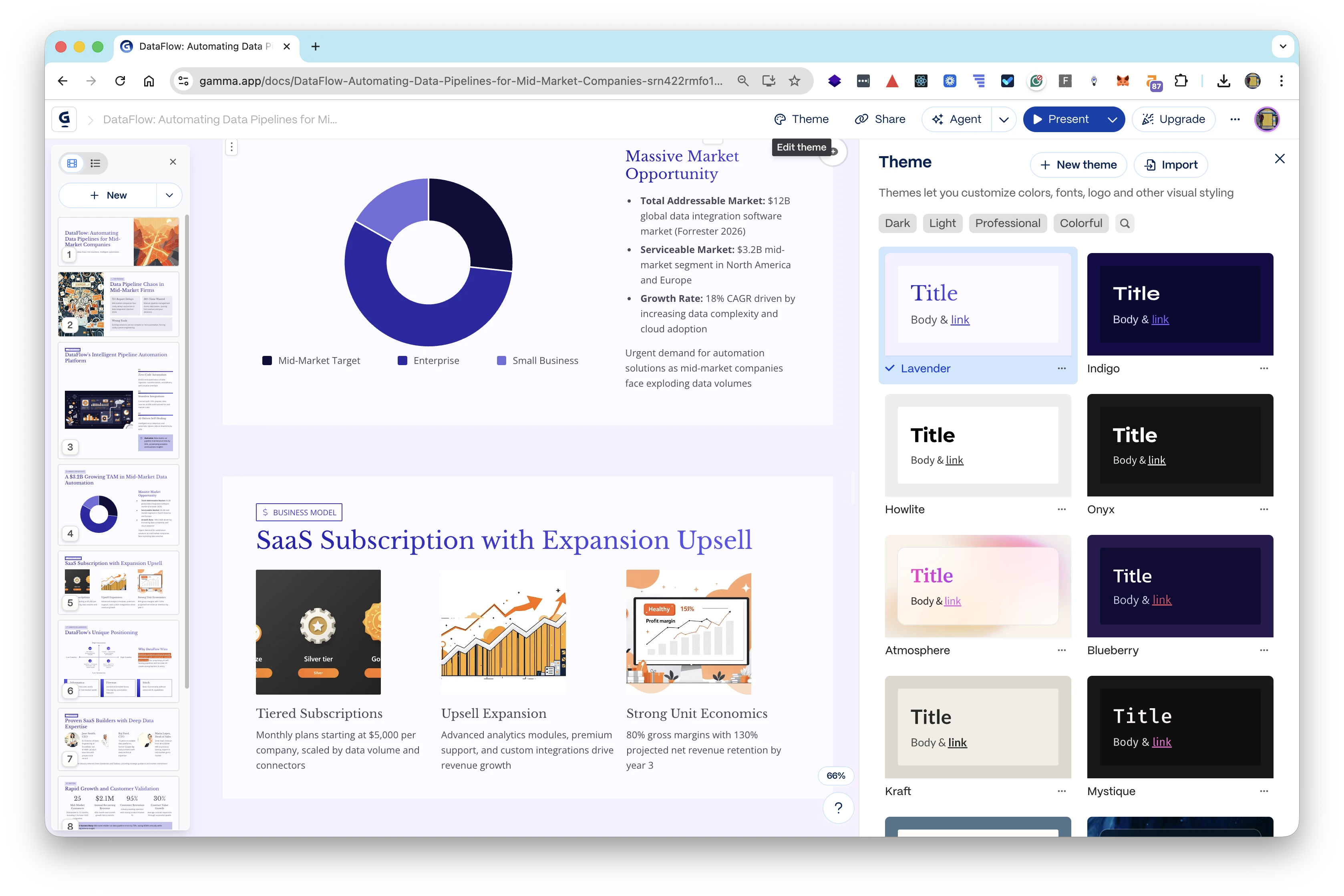
4. Gamma
Gamma has gained a massive following because it breaks the traditional slide format. It creates web-native presentations that look more like interactive documents or landing pages. This is perfect for sharing a link with a prospect or a team member. You can see how it stacks up against other research-centric tools in our Genspark vs NextDocs analysis.
Gamma is incredibly fast. You can type a one-sentence prompt and have a full, visually engaging presentation in under sixty seconds. The free tier is quite generous, which makes it a favorite for startups and budget-conscious creators. However, if you need to export to a standard PPTX for a formal presentation, the formatting can sometimes require manual cleanup.
Key Features:
- Web-native, interactive presentation format.
- Extremely fast generation from simple prompts.
- Modern, "clean" design aesthetic.
- Generous free tier for new users.
Pricing: Free tier available. Pro plans start at $8/mo.
Best for: Startups, internal team updates, and web-based sharing.
Verdict: Gamma is the best for speed and modern web sharing, though it lacks the deep research and export consistency found in NextDocs.
5. Copilot for PowerPoint
Microsoft Copilot for PowerPoint is the enterprise solution for the 365 ecosystem. Its primary advantage is organizational context awareness. It can look at your Word documents, Outlook emails, and Excel sheets to draft a presentation based on your actual work history.
While powerful, it is one of the more expensive options on this list. It also tends to be more conservative in its design choices, sticking to standard layouts that are professional but rarely "wow" an audience. For those looking for more creative options, exploring Copilot PowerPoint alternatives is a common move.
Key Features:
- Deep integration with Microsoft 365 data.
- Enterprise-grade security and data privacy.
- Automatic speaker notes generation based on slide content.
- Ability to summarize long presentations instantly.
Pricing: Requires a Microsoft 365 subscription. Copilot starts at $30/mo per user.
Best for: Large enterprise teams already using the full Microsoft 365 suite.
Verdict: This is the safest and most integrated choice for large corporations, though it lacks the creative flair of standalone AI builders.
6. Gemini for Google Slides
Gemini is Google's answer to Copilot. It is built directly into Google Slides and allows users to generate images and text content on the fly. It is particularly useful because it can pull information from your Google Drive. When comparing ecosystems, many users look at Gemini vs SlidesAI to see which Google-based tool handles content better.
The quality of Gemini's slide generation can be inconsistent compared to dedicated builders. It often produces generic layouts that require a fair amount of manual styling. However, since it is often included in Workspace tiers at no extra cost, it is a highly accessible entry point for AI presentations.
Key Features:
- Native Google Workspace integration.
- Direct access to Google Drive content.
- Built-in AI image generation.
- Real-time collaboration features of Google Slides.
Pricing: Starting at $0/mo for basic features, with paid Workspace tiers for advanced AI.
Best for: Google Workspace users who need quick, internal-facing drafts.
Verdict: A convenient and free starting point for Google users, though it lacks the professional brand kit features found in NextDocs.
7. Pitch.com
Pitch.com has long been a favorite for design-forward teams. Their AI features allow you to generate a draft and then use their robust collaborative editor to refine it. They offer some of the best version history and commenting features in the industry. If you find their pricing or workflow too specific, there are several Pitch alternatives worth considering.
Pitch focuses on the "team" aspect of presentations. It is less about the AI doing all the work and more about the AI giving you a high-quality starting point that your team can then polish together. Their template library is curated by professional designers, ensuring a high floor for quality.
Key Features:
- Real-time collaboration with team members.
- Advanced version history and commenting.
- High-quality, curated template library.
- Brand kit support for fonts and colors.
Pricing: Free tier available. Pro plans start at $8/mo.
Best for: Collaborative teams and design-conscious organizations.
Verdict: Pitch is the best choice for teams that want to balance AI efficiency with human collaboration and design oversight.
8. Canva Magic Design
Canva is the giant of the design world. Their Magic Design tool allows you to turn a text prompt into a multi-page presentation using their massive library of assets. The biggest strength here is the sheer volume of templates, icons, and stock photos available.
However, Canva can sometimes feel too "busy" for high-end corporate presentations. The AI quality is good for social media and marketing decks, but it can struggle with the structure of a complex business case or technical report.
Key Features:
- Access to an enormous library of design assets and templates.
- Multi-format export for social media and video.
- Strong brand kit features for Pro users.
- Intuitive drag-and-drop editor.
Pricing: Free tier available. Pro plans start at $13/mo.
Best for: Marketers, social media managers, and small business owners.
Verdict: Canva is unbeatable for visual variety and asset access, but it may feel less professional than NextDocs for executive-level decks.
9. MagicSlides
MagicSlides is a specialized add-on for Google Slides that focuses on content repurposing. One of its unique features is the ability to turn a YouTube video URL into a presentation. This makes it a favorite for educators and trainers who need to summarize video content into a teachable format.
When comparing simple add-ons, the MagicSlides vs SlidesAI debate usually centers on which tool handles external URLs better. MagicSlides generally wins on the variety of input sources it accepts.
Key Features:
- YouTube-to-slides conversion.
- Simple, text-based prompt interface.
- Direct integration with Google Slides.
- Support for multiple languages.
Pricing: Free tier available. Pro plans start at $8/mo.
Best for: Content creators, trainers, and educators repurposing existing media.
Verdict: A niche but highly effective tool for turning videos and long-form text into quick slide decks.
10. SlidesAI
SlidesAI is another Google Slides add-on that prioritizes simplicity. You paste in a block of text, choose a general style, and the AI generates the slides. It is one of the most affordable options for users who just want to get text onto a screen without much fuss.
The designs are fairly basic, and it lacks the advanced brand kit controls of the top-ranked tools. It is best suited for students or internal meetings where the information is the only thing that matters, rather than the visual impact.
Key Features:
- Fast text-to-slide conversion.
- Easy to use for beginners.
- Affordable entry-level pricing.
- Works natively in Google Slides.
Pricing: Free tier available. Pro plans start at $10/mo.
Best for: Students and internal, low-stakes presentations.
Verdict: A solid, budget-friendly option for simple drafting, but not recommended for high-stakes professional use.
Decision Guide: Selecting the Right Builder
Choosing between these tools requires an honest look at your workflow. If you are a consultant or a founder, the stakes are high. You need a tool that does not just "make slides," but helps you think through the narrative and provides the data to back it up.
When to Prioritize Research and Variants
If your work involves complex topics, NextDocs is the clear choice. The ability to generate multiple variants means you can see different ways to tell your story. Furthermore, the deep research capability ensures your data is accurate, which is the biggest weakness of most AI tools. This is a critical factor for anyone moving beyond simple "about us" decks.
When to Prioritize Workflow Integration
If your organization lives and breathes in PowerPoint, Plus AI or Microsoft Copilot are the most logical steps. They allow you to stay within the files your colleagues use. This avoids the "export dance" where formatting can sometimes break when moving between different platforms.
When to Prioritize Design
If you have a "design-first" requirement but no design team, Beautiful.ai is the safest bet. It prevents the common mistakes of over-crowding slides and inconsistent alignment. For more creative and visual marketing decks, Canva remains a powerhouse due to its asset library.
Conclusion
The evolution of AI presentation builders has made it possible to create high-quality decks in a fraction of the time it used to take. However, the tool you choose determines whether that time saved is spent on "fixing" AI mistakes or on refining your message.
For the modern professional who needs a balance of research, design, and flexibility, NextDocs stands at the top. Its multi-variant approach and deep research integration solve the most frustrating parts of using AI for work. Tools like Plus AI and Gamma provide excellent alternatives for specific workflows, while Beautiful.ai remains the champion of automated design.
By leveraging these tools, you can move from a blank screen to a finished, branded presentation with a level of speed and quality that was previously impossible.
Ready to Create Better Presentations?
Try NextDocs Free and experience multi-variant generation, universal exports, and deep research integration. No credit card required.