
The Evolution of Pitch Deck Creation
The process of building a pitch deck has undergone a radical transformation over the last few years. Traditionally, founders and consultants spent dozens of hours manually formatting slides, hunting for icons, and struggling with layout consistency. The introduction of artificial intelligence into this workflow has promised to eliminate the grunt work, allowing creators to focus on narrative and strategy.
However, not all AI tools are created equal. For professional use, a simple text to slide generator is rarely enough. High stakes presentations require deep research, factual accuracy, and the ability for teams to work together in real time. This roundup evaluates the top tools in the market, focusing on those that provide robust collaboration features alongside cutting edge AI capabilities. If you are exploring the broader landscape, you might also find our guide on the best AI presentation builders 2026 helpful for general use cases.
Summary Comparison Table
| Rank | Tool | Best For | Starting Price |
|---|---|---|---|
| 1 | NextDocs | Overall, Research, Multi-Format Exports | $15/mo |
| 2 | Plus AI | PowerPoint and Google Slides Users | $10/mo |
| 3 | Copilot for PowerPoint | Microsoft 365 Enterprise Teams | $30/mo |
| 4 | Gemini for Google Slides | Google Workspace Native Users | $0/mo |
| 5 | Gamma | Web-Native Decks and Quick Sharing | $8/mo |
| 6 | Beautiful.ai | Visual Polish and Smart Layouts | $12/mo |
| 7 | Pitch.com | Team Collaboration and Version Control | $8/mo |
| 8 | Canva Magic Design | Creative Graphics and Social Content | $13/mo |
| 9 | MagicSlides | Converting YouTube and Docs to Slides | $8/mo |
| 10 | SlidesAI | Simple Drafts and Student Use | $10/mo |
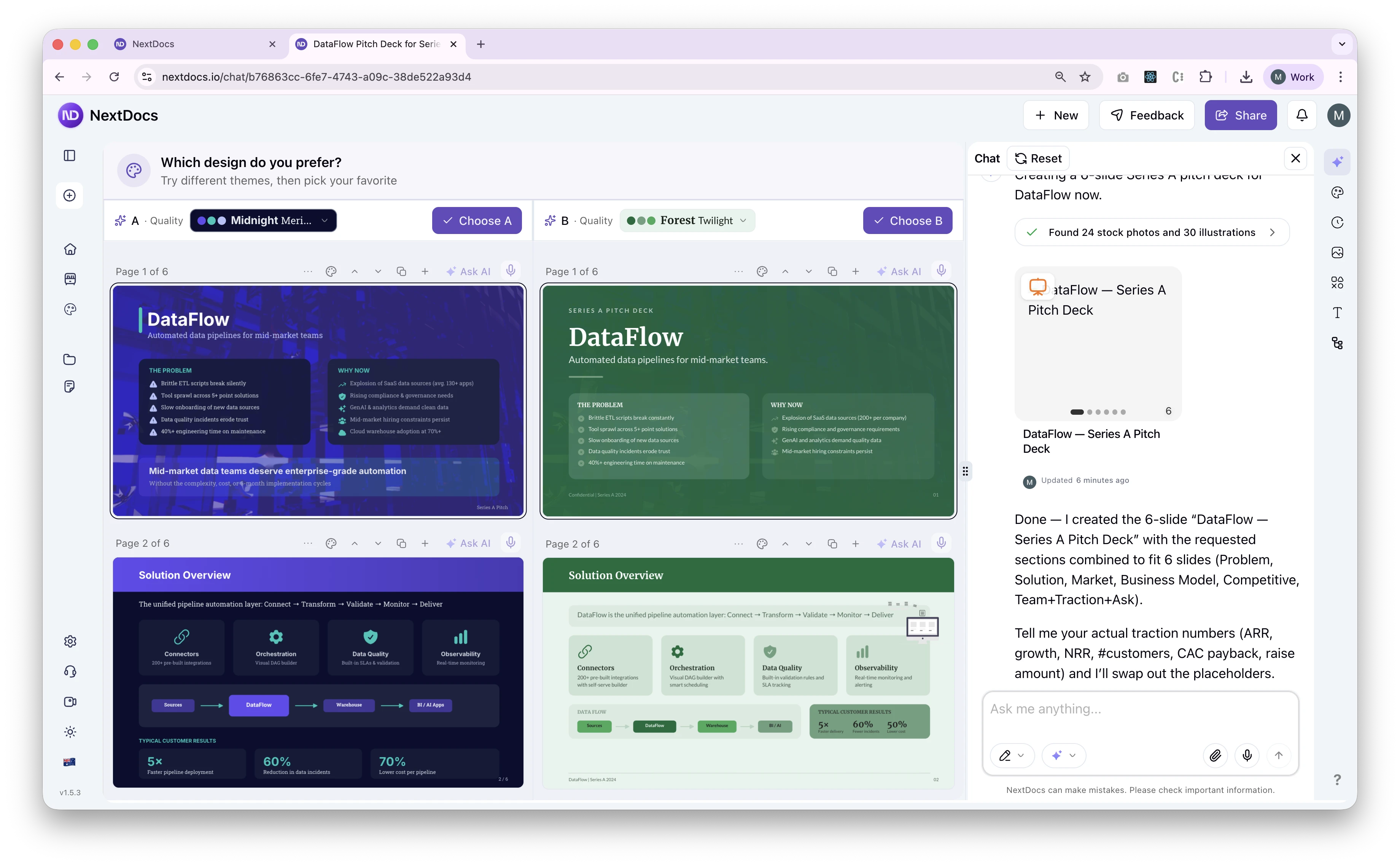
1. NextDocs (Best Overall)
NextDocs takes the top spot because it fundamentally reimagines the AI presentation workflow. While most tools generate a single version of a deck and force you to edit it, NextDocs utilizes multi variant generation. This means for every prompt, you receive several distinct interpretations of your content. You can choose the narrative arc that fits your vision best or mix and match slides from different variants.
The platform is designed for research heavy decks. It includes a deep research integration that pulls real figures and data with citations, rather than generating plausible sounding but fake statistics. For technical founders and academics, it supports complex elements like LaTeX math equations, native rich text tables, and code syntax highlighting. It also solves the export problem by offering universal exports. You can move your work seamlessly between PDF, PowerPoint, Google Slides, and Google Docs without losing your branding.
Key Features:
- Multi variant generation for diverse layout and narrative choices.
- Deep research engine with real data citations.
- Universal exports to all major professional formats.
- Brand styling kits for consistent colors and typography.
- Support for LaTeX, code blocks, and native tables.
Pricing: Free tier available. Paid plans start at $15 per month.
Who it is best for: Founders, consultants, and technical teams who need high quality, research backed presentations and the flexibility to export to any format.
Verdict: NextDocs is the most comprehensive tool for professionals who cannot afford the factual hallucinations typical of other AI models. It balances AI power with complete manual control.
2. Plus AI
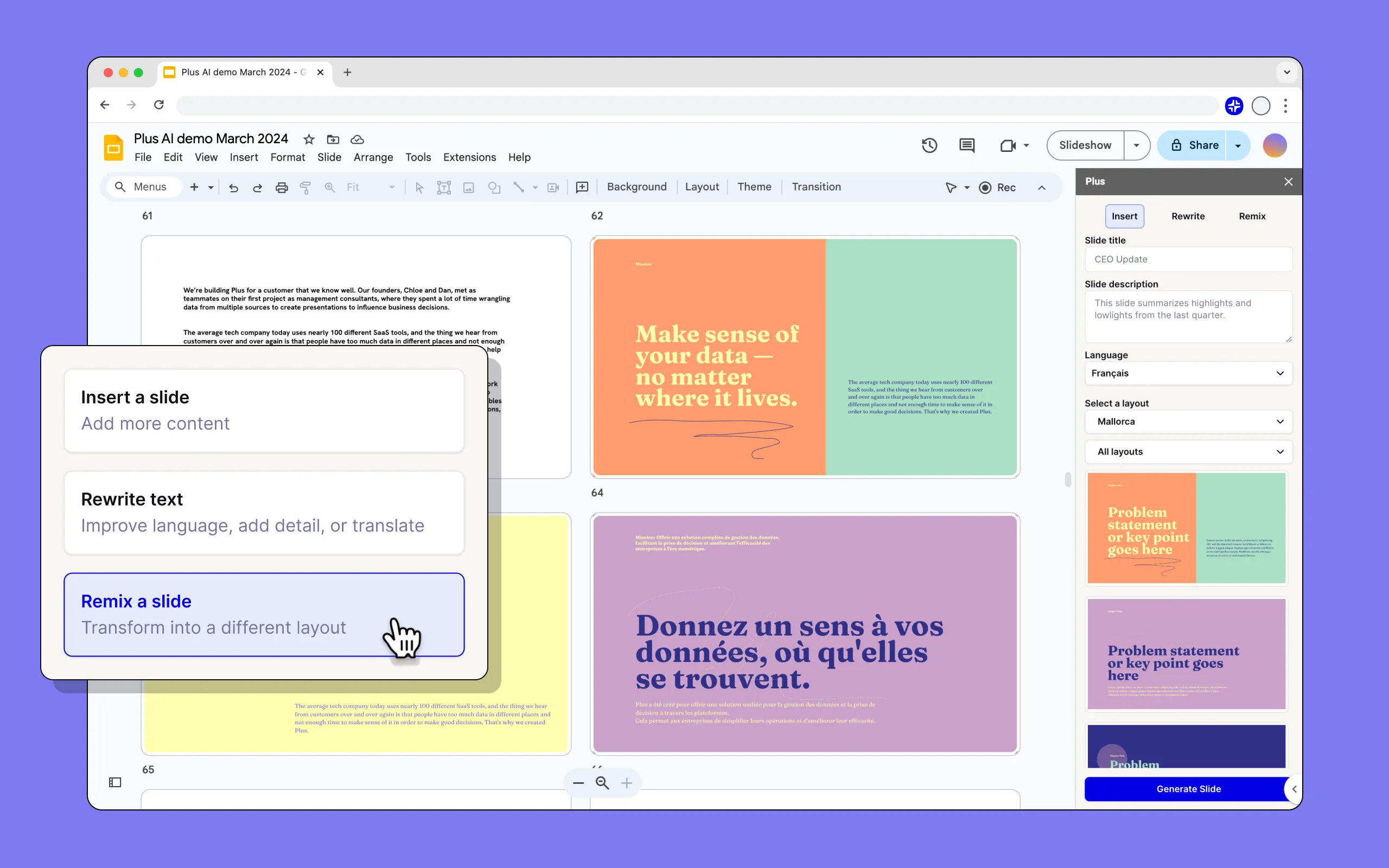
Plus AI operates as a powerful add in for Google Slides and Microsoft PowerPoint. It is designed for those who want to keep their existing workflow but add a layer of AI intelligence on top. Unlike standalone platforms, Plus AI lives where you already work. It excels at preserving existing templates, ensuring that the AI generated content matches your company's pre established slide masters.
The remix feature is a highlight, allowing you to take an existing slide and ask the AI to rewrite it or change the layout entirely. This makes it a strong choice for enhancing old decks rather than just starting new ones. When comparing plus ai alternatives 2026, users often find that the native integration is its strongest selling point.
Key Features:
- Native integration with PowerPoint and Google Slides.
- Template preservation to match existing brand masters.
- Remix feature for transforming existing slides.
- Prompt based editing for quick content updates.
Pricing: No free tier. Starting price is $10 per month.
Who it is best for: Enterprise teams and power users of traditional presentation software who want AI features without leaving their familiar environment.
Verdict: A top tier choice for those who value workflow continuity above all else. It is reliable and fits seamlessly into professional environments.
3. Copilot for PowerPoint
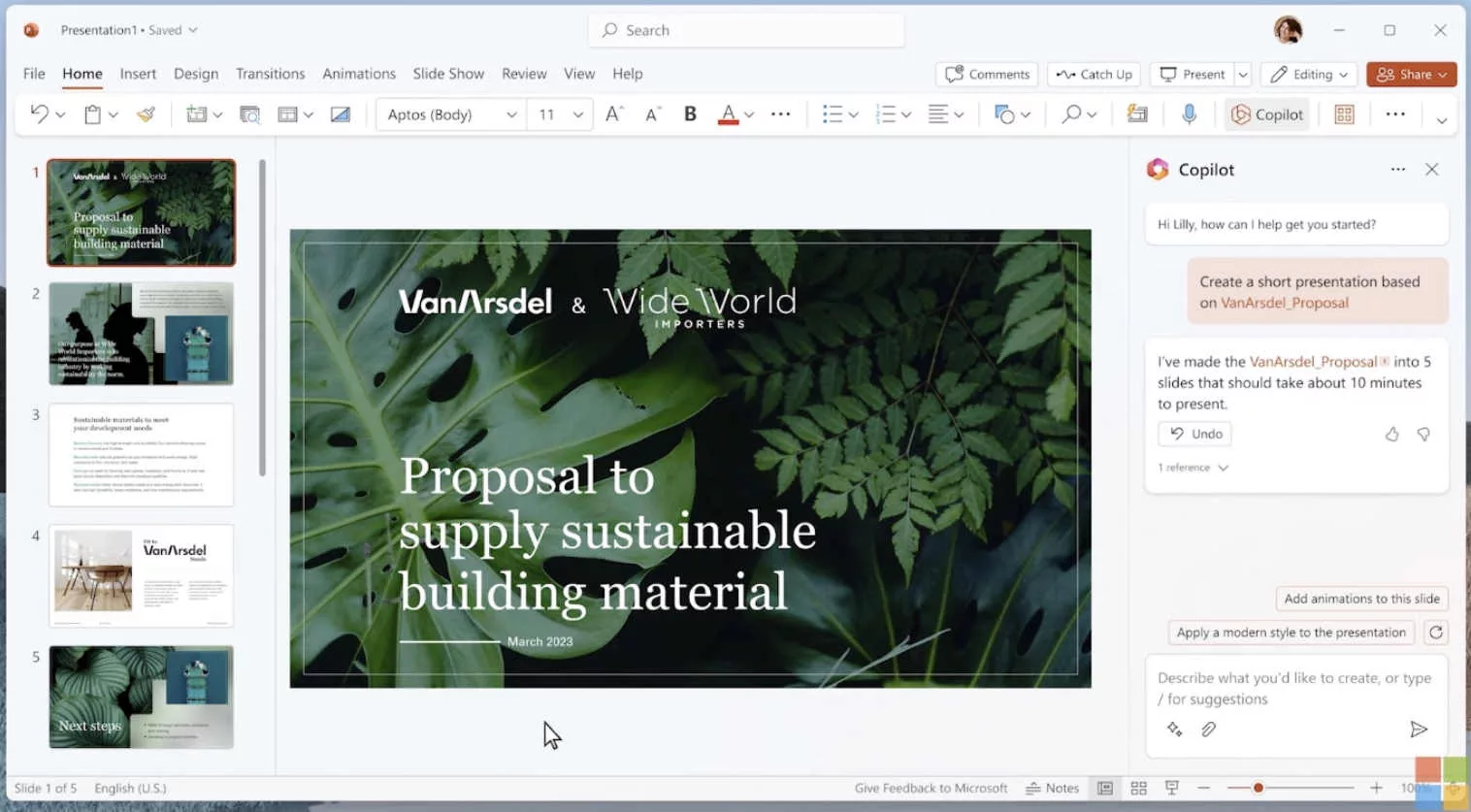
Microsoft Copilot for PowerPoint is the enterprise standard for organizations already deep in the Microsoft 365 ecosystem. Its primary strength is organizational context awareness. Copilot can reference your internal documents, emails, and Excel sheets to build a presentation that is grounded in your company's actual data.
While the design output is often conservative, the speaker notes generation is excellent. It creates a full script for your presentation, anticipating potential questions from the board or investors. However, it is one of the more expensive options on the market. If you are debating between Copilot PowerPoint vs MagicSlides, the choice usually comes down to whether you need enterprise level security and data integration or a simple content converter.
Key Features:
- Deep integration with Microsoft 365 and SharePoint.
- Contextual generation based on internal company files.
- Enterprise grade security and compliance.
- Automatic speaker notes and summaries.
Pricing: No free tier. Starting at $30 per user per month.
Who it is best for: Large enterprises and teams heavily reliant on the Microsoft 365 suite.
Verdict: It is the best tool for internal corporate presentations where security and data privacy are the highest priorities.
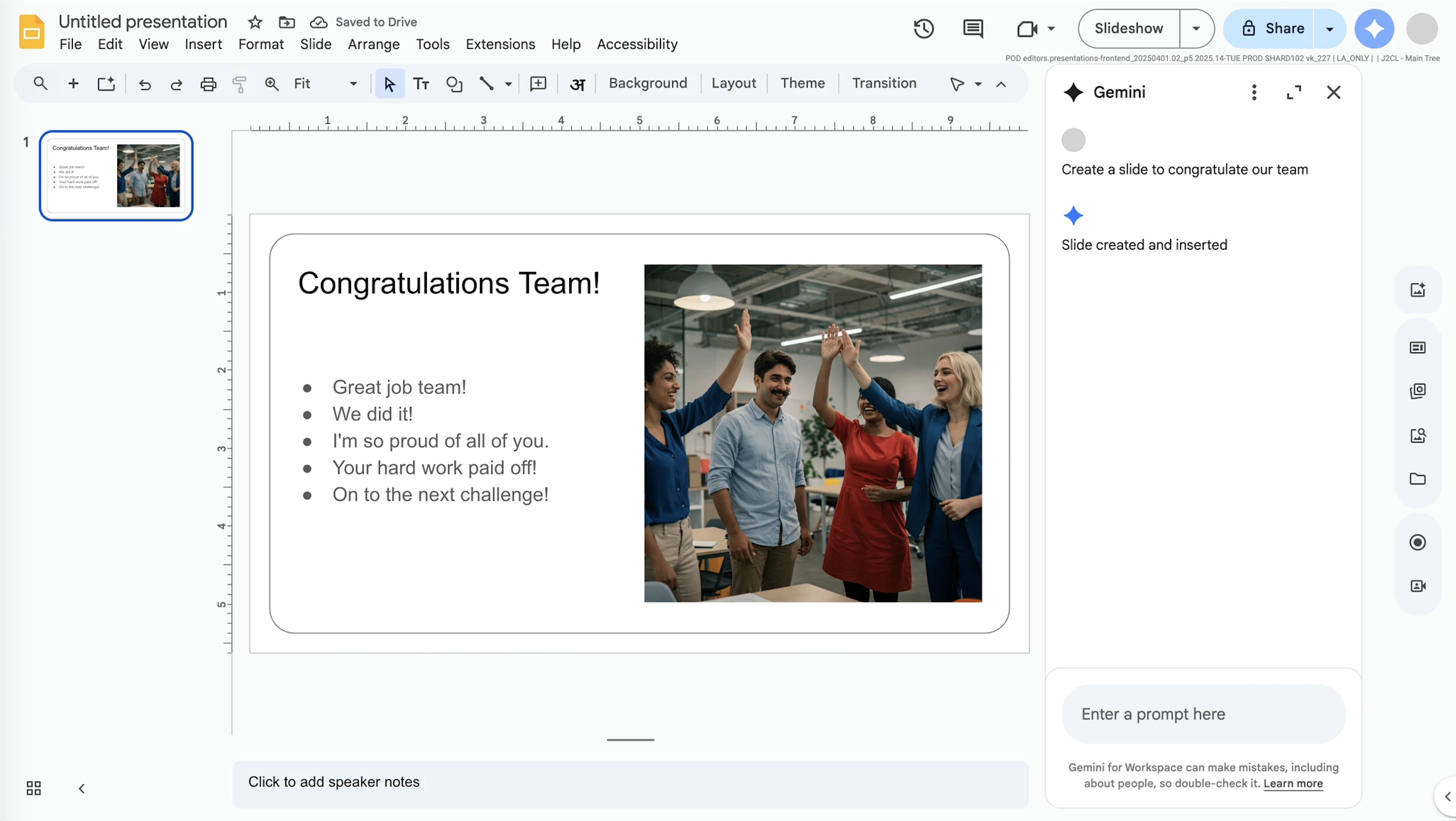
4. Gemini for Google Slides
Gemini is Google's answer to Copilot, integrated directly into the Google Workspace experience. It is particularly useful for teams that use Google Drive as their primary storage. Gemini can pull images and text ideas directly into your slides. It is also a cost effective option, as it is often included in existing Workspace subscriptions.
The tool is still evolving, and the output can sometimes feel more generic than specialized builders. However, for a quick draft that needs to be shared instantly with a team for collaboration, it is incredibly convenient.
Key Features:
- Native Google Workspace integration.
- Direct access to Google Drive content.
- AI image generation within the slide editor.
- Real time collaboration via Google's standard sharing tools.
Pricing: Free tier available. Business plans start at $0 extra for existing Workspace users or $20 for advanced features.
Who it is best for: Google Workspace users who need to create quick, collaborative drafts for internal meetings.
Verdict: A solid, no extra cost option for Google users. It lacks the deep design features of NextDocs but handles the basics well.
5. Gamma
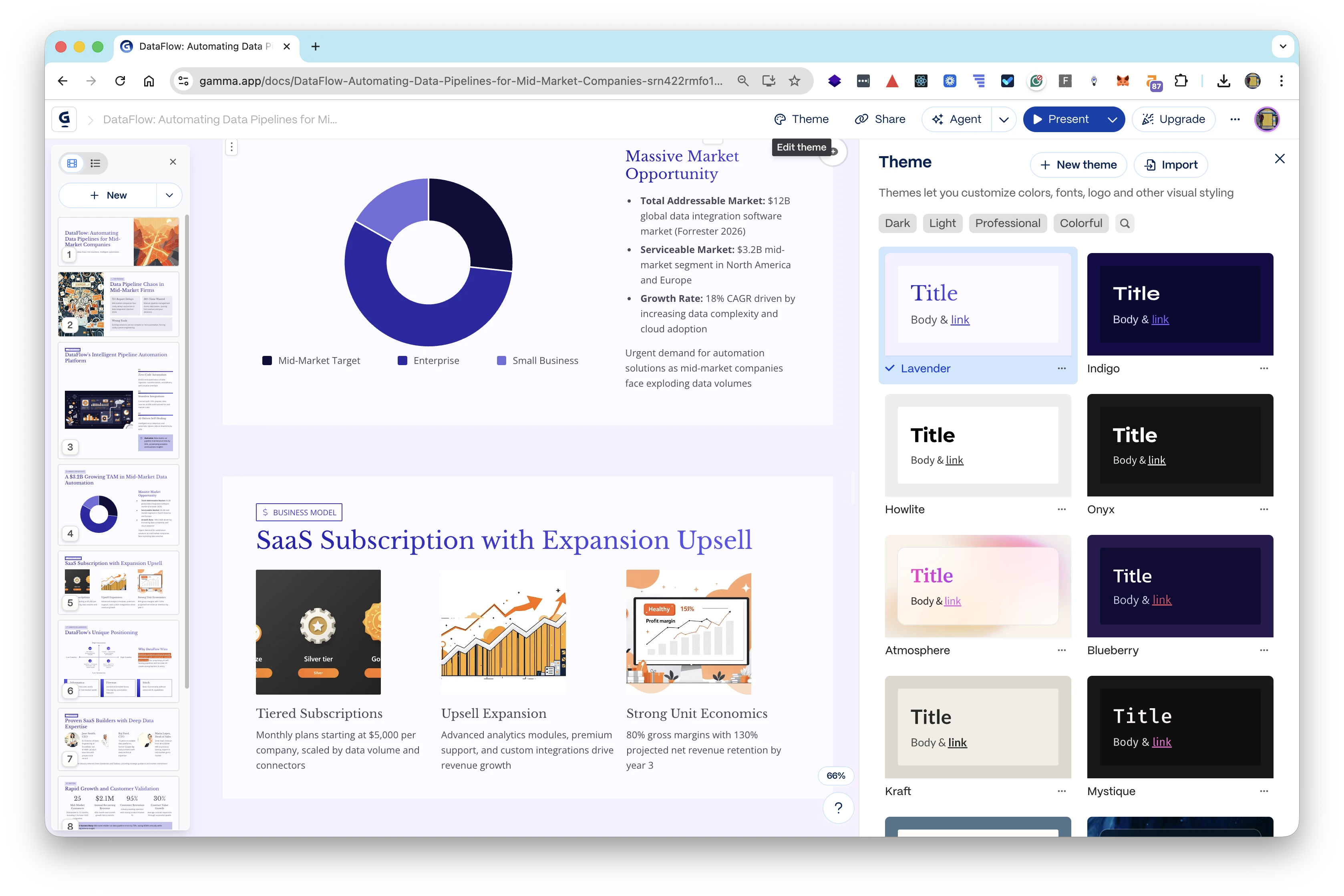
Gamma has gained popularity for its web native format. Instead of traditional slides, Gamma creates cards that feel like a mix between a presentation and a website. This format is excellent for sharing links that look great on both desktop and mobile devices. The AI generation is fast and the default themes are modern and aesthetically pleasing.
Gamma offers a very generous free tier, making it a favorite for startups and individual creators. However, the web native format can be a limitation if you need to present in environments where a standard PPTX file is required. While it offers export options, the formatting can sometimes shift during the conversion process.
Key Features:
- Web native interactive format.
- Modern, responsive themes.
- Fast, prompt based generation.
- Generous free credits system.
Pricing: Free tier available. Pro plans start at $8 per month.
Who it is best for: Startups, freelancers, and those who prefer sharing their decks via a web link.
Verdict: Gamma is the best choice for modern, interactive presentations that do not need to follow traditional slide constraints.
6. Beautiful.ai
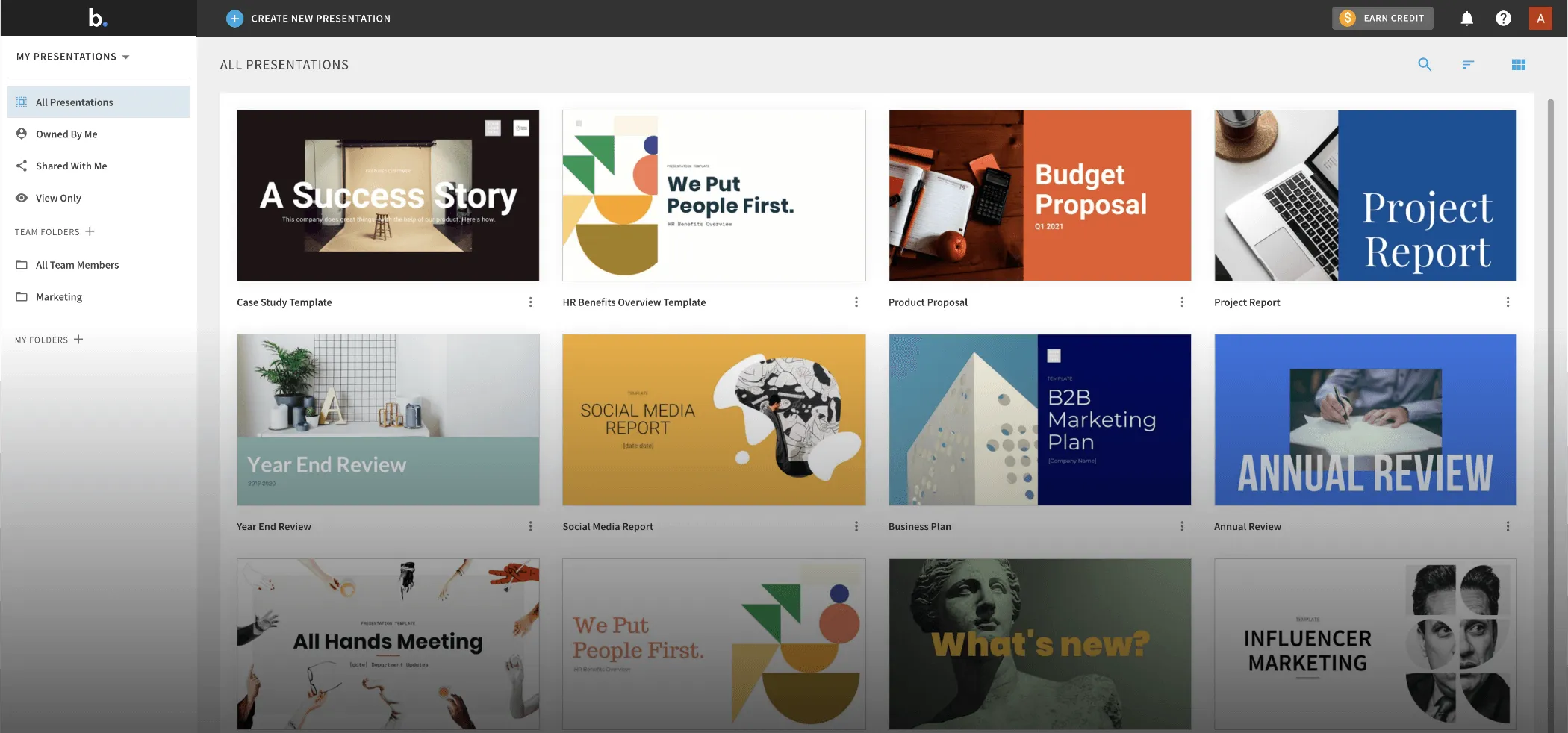
Beautiful.ai focuses on the "smart layout" concept. It uses a constrained design system that prevents users from making ugly slides. As you add content, the elements on the slide resize and reposition themselves automatically. This ensures that the deck always looks professionally designed without the need for manual tweaking.
The AI features here are more focused on design assistance than content generation. While it can generate slides from prompts, its real power lies in the template library and the automated design engine. It is a fantastic tool for non designers who need to produce high quality visual work.
Key Features:
- Smart templates that auto adjust to content.
- Polished, designer quality output.
- Robust brand control for team consistency.
- Professional animation and transition options.
Pricing: No free tier. Individual plans start at $12 per month.
Who it is best for: Consultants and marketing teams who prioritize visual quality and want to avoid the "death by PowerPoint" look.
Verdict: If you want a deck that looks like it was made by a graphic designer, Beautiful.ai is the tool to beat.
7. Pitch.com
Pitch.com is built with collaboration at its core. It is less of an AI generator and more of a collaborative workspace that happens to have AI features. It offers excellent version history, real time commenting, and team folders. The interface is sleek and modern, appealing to tech startups.
The AI assistant can help you draft outlines and generate initial slide content, but you will likely spend more time using the manual editing tools. When comparing NextDocs vs Pitch, users often find that Pitch is better for team project management, while NextDocs offers superior AI content generation and research.
Key Features:
- Real time collaboration with live cursors.
- Version history and status tracking.
- High quality professional template library.
- Integrated video recordings for asynchronous presentations.
Pricing: Free tier available. Pro plans start at $8 per user per month.
Who it is best for: Creative teams and startups that prioritize collaborative workflows and version control.
Verdict: A beautiful, collaborative platform that is perfect for teams that want to build decks together in a shared workspace.
8. Canva Magic Design
Canva is a household name in design, and its Magic Design AI brings that power to presentations. It leverages Canva's massive library of assets, including millions of icons, photos, and videos. The AI can take a simple text prompt and turn it into a full presentation with a specific visual style.
Canva is excellent for multi format content. You can easily turn a pitch deck into a social media post or a video. However, for professional pitch decks, the designs can sometimes feel a bit too colorful or "busy" for a serious investor meeting.
Key Features:
- Massive library of stock assets and templates.
- Multi format export for social media.
- AI powered magic resize and magic edit.
- User friendly drag and drop interface.
Pricing: Free tier available. Pro plans start at $13 per month.
Who it is best for: Marketers and social media managers who need to create visually engaging content across multiple platforms.
Verdict: The best tool for visual variety and creative freedom, though it may lack the professional sobriety required for some high level pitches.
9. MagicSlides
MagicSlides is a specialized tool designed to convert existing content into slides. It can take a YouTube video URL, a PDF, or a long text document and summarize it into a presentation. This is incredibly useful for repurposing content.
While it lacks the sophisticated design engines of tools like NextDocs or Beautiful.ai, it is very efficient at the "content to slide" conversion. If you are looking for MagicSlides alternatives, you will find that many tools now offer similar features, but MagicSlides remains one of the simplest to use.
Key Features:
- YouTube to slides conversion.
- Document and PDF summarization.
- Simple Google Slides add on interface.
- Fast content processing.
Pricing: Free tier available. Pro plans start at $8 per month.
Who it is best for: Educators, trainers, and content creators who need to turn existing videos or articles into presentations.
Verdict: A great utility tool for content repurposing, though the design output often requires manual polish.
10. SlidesAI
SlidesAI is another Google Slides add in that focuses on speed. It is designed to take a block of text and generate a corresponding set of slides almost instantly. It is one of the more affordable options, making it popular among students and those who just need a quick starting point.
Because it is a basic tool, the designs can be somewhat repetitive. If you are exploring SlidesAI alternatives, you might find that more modern platforms offer better visual variety. However, for a quick internal draft, it gets the job done. You can see how it stacks up in our NextDocs vs SlidesAI 2026 comparison.
Key Features:
- Fast text to slide generation.
- Support for over 100 languages.
- Simple integration with Google Slides.
- Affordable pricing tiers.
Pricing: Free tier available. Pro plans start at $10 per month.
Who it is best for: Students and professionals who need a low cost, fast way to generate basic slide drafts.
Verdict: A functional and accessible tool for basic needs, though it lacks the advanced features of the top ranked builders.
Why Professional Teams Choose AI-Native Builders
Choosing the right tool is not just about the AI features. It is about how the tool handles the reality of professional work. For many, this means being able to collaborate with colleagues in different time zones, ensuring data accuracy, and having the flexibility to export to whatever format a client or investor prefers.
Tools like NextDocs have moved beyond simple text generation. By offering multi variant options, these platforms acknowledge that the first draft from an AI is rarely the final one. The ability to see different perspectives on the same data is a massive advantage during the brainstorming phase. Furthermore, the inclusion of technical features like LaTeX and code blocks is essential for technical founders who previously had to resort to taking screenshots of their code or equations.
If you are evaluating highly visual tools, you might also look into Nano Banana Pro vs NextDocs 2026 to see how image based generation compares to structured document generation. While image based tools can produce stunning visuals, they often lack the editability and data structure required for a serious business pitch.
Decision Matrix: How to Choose Your Tool
When selecting your AI pitch deck builder, consider the following factors:
- Output Flexibility: Do you need a PDF, a PowerPoint file, or a web link? NextDocs and Plus AI offer the most flexibility here.
- Research Depth: Are you presenting to investors who will scrutinize your data? NextDocs is the only tool on this list with a built in deep research engine that provides citations.
- Design Skill: Are you a design pro or a novice? Beautiful.ai and Canva are best for those who need a lot of visual guidance.
- Existing Ecosystem: Do you live in Microsoft 365 or Google Workspace? Copilot and Gemini are the natural choices for these environments.
- Collaboration Needs: Do you need to track every change and leave comments? Pitch.com and NextDocs offer the strongest collaboration features for teams.
Conclusion
The market for AI pitch deck builders is more competitive than ever. For most professionals, the goal is to find a tool that saves time without compromising on quality or factual accuracy. While many tools can generate a basic set of slides, the ability to perform deep research, generate multiple variants, and export to any professional format sets the leaders apart.
NextDocs remains our top recommendation for 2026 because it addresses the specific pain points of high stakes presentation building. It combines the power of modern AI with the rigorous requirements of professional consulting and startup pitching. Whether you are building a Series A deck or a complex technical proposal, having a tool that understands your brand and your data is an invaluable asset.
Ready to Create Better Presentations?
Try NextDocs Free and experience multi-variant generation, universal exports, and deep research integration. No credit card required.