

The Evolution of Pitch Deck Creation in 2026
The landscape of startup fundraising has changed dramatically over the last few years. In the past, founders spent weeks laboring over every pixel in a PowerPoint file. Today, the rise of artificial intelligence has compressed that timeline from weeks into minutes. However, as the market for AI presentation tools has exploded, a significant divide has emerged between tools that are merely toys and tools that are professional grade.
For a founder or consultant, the ability to export to a standard format remains the most critical feature. While web-native presentations are flashy, professional investors often require a local file for their internal records. This makes the PPTX export function a non-negotiable requirement for any serious pitch deck builder. A presentation that only lives behind a proprietary URL is a liability in a high-stakes meeting.
In this guide, we have tested and ranked the top 10 AI pitch deck builders available in 2026. We focused specifically on tools that offer robust PowerPoint export capabilities while providing high-quality AI content generation. We evaluated these tools based on their design intelligence, their ability to handle complex business data, and the flexibility of their editing interfaces.
Summary Comparison of the Top AI Pitch Deck Builders
| Rank | Tool | Best For | Starting Price |
|---|---|---|---|
| 1 | NextDocs | Overall, Research-Heavy Decks, and Technical Sales | Free or $15/mo |
| 2 | Plus AI | Native PowerPoint and Google Slides Workflow | $10/mo |
| 3 | Copilot for PowerPoint | Microsoft 365 Enterprise Users | $30/mo |
| 4 | Gemini for Google Slides | Google Workspace Power Users | $0/mo |
| 5 | Gamma | Budget-Conscious Startups and Web Sharing | Free or $8/mo |
| 6 | Beautiful.ai | Non-Designers Seeking Polished Visuals | $12/mo |
| 7 | Pitch.com | Collaborative Team Workflows | Free or $8/mo |
| 8 | Canva Magic Design | Creative and Social Media Presentations | Free or $13/mo |
| 9 | MagicSlides | Content Repurposing and YouTube to Slides | Free or $8/mo |
| 10 | SlidesAI | Quick Internal Drafts and Students | Free or $10/mo |
How We Evaluated These Tools
To provide an objective ranking, we used a standardized benchmark prompt across every platform. We asked each AI to create a ten-slide Series A pitch deck for a fictional B2B SaaS company. This prompt required the AI to generate a problem statement, market size data, a competitive landscape, and a financial traction slide.
We looked for tools that did more than just fill slides with generic text. We prioritized platforms that could perform deep research, suggest relevant imagery, and maintain brand consistency. Most importantly, we tested the integrity of the PPTX export. We checked if the exported files remained editable, if the fonts stayed consistent, and if the layouts broke when opened in standard Microsoft PowerPoint.
1. NextDocs (Best Overall)
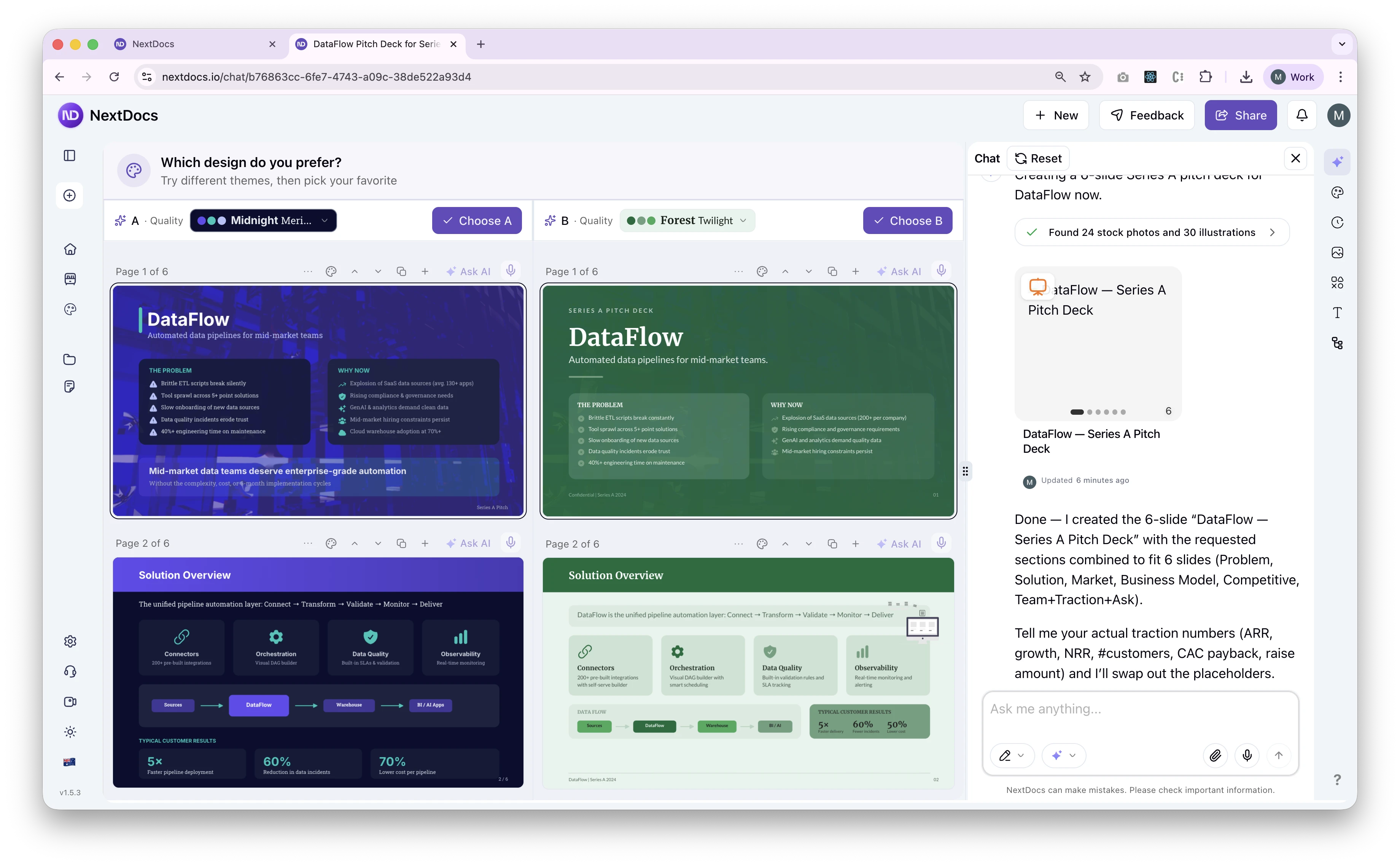
NextDocs takes the top spot in our rankings because it fundamentally reimagines the relationship between the user and the AI. Most builders give you one version of a deck and force you to fix it. NextDocs uses a multi-variant generation engine. When you provide a prompt, it generates several distinct versions of the deck. This allows you to choose the narrative structure and visual style that best fits your specific vision.
The platform is built for professionals who need more than just "filler" text. It features deep research integration, which means it pulls real market figures and citations from the web rather than hallucinating plausible numbers. For technical founders, it offers advanced features like LaTeX math equations and code syntax highlighting. This makes it the premier choice for research-heavy decks and technical presentations.
NextDocs also excels in its export flexibility. It provides universal exports to PDF, PPTX, Google Slides, and even Google Docs. If you are comparing options, you may want to look at a NextDocs vs Plus AI comparison to see how the multi-variant approach differs from traditional add-ins.
Key Features:
- Multi-variant generation gives users multiple versions to choose from.
- Deep research integration pulls real-world data with citations.
- Universal export support for PPTX, PDF, Google Slides, and Docs.
- Native support for LaTeX equations, structured tables, and code blocks.
- Brand kit support ensures consistent styling across all generated variants.
Pricing: A free tier is available for new users. Pro plans start at $15 per month for advanced features and higher generation limits.
Who it is best for: Founders, consultants, and technical teams who need high-quality, research-backed presentations that can be exported anywhere.
Verdict: NextDocs is the most comprehensive tool on the market. It balances powerful AI capabilities with the manual control professionals require.
2. Plus AI (Best for Native Workflow)
Plus AI is designed for users who do not want to learn a new piece of software. It operates as a native add-in for both Microsoft PowerPoint and Google Slides. This means you can use AI to generate slides directly within the environment where you already work. It is an excellent choice for those who have established templates and want the AI to work within those existing guardrails.
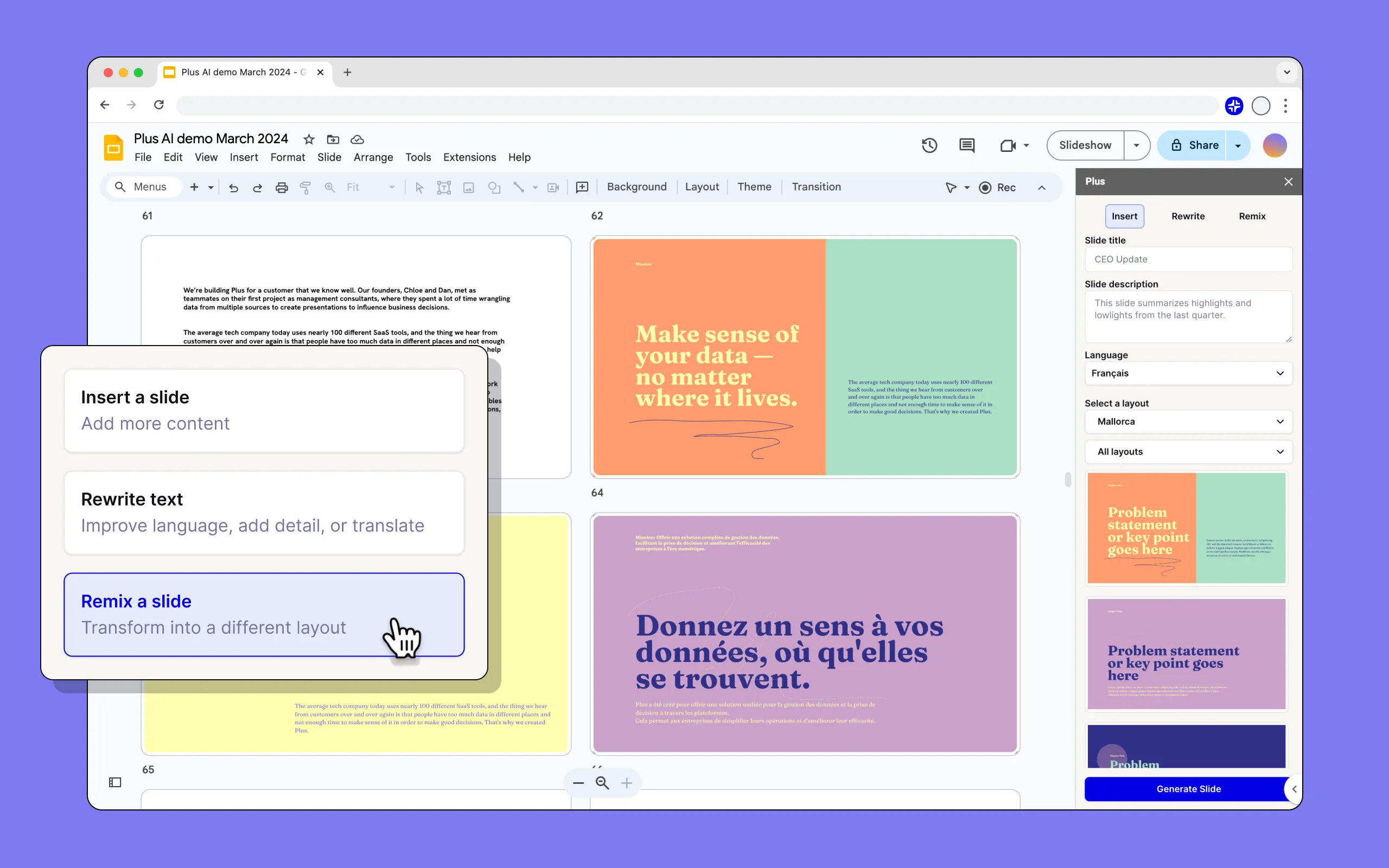
The tool includes a unique "remix" feature. You can take an existing slide and tell the AI to transform it into a different format, such as turning a list of bullets into a three-column comparison. While it lacks the standalone power of NextDocs, its integration is seamless for enterprise teams.
Key Features:
- Native integration as a sidebar in PowerPoint and Google Slides.
- The Remix feature allows for instant layout transformations.
- Preserves existing organizational templates and master slides.
- AI-powered rewriting and content enhancement for existing decks.
Pricing: Plus AI does not offer a free tier. Plans start at $10 per month for individual users.
Who it is best for: Power users of PowerPoint and Google Slides who want to add AI capabilities to their current workflow.
Verdict: If you refuse to leave the PowerPoint interface, Plus AI is your best option. It is a reliable, professional tool that respects your existing design systems.
3. Copilot for PowerPoint (Best for Microsoft 365 Enterprise)
Microsoft Copilot is the heavyweight option for large organizations already paying for the Microsoft 365 ecosystem. Its primary strength is its organizational context. Because it is connected to your company's Graph data, it can pull information from Word documents, Excel spreadsheets, and Teams chats to build a presentation.
However, Copilot can be quite conservative in its design. The slides it generates are functional and professional, but they rarely have the visual "wow" factor of more creative tools. It is also the most expensive option on this list, as it requires a specific enterprise license. For more information, you can read our Copilot for PowerPoint alternatives guide or see a direct Copilot vs NextDocs comparison.
Key Features:
- Deep integration with the entire Microsoft 365 suite.
- Ability to generate presentations directly from a Word document.
- Enterprise-grade security and data privacy for sensitive company info.
- Automatic generation of speaker notes based on slide content.
Pricing: $30 per user per month, billed annually. This requires an underlying Microsoft 365 business license.
Who it is best for: Enterprise employees at large corporations who need to create internal decks based on existing company documents.
Verdict: Copilot is powerful for internal reporting and document conversion, but it is often too rigid for creative pitch decks.
4. Gemini for Google Slides (Best for Google Workspace Users)
Gemini is Google's answer to Copilot. It is built directly into the Google Workspace interface. For users who live in Google Drive, Gemini offers a convenient way to generate slide content and images without leaving the browser. It is particularly good at summarizing long threads of information from Gmail or Docs into a few concise slides.
While the export to PPTX is possible through the standard Google Slides menu, the AI itself is currently less sophisticated than standalone builders. The layouts can feel somewhat generic, and the AI often struggles with complex data visualization.
Key Features:
- Native integration with Google Workspace and Google Drive.
- Built-in image generation to create custom visuals for slides.
- No extra software installation required for Workspace users.
- Collaborative AI features that allow teams to prompt the AI together.
Pricing: Basic features are often included with Workspace. Advanced AI capabilities require a Gemini Business or Enterprise add-on.
Who it is best for: Small teams and individuals who are fully committed to the Google ecosystem and need quick, simple drafts.
Verdict: Gemini is a convenient entry point for AI presentations, but it lacks the deep customization and research tools found in top-tier platforms.
5. Gamma (Best Free Option)
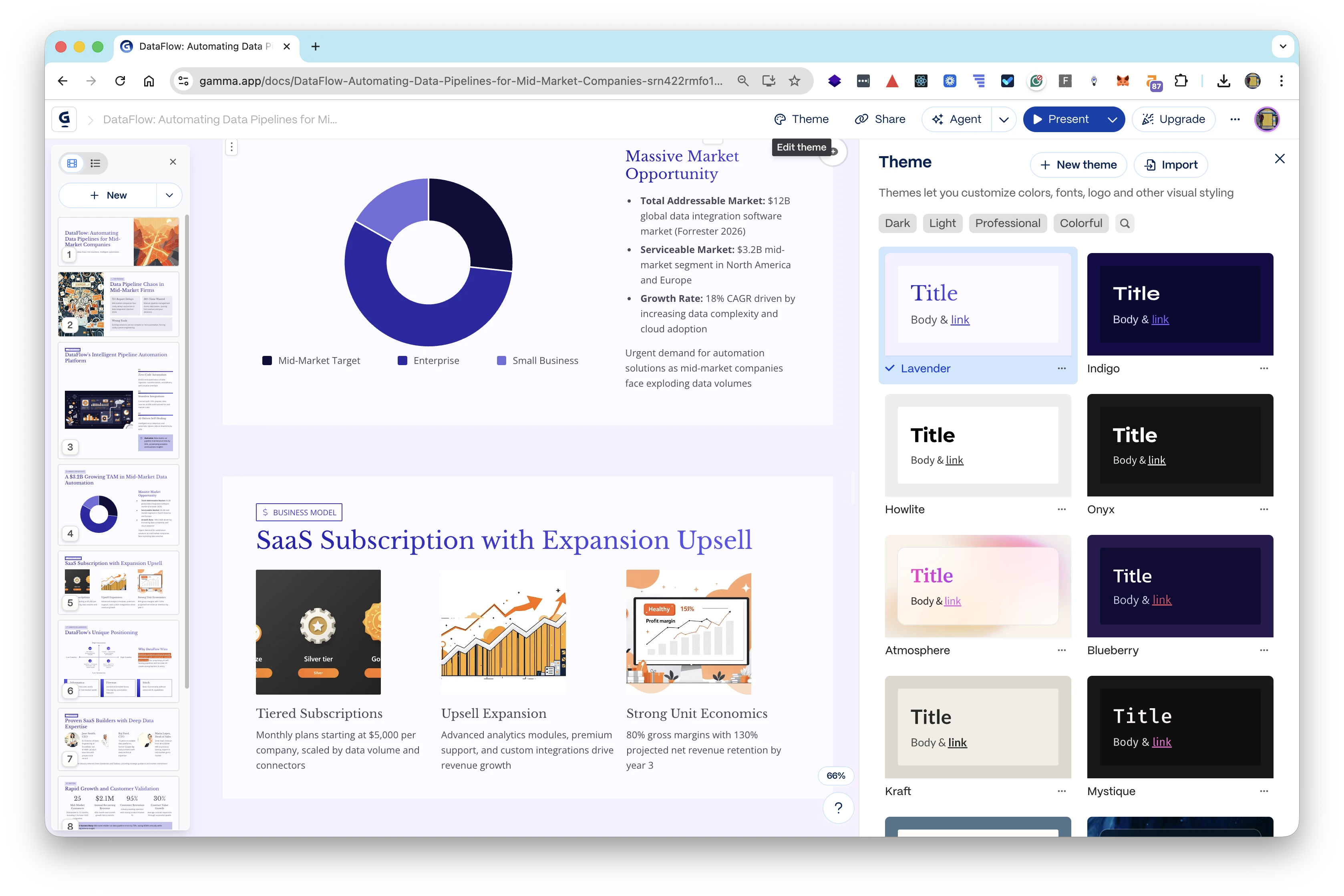
Gamma has gained a massive following because it breaks the traditional "slide" mold. It uses a web-native format that looks more like a modern landing page than a 1990s slideshow. This makes it incredibly popular for startups that want to share their deck via a link. However, Gamma also offers a solid PPTX export for those who need a traditional file.
The free tier is one of the most generous in the industry. Users can generate several high-quality presentations before needing to pay. The main drawback is that the free version includes Gamma branding on the exports. For those looking for different styles, checking out Gamma alternatives for 2026 can be helpful. You might also compare the workflow in a Gamma vs Pitch review.
Key Features:
- One-click "Refine" tool to change the tone or length of content.
- Web-native, responsive layouts that look great on mobile devices.
- A wide variety of modern, minimalist themes and templates.
- Fast generation times with a very intuitive drag-and-drop editor.
Pricing: A generous free tier is available. Pro plans start at $8 per month to remove watermarks and unlock advanced features.
Who it is best for: Founders on a budget who want a modern, stylish look for their presentations.
Verdict: Gamma is the best choice for those who want a "cool" looking deck with minimal effort, provided they don't mind the web-first constraints.
6. Beautiful.ai (Best for Design Quality)
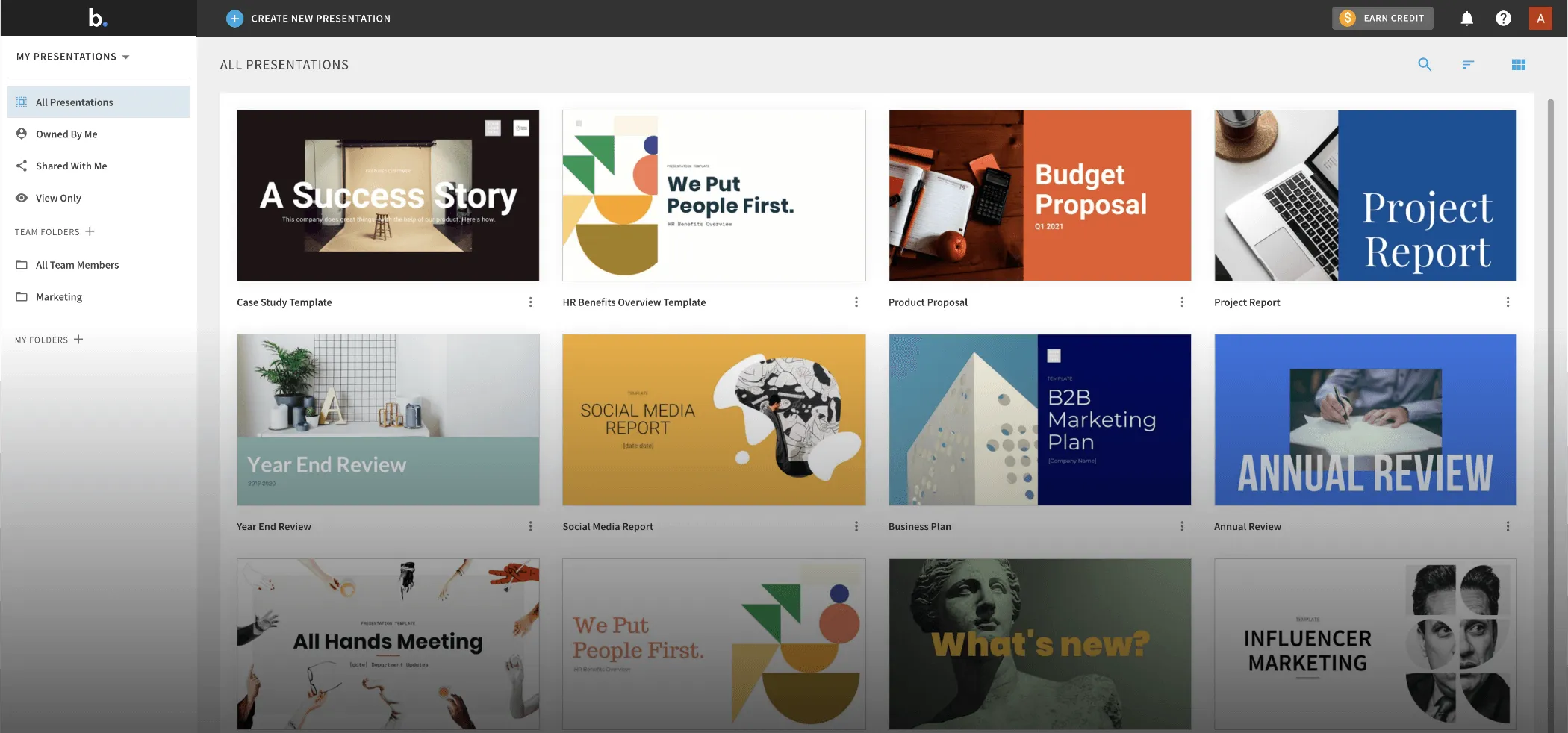
Beautiful.ai was one of the first players in the smart presentation space. Unlike other tools that use generative AI for text, Beautiful.ai uses "Design AI" to ensure your slides stay beautiful no matter what you add to them. If you add a new team member to a slide, the other headshots automatically resize to maintain perfect alignment.
While it has added more generative text features recently, its core strength remains its constraints. It simply does not let you make an ugly slide. This makes it a favorite for non-designers who need to produce client-facing work.
Key Features:
- Smart Slide templates that automatically adjust layouts as content is added.
- A massive library of high-quality icons and stock photography.
- Brand control features that lock in colors and fonts for teams.
- Polished animations and transitions that look professional.
Pricing: No free tier is available for individuals. Pro plans start at $12 per month.
Who it is best for: Consultants and professionals who prioritize visual polish and want a "guaranteed" professional look.
Verdict: Beautiful.ai is the gold standard for automated design, though it offers less flexibility for those who want to break away from its templates.
7. Pitch.com (Best for Collaborative Teams)
Pitch.com has built its reputation on being the "Slack of presentations." It is designed from the ground up for real-time collaboration. While its AI features are solid, its true value lies in the workflow. It includes features like slide status (In Progress, Done), assigned tasks, and integrated video comments.
The AI generator in Pitch is great for creating a starting point, but the platform shines during the refinement stage. It offers a very high level of control over typography and layout, which is rare in AI-first tools.
Key Features:
- Real-time collaboration with integrated activity feeds and comments.
- Sophisticated brand kits that ensure every team member stays on-brand.
- Status tracking for individual slides to manage large team projects.
- High-quality PPTX and PDF exports that maintain design integrity.
Pricing: A free tier is available for small teams. Pro plans start at $8 per user per month.
Who it is best for: Marketing teams and startups where multiple people need to contribute to a single deck.
Verdict: Pitch is the most "mature" software on this list from a collaboration perspective, even if its AI is slightly less automated than newer rivals.
8. Canva Magic Design (Best for Visual and Social Content)
Canva is a household name in design, and its Magic Design tool brings AI presentation building to its massive user base. Canva is unique because of its sheer volume of assets. When you generate a deck in Canva, you have access to millions of illustrations, videos, and graphics.
Canva is perfect for decks that need to be highly visual or "loud." It is less suited for a formal financial pitch to a venture capital firm, but it is excellent for internal creative pitches or social media presentations. The PPTX export is available, but complex layouts can sometimes require a bit of cleanup in PowerPoint.
Key Features:
- Access to the world's largest library of stock assets and templates.
- AI-powered "Magic Switch" that turns a presentation into a blog post or social video.
- Intuitive interface that most marketing professionals already know.
- Robust mobile app for making quick edits on the go.
Pricing: A very strong free tier. Canva Pro costs $13 per month and includes all AI features.
Who it is best for: Marketers, social media managers, and creative entrepreneurs.
Verdict: Canva is the best all-in-one creative suite, but it can feel a bit too "consumer-grade" for high-stakes corporate fundraising.
9. MagicSlides (Best for Content Repurposing)
MagicSlides is a specialized tool that excels at taking content from one format and turning it into slides. Its most impressive feature is the ability to take a YouTube URL and automatically generate a presentation based on the video's transcript. This is a game-changer for educators and trainers.
The design quality of MagicSlides is relatively basic. It focuses on speed and utility rather than high-end aesthetics. It is a Google Slides add-on, so it fits neatly into that ecosystem. For those looking for other options in this niche, see our list of MagicSlides alternatives.
Key Features:
- YouTube-to-Slides conversion is a unique and powerful feature.
- Supports text-to-slide generation in over 100 languages.
- Simple, no-frills interface that gets the job done quickly.
- Direct integration with Google Slides for easy editing.
Pricing: A limited free tier exists. Pro plans start at $8 per month.
Who it is best for: Teachers, trainers, and content creators who need to repurpose existing video or text content.
Verdict: MagicSlides is a utility tool. It is not for building a beautiful Series A deck, but it is fantastic for generating educational materials in minutes.
10. SlidesAI (Best for Quick Internal Drafts)
SlidesAI is another popular Google Slides add-in that focuses on the "text-to-presentation" workflow. You paste in a long block of text, such as a report or an article, and the AI summarizes it and creates slides. It is a very simple tool that does one thing well.
The design options are limited compared to NextDocs or Beautiful.ai, but it is very affordable. It is a popular choice for students or for employees who need to create a quick summary deck for an internal meeting.
Key Features:
- Simple "Paste Text" interface for rapid slide generation.
- Supports multiple languages and basic customization.
- Affordable pricing for casual users.
- Works entirely within the Google Slides sidebar.
Pricing: Free for up to 3 presentations per month. Pro plans start at $10 per month.
Who it is best for: Students and office workers who need to summarize documents into slides quickly.
Verdict: SlidesAI is a solid, entry-level tool for those who have a lot of text and very little time.
Decision Guide: How to Choose the Right Tool
Choosing the right AI pitch deck builder depends on your specific role and the stakes of your presentation.
For Professional Founders and Consultants: If you are building a pitch deck that will determine the future of your company, you need the best possible output. NextDocs is the clear winner here because of its multi-variant generation and deep research capabilities. It ensures your data is accurate and gives you multiple creative directions to choose from. You can also see how it compares to other high-end options in our best AI presentation builders 2026 roundup.
For Corporate Employees: If you are working within a large company, staying within the Microsoft or Google ecosystem is often a requirement for security reasons. In these cases, Plus AI or Copilot for PowerPoint are the most logical choices. They offer the path of least resistance for getting AI into your workday.
For Creative and Social Projects: If your presentation is intended for a creative audience or social media, Canva or Gamma are excellent choices. They offer a more modern, visual aesthetic that breaks away from the "corporate" look of traditional PowerPoint slides. If you are looking for highly stylized, image-driven slides, you might even consider a Nano Banana Pro vs NextDocs comparison to see how different AI models handle visual aesthetics.
Final Thoughts on AI Pitch Decks
The goal of using AI to build a pitch deck is not to remove the human from the process. Instead, the goal is to remove the "grunt work" of formatting, searching for icons, and summarizing text. This frees you up to focus on the most important part of the deck: your story and your strategy.
Every tool on this list offers a PPTX export, ensuring that you can always take your work with you. Whether you choose the research-heavy power of NextDocs, the native integration of Plus AI, or the collaborative environment of Pitch, you are now equipped to build presentations faster than ever before.
The technology will continue to evolve, but the core requirement remains the same. You need a tool that is reliable, professional, and flexible enough to meet the demands of the modern business world.
Ready to Create Better Presentations?
Try NextDocs Free and experience multi-variant generation, universal exports, and deep research integration. No credit card required.