Best Ai Slide Makers for educators in 2026
Discover the top 10 AI presentation tools for teachers and professors, ranked by research capabilities, ease of use, and educational features like LaTeX and code support.
The Transformation of Classroom Presentations
Educators today face an unprecedented challenge. They must balance increasingly heavy administrative loads with the need to create engaging, accurate, and visually stimulating materials for a generation of students raised on high quality digital content. Traditional methods of slide creation often require hours of manual labor, from formatting text to sourcing reliable images and verifying data. This process is often a significant bottleneck in lesson planning.
The emergence of artificial intelligence in the presentation space has changed the landscape for teachers, professors, and academic researchers. AI slide makers no longer just provide templates. They can now synthesize complex research, generate mathematical equations, format code snippets, and produce multiple variations of a lesson plan in seconds. For an educator, this means the ability to spend less time wrestling with bullet points and more time focusing on pedagogy and student interaction.
However, not every tool is suited for the classroom. An educator needs more than just a flashy design. They require factual accuracy, the ability to export to school approved formats like PowerPoint or Google Slides, and often, support for specialized notation like LaTeX for math or syntax highlighting for computer science. This guide evaluates the best AI slide makers specifically through the lens of educational utility, ranking them based on their ability to serve the unique needs of the academic environment.
Summary Comparison of the Best AI Slide Makers for Educators
| Rank | Tool | Best For | Starting Price |
|---|---|---|---|
| 1 | NextDocs | Research-heavy lessons and technical subjects | Free tier ($15/mo Pro) |
| 2 | Plus AI | Teachers using existing Google/PPT templates | $10/mo |
| 3 | Copilot for PowerPoint | Large institutions using Microsoft 365 | $30/mo |
| 4 | Gemini for Google Slides | Quick drafts in Google Workspace for Education | Free tier available |
| 5 | Gamma | Interactive web-based lessons and student sharing | Free tier available |
| 6 | Beautiful.ai | High-stakes administrative or parent presentations | $12/mo |
| 7 | Pitch.com | Collaborative department projects and team work | Free tier available |
| 8 | Canva Magic Design | Creative arts and visual-heavy primary education | Free tier available |
| 9 | MagicSlides | Converting YouTube lectures into study materials | Free tier available |
| 10 | SlidesAI | Simple text-to-slide conversions for students | Free tier available |
1. NextDocs: The Best Overall for Educators
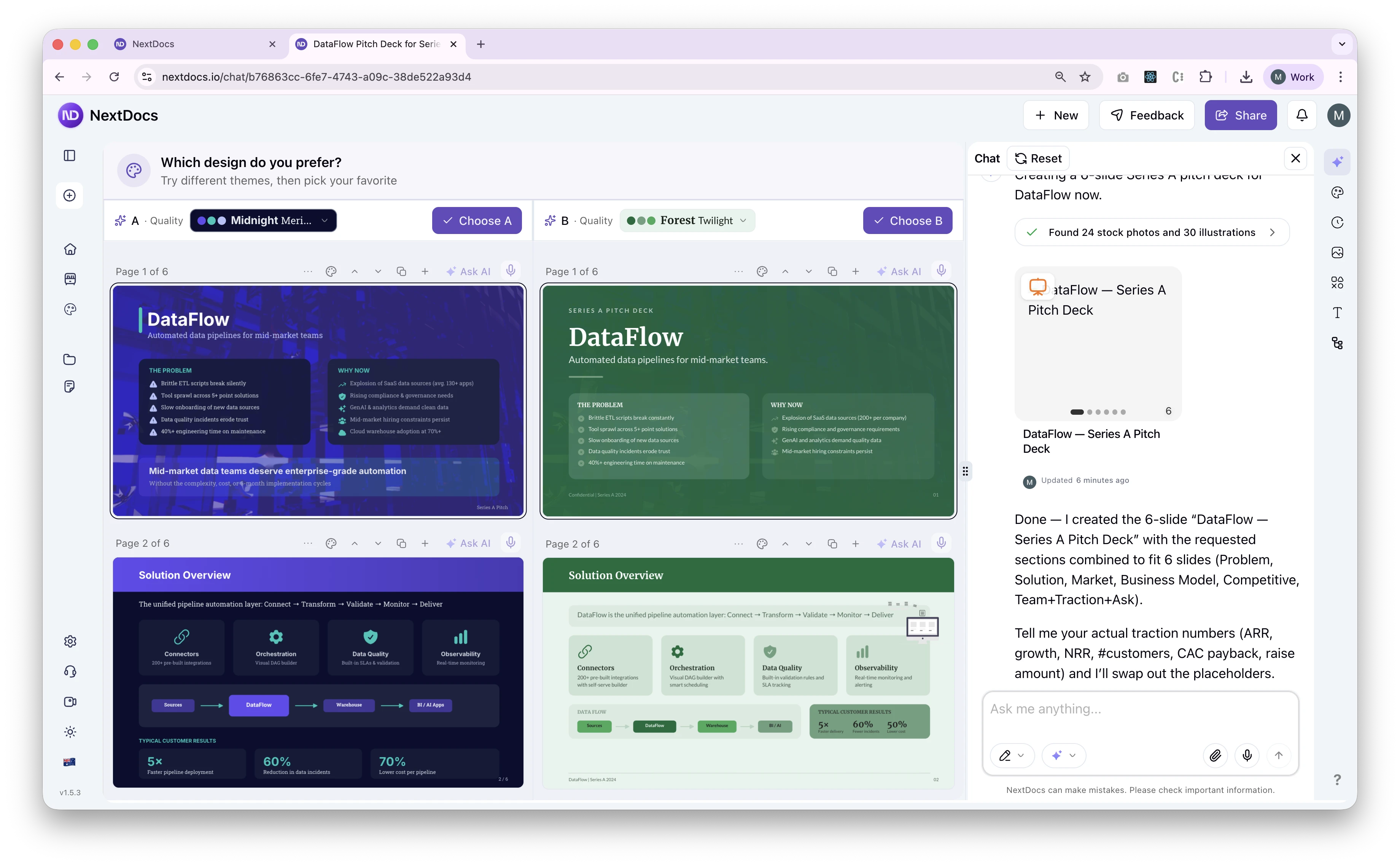
NextDocs is the most comprehensive solution for educators who need to create high quality, research backed presentations. Unlike many competitors that generate a single version of a deck, NextDocs uses a multi-variant generation system. This allows a teacher to see three or four different ways to structure a lesson on the same topic, choosing the one that best fits their specific teaching style.
For science, technology, engineering, and math (STEM) educators, NextDocs is particularly powerful. It includes native support for LaTeX math equations and code syntax highlighting. This means a physics professor can generate complex formulas that render perfectly, or a computer science teacher can include properly formatted Python code without resorting to blurry screenshots. The deep research integration is another standout feature. It pulls actual data and citations from the web, ensuring that the information presented to students is factual and verifiable. For a deeper dive into how this compares to other platforms, you can view our best AI presentation builders 2026 guide.
Key Features:
- Multi-variant generation provides multiple layout and content options.
- Deep research integration with real citations and data.
- Native support for LaTeX math equations and code syntax highlighting.
- Universal exports to PDF, PPTX, Google Slides, and Google Docs.
- Multi-model support allowing users to choose the best AI for their content.
Pricing: Free tier available. Pro plans start at $15 per month.
Who it's best for: Academics, STEM teachers, researchers, and any educator who needs high accuracy and technical formatting.
Verdict: NextDocs is the top choice for educators because it prioritizes content depth and technical accuracy over simple aesthetics.
2. Plus AI
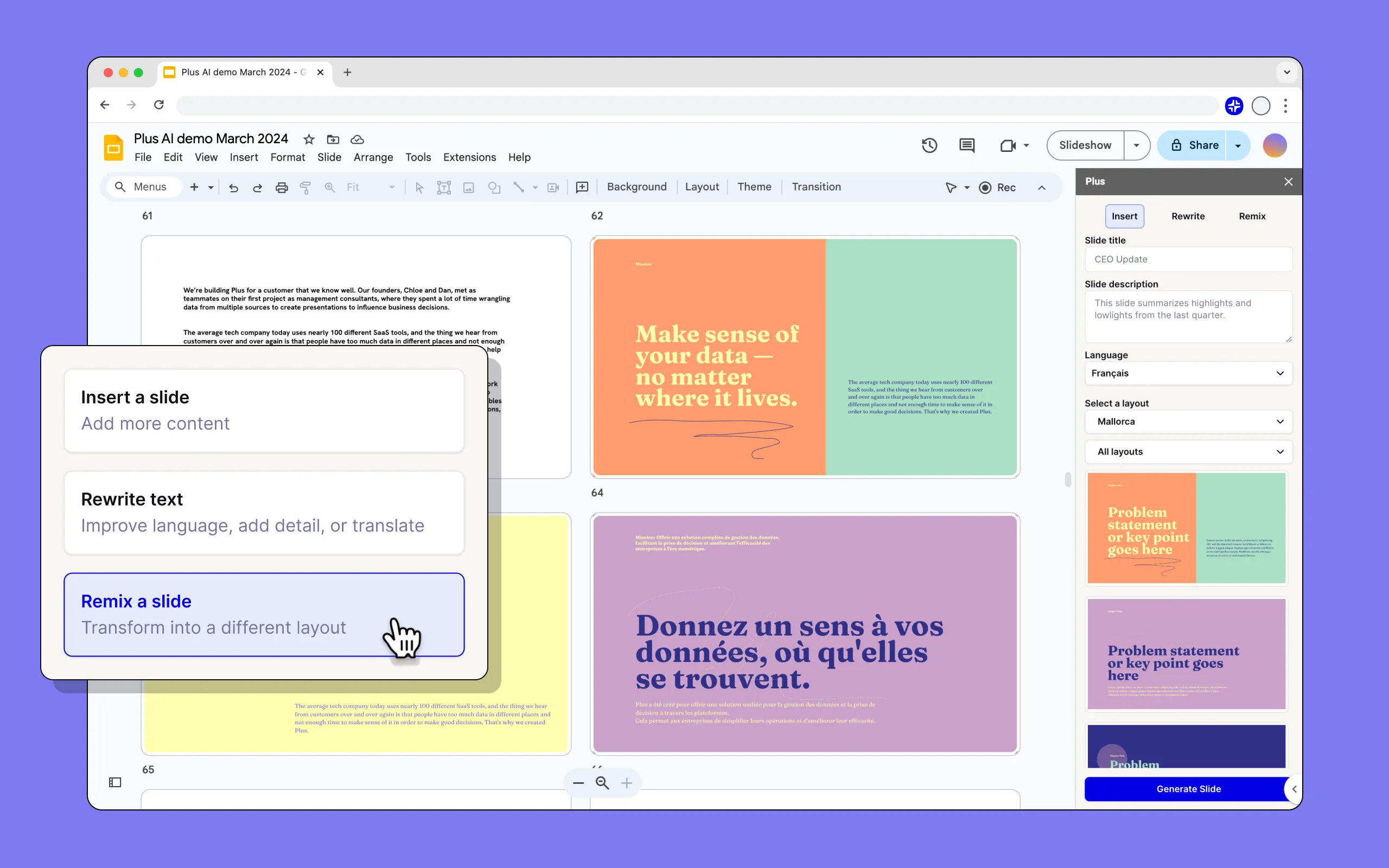
Plus AI operates as a native add-in for Google Slides and PowerPoint. This is a significant advantage for educators who work in school districts that mandate specific software. Instead of learning a new platform, teachers can use Plus AI to generate content directly within the tools they already use. It is excellent for taking an existing syllabus or a long article and "remixing" it into a presentation.
The tool focuses on preserving your existing templates. If your university has a specific brand or layout you must follow, Plus AI can work within those constraints. While it lacks a free tier, its ability to enhance existing presentations makes it a valuable time saver for busy teachers. For those looking for more variety, exploring copilot powerpoint alternatives might provide more flexible options.
Key Features:
- Native integration with Google Slides and Microsoft PowerPoint.
- Remix feature to transform existing text or slides into new formats.
- Template preservation to maintain school or university branding.
- AI powered rewriting and content expansion.
Pricing: No free tier. Plans start at $10 per month.
Who it's best for: K-12 teachers and university staff who are required to use Google Slides or PowerPoint exclusively.
Verdict: Plus AI is the best "invisible" assistant for educators who want to stay inside their current workflow.
3. Copilot for PowerPoint
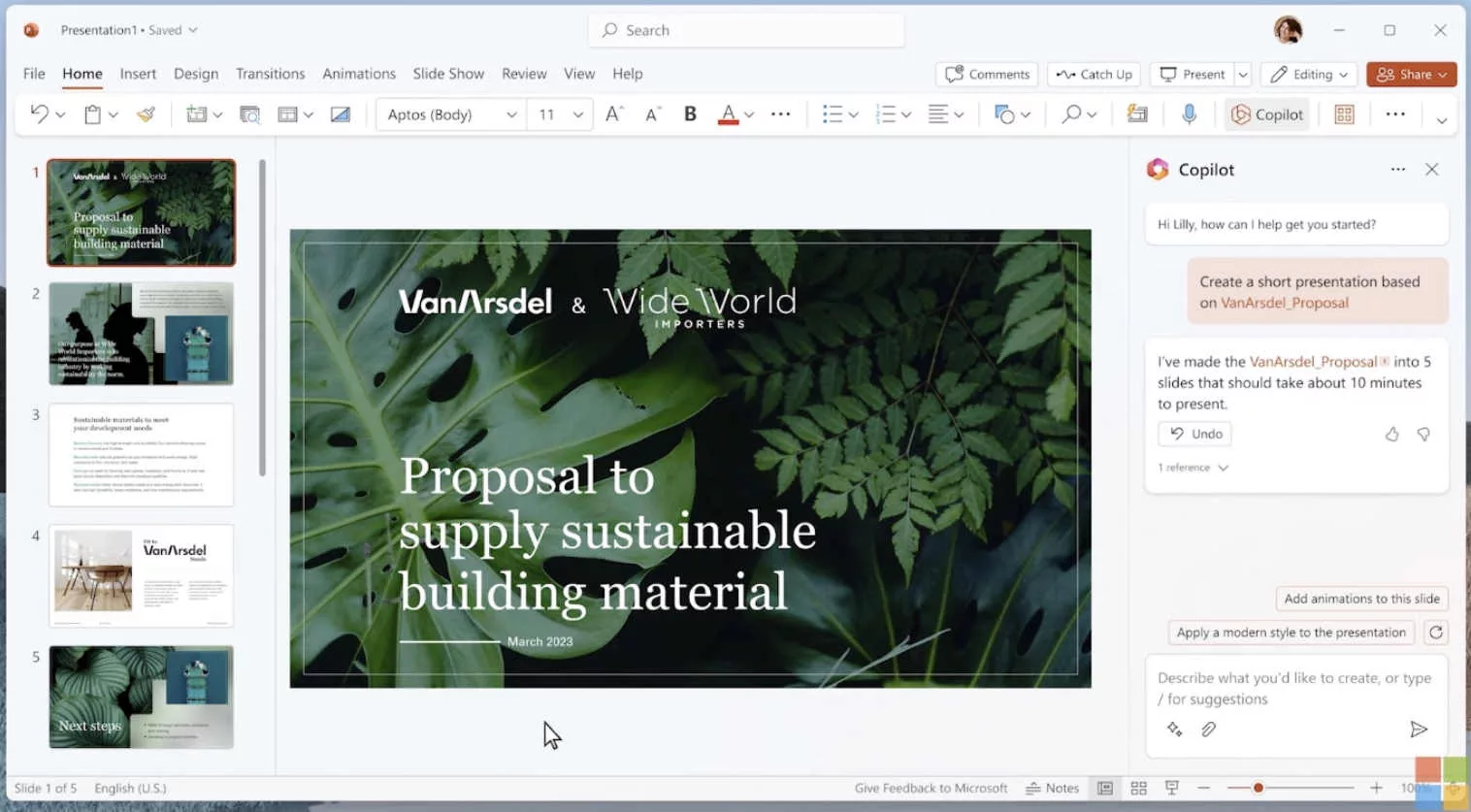
Microsoft Copilot is the gold standard for educators working in massive institutional ecosystems. Because it is part of Microsoft 365, it has access to the "organizational context." This means it can pull information from your Outlook emails, Word documents, and Teams chats to build a presentation. If you have written a 20 page research paper in Word, Copilot can transform it into a 10 slide presentation with one click.
However, Copilot is expensive and usually requires an enterprise license. Its designs are often conservative and functional, which is fine for faculty meetings but might not be as engaging for younger students. If the cost is a barrier, you might consider how it compares to other tools in our Claude vs NextDocs analysis.
Key Features:
- Deep integration with the entire Microsoft 365 suite.
- Ability to generate slides directly from Word documents.
- Automatic generation of speaker notes.
- Enterprise grade security and data privacy.
Pricing: Requires a Microsoft 365 subscription plus $30 per user per month.
Who it's best for: University administrators and educators in Microsoft-centric districts.
Verdict: Copilot is an incredibly powerful productivity tool, provided your institution is willing to pay the premium price.
4. Gemini for Google Slides
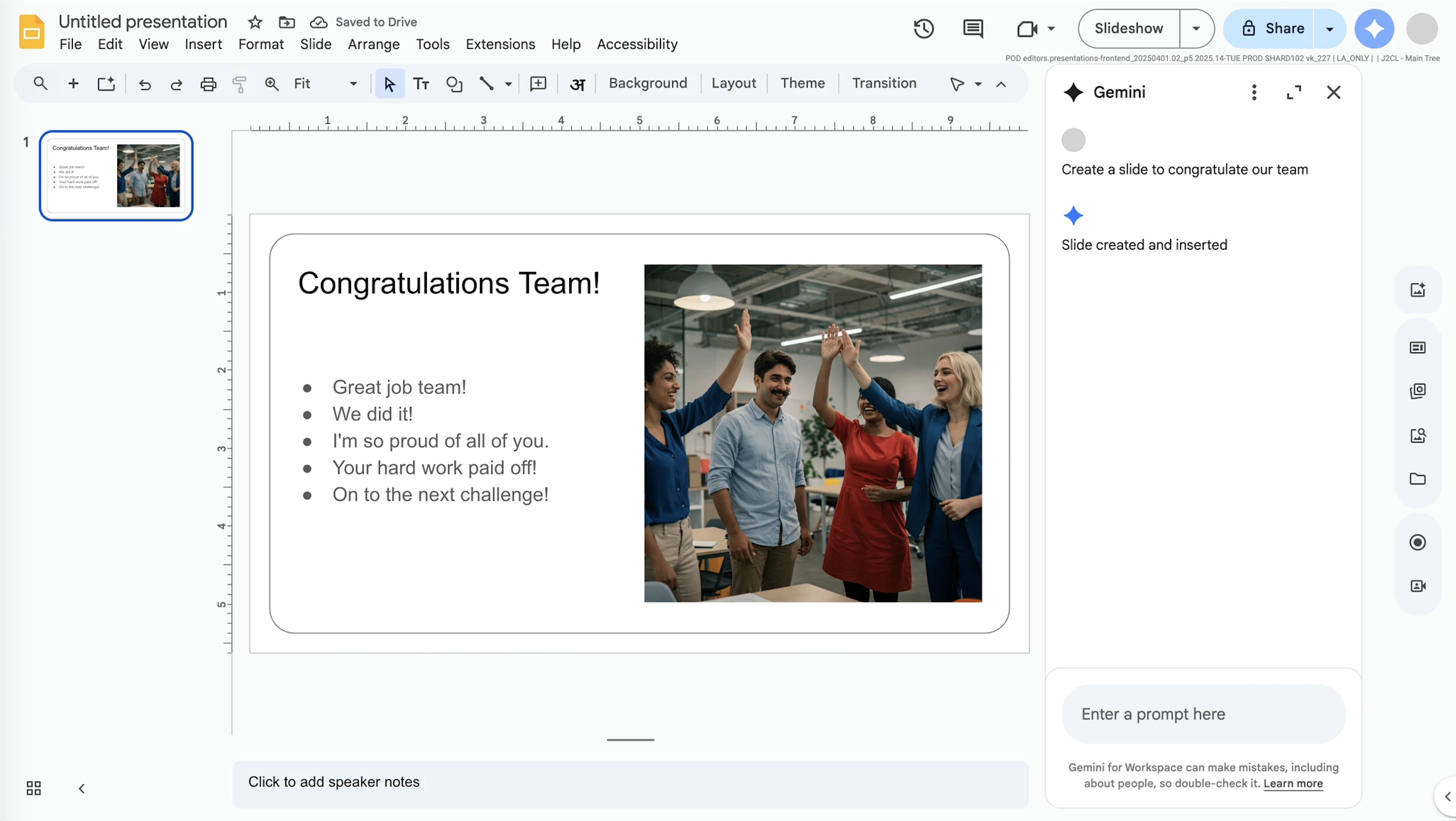
Gemini is Google's answer to the AI presentation surge. For educators using Google Workspace for Education, Gemini is often the most accessible tool. It lives in a side panel within Google Slides and can help generate images, write text, or summarize content from your Google Drive.
The primary strength of Gemini is its convenience. It is already there, and for many users, there is no extra cost beyond their standard Workspace subscription. The output can sometimes be generic, and it lacks the advanced technical features of NextDocs. Educators often find themselves using Gemini for quick drafts before moving to more specialized tools. You can see how this compares to other Google-centric tools in our Gemini vs SlidesAI comparison.
Key Features:
- Built into the Google Workspace ecosystem.
- Can access and reference files in your Google Drive.
- Built-in AI image generation for custom visuals.
- Simple, chat-based interface.
Pricing: Free tier available. Workspace for Education tiers vary.
Who it's best for: Google-centric teachers who need to create quick, simple presentations for daily lessons.
Verdict: A solid, accessible entry point for AI slide generation, though it lacks professional depth.
5. Gamma
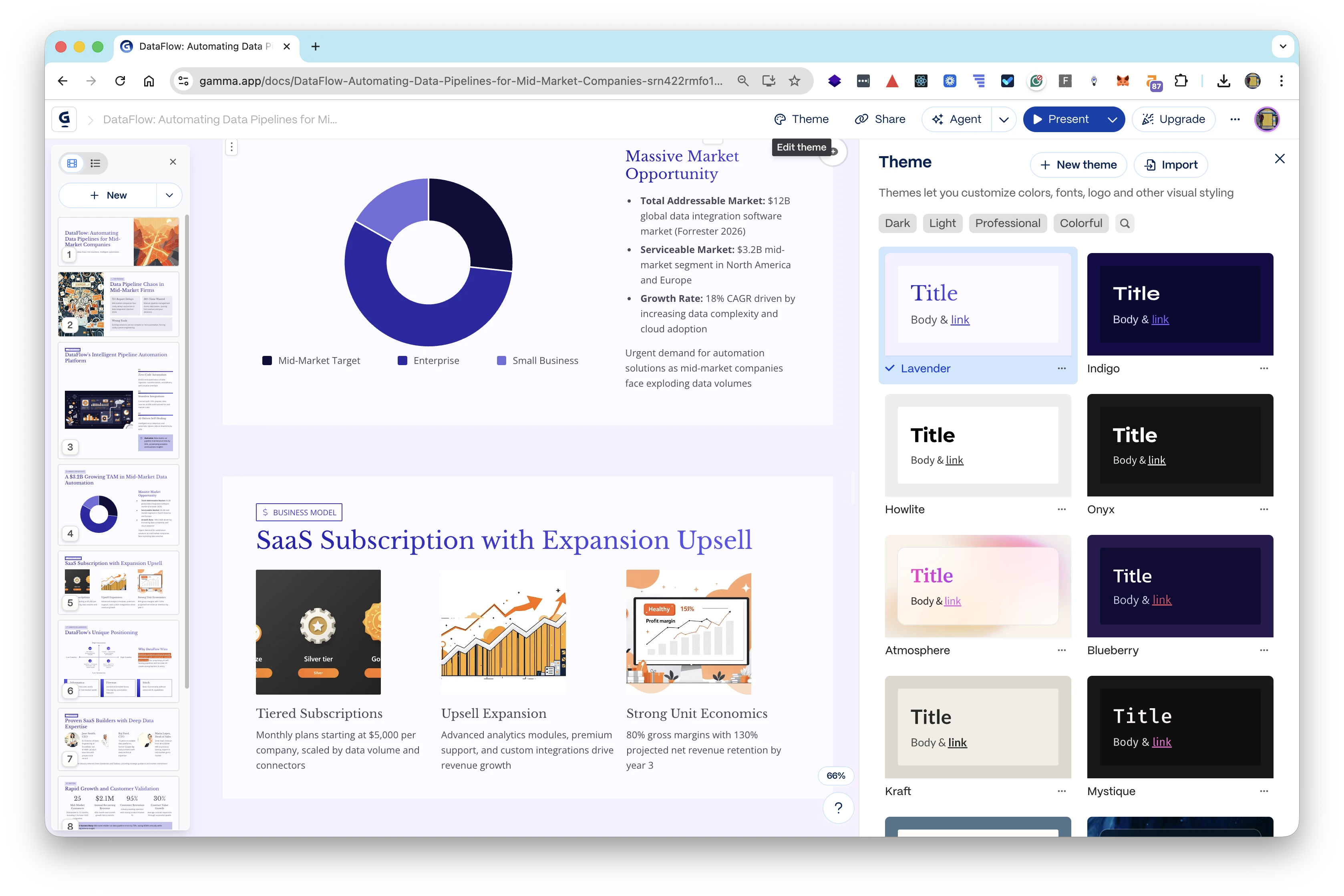
Gamma has gained a massive following in the education world because it breaks the traditional "slide" mold. Instead of static pages, Gamma creates "decks" that feel like interactive websites. This is highly effective for student engagement. A teacher can share a Gamma link, and students can scroll through the content on their tablets or phones in a responsive, modern format.
Gamma offers a very generous free tier, which is vital for teachers paying out of pocket. While it does support exports to PowerPoint, its best features are its web-native ones. For a detailed look at how its web-first approach stacks up against document-first tools, check out our Gamma vs NextDocs 2026 review.
Key Features:
- Web-native format that looks great on all devices.
- One-click themes that instantly change the look of the entire deck.
- Ability to embed interactive forms, videos, and websites.
- Fast, prompt-to-deck generation.
Pricing: Free tier available. Pro plans start at $8 per month.
Who it's best for: Tech-forward teachers who want to provide students with interactive, mobile-friendly study materials.
Verdict: Gamma is the best choice for educators who want to move beyond the traditional "lecture" format and into something more interactive.
6. Beautiful.ai
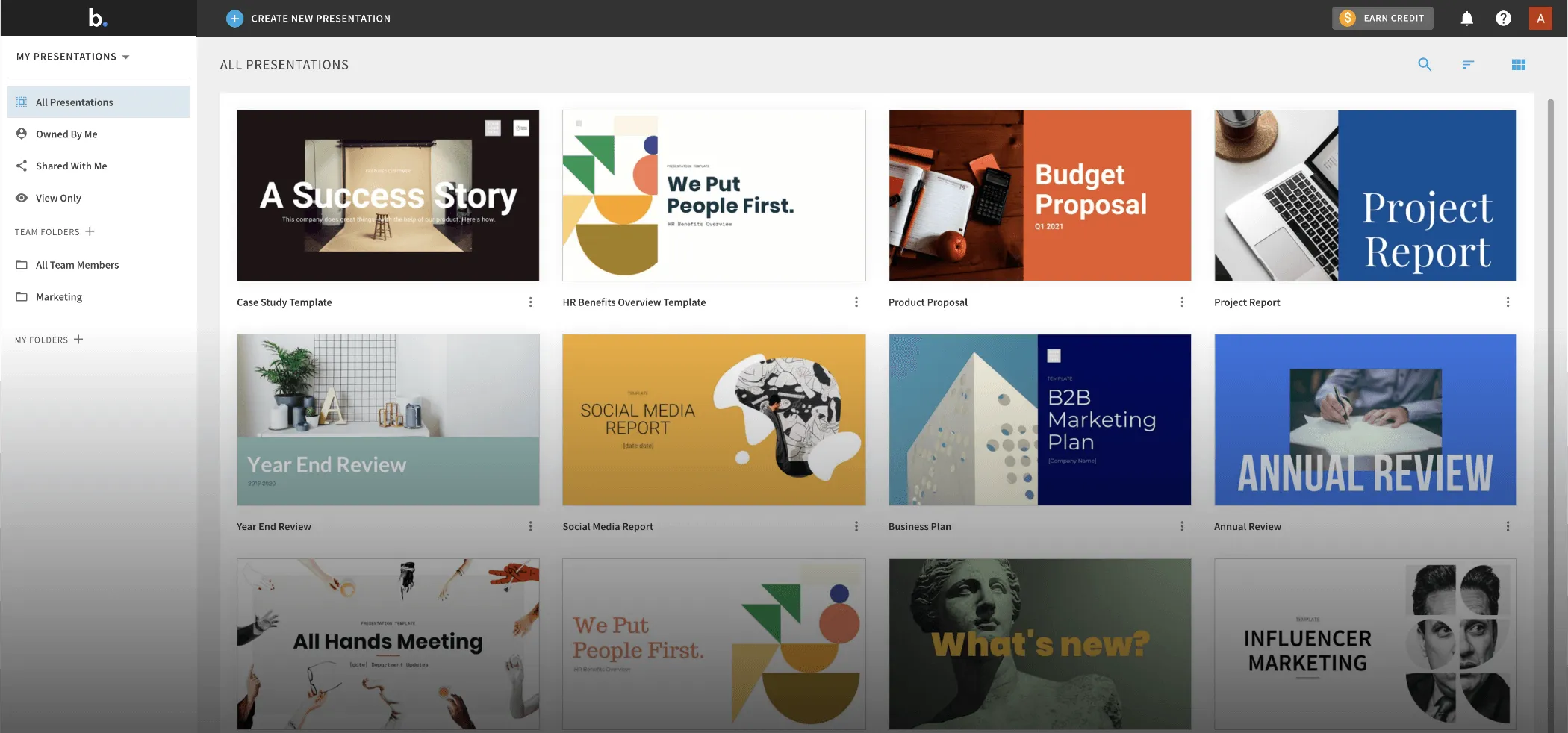
Beautiful.ai is designed for users who want their slides to look like they were created by a professional designer. It uses "smart templates" that automatically resize and reposition elements as you add content. This is perfect for university administrators who need to present data to donors or at conferences.
For most daily classroom use, Beautiful.ai might be too restrictive. Its templates are rigid to ensure they stay "beautiful," which can make it difficult to add custom charts or complex diagrams. However, for high-stakes presentations, it is hard to beat. You can read more about how it compares to more flexible tools in our Beautiful.ai vs NextDocs article.
Key Features:
- Smart templates that handle all the alignment and spacing automatically.
- High quality library of icons and stock photography.
- Collaborative features for department heads.
- Advanced data visualization tools.
Pricing: No free tier for individuals. Plans start at $12 per month.
Who it's best for: Administrators, department heads, and professors presenting at major conferences.
Verdict: If your primary goal is professional aesthetics and you have a small budget, this is a top contender.
7. Pitch.com
Pitch.com is a collaborative platform that combines modern design with powerful team features. In an educational setting, this is excellent for group projects or department-wide curriculum planning. It allows multiple people to work on a deck simultaneously with a much smoother experience than Google Slides.
While Pitch has introduced AI features to help generate content, its core strength remains the editor and the collaboration workflow. It is a great alternative for those who find PowerPoint too clunky. If you are looking for other options in this category, see our Pitch alternatives list.
Key Features:
- Real-time collaboration with version history.
- Professional, modern template library.
- Integrated video recordings for asynchronous lessons.
- AI generator for quick slide outlines.
Pricing: Free tier available. Pro plans start at $8 per month.
Who it's best for: Collaborative teaching teams and students working on group presentations.
Verdict: Pitch is a fantastic tool for teams, though its AI generation is slightly behind NextDocs and Gamma.
8. Canva Magic Design
Canva is a staple in many K-12 classrooms. Its Magic Design tool uses AI to turn a simple text prompt into a fully designed presentation. Because Canva has an enormous library of graphics, illustrations, and stickers, it is the best tool for primary school teachers who need to create visually engaging and "fun" materials.
The AI is good for getting started, but the real power is the Canva library. Teachers can easily find educational graphics for everything from biology to history. However, for higher education or technical subjects, the designs might feel a bit too casual.
Key Features:
- Access to millions of free graphics, photos, and videos.
- Magic Switch to turn presentations into worksheets or social posts.
- Brand kits for consistent classroom "branding."
- Excellent free tier for verified educators.
Pricing: Free tier available. Canva for Education is free for many teachers.
Who it's best for: Primary and secondary school teachers who need highly visual, creative slides.
Verdict: Canva is the undisputed king of visual variety, even if its AI generation is less focused on deep content.
9. MagicSlides
MagicSlides is a specialized Google Slides add-on that excels at content repurposing. One of its unique features is the ability to take a YouTube URL and turn the video content into a slide deck. For an educator, this is a game changer for creating study guides from recorded lectures or educational videos.
The design quality is fairly basic, and the slides often require a good amount of manual cleanup. However, as a tool for quickly extracting information and putting it into a presentable format, it is very effective. You can find more similar tools in our SlidesAI alternatives roundup.
Key Features:
- YouTube to Slides conversion.
- Text to Slide generation with support for over 100 languages.
- Simple, no-frills interface.
- Affordable pricing for educators on a budget.
Pricing: Free tier available. Pro plans start at $8 per month.
Who it's best for: Teachers who rely heavily on video content and need to create quick summaries for students.
Verdict: A great "utility" tool that solves the specific problem of video to slide conversion.
10. SlidesAI
SlidesAI is another Google Slides add-on that focuses on text to slide conversion. It is designed for speed. You paste in a long text, select the presentation type, and it generates the slides. It is a popular choice among students for creating quick drafts of their assignments.
For educators, it is useful for turning a lesson outline into a basic deck. It lacks the advanced design features of Beautiful.ai or the research capabilities of NextDocs, but it is reliable and easy to use.
Key Features:
- Simple text-to-presentation workflow.
- Integration with Google Slides.
- Support for multiple languages.
- Fast generation times.
Pricing: Free tier available. Pro plans start at $10 per month.
Who it's best for: Students and teachers who need to create simple, text-based presentations very quickly.
Verdict: A functional, basic tool that is perfect for those who want simplicity over features.
Decision Guide: Choosing the Right Tool for Your Classroom
Selecting an AI slide maker depends on your specific educational context. Not every teacher needs the same features.
For STEM and Technical Subjects
If you teach math, physics, or computer science, your requirements are unique. You need a tool that handles LaTeX and code. NextDocs is the clear winner here. Its ability to render equations and highlight code syntax prevents the messy "screenshot and paste" workflow that plagues technical teachers.
For Large Scale Institutional Use
If your university or school district provides a Microsoft 365 or Google Workspace account, starting with Copilot or Gemini makes sense. These tools are already integrated into your cloud storage and email, making it easy to pull in existing documents.
For Interactive Student Engagement
If you want to move away from the traditional "lecture at the front of the room" model, Gamma is the best choice. Its web-native format allows students to engage with the content on their own devices. It feels more like a modern learning experience than a 1990s slideshow.
For Primary Education (K-5)
Visuals are everything for younger students. Canva Magic Design provides the best library of kid-friendly illustrations and creative templates. Many teachers can also get Canva Pro for free through their school, making it a very cost-effective option.
For Research and Academic Integrity
In higher education, citations matter. NextDocs is the only tool on this list that prioritizes deep research with real citations. This helps maintain academic integrity and ensures that students are being presented with verified information rather than AI hallucinations.
Conclusion
The role of the educator is evolving, and the tools used to deliver information must evolve as well. AI slide makers are no longer a luxury. They are essential productivity tools that allow teachers to reclaim their time.
While there are many options available, NextDocs stands out as the best overall for educators due to its multi-variant generation, technical support for math and code, and its commitment to research-backed content. Whether you are a primary school teacher looking for fun visuals or a university professor preparing a complex lecture, there is a tool on this list that can help you work more efficiently.
By offloading the manual labor of formatting and initial drafting to AI, you can focus on what truly matters: inspiring and educating your students.
Ready to Create Better Presentations?
Try NextDocs Free and experience multi-variant generation, universal exports, and deep research integration. No credit card required.