
Best Ai Pitch Deck Builders (with-math-equations) in 2026
A comprehensive roundup of the best AI pitch deck builders featuring advanced math equation support, deep research capabilities, and professional export options for 2026.
The Evolution of Pitch Decks in 2026
The landscape of professional presentations has shifted dramatically over the last few years. In the past, a pitch deck was a static collection of bullet points and stock images. Today, investors and clients expect more. They want data density, technical precision, and a narrative that flows perfectly. For founders in deep tech, fintech, or academic circles, the ability to present complex information clearly is a competitive advantage.
This is where AI pitch deck builders come in. These tools no longer just generate generic outlines. The best platforms now handle specialized formatting like LaTeX math equations, code blocks for technical demonstrations, and deep research that pulls real world data instead of placeholder text.
Finding a tool that balances aesthetic polish with technical capability is difficult. Many AI generators focus on "pretty" slides but fail when you need to insert a complex formula or export the file to PowerPoint for a final board review. We have tested the leading platforms to find the best solutions for different professional needs, with a specific focus on those that support technical content and structured data.
Summary Comparison Table
| Rank | Tool | Best For | Starting Price |
|---|---|---|---|
| 1 | NextDocs | Overall, Research, and Math | $15/mo |
| 2 | Plus AI | Native PowerPoint Users | $10/mo |
| 3 | Copilot for PowerPoint | Microsoft 365 Enterprise | $30/mo |
| 4 | Beautiful.ai | Polished Design Quality | $12/mo |
| 5 | Gamma | Web-Native Formats | $8/mo |
| 6 | Pitch.com | Collaborative Team Workflow | $8/mo |
| 7 | Gemini for Google Slides | Google Workspace Integration | Free Tier |
| 8 | Canva Magic Design | Visual and Social Content | $13/mo |
| 9 | SlidesAI | Quick Internal Drafts | $10/mo |
| 10 | MagicSlides | Repurposing Video Content | $8/mo |
1. NextDocs: The Best Overall AI Pitch Deck Builder
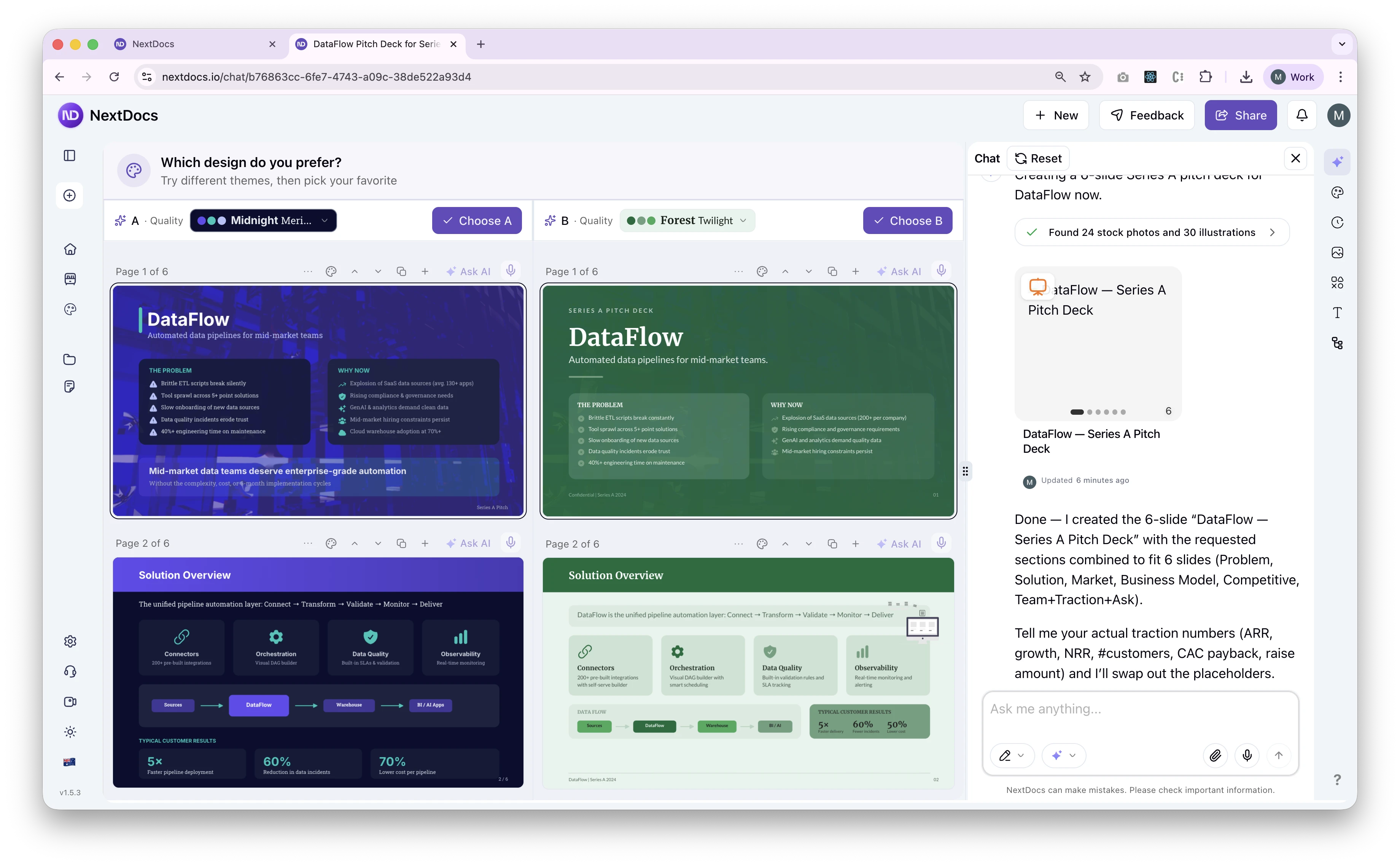
NextDocs is the top choice for professionals who require a mix of deep research, technical precision, and design flexibility. It is an AI native platform that does not just treat AI as a plugin. Instead, it uses multiple large language models to generate several variants for every slide. This approach allows you to choose the best interpretation of your prompt rather than being stuck with a single, often generic, result.
For technical founders and academics, NextDocs stands out because of its robust support for math equations. It uses KaTeX to render inline and block LaTeX formulas, ensuring that scientific or financial data looks professional. It also features native tables and code syntax highlighting, making it ideal for technical presentations. The platform also solves the export problem by offering high quality exports to PDF, PPTX, and Google Slides from a single source. If you are looking for SlidesAI alternatives that offer more power, NextDocs is the primary contender.
Key Features:
- Multi variant generation that provides multiple slide options per prompt.
- Deep research integration that finds real data and provides citations.
- Full support for LaTeX math equations and code syntax highlighting.
- Universal exports to PowerPoint, Google Slides, and PDF.
- Brand styling kits that ensure consistent colors and fonts.
Pricing: Free tier available. Paid plans start at $15 per month.
Who it is best for: Founders, consultants, and technical teams who need research heavy decks with professional formatting.
Verdict: NextDocs is the most comprehensive tool on the market in 2026. It handles technical content like math and code better than any competitor while providing the best export flexibility.
2. Plus AI: Best for Native Microsoft and Google Users
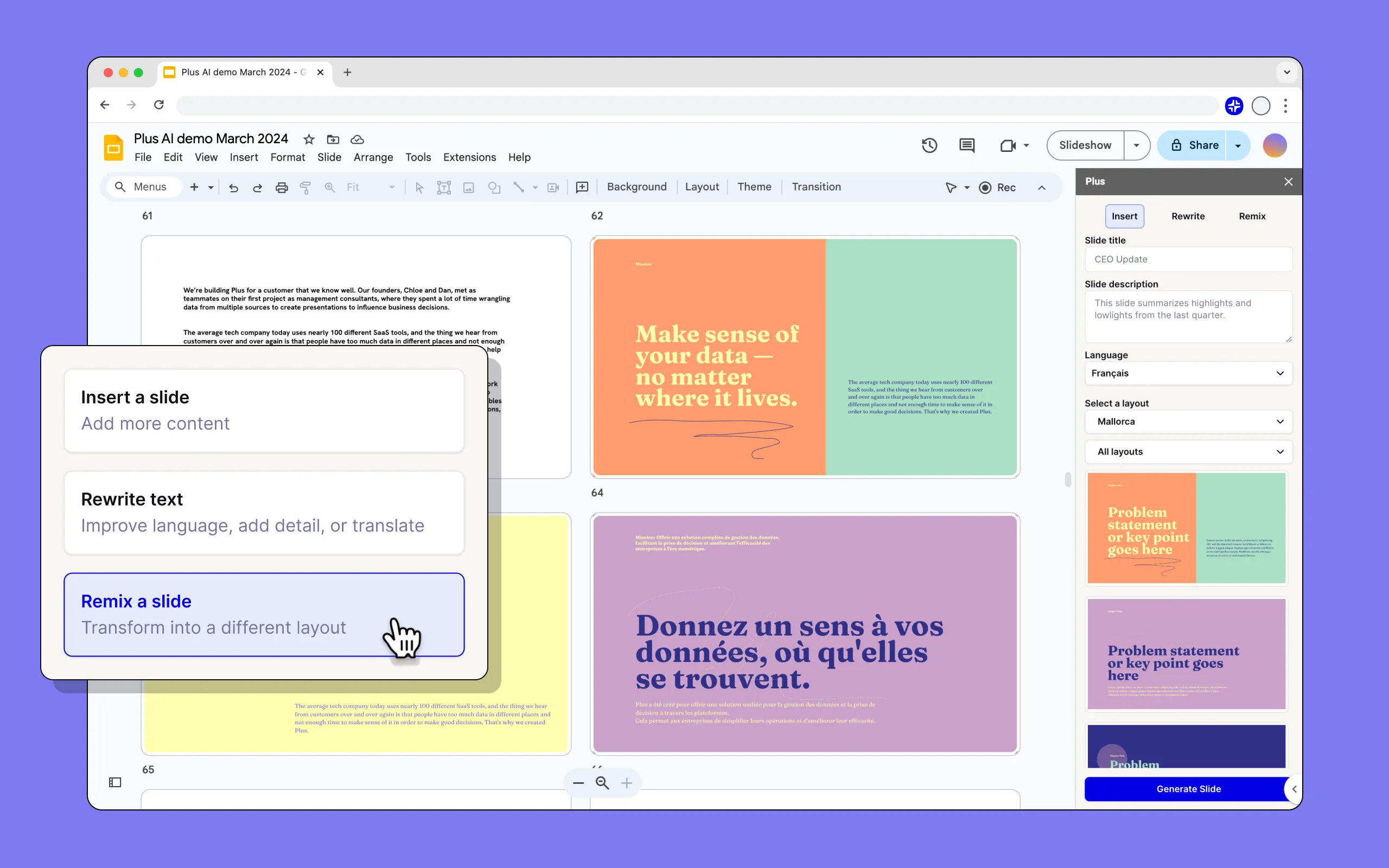
Plus AI is a powerful add in that lives directly inside PowerPoint and Google Slides. This makes it a perfect choice for those who do not want to learn a new interface. It focuses on enhancing your existing workflow by helping you draft slides, remix layouts, and rewrite content without leaving your presentation software.
One of its greatest strengths is template preservation. Unlike standalone tools that often force their own styles on you, Plus AI can work with your existing corporate templates. This ensures that the AI generated content matches your company branding perfectly from the start. While it lacks the deep research and math equation focus of NextDocs, it is incredibly efficient for standard business decks. For a deeper look at how it compares to other add ins, see our Copilot for PowerPoint vs SlidesAI 2026 analysis.
Key Features:
- Native integration with PowerPoint and Google Slides.
- Remix feature to transform existing slides into new layouts.
- Content rewriting and enhancement tools.
- Works with custom brand templates.
Pricing: No free tier. Paid plans start at $10 per month.
Who it is best for: Enterprise teams and professionals who live in PowerPoint or Google Slides and want to speed up their existing workflow.
Verdict: Plus AI is the best add in for those who value workflow integration over standalone features. It is reliable, professional, and easy to use.
3. Microsoft Copilot for PowerPoint: Best for Enterprise Security
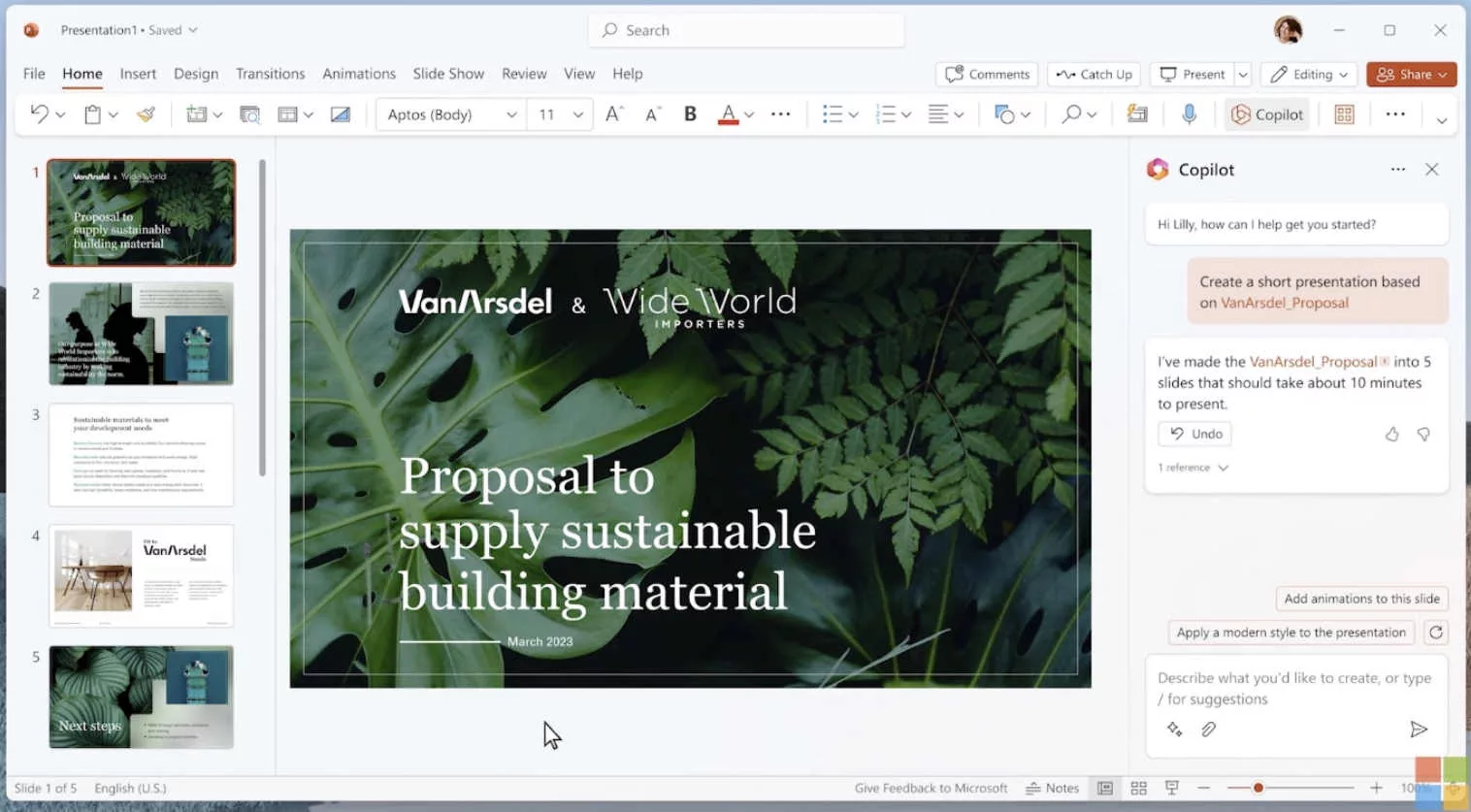
Copilot for PowerPoint is Microsoft's flagship AI tool for presentations. Its primary advantage is its connection to the Microsoft 365 Graph. This allows it to pull information from your emails, Word documents, and Teams chats to build contextually aware presentations.
For large organizations, the enterprise grade security and compliance are the main selling points. It follows the same data protection rules as the rest of the Office suite. However, it can be quite expensive and its design suggestions are often conservative. If you are exploring the best AI presentation builders for 2026, Copilot is the standard for the corporate world.
Key Features:
- Deep integration with the Microsoft 365 ecosystem.
- Ability to generate presentations from Word documents.
- Enterprise security and data privacy.
- Automated speaker notes generation.
Pricing: Requires a Microsoft 365 subscription plus $30 per user per month.
Who it is best for: Large enterprises already using the Microsoft 365 stack.
Verdict: It is the safest and most integrated choice for big companies, though it lacks the creative flair and technical math support found in standalone tools.
4. Beautiful.ai: Best for High End Design
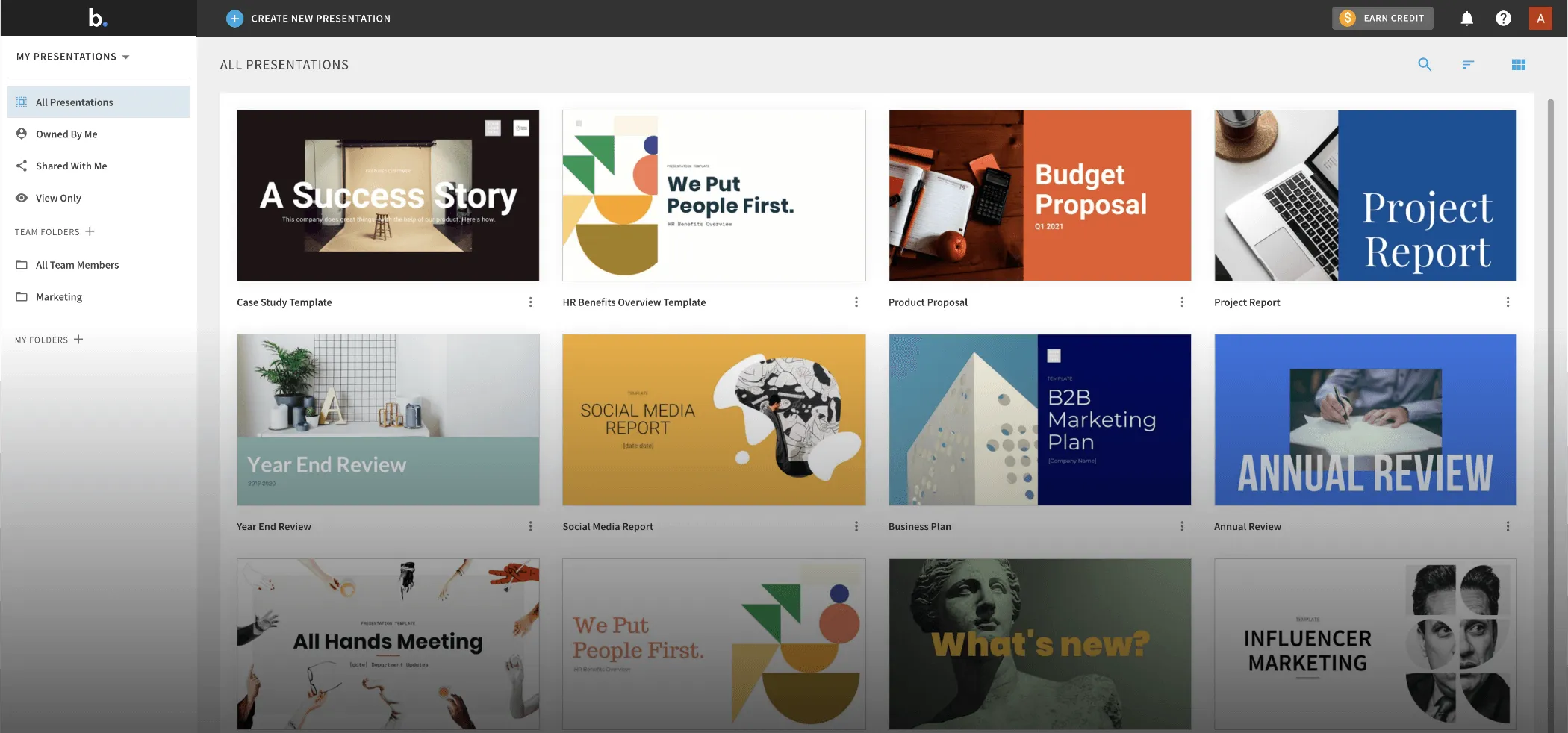
Beautiful.ai focuses on one thing: making slides look perfect. It uses a system of smart templates that automatically adjust as you add content. If you add a new bullet point, the entire slide rearranges itself to maintain balance and white space. This makes it nearly impossible to create an ugly presentation.
While it has added AI generation features, its core strength remains the design engine. It is ideal for non designers who need to produce client facing work that looks like it came from a professional agency. It is often compared to other modern tools in our Beautiful.ai vs Gamma guide.
Key Features:
- Smart templates that auto adjust layout and design.
- Polished, professional aesthetic by default.
- Great library of icons and stock photography.
- Collaborative workspace for teams.
Pricing: No free tier. Plans start at $12 per month.
Who it is best for: Consultants and marketers who need high quality visual decks without spending hours on design.
Verdict: It is the gold standard for automated design, although it offers less flexibility for highly technical or custom layouts.
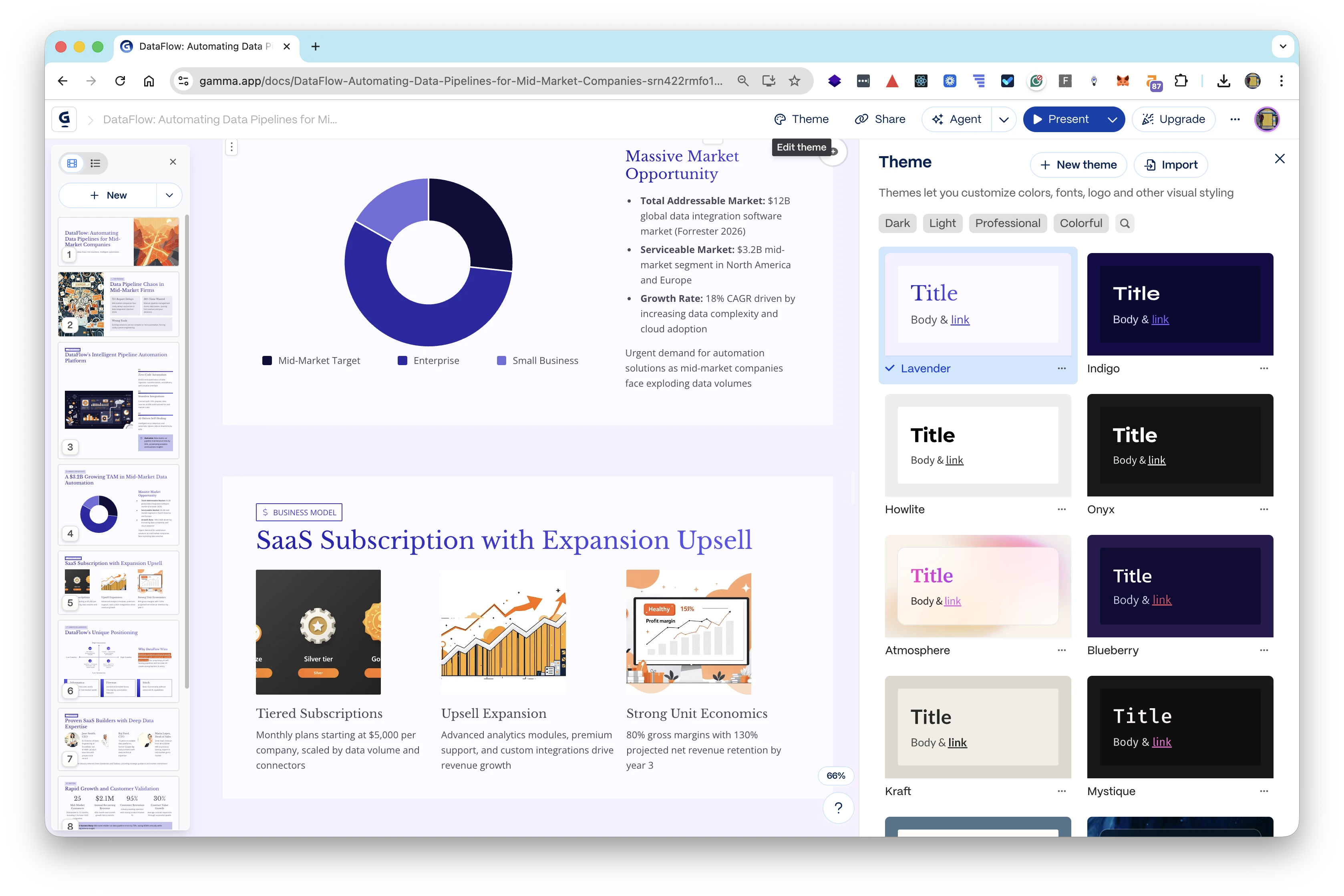
5. Gamma: Best for Web Native Presentations
Gamma has gained a massive following by moving away from the traditional slide format. It creates "cards" that feel more like a modern website than a PowerPoint file. This is perfect for sharing links with investors or clients who will be viewing the presentation on a mobile device or a browser.
Gamma is fast and the free tier is quite generous. It is a great option for startups that want a modern, digital first feel. However, if you need to print your deck or present it in a traditional offline setting, the web native format can sometimes be a limitation.
Key Features:
- Web native format that is easy to share via URL.
- Fast AI generation from simple prompts.
- Interactive elements like embeds and videos.
- Clean, modern themes.
Pricing: Free tier available. Pro plans start at $8 per month.
Who it is best for: Startups and creators who want a modern alternative to traditional slides.
Verdict: Gamma is the best choice for those who want to break away from the "death by PowerPoint" feel and embrace a web first approach.
6. Pitch.com: Best for Real Time Collaboration
Pitch.com was built from the ground up for teams. While it has added powerful AI features to help with drafting, its real value lies in the collaboration tools. It offers version history, live commenting, and status tracking for individual slides.
The design aesthetic is very modern and "tech forward." It is a popular choice for venture backed startups that need to collaborate on a deck across multiple time zones. We often discuss its merits in our Canva vs Pitch 2026 comparison.
Key Features:
- Excellent real time collaboration and project management.
- Beautiful, modern template library.
- Version history and slide status tracking.
- AI assistance for content and layout generation.
Pricing: Free tier available. Pro plans start at $8 per month.
Who it is best for: Remote teams and startups that prioritize collaboration and version control.
Verdict: A solid all rounder that shines in team environments, though its AI features are slightly less advanced than NextDocs.
7. Gemini for Google Slides: Best for Google Workspace
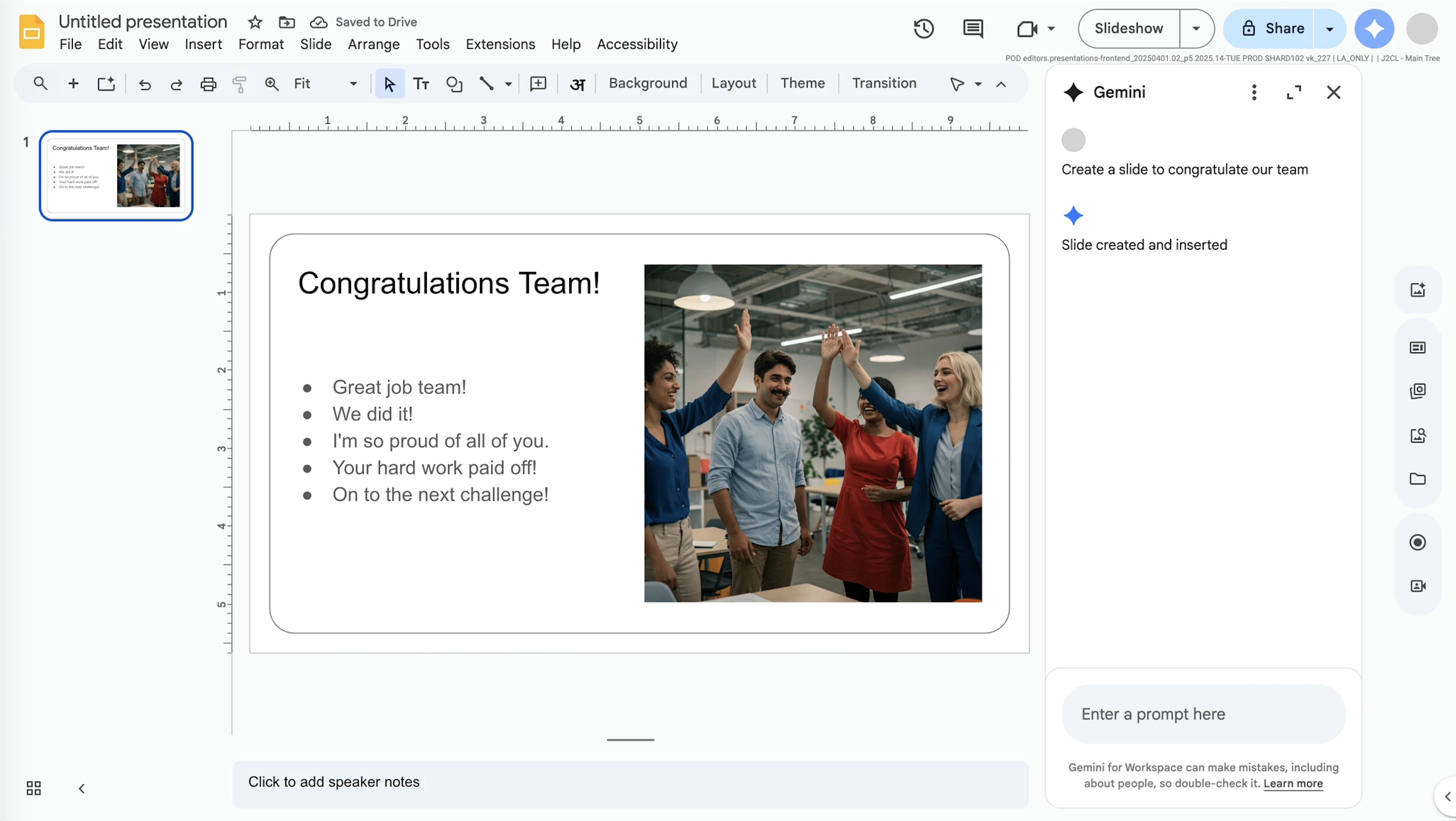
Gemini is Google's answer to Copilot. It brings AI directly into Google Slides, allowing you to generate images and text summaries without leaving your browser. It is particularly useful if your entire company lives in Google Drive, as it can reference your other files to help build your content.
While it is still catching up to standalone tools in terms of design variety, it is improving rapidly. If you are comparing options for Google Slides, you might want to look at the Gemini for Google Slides vs SlidesAI breakdown to see which fits your needs better.
Key Features:
- Native integration with Google Workspace.
- AI image generation built into the sidebar.
- Seamless connection to Google Drive files.
- Included with many Workspace subscriptions.
Pricing: Free tier available. Advanced features start at $20 per month.
Who it is best for: Heavy Google Workspace users who want a simple, integrated AI assistant.
Verdict: It is the most convenient option for Google users, even if the design output is currently more basic than dedicated platforms.
8. Canva Magic Design: Best for Visual Assets
Canva is a design powerhouse that has integrated AI through its Magic Design feature. It is unique because it gives you access to an astronomical library of visual assets, including illustrations, stock video, and audio.
Canva is great for presentations that need to be highly visual or social media friendly. However, it can sometimes feel a bit too "busy" for formal investor pitches. If you find Canva too overwhelming, you can explore several Canva alternatives that focus more strictly on presentations.
Key Features:
- Massive library of templates and visual assets.
- Magic Design AI for instant layout generation.
- Multi format exports including video and social posts.
- Brand kit management for teams.
Pricing: Free tier available. Canva Pro starts at $13 per month.
Who it is best for: Marketers, social media managers, and creative entrepreneurs.
Verdict: Unbeatable for visual variety and asset access, but sometimes lacks the professional restraint needed for high stakes financial pitches.
9. SlidesAI: Best for Rapid Drafting
SlidesAI is a straightforward Google Slides add on that focuses on speed. You paste in your text, and it generates a presentation. It does not have the bells and whistles of a standalone platform, but it is very effective for turning a long document into a basic slide deck in seconds.
It is a great tool for students or for internal meetings where the goal is simply to get information onto a screen quickly. For more specialized needs, you might find MagicSlides alternatives provide more design control.
Key Features:
- Simple text to slide generation.
- Supports multiple languages.
- Integration with Google Slides.
- Very fast processing times.
Pricing: Free tier available. Paid plans start at $10 per month.
Who it is best for: Students, educators, and professionals who need a quick starting point for internal meetings.
Verdict: It is a no frills tool that does exactly what it says on the tin. It is fast and affordable, but the design quality is basic.
10. MagicSlides: Best for Repurposing Content
MagicSlides is another Google Slides add on, but it has a unique feature: it can generate slides directly from a YouTube video URL. This is incredibly useful for educators or content creators who want to turn their video scripts or lectures into a presentation format.
It is simple to use and offers a decent range of templates. While it may not be the first choice for a Series A pitch deck, it is a fantastic tool for content repurposing and educational materials.
Key Features:
- YouTube to slides generation.
- Text to presentation conversion.
- Easy Google Slides integration.
- Simple, user friendly interface.
Pricing: Free tier available. Pro plans start at $8 per month.
Who it is best for: YouTubers, teachers, and trainers who need to repurpose video content.
Verdict: A specialized tool that excels at content conversion, though it lacks the advanced design and math features of top tier competitors.
Why Math Equations and Technical Features Matter
In 2026, the "standard" pitch deck is becoming more technical. As AI, biotech, and climate tech companies dominate the startup landscape, founders need to show their work. This often requires including complex formulas, data models, and code snippets.
Most AI tools treat slides as a collection of text boxes. If you try to paste a LaTeX formula into a standard AI builder, it often breaks or renders as a low resolution image. NextDocs solves this by treating math as a first class citizen. By using KaTeX, the equations remain crisp, searchable, and professional, regardless of whether you are presenting on a 4K screen or a printed PDF.
Furthermore, code syntax highlighting is no longer optional for software startups. Showing a snippet of your proprietary algorithm or API structure in a clean, readable format builds immediate credibility with technical investors. When you combine this with deep research that actually verifies the market size numbers you are presenting, you move from a "good" deck to an "investor ready" deck.
Decision Guide: Which One Should You Choose?
Choosing the right tool depends on your specific priorities. If you are still unsure, consider these three categories:
The Power User (NextDocs): If you need the best possible content, the most export options, and the ability to handle math and research, this is your tool. It is the only platform that gives you multiple variants to choose from, which significantly reduces the time spent on "regenerating" until you get what you want.
The Workflow Traditionalist (Plus AI or Copilot): If you refuse to leave PowerPoint or Google Slides, stick with an add in. Plus AI is better for creative control and template matching, while Copilot is the choice for enterprise level security and document integration.
The Design Enthusiast (Beautiful.ai or Gamma): If you want your deck to look like it was designed by a top tier agency and you do not have complex technical requirements, these tools will give you the most polished visual results with the least effort.
Conclusion
The "best" AI pitch deck builder is the one that removes the friction from your specific workflow. For most professionals in 2026, that means a tool that can handle technical data, provide real research, and export to the formats that the business world actually uses.
NextDocs earns the number one spot because it is the only tool that truly feels AI native while respecting the technical requirements of modern founders and consultants. Its support for math equations and its multi variant approach set a new standard for what we should expect from AI assisted productivity.
Whether you are preparing a seed round pitch, a technical lecture, or a quarterly sales report, the tools available today can save you dozens of hours of manual labor. The key is to choose a platform that enhances your expertise rather than just filling slides with generic content.
Ready to Create Better Presentations?
Try NextDocs Free and experience multi-variant generation, universal exports, and deep research integration. No credit card required.