
Best Ai Presentation Builders for professors in 2026
A comprehensive roundup of the best AI presentation builders for professors, researchers, and academics looking to automate lecture slides and conference decks.
Academic life in 2026 demands more than just subject matter expertise. Professors are now expected to be visual storytellers, graphic designers, and technical editors. Between grant applications, peer reviews, and daily lectures, the time required to build high quality slides is a significant burden. AI presentation builders have emerged as a critical solution for educators who need to transform complex research into digestible, engaging visuals.
For a deeper dive into the broader market, you can see our best AI presentation builders 2026 roundup. This specific guide focuses on the unique needs of the ivory tower: technical accuracy, support for mathematical notation, deep research capabilities, and the ability to export to standard formats like PowerPoint and PDF for conference distribution.
Comparison of Top AI Presentation Builders for Educators
| Rank | Tool | Best For | Starting Price |
|---|---|---|---|
| 1 | NextDocs | Research, STEM, and Technical Lectures | $15/mo |
| 2 | Plus AI | Existing Google Slides Workflows | $10/mo |
| 3 | Copilot for PowerPoint | Microsoft 365 Enterprise Users | $30/mo |
| 4 | Gemini for Google Slides | Quick Google Workspace Drafts | Free |
| 5 | Gamma | Web-Native Interactive Lectures | $8/mo |
| 6 | Beautiful.ai | Visual Quality and Design Automation | $12/mo |
| 7 | Pitch.com | Collaborative Research Groups | $8/mo |
| 8 | Canva Magic Design | Creative and Arts-Focused Subjects | $13/mo |
| 9 | MagicSlides | Converting YouTube or Docs to Slides | $8/mo |
| 10 | SlidesAI | Basic Drafts for Student Projects | $10/mo |
1. NextDocs: Best Overall for Academic Research and STEM
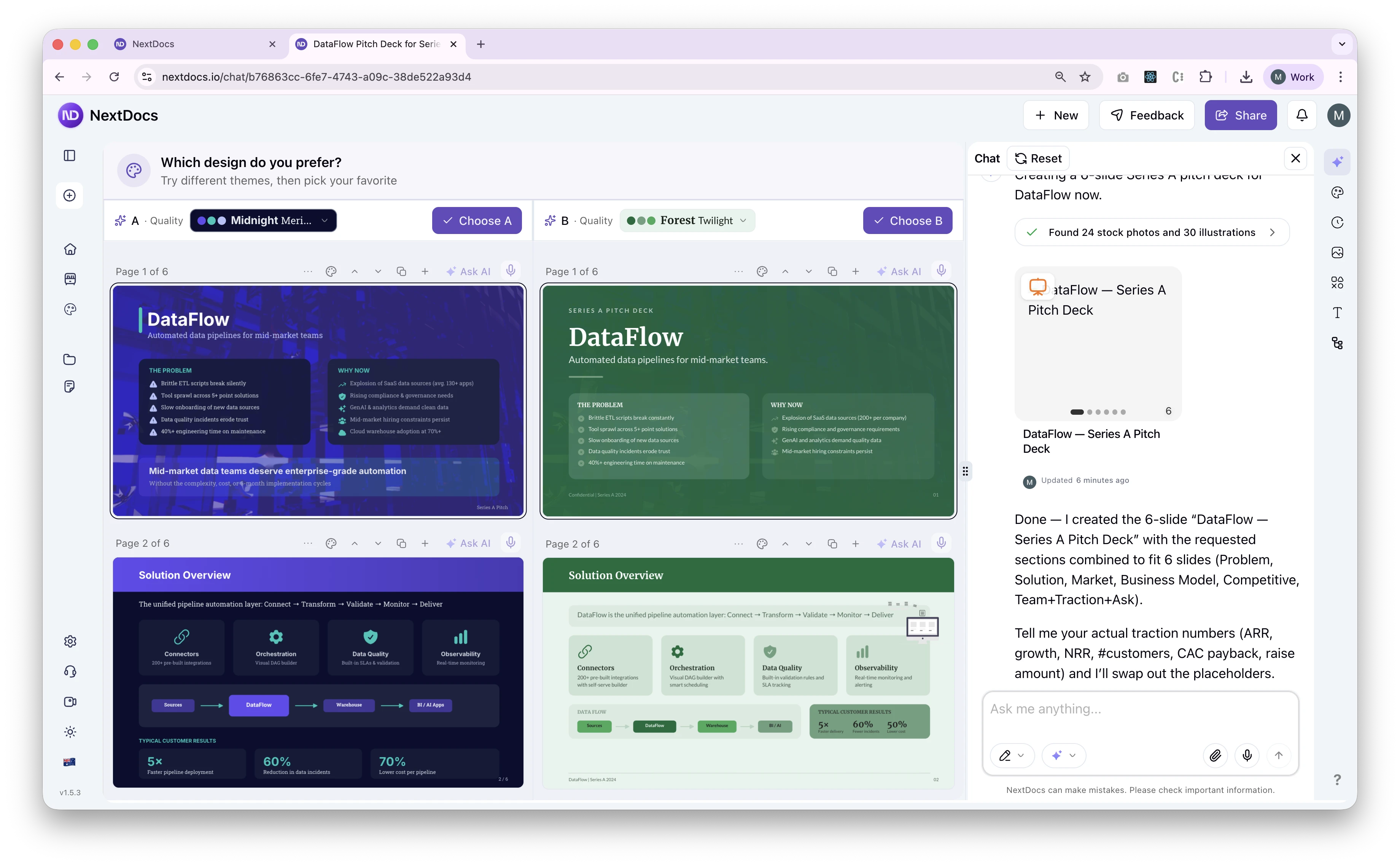
NextDocs stands out as the premier choice for professors, especially those in STEM or research intensive fields. Unlike tools that simply generate a single layout, NextDocs uses a multi-variant generation engine. This means that for every prompt, it creates multiple versions of the presentation, allowing educators to choose the narrative structure that best fits their specific lesson plan or research findings.
For technical professors, the inclusion of native LaTeX math equations and code syntax highlighting is a game changer. You can render complex formulas using KaTeX directly within the slides, ensuring that mathematical notation remains crisp and accurate. The deep research integration is another standout feature. It allows you to pull real data with citations directly into your deck, which is essential for maintaining academic integrity. If you are currently looking at other tools, you might find our magicslides vs nextdocs 2026 comparison helpful to see the difference in technical depth.
Key Features:
- Multi-variant generation provides several layout and content options per prompt.
- Universal exports to PDF, PPTX, Google Slides, and Google Docs.
- Built-in support for LaTeX math equations and code syntax highlighting.
- Deep research integration that pulls real world data and citations.
- Brand styling to maintain university or lab visual standards.
Pricing: Free tier available. Pro plans start at $15 per month.
Who it's best for: Professors in STEM, researchers, and technical lecturers who need accuracy and high quality exports.
Verdict: NextDocs is the most robust tool for serious academic work, offering the technical features other builders lack.
2. Plus AI: Best for Google Slides Power Users
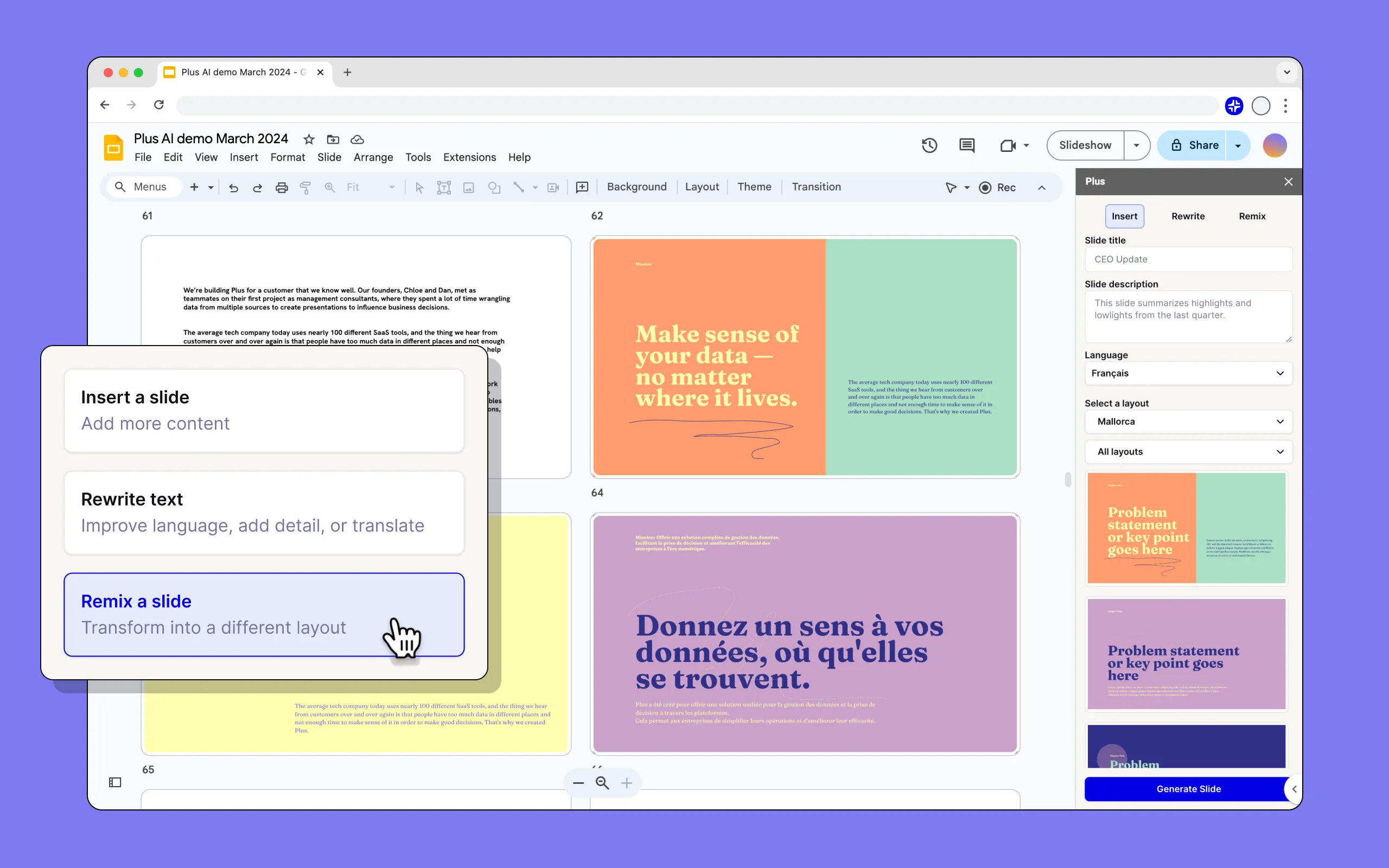
Plus AI is a dedicated add-in that functions directly within Google Slides and PowerPoint. For professors who have spent decades mastering these platforms, Plus AI offers a way to integrate artificial intelligence without learning an entirely new interface. It is particularly effective at taking an existing syllabus or a long research paper and "remixing" it into a structured presentation.
The tool focuses on template preservation. If your university provides a specific PowerPoint theme, Plus AI can generate new content while strictly adhering to that theme. This makes it a strong contender if you already have a library of slides that simply need updating. You can explore more about this category in our list of plus ai alternatives 2026.
Key Features:
- Native integration as a sidebar within Google Slides and PowerPoint.
- Remix feature that transforms existing text or documents into slides.
- Preservation of existing slide templates and master layouts.
- Real-time editing using AI-powered suggestions.
Pricing: No free tier. Starting price is $10 per month.
Who it's best for: Professors who want to stay within the Google or Microsoft ecosystems and value workflow continuity.
Verdict: A solid, reliable choice for those who want AI features inside the software they already use daily.
3. Microsoft Copilot for PowerPoint: Best for Enterprise Environments
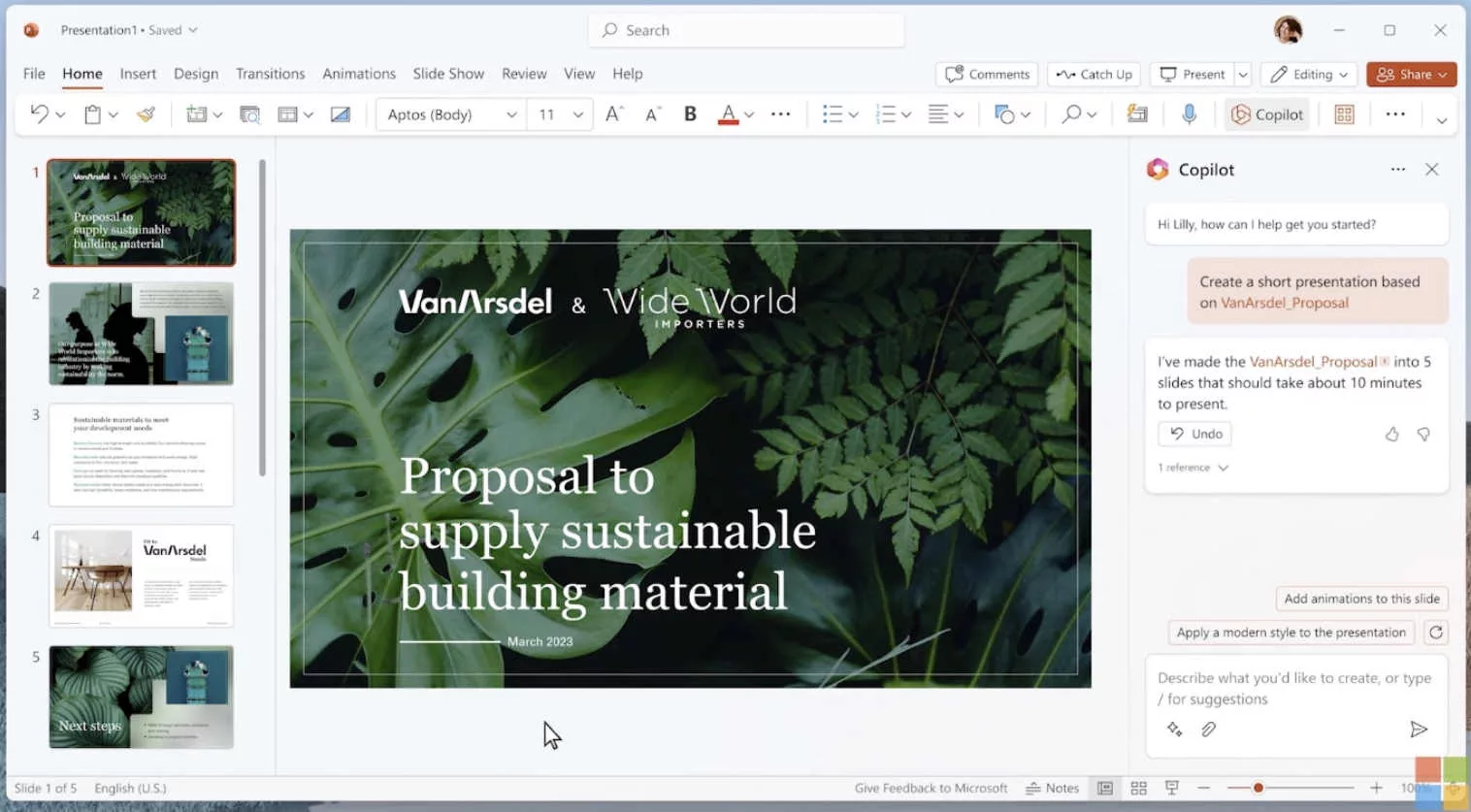
Microsoft Copilot is the gold standard for professors working in universities that have fully adopted the Microsoft 365 suite. Its greatest strength is its organizational awareness. Copilot can scan your Outlook emails, your OneDrive documents, and your Teams chats to gather context for a presentation. If you have a detailed grant proposal in Word, Copilot can transform it into a PowerPoint deck in seconds.
However, the tool is strictly for enterprise or business accounts, which might be a barrier for some individual educators. The design output is often conservative, which suits formal academic settings but might feel limited for more creative lectures. To see how it stacks up against lighter tools, check out our copilot powerpoint vs slidesai 2026 comparison.
Key Features:
- Deep integration with the entire Microsoft 365 ecosystem.
- Ability to generate slides from existing Word documents and Excel data.
- Automatic generation of speaker notes based on slide content.
- Enterprise-grade security for sensitive research data.
Pricing: No free tier. Requires a $30 per month subscription on top of a Microsoft 365 license.
Who it's best for: Professors at large institutions with existing Microsoft 365 enterprise access.
Verdict: Powerful and secure, but expensive and somewhat rigid in its design capabilities.
4. Gemini for Google Slides: Best for Quick Workspace Drafts
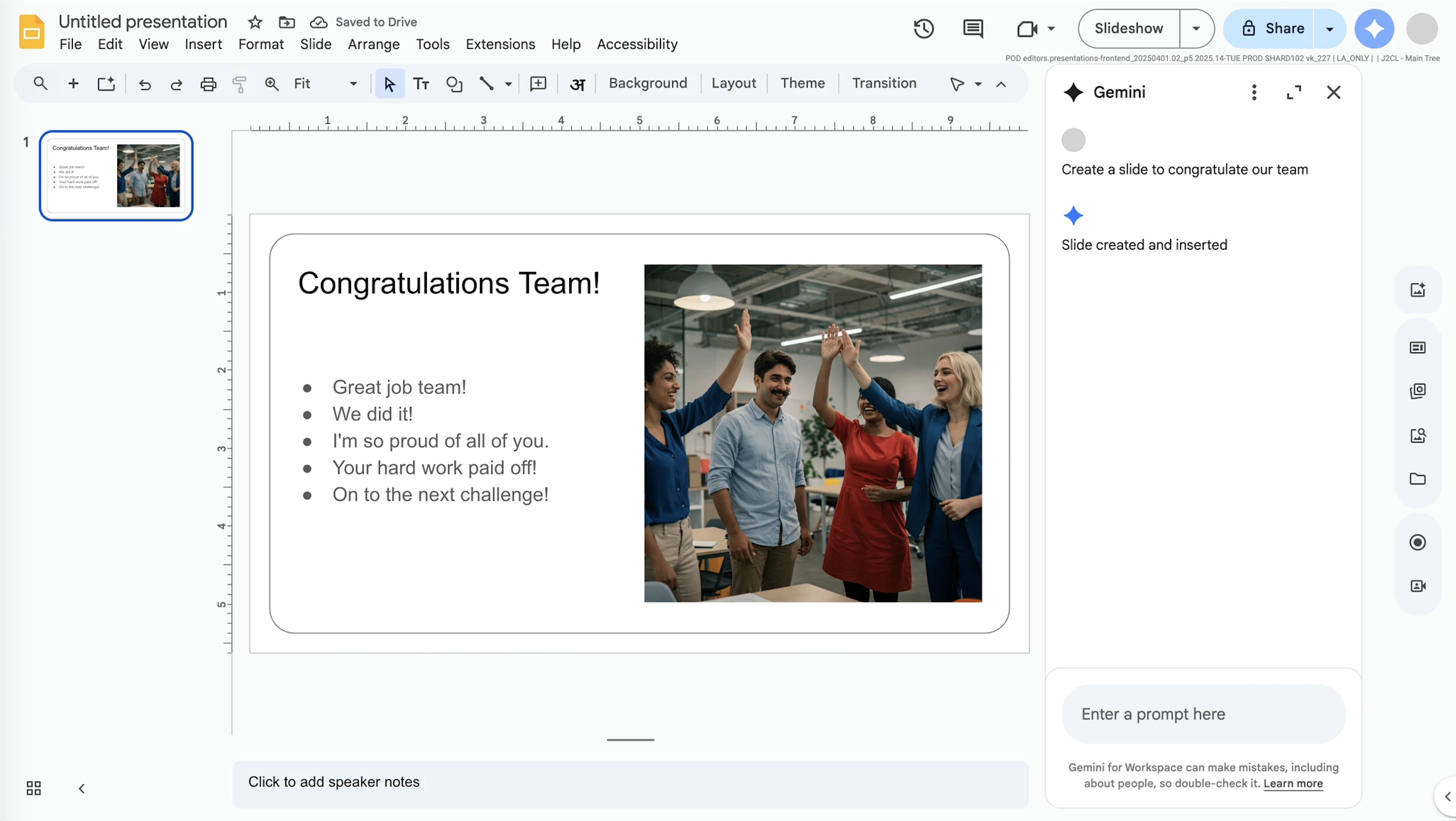
Gemini is Google's answer to Copilot. It is built directly into Google Workspace and is often available at no extra cost for many educational accounts. For a professor who needs to whip up a quick five-slide deck for a faculty meeting or a basic classroom announcement, Gemini is incredibly convenient. It can access your Google Drive content to pull information and even generate AI images to illustrate abstract concepts.
While convenient, the output quality can be inconsistent compared to standalone tools. The templates are somewhat generic, and the AI can sometimes produce repetitive content. For those interested in how this compares to other add-ins, we have a guide on gemini google slides vs plus ai.
Key Features:
- Seamless integration with Google Drive and Google Docs.
- Built-in AI image generation for slide backgrounds and icons.
- Simple, prompt-based slide creation.
- Collaborative features inherent to the Google Workspace environment.
Pricing: Free tier available. Starting price is $0, but advanced features require a paid Workspace tier.
Who it's best for: Educators who need a fast, free way to generate simple presentations within Google Slides.
Verdict: Excellent for convenience and simple tasks, but lacks the depth required for complex research presentations.
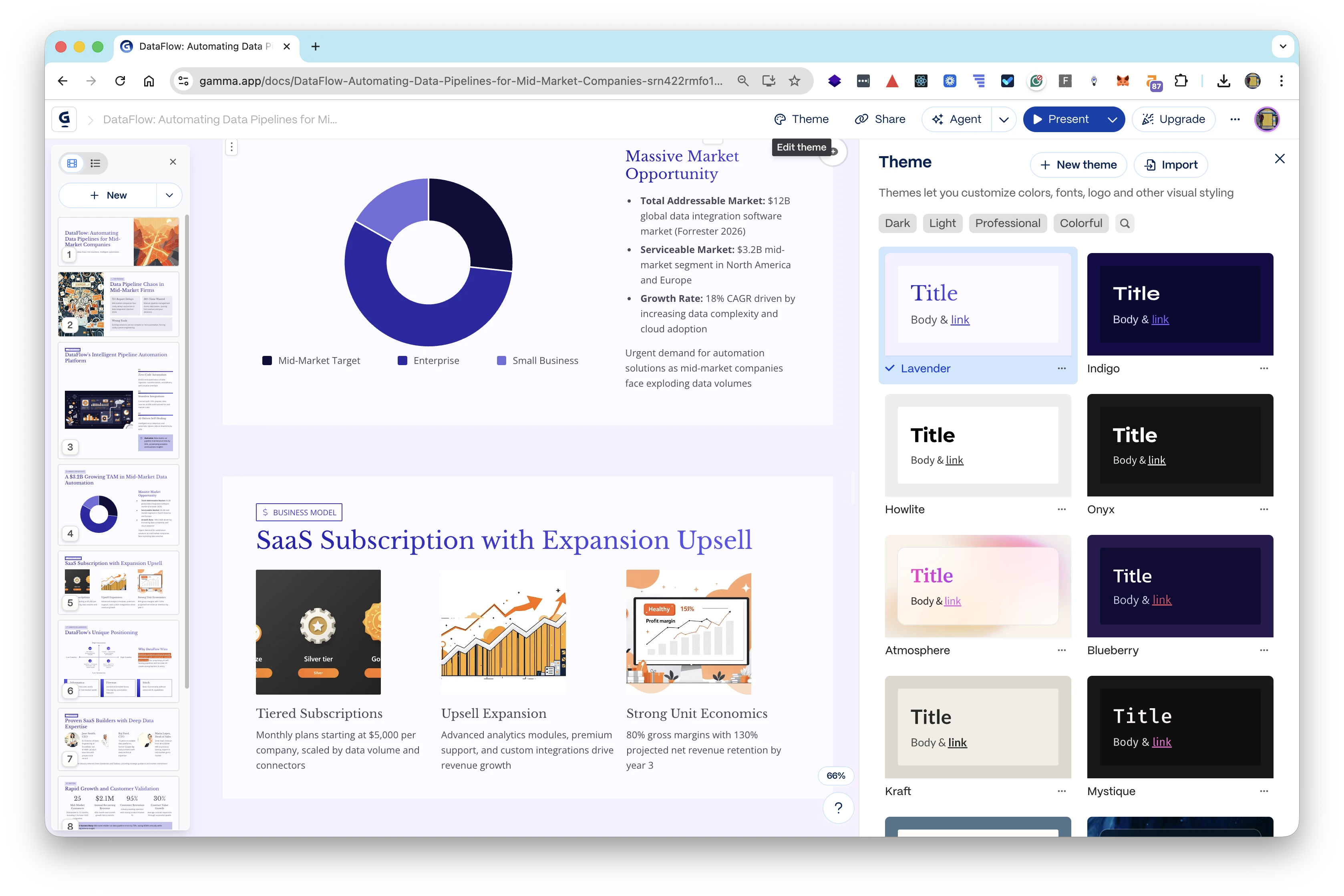
5. Gamma: Best for Web-Native Interactive Lectures
Gamma departs from the traditional slide format by creating web-native "decks" that look more like interactive documents. For professors teaching online or hybrid courses, this is a major advantage. You can share a single link with students, and they can view an interactive, responsive presentation that looks great on both laptops and mobile devices.
The tool uses a modern design aesthetic that stands out from the typical corporate look of PowerPoint. However, the web-native format can be a double-edged sword. If you need to present in a lecture hall with a traditional projector and no internet, the export to PDF or PPTX might not perfectly capture the interactive elements of the original Gamma deck. You can compare its visual style in our canva vs gamma 2026 analysis.
Key Features:
- Web-native format that allows for vertical scrolling and nested content.
- Generous free tier for individual users.
- Fast generation with modern, high quality themes.
- Support for embedded videos, tweets, and live web content.
Pricing: Free tier available. Pro plans start at $8 per month.
Who it's best for: Online educators and professors who want to provide students with modern, interactive study materials.
Verdict: A refreshing alternative to traditional slides, though it may struggle with old-school offline presentation requirements.
6. Beautiful.ai: Best for Design Automation
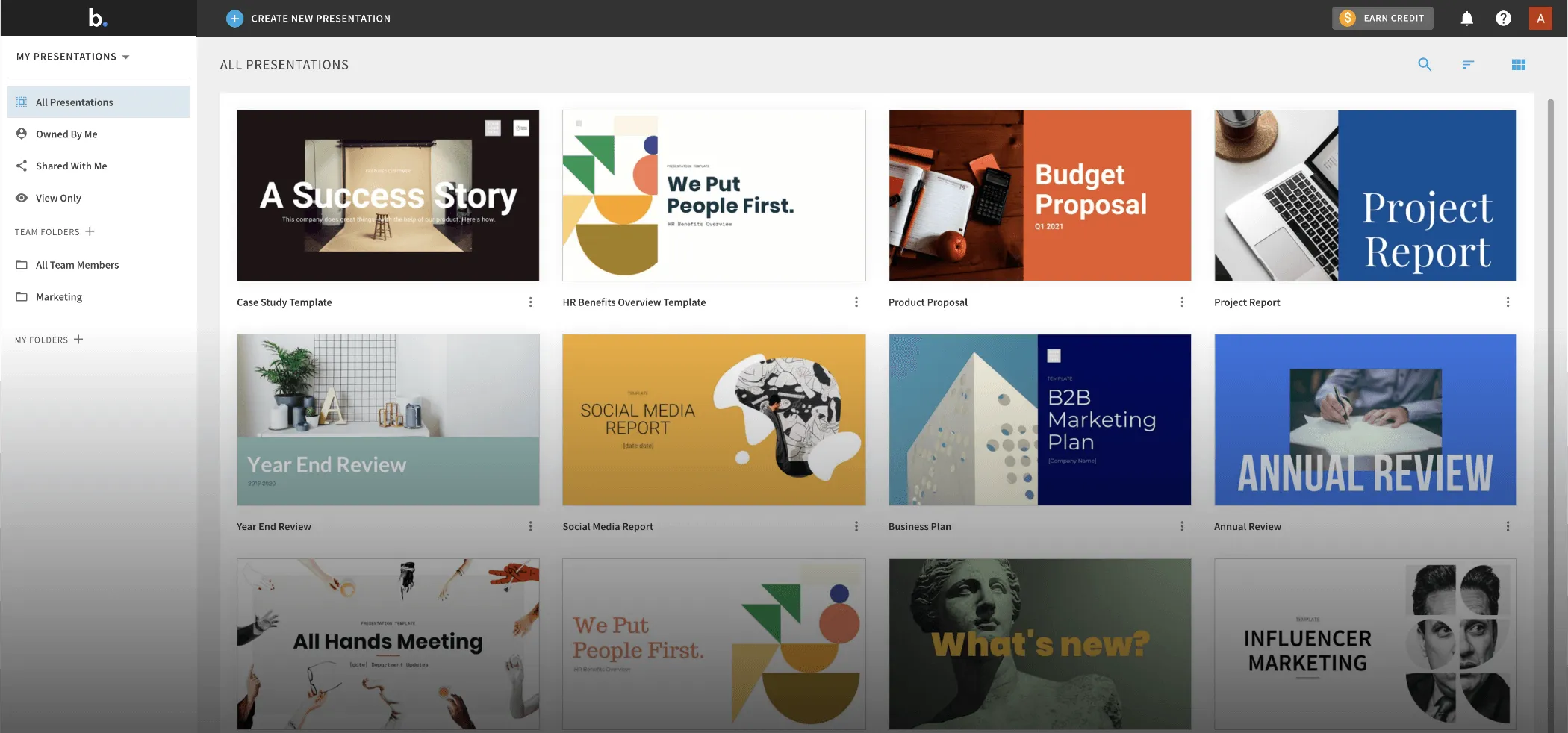
Beautiful.ai is designed for those who want their slides to look professional without having to manually adjust every text box. It uses "smart templates" that automatically resize and reposition elements as you add content. For a professor who has a lot of data but little design experience, this tool ensures that the slides remain legible and visually balanced.
While the design quality is high, the AI generation features are not as deep as those found in NextDocs or Plus AI. It is more of a design assistant than a content creator. It also lacks a free tier, which might be a deterrent for educators on a tight budget.
Key Features:
- Smart templates that maintain design integrity automatically.
- High quality library of icons, stock photos, and professional themes.
- Automated data visualization tools for charts and graphs.
- Brand kit features to keep university logos and colors consistent.
Pricing: No free tier. Starting price is $12 per month.
Who it's best for: Professors who prioritize visual polish and want to avoid the "death by PowerPoint" aesthetic.
Verdict: The best tool for ensuring your slides look like they were made by a professional designer, even if you have no design skills.
7. Pitch.com: Best for Collaborative Research Groups
Pitch.com focuses heavily on the collaborative aspect of presentation building. In a university setting, where research groups and labs often work together on a single deck for a conference, Pitch.com provides excellent version history, real-time commenting, and task assignment. It feels more like a modern project management tool than a simple slide builder.
The AI features are useful for generating initial outlines, but the platform shines in the manual refinement stage. If you find Pitch doesn't quite meet your needs, you might explore these pitch alternatives.
Key Features:
- Real-time collaboration with multiple editors.
- Robust version history and commenting systems.
- Professional, clean template library.
- Integrated data links to keep charts updated with external sources.
Pricing: Free tier available. Pro plans start at $8 per month.
Who it's best for: Research groups, lab teams, and departments working on shared presentations.
Verdict: A top-tier choice for collaboration, though the AI generation is less advanced than specialized tools.
8. Canva Magic Design: Best for Creative Disciplines
Canva is a household name in design, and its Magic Design AI brings that power to presentations. For professors in the arts, humanities, or marketing, Canva offers a massive library of visual assets that other tools cannot match. The AI can take a simple prompt and generate a visually stunning deck that incorporates unique graphics and animations.
The weakness for academics is that Canva can sometimes prioritize "flash" over "substance." The designs can feel too busy for a formal lecture, and exporting to PowerPoint can sometimes result in formatting errors.
Key Features:
- Enormous library of stock images, videos, and graphic elements.
- Multi-format export for social media, print, and presentations.
- Strong free tier that is accessible to students and faculty alike.
- Simple, drag-and-drop interface that is very easy to learn.
Pricing: Free tier available. Pro plans start at $13 per month.
Who it's best for: Professors in creative fields who need highly visual, high-impact slides.
Verdict: Unbeatable for visual assets, but sometimes lacks the sobriety required for technical academic work.
9. MagicSlides: Best for Content Repurposing
MagicSlides is a specialized tool designed to turn existing content into presentations. For a professor who has a collection of YouTube lectures or long PDF papers, MagicSlides can ingest that content and summarize it into a slide deck. This is a massive time saver for educators who are transitioning their curriculum from one format to another.
The designs are fairly basic, and you will likely need to do some manual cleanup after the AI finishes its work. However, as a starting point for repurposing content, it is very effective.
Key Features:
- Ability to generate slides from YouTube URLs.
- Support for converting long documents and PDFs into summaries.
- Direct integration with Google Slides.
- Multi-language support for international educators.
Pricing: Free tier available. Paid plans start at $8 per month.
Who it's best for: Educators who need to convert existing video or text content into lecture slides quickly.
Verdict: A great utility tool for content conversion, though not a complete design solution.
10. SlidesAI: Best for Basic Drafts
SlidesAI is another Google Slides add-on that focuses on simplicity and speed. It is one of the more affordable options on the market, making it popular with students and junior faculty. It excels at taking a block of text and breaking it down into logical bullet points across several slides.
While it is fast, it lacks the sophisticated design automation of Beautiful.ai or the technical depth of NextDocs. If you find it too limiting, you can check out these slidesai alternatives.
Key Features:
- Fast text-to-slide generation.
- Simple interface within Google Slides.
- Affordable pricing for those on a budget.
- Basic image suggestions based on slide text.
Pricing: Free tier available. Pro plans start at $10 per month.
Who it's best for: Professors who just need a quick, basic starting point for a simple lecture.
Verdict: A functional, low-cost option for basic needs, but lacks professional-grade features.
Conclusion: Selecting the Right Tool for the Podium
Choosing the right AI presentation builder depends on your specific academic discipline and your existing technical workflow. If you are a professor who requires absolute precision, mathematical notation, and deep research capabilities, NextDocs is the clear winner. Its ability to handle LaTeX and provide multi-variant options ensures that your technical content is never compromised by the AI's limitations.
For those who are deeply integrated into the Google or Microsoft ecosystems, Plus AI and Copilot offer the path of least resistance. They allow you to stay within your comfort zone while still benefiting from significant productivity gains. Meanwhile, Gamma and Canva are excellent for those who want to push the boundaries of what a "lecture" looks like, offering interactive and highly visual formats that can engage students in new ways.
Ultimately, the goal of these tools is to give professors back their most valuable resource: time. By automating the tedious parts of slide creation, educators can focus more on their research and their students, which is where the real value of the academic experience lies.
Ready to Create Better Presentations?
Try NextDocs Free and experience multi-variant generation, universal exports, and deep research integration. No credit card required.