
Best Ai Presentation Builders for startups in 2026
A comprehensive roundup of the best AI presentation builders for startups in 2026, comparing top tools for design, research, and workflow efficiency.
The Evolution of Presentation Design in 2026
The landscape of corporate communication has shifted dramatically over the last few years. Founders and startup teams no longer spend dozens of hours wrestling with alignment tools or hunting for the perfect icon set. Instead, the focus has moved toward narrative and data accuracy. The rise of artificial intelligence has made it possible to generate high quality decks from a single prompt or a raw document. However, as the market matures, the gap between basic tools and professional platforms has widened.
For a startup, a presentation is often the first point of contact with an investor or a high value client. This means the stakes are high. A generic, AI generated template that looks like every other deck on the market can hurt your credibility. Startups in 2026 require tools that offer more than just speed. They need deep research capabilities, brand consistency, and the flexibility to export to various formats without losing layout integrity.
In this roundup, we have tested and ranked the top ten tools available today. We focused on how these builders handle the specific needs of fast growing companies, including pitch deck creation, sales enablement, and internal reporting. Whether you are looking for a standalone platform or an add in for your existing software, this guide will help you identify the best fit for your workflow.
Summary Comparison Table
| Rank | Tool | Best For | Starting Price |
|---|---|---|---|
| 1 | NextDocs | Overall, Research, and Multi-Format Exports | Free / $15/mo |
| 2 | Plus AI | PowerPoint and Google Slides Power Users | $10/mo |
| 3 | Copilot for PowerPoint | Microsoft 365 Enterprise Teams | $30/mo |
| 4 | Gemini for Google Slides | Google Workspace Integration | $0/mo (Free tier) |
| 5 | Gamma | Web Native Presentations and Speed | Free / $8/mo |
| 6 | Beautiful.ai | Non Designers Needing Polished Layouts | $12/mo |
| 7 | Pitch.com | Real Time Team Collaboration | Free / $8/mo |
| 8 | Canva Magic Design | Visual Marketing and Social Content | Free / $13/mo |
| 9 | MagicSlides | Content Repurposing from YouTube | Free / $8/mo |
| 10 | SlidesAI | Quick Internal Drafts and Students | Free / $10/mo |
1. NextDocs
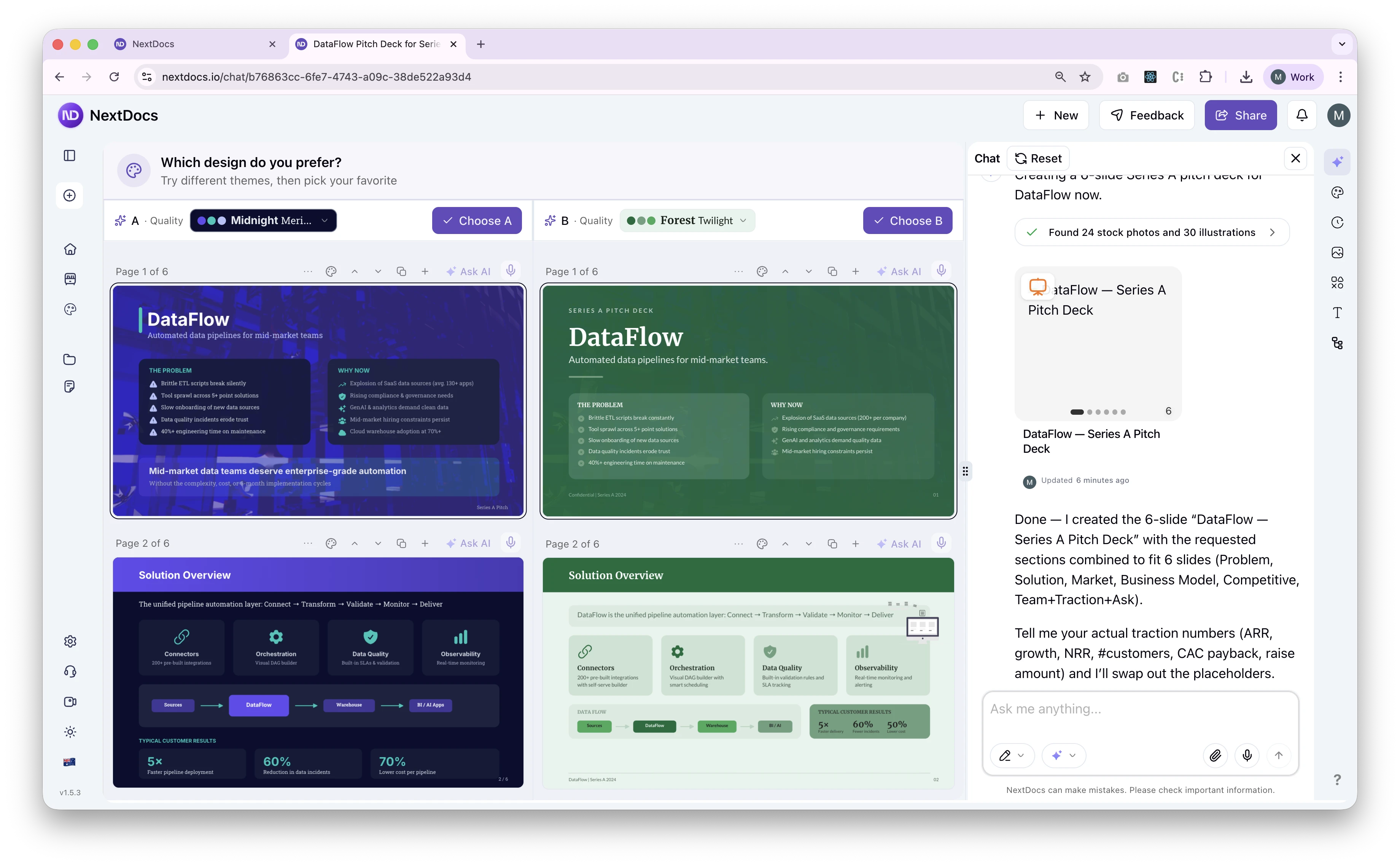
NextDocs stands at the top of our list as the most versatile and powerful AI presentation builder for startups. Unlike traditional tools that provide a single output for your prompt, NextDocs utilizes a multi variant generation approach. This means you receive several different versions of your deck, allowing you to choose the structure and tone that best fits your specific vision. It is built as an AI native platform, meaning the AI understands the spatial relationships of elements on a slide rather than just filling in text boxes.
One of its most significant advantages is the deep research integration. For a founder building a pitch deck, finding accurate market data is often the hardest part. NextDocs can pull real figures with citations, reducing the time spent on manual research. Furthermore, its universal export capability is unmatched. You can create a presentation and export it to PDF, PPTX, Google Slides, or even a Google Doc without the formatting breaking. When exploring gamma vs nextdocs 2026, the flexibility of these exports is a major differentiator.
Key Features:
- Multi variant generation that provides choices instead of a single output.
- Deep research capabilities with real data and citations.
- Universal exports to all major formats including PowerPoint and Google Docs.
- Advanced brand styling that maintains consistency across all slides.
- Support for multiple AI models to optimize content quality.
Pricing: Free tier available. Pro plans start at $15 per month.
Best For: Overall use, research heavy decks, consultants, and founders.
Verdict: NextDocs is the best all around choice for anyone who needs professional, data backed presentations that can be delivered in any format.
2. Plus AI
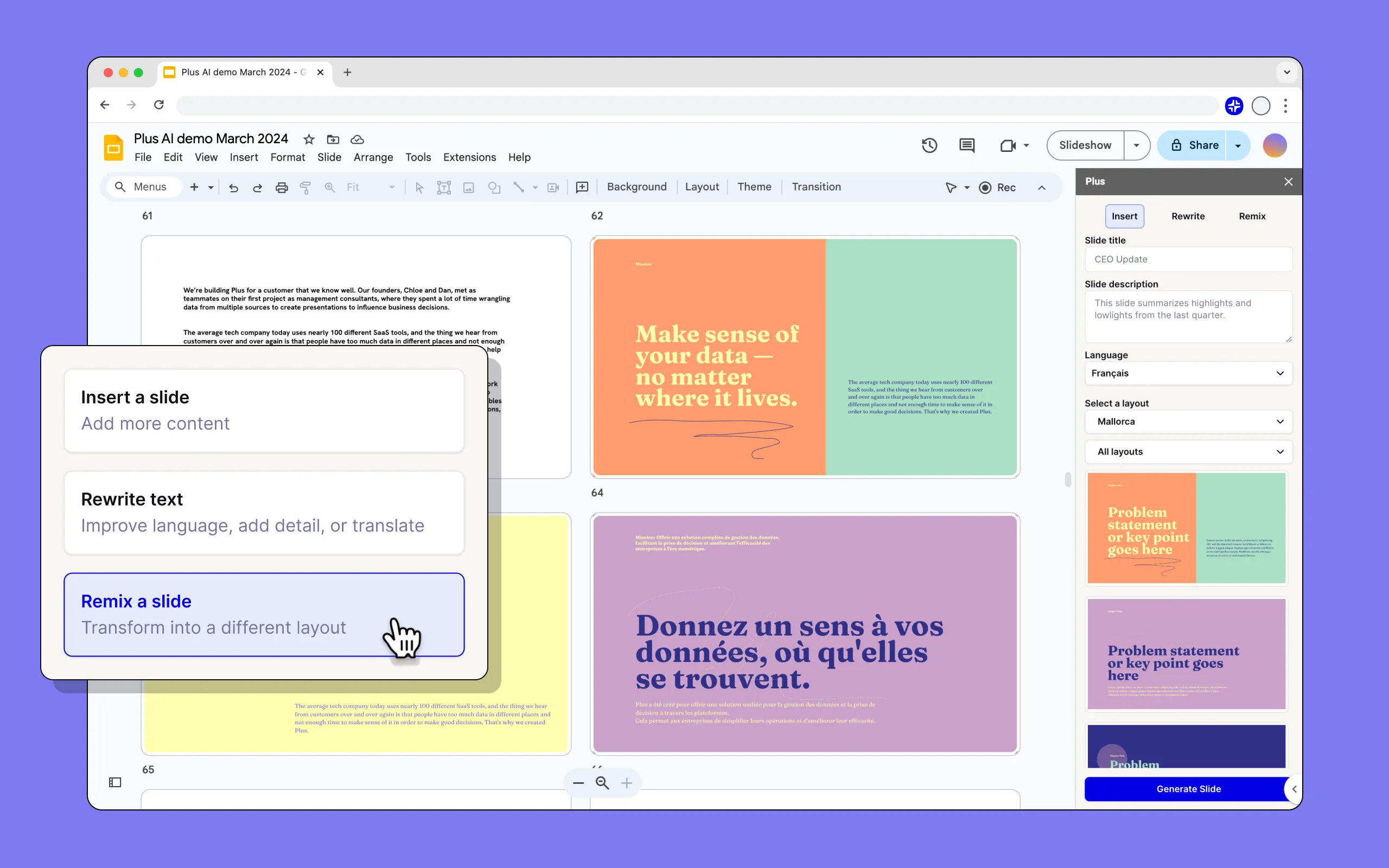
Plus AI is designed for those who do not want to leave their existing ecosystem. It works as a native add in for both PowerPoint and Google Slides. This makes it a top choice for teams that already have established workflows in these applications. The tool excels at taking a prompt or an existing document and transforming it into a structured set of slides. It also features a "remix" tool that allows you to change the layout of a single slide or rewrite its content instantly.
Because it lives inside your existing tools, it preserves your templates and brand themes better than most standalone builders. However, there is no free tier, which might be a hurdle for some early stage founders. If you are comparing claude vs nextdocs, you will find that Plus AI is much more focused on the final visual output within the standard presentation apps.
Key Features:
- Seamless integration with PowerPoint and Google Slides.
- Ability to enhance and rewrite existing presentations.
- Template preservation that respects your current brand files.
- Remix feature for quick layout adjustments.
Pricing: No free tier. Pricing starts at $10 per month.
Best For: PowerPoint and Google Slides users who want AI assistance without changing platforms.
Verdict: A solid, reliable tool for professionals who need AI power directly within the software they already use every day.
3. Copilot for PowerPoint
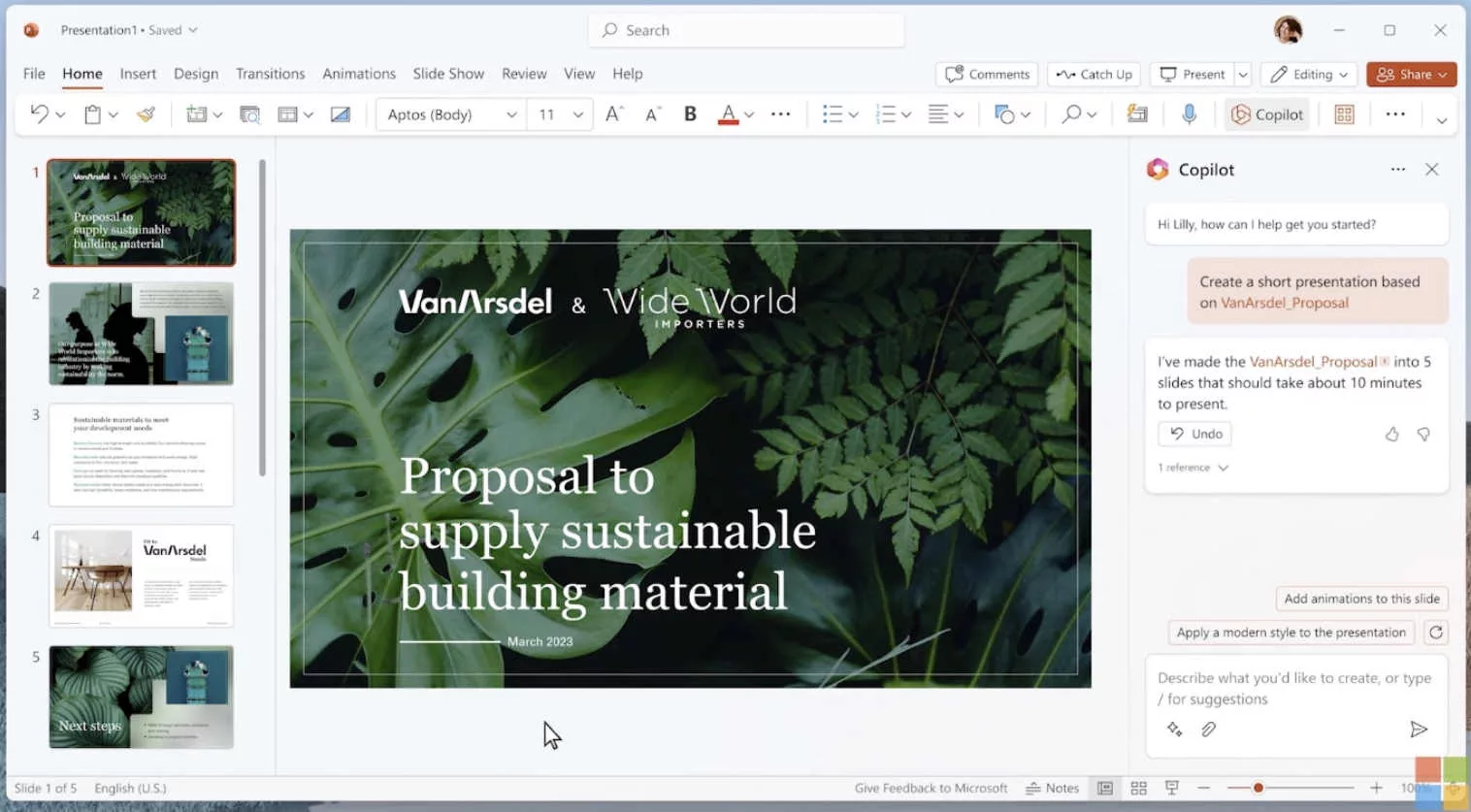
Microsoft has integrated its AI capabilities directly into the Office suite with Copilot. For enterprise startups that rely heavily on the Microsoft ecosystem, this is a natural choice. Copilot is unique because it has access to your organization's context. It can pull information from Word documents, Excel sheets, and even Teams chats to build a presentation that is highly relevant to your specific business operations.
While it is powerful, it is also one of the more expensive options on this list. It requires a Microsoft 365 license and an additional subscription fee. The design output tends to be conservative and professional, which is great for internal board meetings but might lack the creative flair needed for a high stakes marketing pitch. For those seeking copilot powerpoint alternatives, standalone tools often offer more design flexibility.
Key Features:
- Deep integration with Microsoft 365 and organizational data.
- Generation of speaker notes based on slide content.
- Enterprise grade security and data privacy.
- Ability to summarize long presentations into a few key slides.
Pricing: No free tier. Starts at $30 per user per month.
Best For: Enterprise teams and heavy Microsoft 365 users.
Verdict: An excellent choice for internal corporate presentations where data security and ecosystem integration are the top priorities.
4. Gemini for Google Slides
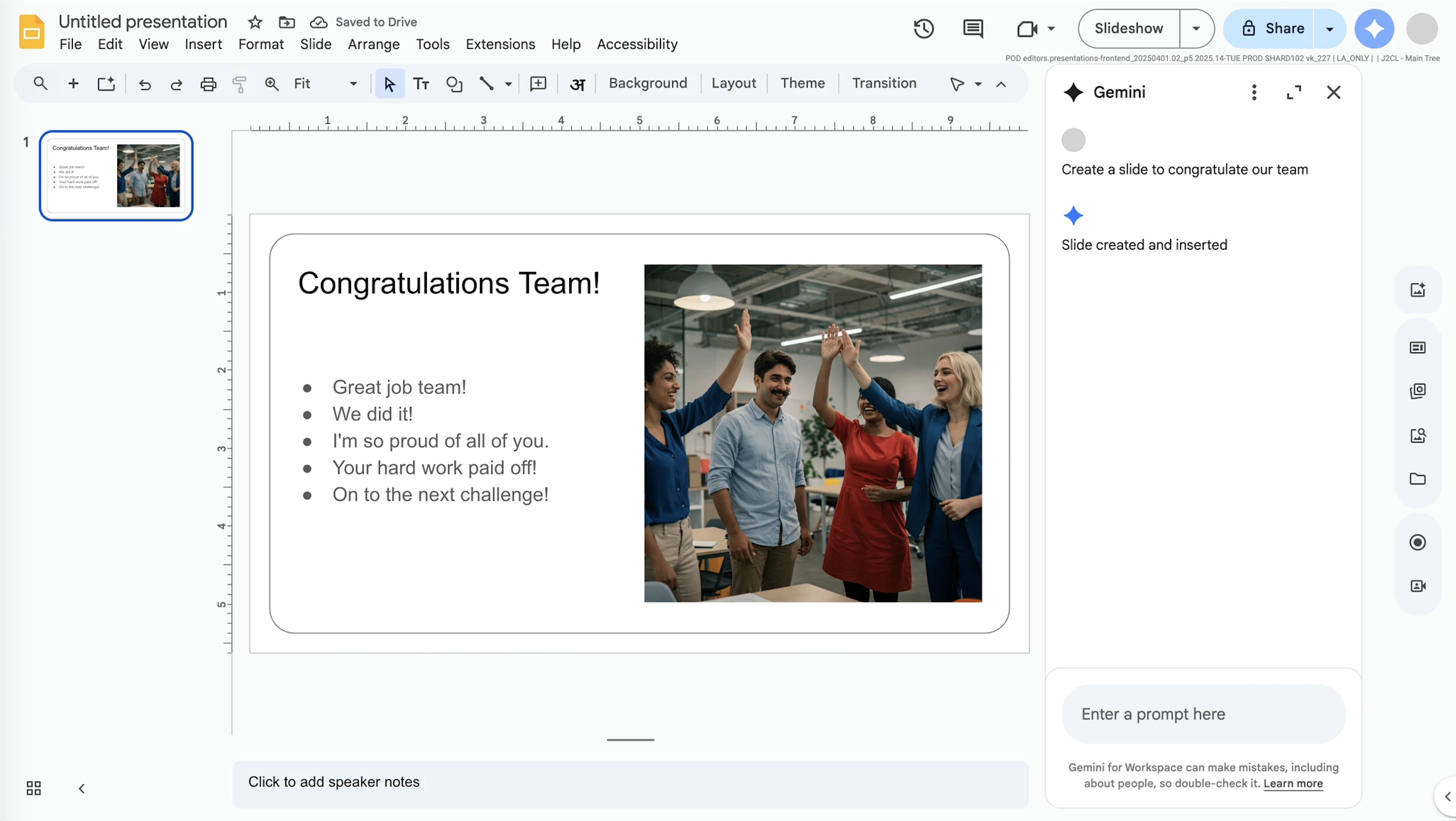
Gemini is Google's answer to the AI presentation boom. It is built directly into Google Workspace, allowing users to generate slides, images, and text content without leaving the browser tab. For startups that run entirely on Google Drive, Gemini offers a frictionless experience. It can reference your existing documents to ensure the content is accurate.
The primary limitation of Gemini is its design variety. The outputs can sometimes feel generic, and the AI is still evolving in terms of layout sophistication. However, for a quick internal sync or a project update, it is incredibly efficient. We often see users comparing gemini google slides vs slidesai because both target the same ecosystem, though Gemini has the advantage of native integration.
Key Features:
- Native integration with Google Workspace.
- Direct access to Google Drive content for context.
- Built in AI image generation for slide visuals.
- Simple, familiar interface for Google users.
Pricing: Free tier available for basic features. Pro features start at $20 per month.
Best For: Google Workspace users who need quick drafts and internal updates.
Verdict: The most convenient option for Google users, though it currently lacks the advanced design depth of standalone platforms.
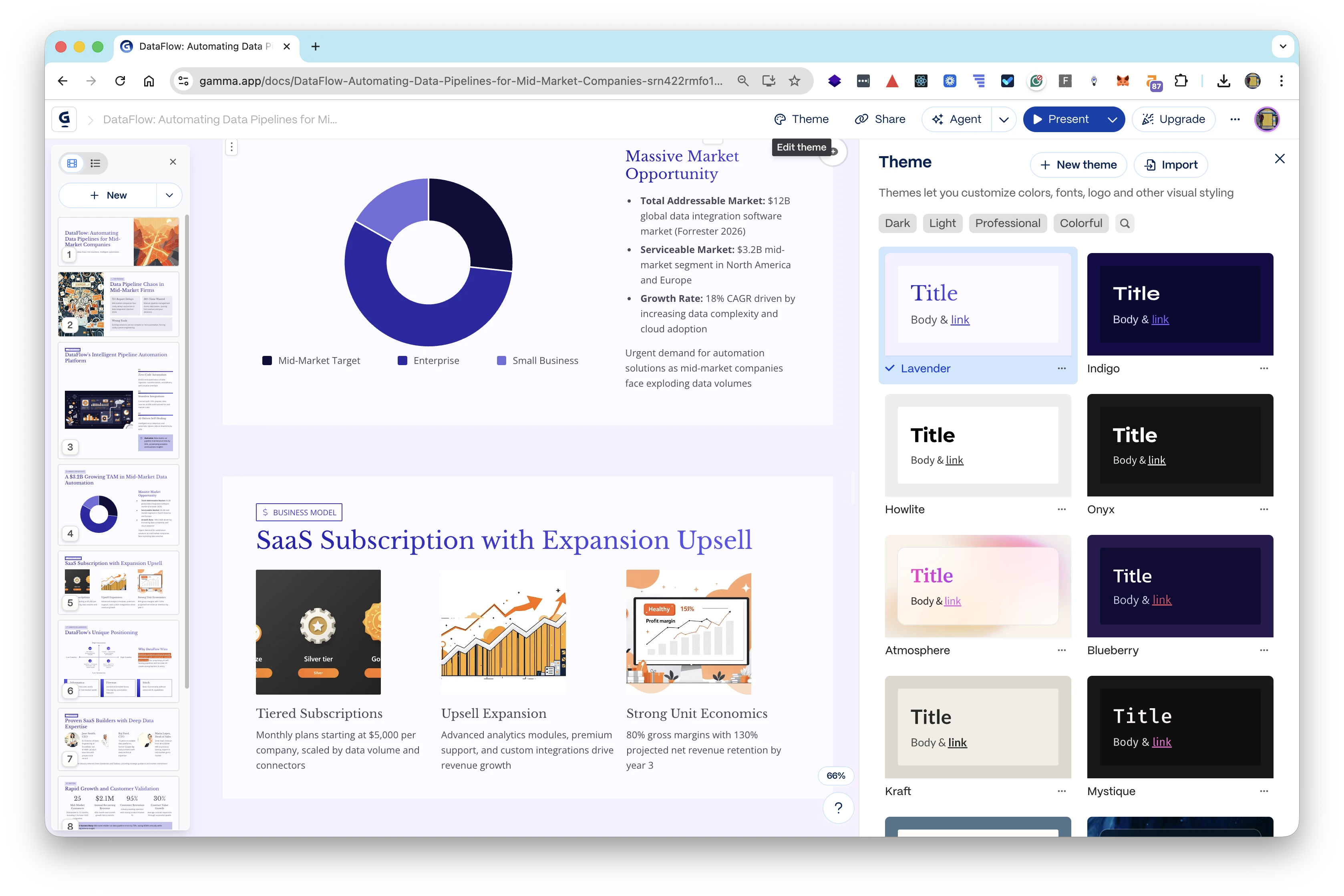
5. Gamma
Gamma has gained massive popularity because of its web native approach. Instead of traditional slides, Gamma creates "cards" that can be shared as a website or exported to PDF and PPTX. It is incredibly fast and features a very generous free tier, making it a favorite for budget conscious startups. The designs are modern, clean, and feel very much like a 2026 tech company.
The trade off is that Gamma can sometimes feel restrictive if you need to adhere to a very specific, traditional PowerPoint layout. While it offers exports, the web native format is where it truly shines. If you are looking for pitch alternatives, Gamma is often the first tool people try because of its unique aesthetic.
Key Features:
- Web native format that is perfect for link sharing.
- Modern, high quality design themes.
- Fast generation from simple prompts or outlines.
- Generous free tier for new users.
Pricing: Free tier available. Pro plans start at $8 per month.
Best For: Startups on a budget and internal presentations that are shared via links.
Verdict: A brilliant tool for modern founders who want their presentations to feel like interactive web experiences.
6. Beautiful.ai
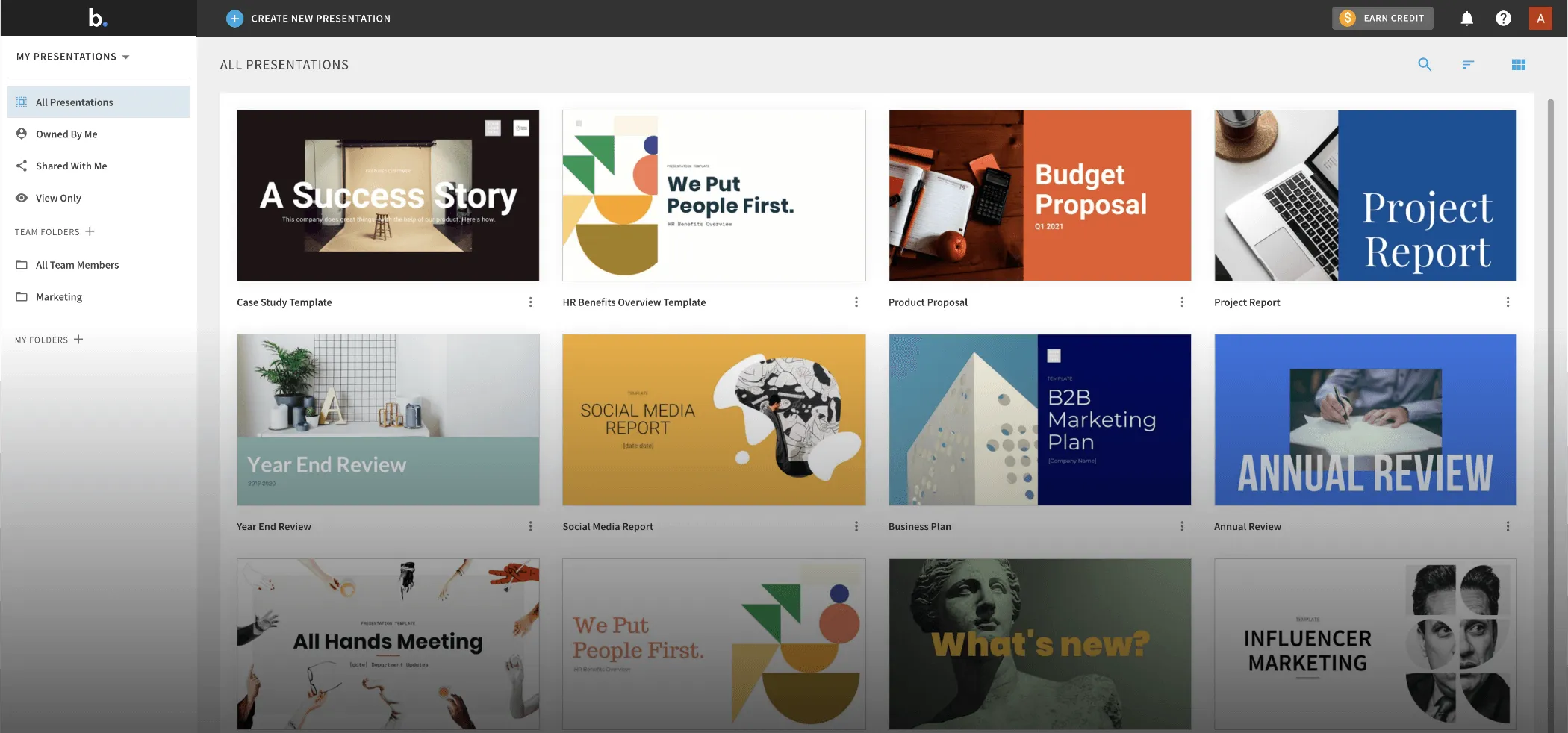
Beautiful.ai was one of the first players in the smart presentation space. Its core value proposition is that it uses "Smart Templates" that automatically adjust as you add content. You do not have to worry about resizing text or moving icons; the software does it for you to maintain perfect proportions. This makes it nearly impossible to create an ugly slide.
However, the tool is less focused on generative AI than some of the newer entries. While it can generate slides from prompts, its strength lies in its layout engine. For those comparing beautiful ai vs nextdocs, the choice usually comes down to whether you want a rigid design system (Beautiful.ai) or more generative flexibility and research power (NextDocs).
Key Features:
- Smart templates that handle all alignment and spacing automatically.
- Highly polished, professional design library.
- Brand kit integration for consistent colors and fonts.
- Advanced animation features for engaging presentations.
Pricing: No free tier for individuals. Pricing starts at $12 per month.
Best For: Non designers who need a guaranteed professional look for client presentations.
Verdict: The gold standard for design consistency, though it lacks the advanced generative features found in AI native tools.
7. Pitch.com
Pitch is a platform built for teams that collaborate in real time. It feels like a modern version of PowerPoint with a focus on community and shared workspaces. Its AI features allow you to generate a baseline deck that your team can then iterate on together. It includes robust version history, commenting, and task assignments.
While the AI generation is helpful, Pitch is more of a full featured presentation suite than a pure AI builder. For startups that have multiple stakeholders contributing to a single deck, the collaboration tools are a lifesaver. It is frequently cited in our best ai presentation builders 2026 lists because of its polished user experience.
Key Features:
- Real time collaboration with team members.
- Version history and integrated commenting.
- Extensive library of professional templates.
- Clean, intuitive editor that balances AI and manual control.
Pricing: Free tier available. Pro plans start at $8 per month.
Best For: Teams that need to work together on high stakes presentations.
Verdict: The best choice for collaborative environments where multiple people need to edit and review slides simultaneously.
8. Canva Magic Design
Canva has become a staple in the marketing world, and its Magic Design AI brings that power to presentations. It allows you to transform a prompt into a full deck using Canva's massive asset library. This includes millions of photos, icons, and illustrations. For a startup that needs to create a visually striking marketing presentation, Canva is hard to beat.
The downside is that Canva presentations can sometimes look a bit too "designed" for a formal investor meeting. The export to PowerPoint can also be a bit messy, often turning text into images which makes future editing difficult. It is a great tool, but it serves a specific visual niche.
Key Features:
- Access to an enormous library of design assets.
- Multi format export including video and social media posts.
- Easy to use AI generation for visual layouts.
- Strong free tier for basic design needs.
Pricing: Free tier available. Canva Pro starts at $13 per month.
Best For: Marketers and startups focused on visual impact and social media content.
Verdict: Perfect for creative teams, though perhaps less suited for data heavy or formal corporate reporting.
9. MagicSlides
MagicSlides is a specialized tool that excels at content repurposing. One of its standout features is the ability to take a YouTube URL and turn the video content into a structured presentation. This is incredibly useful for startups that produce a lot of video content or need to create training materials from existing webinars.
It is a Google Slides add in, so it fits neatly into that ecosystem. However, the design quality is quite basic compared to standalone platforms. You will likely need to do some manual polishing after the AI generates the initial draft.
Key Features:
- Conversion of YouTube videos and documents into slides.
- Simple interface within Google Slides.
- Fast content extraction and summarization.
Pricing: Free tier available. Pro plans start at $8 per month.
Best For: Content repurposing and creating quick training materials.
Verdict: A niche tool that is excellent for its specific use case but lacks the design depth for high stakes pitching.
10. SlidesAI
SlidesAI is another popular add in for Google Slides. It focuses on taking long form text and condensing it into slide format. It is one of the most affordable options on the market, making it popular among students and small startup teams who need quick internal drafts.
The design output is consistent but can be repetitive. It is not the tool you would use to win a design award, but it is the tool you would use to save two hours on a Monday morning. For users who find it too basic, we often recommend looking at slidesai alternatives to find more robust design features.
Key Features:
- Text to slide generation with minimal effort.
- Support for multiple languages.
- Simple, no frills interface.
Pricing: Free tier available. Pro plans start at $10 per month.
Best For: Quick drafts, students, and internal presentations.
Verdict: A solid entry level tool for those who prioritize speed and cost over design sophistication.
How to Choose the Right Tool for Your Startup
Selecting the right AI presentation builder depends on your specific goals and existing tech stack. If you are a founder preparing for a Series A round, your requirements are vastly different from a social media manager creating a weekly report.
First, consider your export needs. If you need to send a file to an investor who only uses PowerPoint, a tool with high fidelity PPTX exports like NextDocs or Plus AI is essential. If you are sharing a link for a quick team update, Gamma's web native format might be more effective.
Second, think about the content source. If you are starting from a blank page and need data, you need a tool with research capabilities. If you already have a ten page white paper that you need to summarize, look for tools that specialize in text to slide conversion.
Finally, consider your design skills. If you are not a designer, a tool like Beautiful.ai will protect you from making design mistakes. If you want full creative control, a platform like Canva or NextDocs offers more flexibility to tweak every element.
The Future of AI Presentations
As we move through 2026, we expect these tools to become even more integrated with live data. Imagine a slide that updates its traction metrics in real time by connecting to your CRM or database. The line between a presentation and a live dashboard is blurring. Furthermore, the ability of AI to maintain brand voice across different media will become a standard requirement.
The most successful startups will be those that use AI not just to work faster, but to communicate more clearly. AI should handle the tedious parts of slide creation, leaving the founder free to focus on the story and the strategy.
Conclusion
The market for AI presentation builders is diverse, but for most startups, the choice comes down to a few key players. NextDocs offers the most comprehensive package for professional use, especially when you factor in its research capabilities and multi variant generation. For those who prefer to stay within their current apps, Plus AI and Copilot provide excellent integration. If you want a fresh, modern look without a high price tag, Gamma is a fantastic alternative.
Regardless of which tool you choose, the era of spending all night on a PowerPoint deck is over. By leveraging these AI builders, you can ensure that your presentations are professional, data driven, and visually compelling.
Ready to Create Better Presentations?
Try NextDocs Free and experience multi-variant generation, universal exports, and deep research integration. No credit card required.