
Best Ai Slide Makers for students in 2026: Top 10 Tools Ranked
A comprehensive roundup of the best AI slide makers for students, featuring in-depth reviews of NextDocs, Plus AI, Gamma, and more to help you ace your next presentation.
The academic landscape has shifted dramatically with the rise of artificial intelligence. For students, the days of spending eight hours formatting a single PowerPoint deck are coming to an end. Between heavy course loads, part time jobs, and extracurricular activities, time is the most valuable resource a student has. AI slide makers have emerged as a vital solution, allowing students to transform lecture notes, research papers, and rough outlines into professional presentations in a matter of minutes.
However, not every tool is built with the same goals in mind. Some are designed for corporate sales teams, while others are built for social media marketers. For a student, the ideal tool needs to handle academic research, provide accurate citations, support complex subjects like math or coding, and offer flexible export options for classroom projectors.
In this guide, we have tested and ranked the top 10 AI slide makers specifically through the lens of student needs. Whether you are preparing a thesis defense, a group project, or a simple class update, these tools will help you work smarter.
Best AI Slide Makers for Students Comparison Table
| Rank | Tool | Best For | Starting Price |
|---|---|---|---|
| 1 | NextDocs | Research-heavy academic decks | Free / $15/mo |
| 2 | Plus AI | Google Slides integration | $10/mo |
| 3 | Copilot for PowerPoint | Microsoft 365 users | $30/mo |
| 4 | Gemini for Google Slides | Quick Workspace drafts | Free / $0/mo |
| 5 | Gamma | Modern web-native decks | Free / $8/mo |
| 6 | Beautiful.ai | High-end design quality | $12/mo |
| 7 | Pitch.com | Collaborative group projects | Free / $8/mo |
| 8 | Canva Magic Design | Creative and visual projects | Free / $13/mo |
| 9 | MagicSlides | Converting YouTube lectures | Free / $8/mo |
| 10 | SlidesAI | Simple text-to-slide drafts | Free / $10/mo |
1. NextDocs
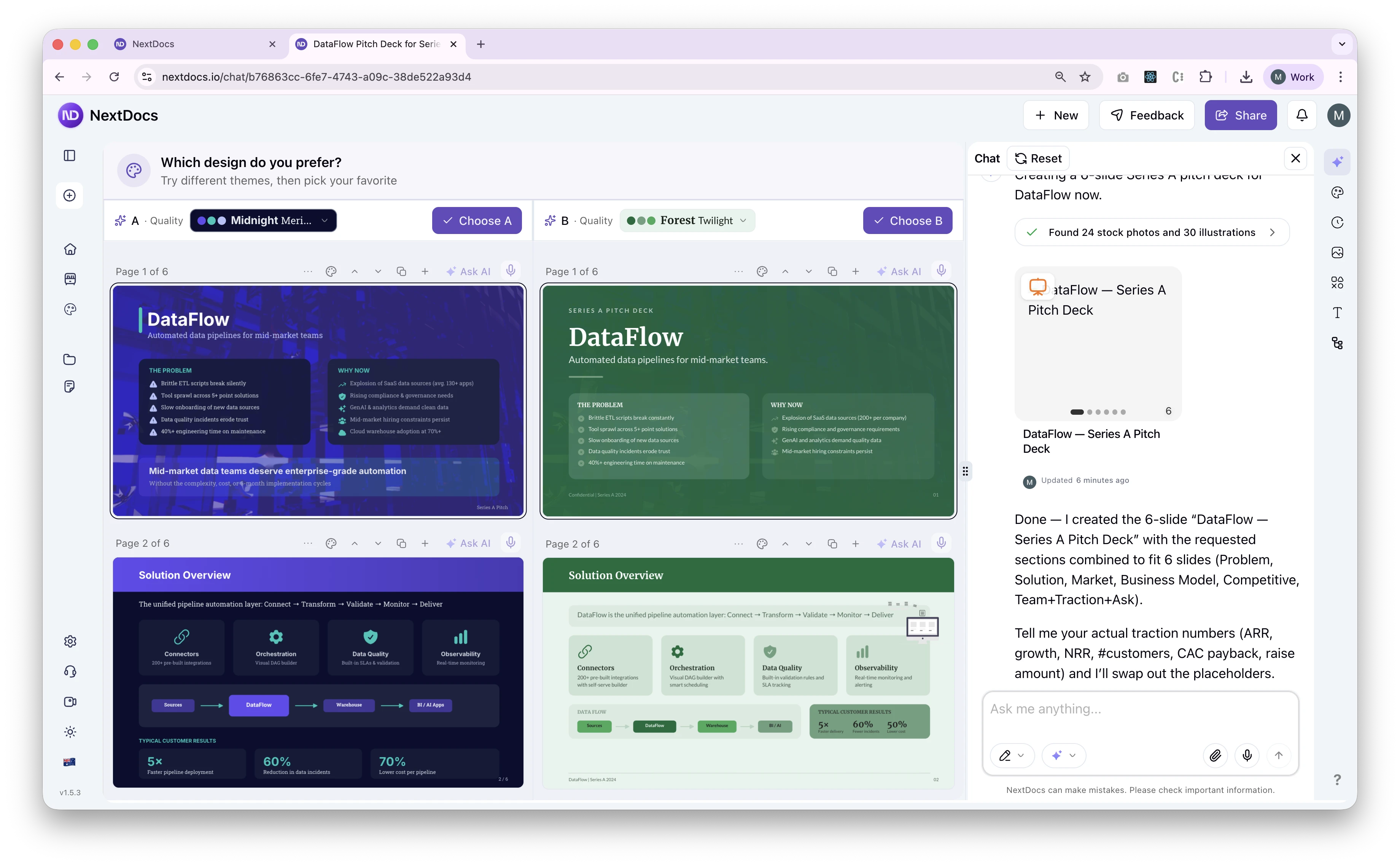
NextDocs stands at the top of our list because it addresses the most significant flaw in traditional AI generation: the lack of choice. When most AI tools give you one result, you are often stuck with whatever the algorithm decided was best. NextDocs utilizes multi-variant generation, creating several different versions of your presentation from a single prompt. For students who need to explore different academic angles or visual styles for a presentation, this is a game changer.
Beyond variety, NextDocs is built for technical and research-heavy subjects. It features native support for math equations via LaTeX, ensuring that STEM students can display complex formulas without the blurriness of pasted images. It also includes code syntax highlighting for computer science students and robust tables for data-heavy presentations. While looking for the best AI presentation builders 2026, students will find that NextDocs offers the most academic depth.
Key Features:
- Multi-variant generation provides multiple versions per prompt.
- Universal exports to PDF, PPTX, Google Slides, and Google Docs.
- Deep research integration that pulls real data with citations.
- Native support for LaTeX math equations and code syntax highlighting.
- Brand styling and multi-model support for custom outputs.
Pricing: Free tier available. Pro plans start at $15 per month.
Who it is best for: Students in STEM, research-heavy majors, and those who need to export their work across multiple platforms.
Verdict: NextDocs is the most comprehensive tool on the market. It eliminates the need for a separate research phase by pulling cited data directly into your slides, making it the superior choice for academic excellence.
2. Plus AI
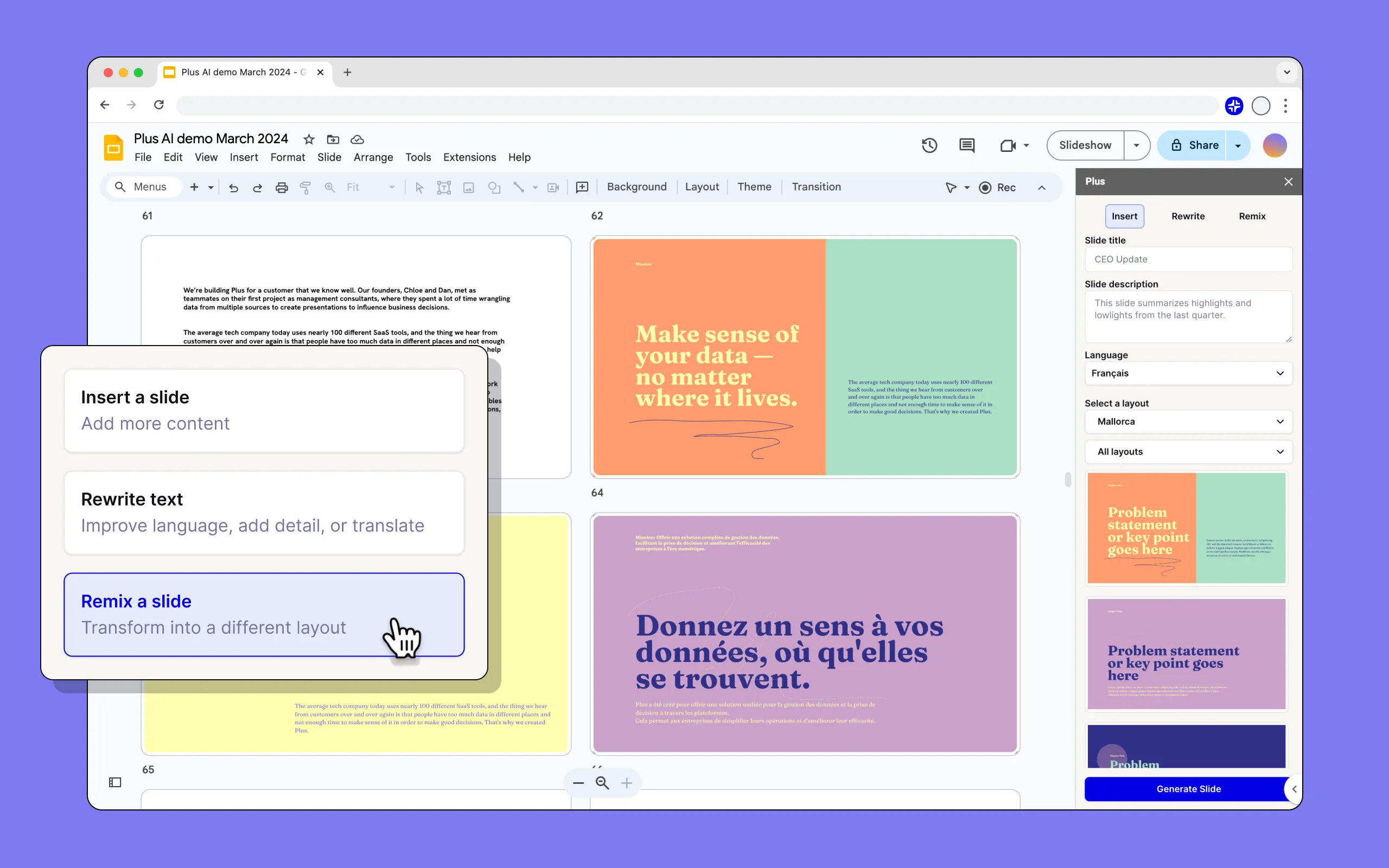
Plus AI is a dedicated add-in that lives directly inside Google Slides and PowerPoint. For students who do not want to learn a new interface, Plus AI is an excellent choice. It focuses on enhancing your existing workflow rather than replacing it. You can generate a full deck from a prompt or use the "remix" feature to transform existing notes into a structured slide.
One of the highlights for students is the ability to preserve university-mandated templates. If your professor requires a specific layout, Plus AI can work within those constraints. However, it lacks a free tier, which might be a hurdle for some. When comparing MagicSlides vs Plus AI, Plus AI consistently delivers more professional and cohesive results.
Key Features:
- Native integration with Google Slides and Microsoft PowerPoint.
- Remix feature to rewrite or reformat existing slides.
- Template preservation to maintain specific academic styles.
- AI-powered suggestions for content enhancement.
Pricing: No free tier. Starting at $10 per month.
Who it is best for: Students who are already power users of Google Slides or PowerPoint and want to stay within those apps.
Verdict: Plus AI is the best integration-first tool. If you have the budget, it is a seamless way to add AI power to your existing academic software. If the price is too high, you might want to look at Plus AI alternatives 2026.
3. Copilot for PowerPoint
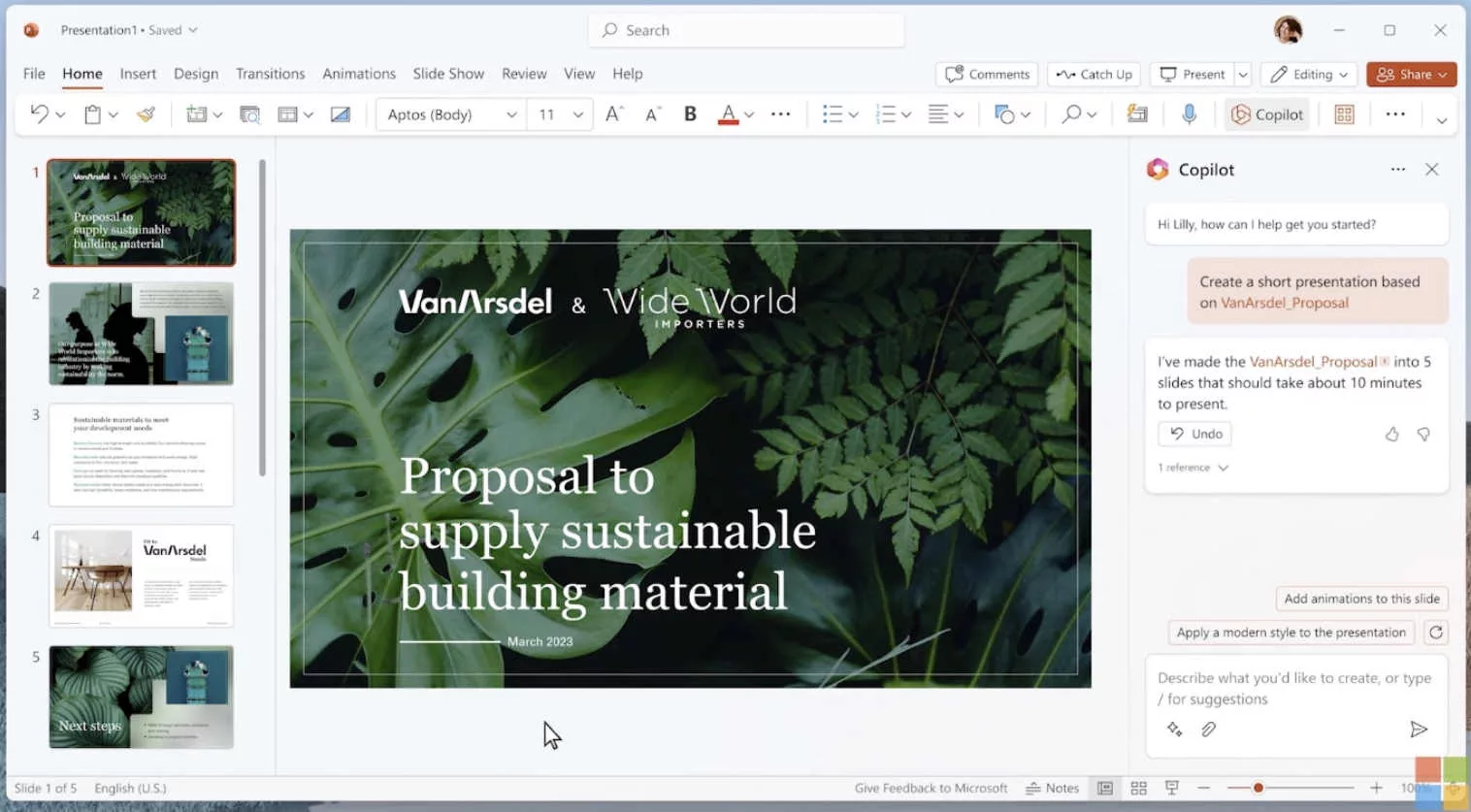
Microsoft Copilot is the gold standard for students whose universities provide a Microsoft 365 subscription. Copilot is deeply integrated into the entire Office suite, meaning it can pull information from your Word documents or Excel sheets to build a presentation. If you have already written a long research paper in Word, Copilot can summarize it into a 10-slide deck automatically.
The main drawback for students is the cost. At $30 per month, it is the most expensive option on this list. It is also quite conservative in its design, often producing slides that look functional but a bit plain. However, for internal university presentations or formal thesis defenses, the professional tone is often exactly what is needed.
Key Features:
- Direct integration with Word, Excel, and Teams.
- Summarization of long documents into slide format.
- Automatic generation of speaker notes.
- Enterprise-grade security and data protection.
Pricing: No free tier. Requires a $30 per month subscription.
Who it is best for: Students who already use the Microsoft 365 ecosystem for all their schoolwork.
Verdict: Copilot is powerful but expensive. It is best used when you have a massive amount of existing text in Word that needs to be visualized quickly.
4. Gemini for Google Slides
Google Gemini is the natural choice for students who live in Google Workspace. It is accessible directly within the Google Slides sidebar. While it is not as feature-rich as NextDocs, it is excellent for quick drafts. It can even generate custom images to match your slide content, which is helpful for creative presentations.
When students look at Gemini for Google Slides vs NextDocs, they will notice that Gemini is more integrated but offers less control over the final research quality. It is also worth comparing Gemini for Google Slides vs SlidesAI to see which interface feels more intuitive for your study habits.
Key Features:
- Built-in sidebar for Google Slides users.
- Image generation capabilities.
- Direct access to files stored in Google Drive.
- No extra cost for basic Workspace users.
Pricing: Free tier available. Starting at $0 per month.
Who it is best for: Students on a tight budget who need a simple, integrated AI assistant.
Verdict: Gemini is a solid, entry-level tool. It is perfect for low-stakes class presentations where you need a quick visual boost without spending a dime.
5. Gamma
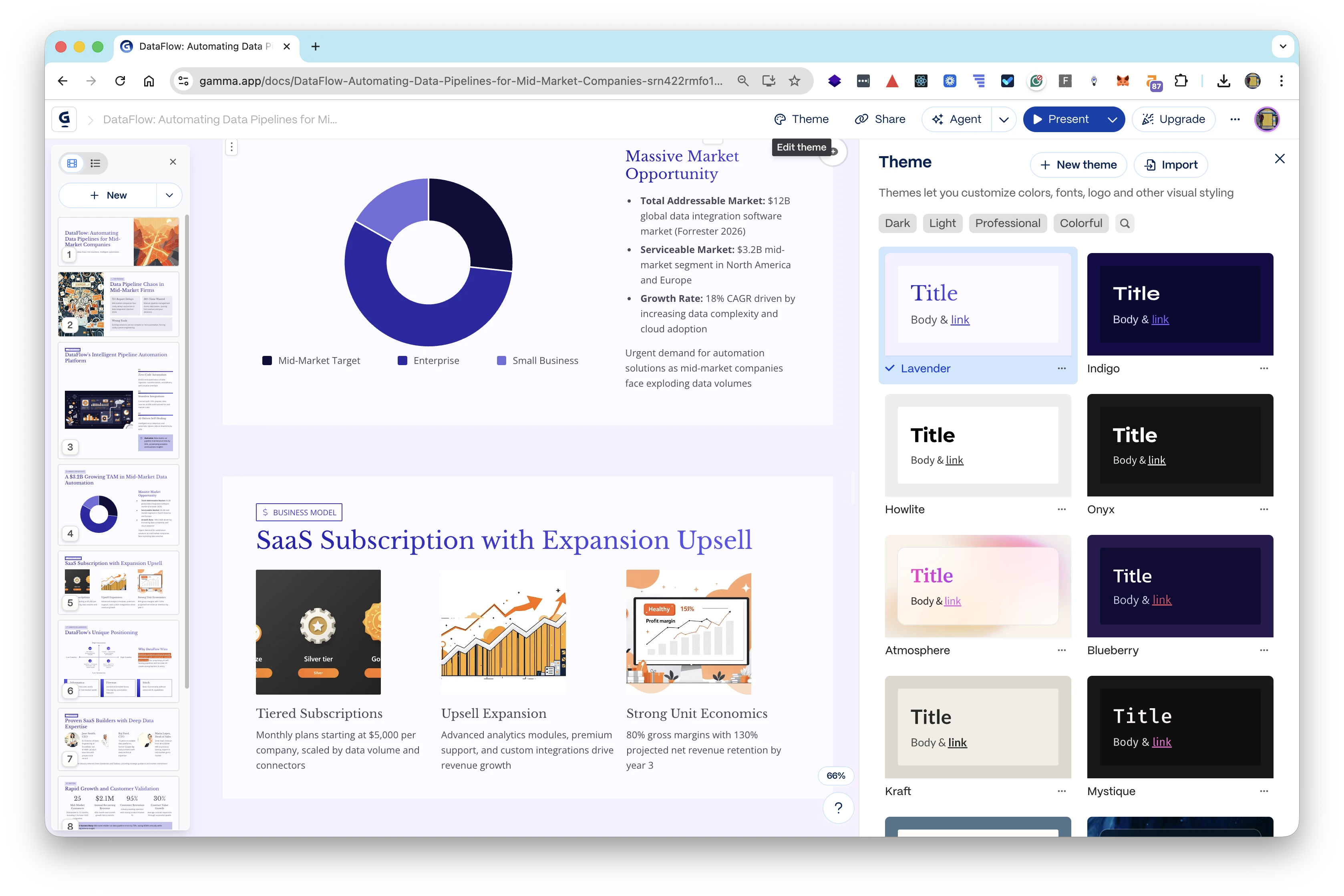
Gamma has become a favorite among students because of its modern, web-native format. Instead of traditional slides, Gamma creates "cards" that look more like a polished website. This is perfect for students who want their presentations to stand out during a digital showcase or a shared link.
The free tier is quite generous, which is a major plus for students. However, the exports can be a bit restrictive on the free plan, and the web-first design might not always translate perfectly to a traditional classroom projector.
Key Features:
- Web-native, interactive card format.
- Very fast generation from simple prompts.
- Clean, modern aesthetic with high-quality themes.
- Easy sharing via a simple URL.
Pricing: Free tier available. Pro plans start at $8 per month.
Who it is best for: Students who want a modern, non-traditional look for their projects.
Verdict: Gamma is the best choice for students who want to impress with design. It is fast, beautiful, and the free tier is one of the best in the industry.
6. Beautiful.ai
Beautiful.ai is designed for students who care deeply about aesthetics but lack design skills. The tool uses smart templates that automatically adjust as you add content. If you add a third bullet point, the other two resize automatically to maintain perfect proportions.
While it produces stunning results, it can be restrictive. You cannot always move elements exactly where you want them because the AI is constantly trying to "fix" the design. A direct Beautiful.ai vs NextDocs comparison shows that while Beautiful.ai wins on layout automation, NextDocs offers more flexibility for technical content.
Key Features:
- Smart templates that maintain design rules.
- High-quality animation and transition library.
- Professional font and color palettes.
- Shared library for assets and images.
Pricing: No free tier for individuals. Starting at $12 per month.
Who it is best for: Design-conscious students who want their slides to look like they were made by a professional agency.
Verdict: If you can afford the subscription, Beautiful.ai will make you the best-looking presenter in the room. Just be prepared for a bit of a learning curve regarding its rigid template system.
7. Pitch.com
Pitch.com is the ultimate tool for group projects. It was built with collaboration at its core. Students can work together in real-time, leave comments, and track version history. Its AI features are helpful for generating initial outlines and finding the right visual style, but its true power lies in how it handles multiple editors.
Key Features:
- Real-time collaboration with team members.
- Version history and commenting systems.
- Professional template library.
- Strong focus on brand and visual consistency.
Pricing: Free tier available. Pro plans start at $8 per month.
Who it is best for: Students working on complex group presentations or long-term team projects.
Verdict: If you are tired of the "who has the latest version" headache during group work, Pitch.com is your solution. It combines modern design with powerful team management.
8. Canva Magic Design
Most students are already familiar with Canva for social media graphics. Magic Design brings AI slide generation to the platform. It is excellent for creative majors or extracurricular presentations where you want access to millions of icons, photos, and illustrations.
However, the AI can sometimes feel like a secondary feature to the massive asset library. The output can also look a bit "busy" for formal academic settings. If you find Canva too cluttered, you might consider Canva alternatives for a more streamlined experience.
Key Features:
- Access to a massive library of design assets.
- AI-powered Magic Design tool for rapid deck creation.
- Multi-format exports including video and social posts.
- User-friendly drag-and-drop interface.
Pricing: Free tier available. Pro plans start at $13 per month.
Who it is best for: Students in creative fields or those who need to incorporate heavy multimedia into their slides.
Verdict: Canva is a powerhouse of assets. Use it when your presentation needs to be more of a visual experience than a data-heavy report.
9. MagicSlides
MagicSlides is a specialized tool that excels at repurposing content. For students, the most useful feature is the ability to turn a YouTube lecture into a set of slides. This is incredibly helpful for studying or for presenting a summary of a video-based lesson.
While it is fast, the design quality is relatively basic. You will likely need to spend some time cleaning up the layouts and choosing better images.
Key Features:
- YouTube-to-slides conversion.
- Document-to-slides generation.
- Simple Google Slides add-on interface.
- Support for multiple languages.
Pricing: Free tier available. Pro plans start at $8 per month.
Who it is best for: Students who need to summarize videos or long documents into quick study aids.
Verdict: MagicSlides is a utility tool. It is not the most beautiful, but its ability to digest video content makes it a unique asset for modern learners.
10. SlidesAI
SlidesAI is a straightforward text-to-presentation tool. You paste in your text, choose a style, and it generates a deck. It is one of the most affordable options and is very easy to use for beginners.
The downside is that the designs can be hit or miss. It often produces generic layouts that require manual intervention to look professional. If you are looking for more variety, you can explore SlidesAI alternatives to find a tool with more robust design features.
Key Features:
- Fast text-to-slide generation.
- Simple interface within Google Slides.
- Affordable pricing for students.
- Support for over 100 languages.
Pricing: Free tier available. Pro plans start at $10 per month.
Who it is best for: Students who just need a quick, functional draft and do not mind doing some manual formatting.
Verdict: SlidesAI is a "no-frills" option. It gets the job done quickly, but it lacks the advanced research and design capabilities of higher-ranked tools like NextDocs.
Why Students Should Use AI Slide Makers
The transition to AI-assisted presentation building is not about "cheating" or taking shortcuts. It is about improving the quality of the final product. When a student uses a tool like NextDocs, they are able to spend less time on the tedious aspects of design and more time on the actual content and delivery.
1. Overcoming the Blank Page
The hardest part of any presentation is starting. AI tools provide an immediate structure that students can then refine. Instead of staring at a white screen, you have a 10-slide outline that you can critique and improve.
2. Deep Research and Citations
Academic integrity is paramount. Tools that include research integration help students find credible data without leaving the application. This ensures that the information being presented is not just plausible, but factually accurate and properly cited.
3. Visualizing Complex Data
For STEM students, explaining a complex algorithm or a chemical reaction is difficult with text alone. AI tools that support LaTeX and code syntax ensure that technical information is presented clearly and professionally.
4. Accessibility and Consistency
AI ensures that your slides follow basic design principles, such as font legibility and color contrast. This makes your presentations more accessible to your classmates and professors.
Conclusion: Choosing Your Academic Partner
Choosing the right AI slide maker depends on your specific academic needs. If you are a computer science student, you need code highlighting. If you are a math major, you need LaTeX support. If you are a marketing student, you need high-end design assets.
After extensive testing, NextDocs remains our top recommendation for the student community in 2026. Its multi-variant generation allows for creative exploration, while its deep research capabilities ensure that your academic work remains rigorous. The ability to export to any format means you will never be caught off guard by a classroom's technical limitations.
However, the best tool is the one that fits your workflow. If you are a Microsoft power user, Copilot is a natural fit. If you are working on a collaborative group project, Pitch.com will save you hours of coordination. No matter which tool you choose, incorporating AI into your presentation workflow will give you a significant advantage in your academic career.
Ready to Create Better Presentations?
Try NextDocs Free and experience multi-variant generation, universal exports, and deep research integration. No credit card required.