

The Evolution of Affordable AI Presentation Design
The landscape of presentation software has undergone a radical transformation over the last few years. Professionals no longer spend hours wrestling with alignment tools or hunting for the perfect icon. Instead, the focus has shifted toward high level storytelling and strategic content. Affordable AI slide makers have democratized professional design. They allow founders, consultants, and students to produce high quality decks that once required a dedicated design team.
In 2026, the market is saturated with options. Some tools act as simple add ins for existing software like Google Slides or PowerPoint. Others are standalone platforms built from the ground up to be AI native. Choosing the right one requires looking past the marketing hype to find a tool that fits your specific workflow. Whether you need deep research capabilities, seamless collaboration, or the ability to export to multiple formats, there is an affordable solution available.
This guide ranks the top ten tools available today. We evaluated each based on output quality, ease of use, and overall value for the price.
Summary Comparison of Best AI Slide Makers
| Rank | Tool | Best For | Starting Price |
|---|---|---|---|
| 1 | NextDocs | Research-heavy decks and multi-variant generation | $15/mo (Free tier available) |
| 2 | Plus AI | Native integration with PowerPoint and Google Slides | $10/mo |
| 3 | Gamma | Budget-conscious users and web-native sharing | $8/mo (Free tier available) |
| 4 | Beautiful.ai | Non-designers who need polished, automated layouts | $12/mo |
| 5 | Pitch.com | Collaborative teams and version control | $8/mo (Free tier available) |
| 6 | Copilot for PowerPoint | Microsoft 365 enterprise power users | $30/mo |
| 7 | Gemini for Google Slides | Google Workspace users seeking simplicity | $0/mo (Free tier available) |
| 8 | Canva Magic Design | Visual marketing and social media presentations | $13/mo (Free tier available) |
| 9 | SlidesAI | Quick internal drafts and student projects | $10/mo (Free tier available) |
| 10 | MagicSlides | Converting YouTube videos or documents into slides | $8/mo (Free tier available) |
1. NextDocs: The Best Overall AI Slide Maker
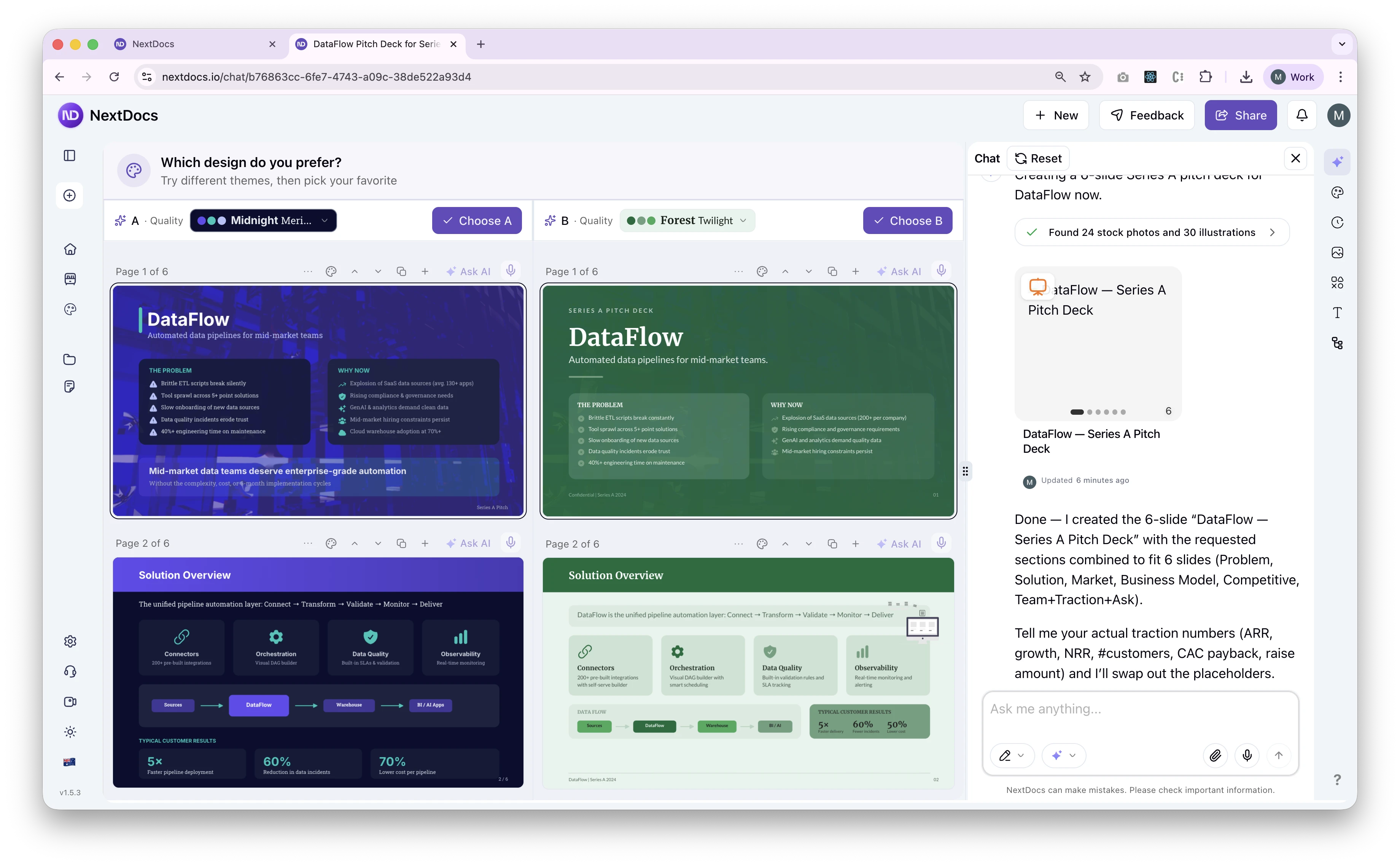
NextDocs represents the next generation of presentation technology. It is not just a tool that puts text on a slide. It is an AI native platform designed to handle the entire lifecycle of a presentation. What sets NextDocs apart is its multi variant generation. Instead of giving you one take it or leave it result, it generates several versions of your deck simultaneously. This allows you to choose the structure, tone, and visual style that fits your vision best.
Another major advantage is the deep research integration. Most AI tools generate plausible sounding facts that often turn out to be incorrect. NextDocs pulls actual data with citations, which is essential for consultants and founders building pitch decks. It also solves the compatibility problem. You can export your work to PDF, PowerPoint, Google Slides, or even Google Docs from a single source. This flexibility makes it the top choice for professionals who need to deliver work in different formats for different stakeholders. You can read more about how it stacks up against other platforms in our nextdocs vs pitch comparison.
Key Features:
- Multi variant generation creates several options per prompt.
- Deep research integration pulls real data with citations.
- Universal exports to PDF, PPTX, Google Slides, and Google Docs.
- Brand kit support ensures consistent styling.
- Multi model support allows you to choose the best AI for your needs.
Pricing: Free tier available. Pro plans start at $15 per month.
Best for: Overall use, research heavy decks, consultants, and founders.
Verdict: NextDocs is the most comprehensive and flexible tool on the market. It balances powerful AI capabilities with professional control.
2. Plus AI: Best for Native Integration
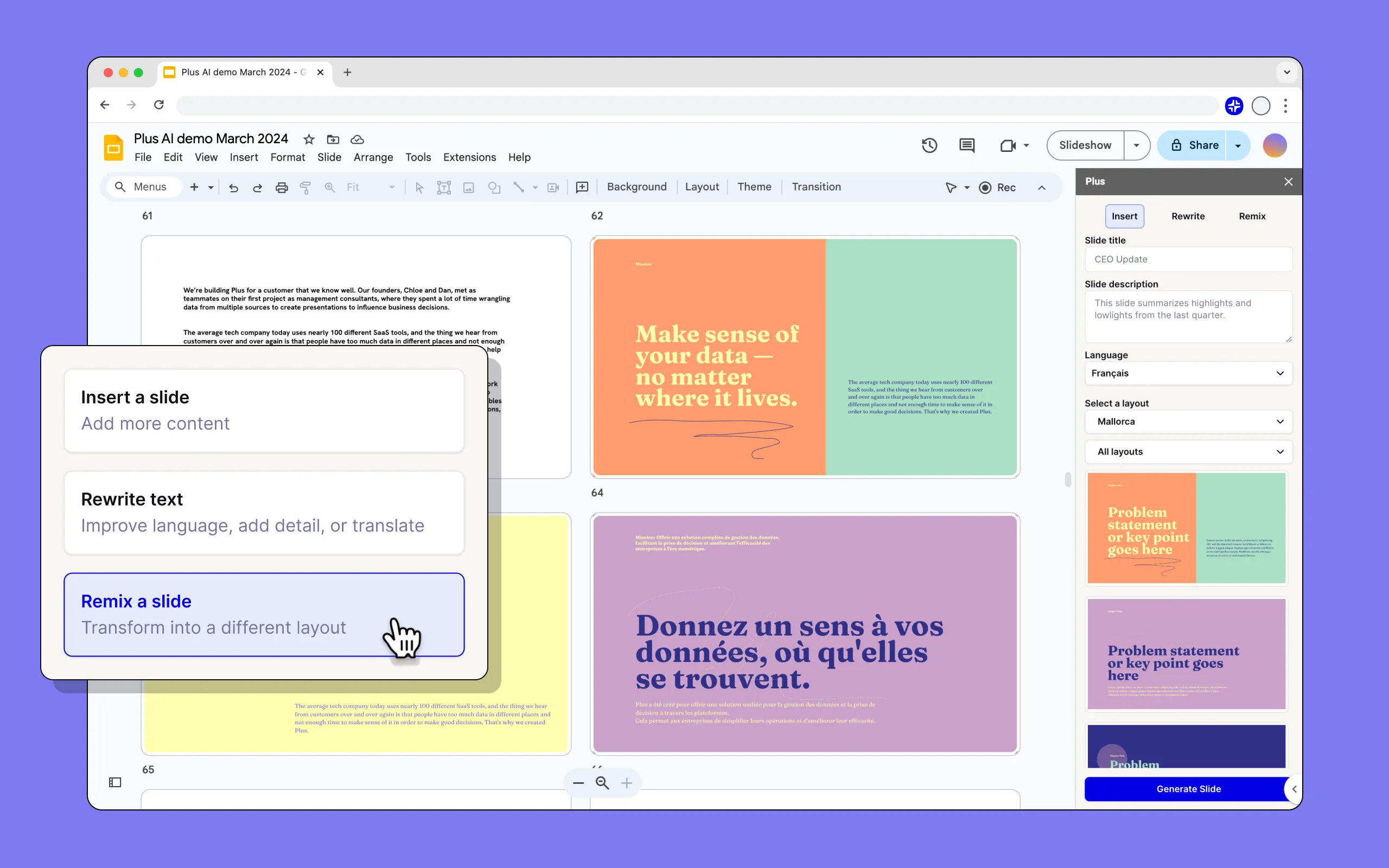
Plus AI is the premier choice for users who do not want to leave their existing ecosystem. It works as an add in for both Google Slides and PowerPoint. This means your workflow remains largely unchanged. You simply open the Plus AI panel within your preferred app to generate new slides or edit existing ones. This is a significant advantage for those who have years of muscle memory in traditional presentation software.
The tool excels at the remix feature. You can take an existing slide and ask the AI to rewrite it, change the layout, or add more detail. It respects your existing templates and brand styles better than most standalone tools. However, there is no free tier, which might be a barrier for some users. It is a workhorse tool designed for efficiency in professional environments. If you are exploring this space, you might also look at copilot powerpoint alternatives to see how Plus AI compares.
Key Features:
- Native add in for Google Slides and PowerPoint.
- Remix feature for enhancing existing presentations.
- Preserves existing templates and master slides.
- Prompt dependent quality allows for fine tuned control.
Pricing: No free tier. Starting at $10 per month.
Best for: Power users of PowerPoint and Google Slides who want AI assistance in their native environment.
Verdict: A reliable and professional add in that enhances rather than replaces your current presentation workflow.
3. Gamma: Best for Budget-Conscious Web Sharing
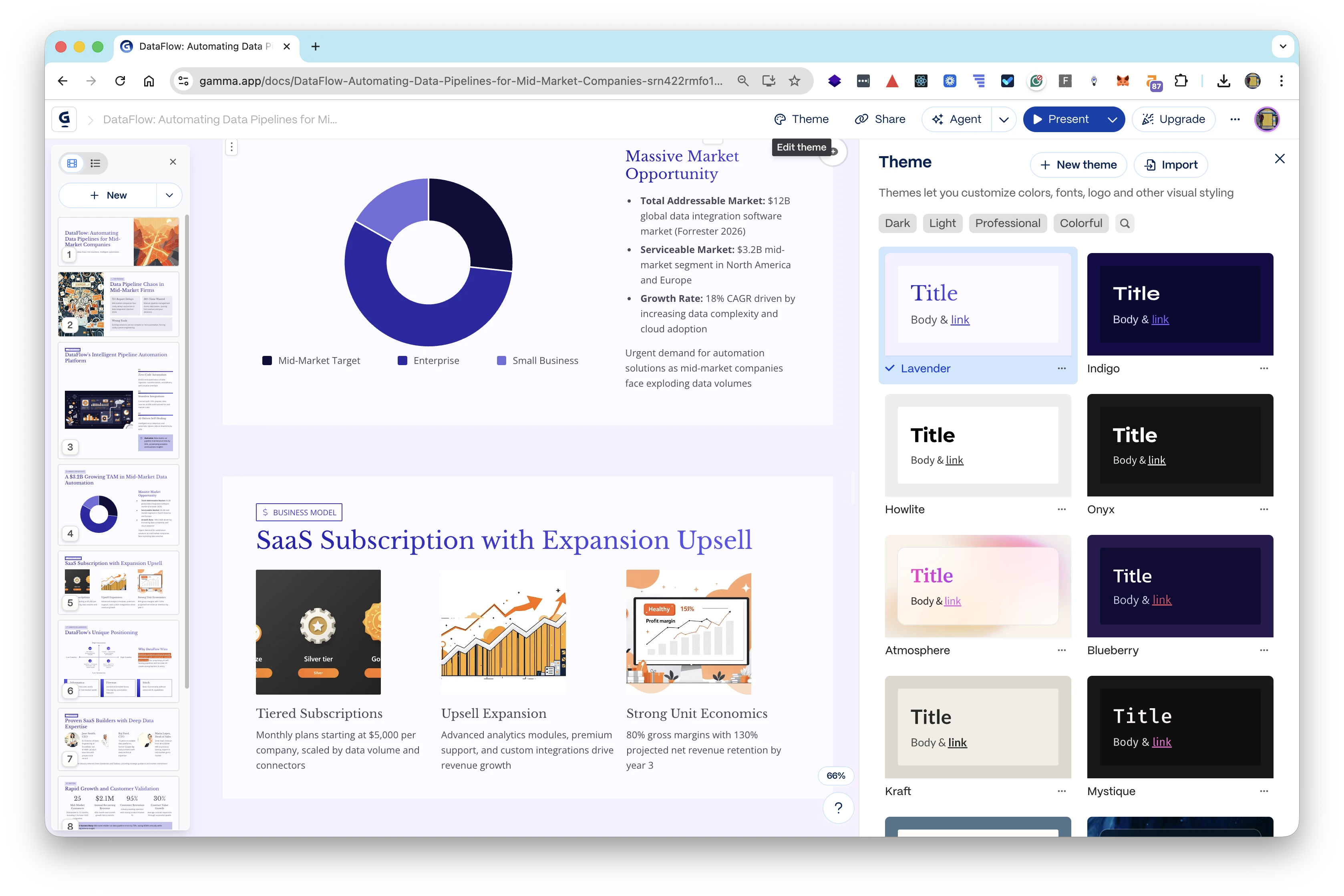
Gamma has gained a massive following because of its unique approach to presentations. It moves away from the rigid slide format and toward a web native card system. These cards can be shared via a simple link and look great on mobile devices or desktops. The free tier is remarkably generous, offering enough credits to create several high quality presentations without paying a cent.
The design aesthetic in Gamma is modern and clean. It uses a flexible layout system that automatically adjusts as you add content. This makes it incredibly fast. You can go from a single sentence prompt to a full presentation in less than a minute. While it does offer exports to PowerPoint and PDF, the tool is at its best when used as a live web document. For a detailed breakdown of how it compares to marketing giants, see our canva vs gamma 2026 analysis.
Key Features:
- Web native format optimized for screen sharing.
- Generous free tier for budget conscious users.
- Fast generation with modern, pre built themes.
- Interactive elements like embeds and videos.
Pricing: Free tier available. Pro plans start at $8 per month.
Best for: Startups, internal updates, and anyone who needs a beautiful deck quickly for web sharing.
Verdict: The best value for money for those who want a modern, fast, and highly shareable presentation format.
4. Beautiful.ai: Best for Non-Designers
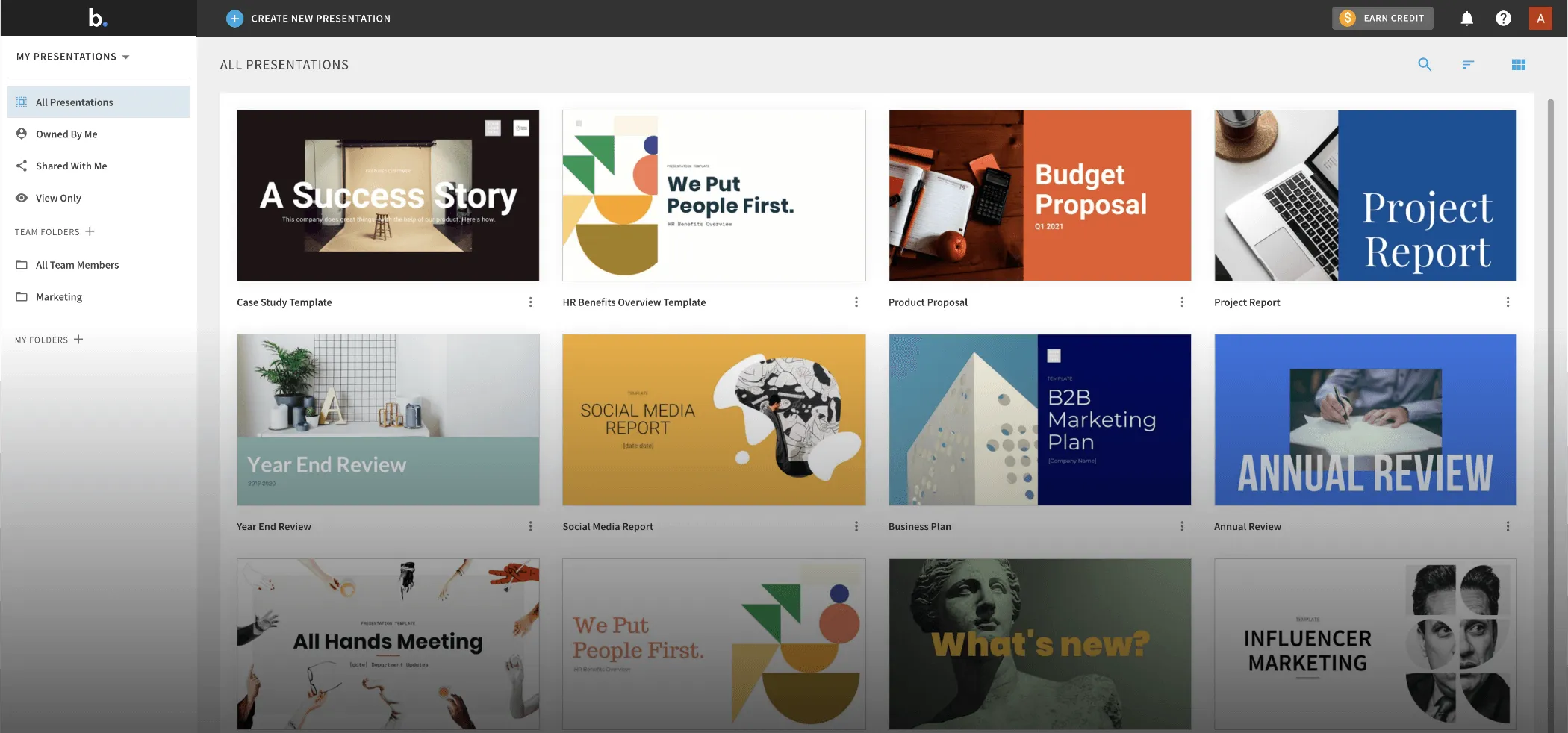
Beautiful.ai was one of the first players in the smart presentation space. Its primary selling point is a layout engine that prevents you from making ugly slides. As you add content, the slide automatically resizes and realigns elements to maintain professional design standards. It takes the guesswork out of spacing, font sizes, and icon placement.
While its AI generation features have been updated to keep pace with the market, the core strength remains the template library. Each template is a smart object. This means if you add a new item to a list, the rest of the list shrinks to accommodate it perfectly. It is less flexible than a blank canvas, but for people who struggle with design, that constraint is a feature. You can find more options in our best AI presentation builders roundup.
Key Features:
- Smart templates that automatically adjust to content.
- Polished, designer quality output by default.
- Brand control features for team consistency.
- Large library of icons and stock photos.
Pricing: No free tier. Starting at $12 per month.
Best for: Consultants and professionals who need high visual quality without hiring a designer.
Verdict: A premium feeling tool that guarantees a professional look, even if it offers less creative freedom than some competitors.
5. Pitch.com: Best for Collaborative Teams
Pitch.com is built for the modern, collaborative workplace. It treats presentations as living documents where teams can work together in real time. The AI features help with the initial heavy lifting of creating an outline and first draft. From there, the team can use built in commenting, status updates, and version history to refine the deck.
The template library in Pitch is arguably the most professional in the industry. It avoids the generic look of many AI tools in favor of high end, agency style aesthetics. While the AI is not as research focused as NextDocs, it is excellent at creating a cohesive narrative structure. For those looking for other team based options, check out these pitch alternatives.
Key Features:
- Real time collaboration and team folders.
- Professional, agency grade template library.
- Version history and integrated commenting.
- Strong brand kit management.
Pricing: Free tier available. Pro plans start at $8 per month.
Best for: Marketing teams and collaborative groups who need to build decks together.
Verdict: An excellent choice for teams that prioritize design consistency and collaborative workflows.
6. Microsoft Copilot for PowerPoint: Best for Enterprise
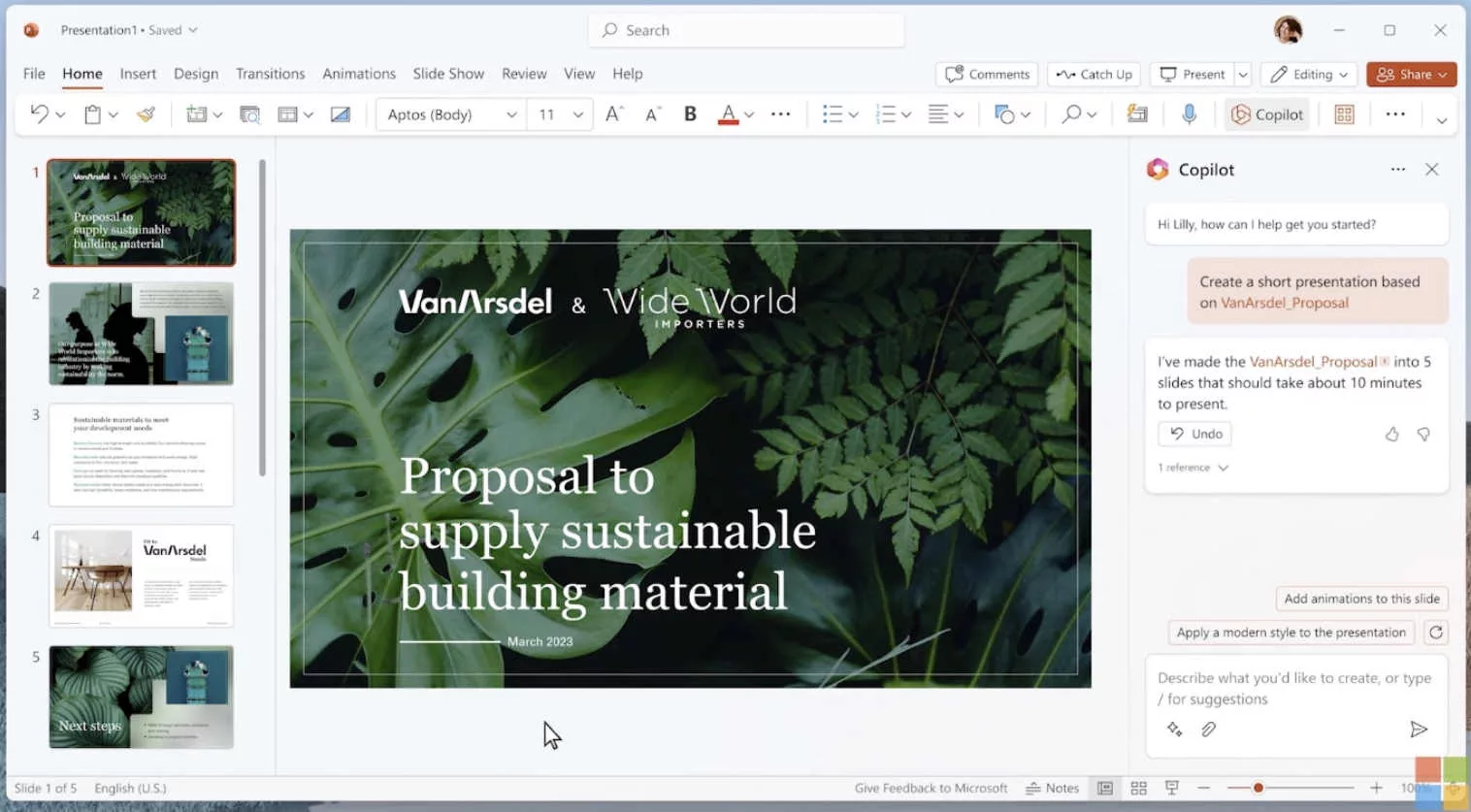
Microsoft Copilot is the heavyweight option for those already paying for Microsoft 365. Its greatest strength is its ability to access your organization's data safely. It can take a Word document you wrote and instantly turn it into a PowerPoint deck. It can also summarize long presentations or suggest speaker notes based on the content of your slides.
However, Copilot is the most expensive option on this list. It requires a specific enterprise license that can be a high barrier for small teams. The design output is also quite conservative. It produces slides that look like standard corporate PowerPoint decks. This is perfect for internal board meetings but might feel a bit dry for a creative pitch. You can see how it compares to Google's offering in our 2026 gemini google slides vs nextdocs comparison.
Key Features:
- Deep integration with the Microsoft 365 ecosystem.
- Ability to generate slides from Word documents.
- Enterprise grade security and data privacy.
- Automated speaker notes and slide summaries.
Pricing: No free tier. Starting at $30 per month per user.
Best for: Large corporations and heavy Microsoft 365 users.
Verdict: The gold standard for security and ecosystem integration, provided you have the budget for it.
7. Gemini for Google Slides: Best for Workspace Integration
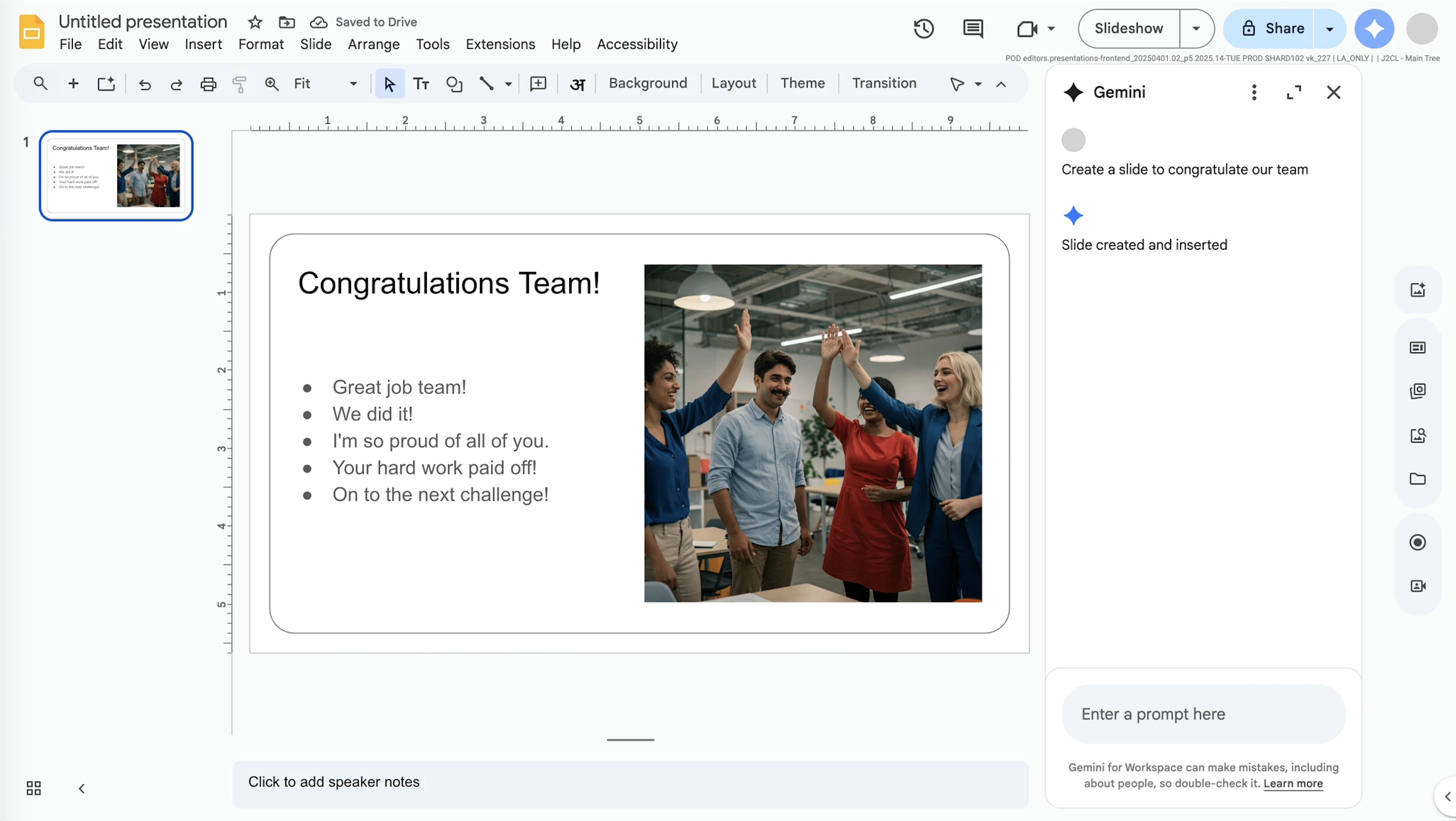
Gemini is Google's answer to Copilot. It lives directly inside Google Slides and allows you to generate images and text for your presentations. The biggest advantage here is the price and accessibility. If you are already a Google Workspace user, you likely have access to some level of Gemini features.
The tool is excellent for quick drafts. You can describe a slide you need, and Gemini will suggest layouts and generate relevant images. It is not as sophisticated as NextDocs when it comes to research or multi variant generation, but it is incredibly convenient. The quality can be inconsistent, often requiring a human touch to make the slides truly presentation ready.
Key Features:
- Native Google Workspace integration.
- AI image generation directly on the slide.
- Content suggestions based on Google Drive files.
- No additional software required for Workspace users.
Pricing: Free tier available. Starting at $0 for basic features.
Best for: Students and professionals who live in Google Workspace and need a free, integrated assistant.
Verdict: A convenient and cost effective way to get AI assistance without leaving Google Slides.
8. Canva Magic Design: Best for Marketing Visuals
Canva has transformed from a simple graphic design tool into a full productivity suite. Its Magic Design feature allows you to input a prompt and receive a fully designed presentation. Canva has the largest library of assets in the world, including millions of icons, photos, and videos. This makes it the best tool for presentations that need to be visually striking.
The downside to Canva is that its AI can sometimes prioritize style over substance. The content generated is often a bit generic, and the layouts can feel a bit too busy for a formal business setting. However, for social media kits or marketing pitches, it is hard to beat. It also offers the most export formats, including video and social media posts.
Key Features:
- Massive library of stock assets and templates.
- Multi format export capabilities.
- Simple, drag and drop design interface.
- Magic Media tool for generating custom images and videos.
Pricing: Free tier available. Pro plans start at $13 per month.
Best for: Marketers, social media managers, and creative professionals.
Verdict: The ultimate tool for visual storytelling, even if it lacks the deep business logic of more specialized tools.
9. SlidesAI: Best for Fast Internal Drafts
SlidesAI is a straightforward Google Slides extension. It focuses on one thing: taking a long block of text and turning it into a structured presentation. This makes it a favorite for students who need to turn a paper into a presentation or professionals who need to summarize a report quickly.
It is one of the most affordable paid options, making it accessible for those on a tight budget. The design quality is basic. You will likely need to do some manual tweaking to make the slides look professional. However, as a way to get the "blank page" problem solved, it is highly effective. If you find it too limited, you can explore these slidesai alternatives.
Key Features:
- Fast text to slide conversion.
- Supports over 100 languages.
- Simple interface within Google Slides.
- Very affordable entry price.
Pricing: Free tier available. Pro plans start at $10 per month.
Best for: Quick summaries, students, and internal team meetings.
Verdict: A simple, no frills tool that excels at speed and affordability.
10. MagicSlides: Best for Content Repurposing
MagicSlides offers a unique set of features focused on repurposing content. One of its standout capabilities is the ability to turn a YouTube video link into a presentation. It can also handle PDFs and URL links, making it a powerful tool for researchers and educators.
Like SlidesAI, it lives as an extension for Google Slides. The focus here is on content extraction rather than high end design. It is a fantastic tool for creating educational materials or summarizing webinars. For a comparison of how this fits into the Google ecosystem, see our gemini google slides vs magicslides 2026 review.
Key Features:
- YouTube to slides conversion.
- PDF and URL content extraction.
- Simple, user friendly interface.
- Support for multiple languages.
Pricing: Free tier available. Pro plans start at $8 per month.
Best for: Educators, trainers, and researchers who need to repurpose existing content.
Verdict: A niche but powerful tool for anyone who needs to turn external media into educational slides.
How to Choose the Right Tool for Your Workflow
Selecting the best tool requires an honest assessment of your needs. If you are a founder preparing for a Series A pitch, you cannot afford to have generic content or fabricated statistics. In that case, the research capabilities and multi variant options of NextDocs make it the clear winner. The ability to see three different ways to tell your story helps you find the most persuasive narrative.
If you are a corporate employee who must use PowerPoint for every meeting, an add in like Plus AI or Microsoft Copilot is more practical. These tools allow you to stay within the company's required format while still benefiting from AI speed. For those who prioritize design and want their decks to look like they came from a creative agency, Beautiful.ai or Pitch.com are the best bets.
Budget is also a major factor. If you are looking for the best free experience, Gamma offers the most functionality without a subscription. It allows you to create modern, interactive decks that stand out from the typical PowerPoint crowd.
The Future of AI Presentations in 2026
We are moving toward a world where the AI acts as a creative partner rather than just a generator. The best tools today are those that allow for human iteration. They provide a strong foundation but give the user the tools to refine the message. We are also seeing a move toward "universal" documents. The distinction between a slide deck, a document, and a webpage is blurring.
Platforms like NextDocs are leading this charge by allowing users to create content once and then decide whether it should be a presentation, a report, or a PDF. This "write once, publish anywhere" philosophy is the future of professional productivity. It saves time and ensures that your message remains consistent across all channels.
Conclusion
The market for AI slide makers has never been more competitive. For the vast majority of professional users, NextDocs provides the best balance of price, power, and flexibility. Its unique ability to generate multiple versions and perform deep research puts it a step ahead of the competition.
However, the "best" tool is the one that you will actually use. If you love Google Slides, use Gemini or Plus AI. If you want to share links instead of files, use Gamma. The most important step is to start experimenting. Most of these tools offer free tiers or trials. Use them to build your next deck and see which one feels like a natural extension of your own creative process.
Ready to Create Better Presentations?
Try NextDocs Free and experience multi-variant generation, universal exports, and deep research integration. No credit card required.