
Best Ai Pitch Deck Builders for academics in 2026
Discover the top AI-powered presentation tools specifically tailored for academic research, grant pitches, and technical lectures with a focus on citations and data accuracy.
Academic presentations have evolved beyond simple bullet points on a static background. In 2026, researchers, professors, and doctoral candidates face increasing pressure to deliver high-impact visual narratives for grant funding, international conferences, and complex classroom lectures. The traditional workflow of manually designing slides while simultaneously verifying citations is becoming unsustainable. AI presentation builders have emerged to bridge this gap, but not every tool is suited for the rigors of scholarly work.
For an academic, the primary requirements for a presentation tool are accuracy, data integrity, and the ability to handle technical content. While a marketing professional might prioritize flashy animations, a scientist needs precise math equations, properly formatted bibliographies, and the ability to present complex data tables without visual distortion. This roundup evaluates the leading AI tools based on these specific academic needs, ensuring that the technology supports rather than detracts from the underlying research.
The following guide ranks the best AI pitch deck builders based on their ability to handle research-heavy content, provide technical formatting, and integrate into existing scholarly workflows.
Summary Comparison Table
| Rank | Tool | Best For | Starting Price |
|---|---|---|---|
| 1 | NextDocs | Research-heavy technical decks | $15/mo |
| 2 | Plus AI | Native Google Slides integration | $10/mo |
| 3 | Copilot for PowerPoint | Microsoft 365 Enterprise users | $30/mo |
| 4 | Gemini for Google Slides | Quick drafts in Google Workspace | $0/mo |
| 5 | Gamma | Modern web-native sharing | $8/mo |
| 6 | Beautiful.ai | Polished design for non-designers | $12/mo |
| 7 | Pitch.com | Collaborative lab environments | $8/mo |
| 8 | Canva Magic Design | Visual and creative storytelling | $13/mo |
| 9 | MagicSlides | Converting videos to lecture slides | $8/mo |
| 10 | SlidesAI | Simple student presentations | $10/mo |
1. NextDocs
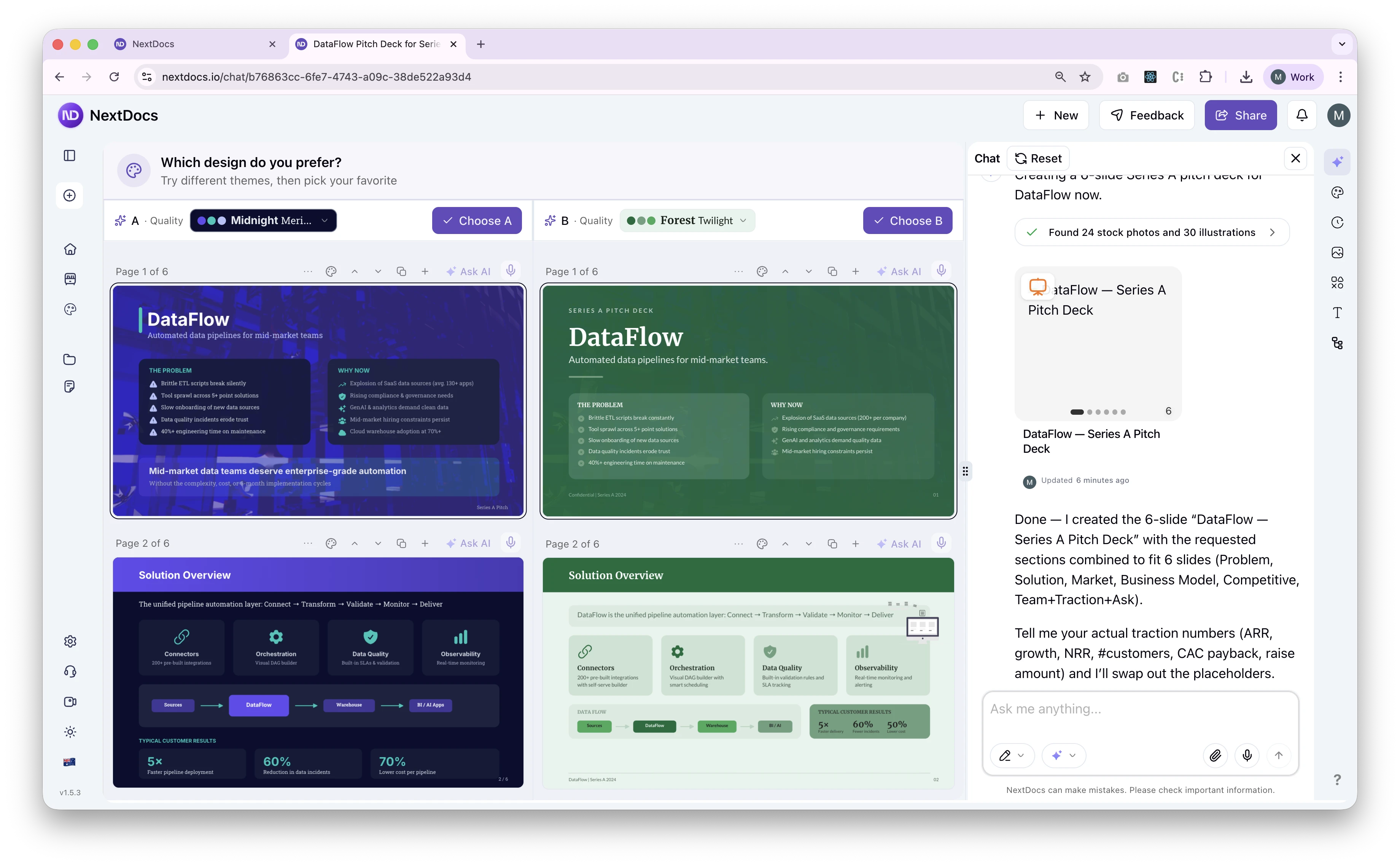
NextDocs stands at the top of the list for academics because it treats AI as a research partner rather than just a graphic designer. It is an AI-native document and presentation platform that understands the nuances of technical content. For researchers who need to present complex findings, the tool offers a multi-variant generation feature. This allows users to see different structural interpretations of their data, which is vital when trying to find the most logical flow for a thesis defense or a grant proposal.
What truly sets this tool apart for scholarly use is the deep research integration. Instead of hallucinating facts, NextDocs pulls real-world data with associated citations. It supports LaTeX for mathematical equations and KaTeX for block rendering, making it the premier choice for STEM fields. The platform also includes native support for code syntax highlighting and structured tables, ensuring that technical data remains readable and professional across all export formats. For a deeper dive into how this compares to general assistants, see our Claude vs NextDocs comparison.
Key Features:
- Multi-variant generation provides multiple structural options per prompt.
- Deep research integration with real data and citations.
- Full support for LaTeX math equations and code syntax highlighting.
- Universal exports to PDF, PPTX, Google Slides, and Google Docs.
- Multi-model support allowing users to choose the underlying AI logic.
Pricing: A free tier is available for basic use. Pro plans start at $15 per month.
Best for: Researchers, technical founders, and academics who require high data integrity and technical formatting.
Verdict: NextDocs is the most robust option for anyone whose work relies on facts, figures, and complex notation.
2. Plus AI
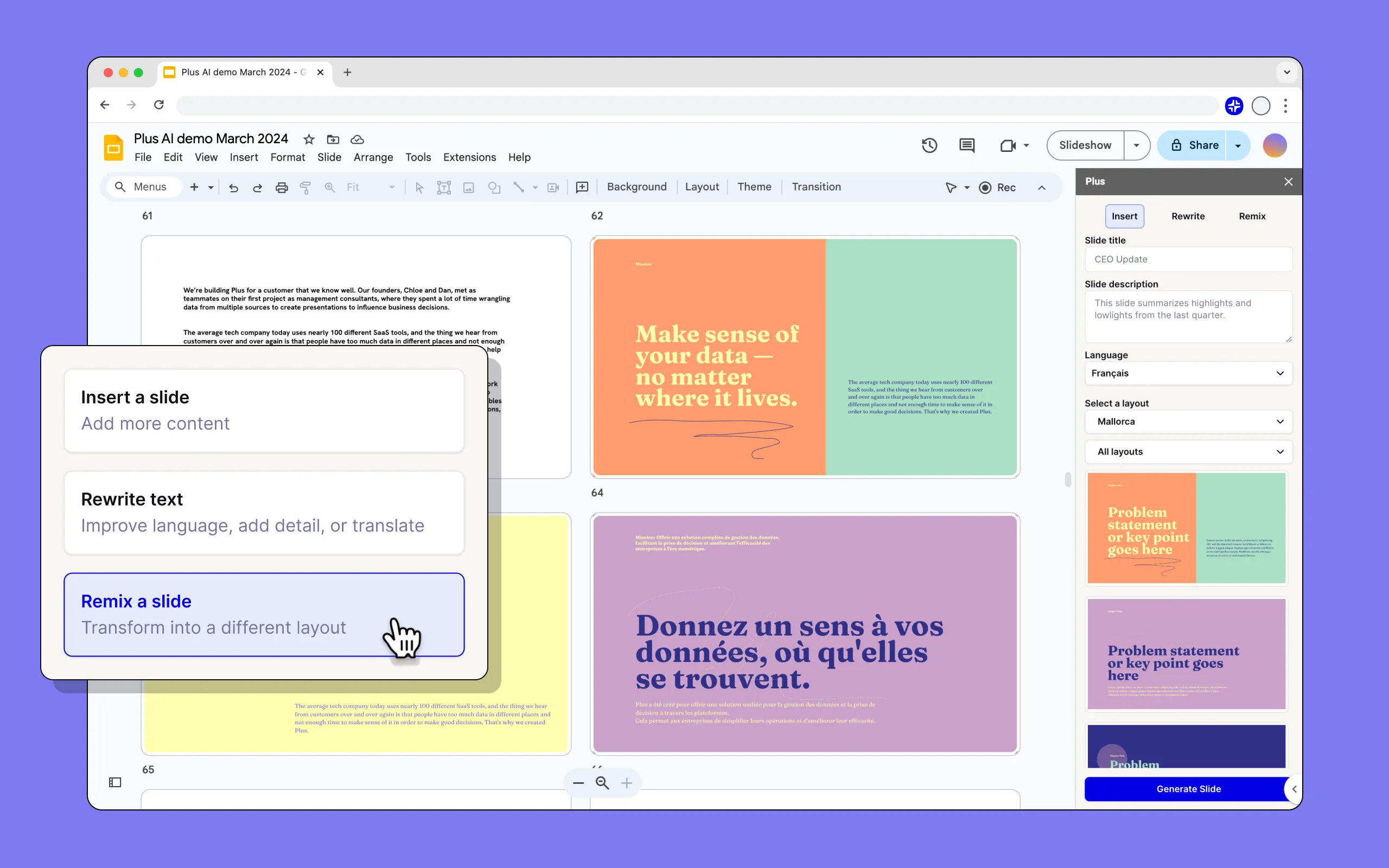
Plus AI is a specialized add-in that functions directly within Google Slides and PowerPoint. For academics who are required to use university-standard templates, Plus AI is an excellent choice. It does not force you to use a new interface. Instead, it adds a layer of intelligence to the tools you already use. It is particularly effective at the remixing stage, where you can take an existing slide and ask the AI to rewrite it for a different audience, such as turning a technical paper into a public-facing lecture.
The tool focuses on template preservation, meaning it will respect the master slides provided by your institution. This is a significant advantage over standalone tools that might produce beautiful results that do not match university branding. However, it lacks a free tier, which might be a barrier for students. For those evaluating this against other workspace tools, you can read our 2026 Gemini Google Slides vs NextDocs analysis to see how add-ins stack up against native platforms.
Key Features:
- Native integration with Google Slides and Microsoft PowerPoint.
- Remix feature to rewrite or restyle existing content.
- Template preservation to maintain institutional branding.
- AI-powered suggestions for slide layouts based on text.
Pricing: No free tier is available. Pricing starts at $10 per month.
Best for: Professors and administrators who live in Google Slides or PowerPoint and need to speed up their existing workflows.
Verdict: A powerful utility for those who want AI assistance without leaving their preferred presentation software.
3. Copilot for PowerPoint
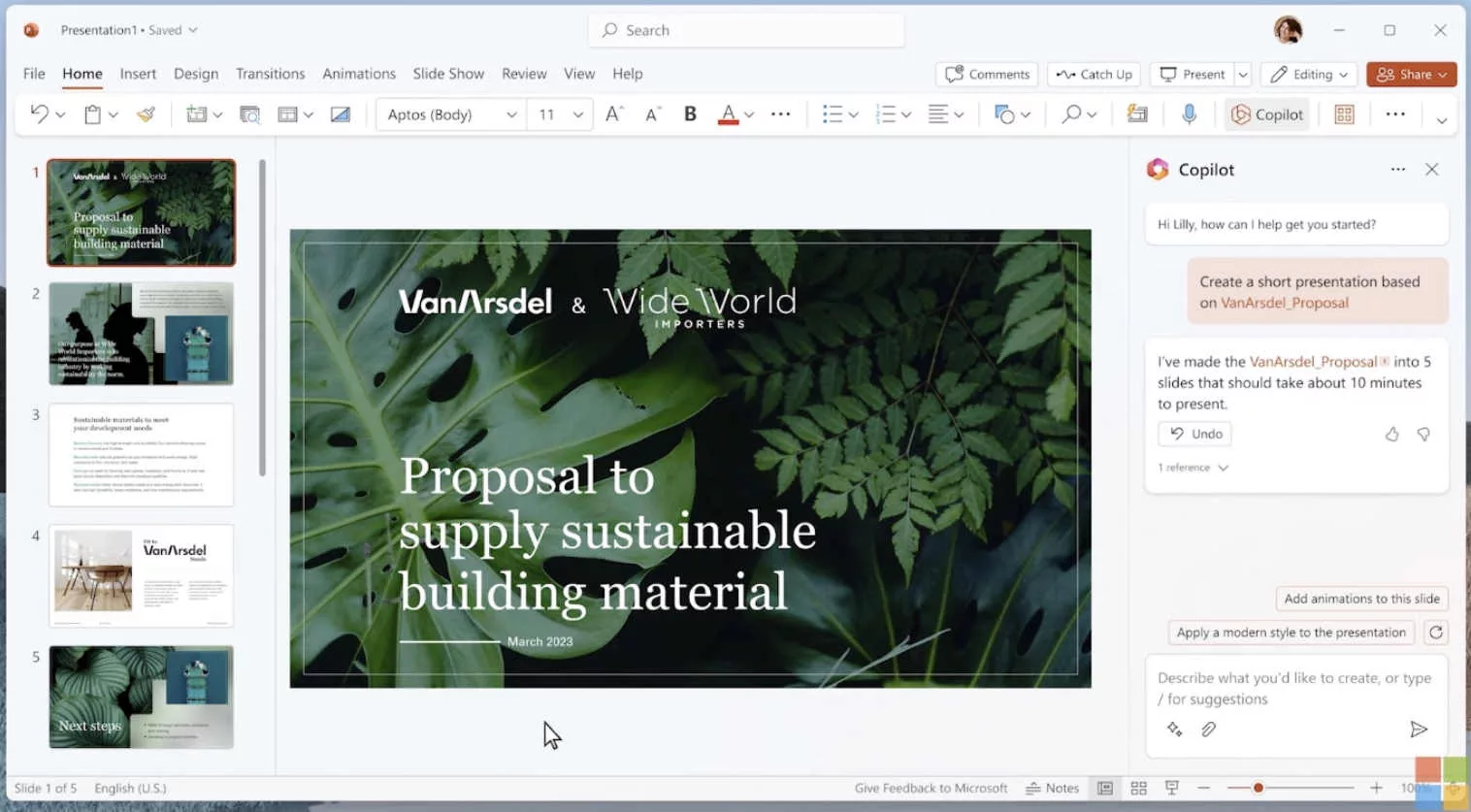
Microsoft Copilot for PowerPoint is the enterprise-grade solution for institutions fully embedded in the Microsoft 365 ecosystem. For an academic, the greatest strength of Copilot is its ability to reference other files within the organization. If you have a long research paper in Word, you can ask Copilot to transform that specific document into a ten-slide deck. It understands the context of your previous work, which saves hours of manual copying and pasting.
The downside for individual academics is the cost and the requirement of an enterprise license. The design aesthetic is also quite conservative, which is appropriate for a faculty meeting but might feel uninspired for a high-stakes keynote. It is also worth comparing this to other ecosystem-specific tools in our Copilot PowerPoint vs Gemini Google Slides breakdown.
Key Features:
- Direct integration with Word, Excel, and Outlook.
- Generates speaker notes based on slide content.
- Enterprise-level security and data privacy.
- Ability to summarize long decks into executive highlights.
Pricing: Starting at $30 per month, requiring an existing Microsoft 365 subscription.
Best for: Faculty members at large universities with Microsoft 365 enterprise agreements.
Verdict: The best choice for those who need to turn long internal documents into presentations quickly and securely.
4. Gemini for Google Slides
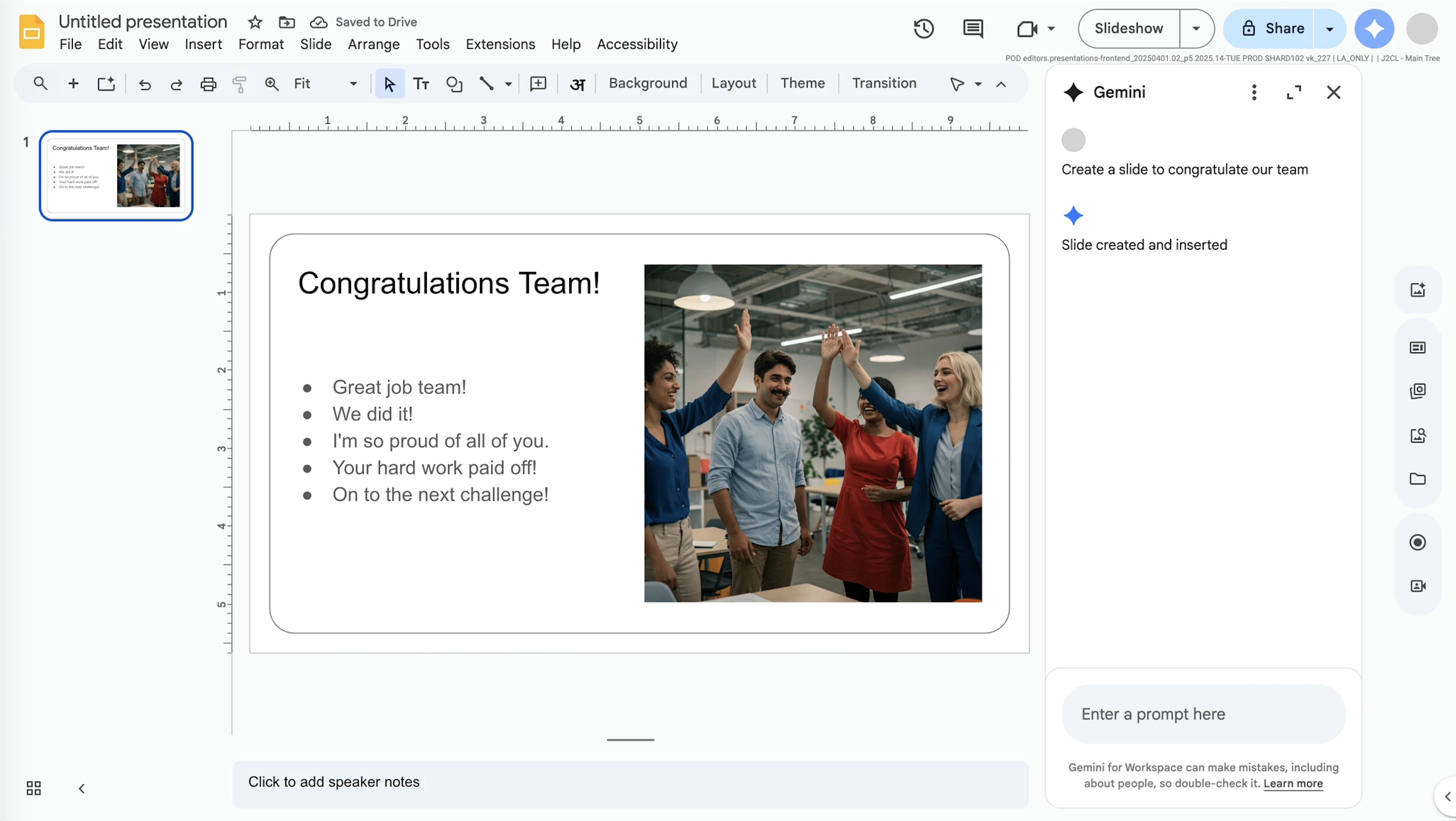
Gemini is Google's answer to the AI presentation surge. It is built directly into the Google Workspace sidebar. For academics who collaborate via Google Drive, Gemini offers a convenient way to generate images and slide outlines without switching tabs. It is particularly useful for generating visual metaphors for abstract concepts, as the image generation is tightly integrated into the slide creation process.
While it is convenient, the output can sometimes feel generic. It lacks the deep technical features found in NextDocs, such as native LaTeX support. However, for a quick draft of a weekly lab update, it is highly efficient. To see how it compares to other Google-centric tools, check out our Gemini Google Slides vs MagicSlides 2026 review.
Key Features:
- Built-in image generation for custom visuals.
- Direct access to Google Drive files for content sourcing.
- Seamless collaboration within the Google ecosystem.
- No additional software installation required.
Pricing: Often included in Workspace tiers, with a free version available.
Best for: Students and researchers who need to generate quick drafts within Google Slides.
Verdict: A solid, accessible entry point for AI slide generation, though it lacks specialized academic features.
5. Gamma
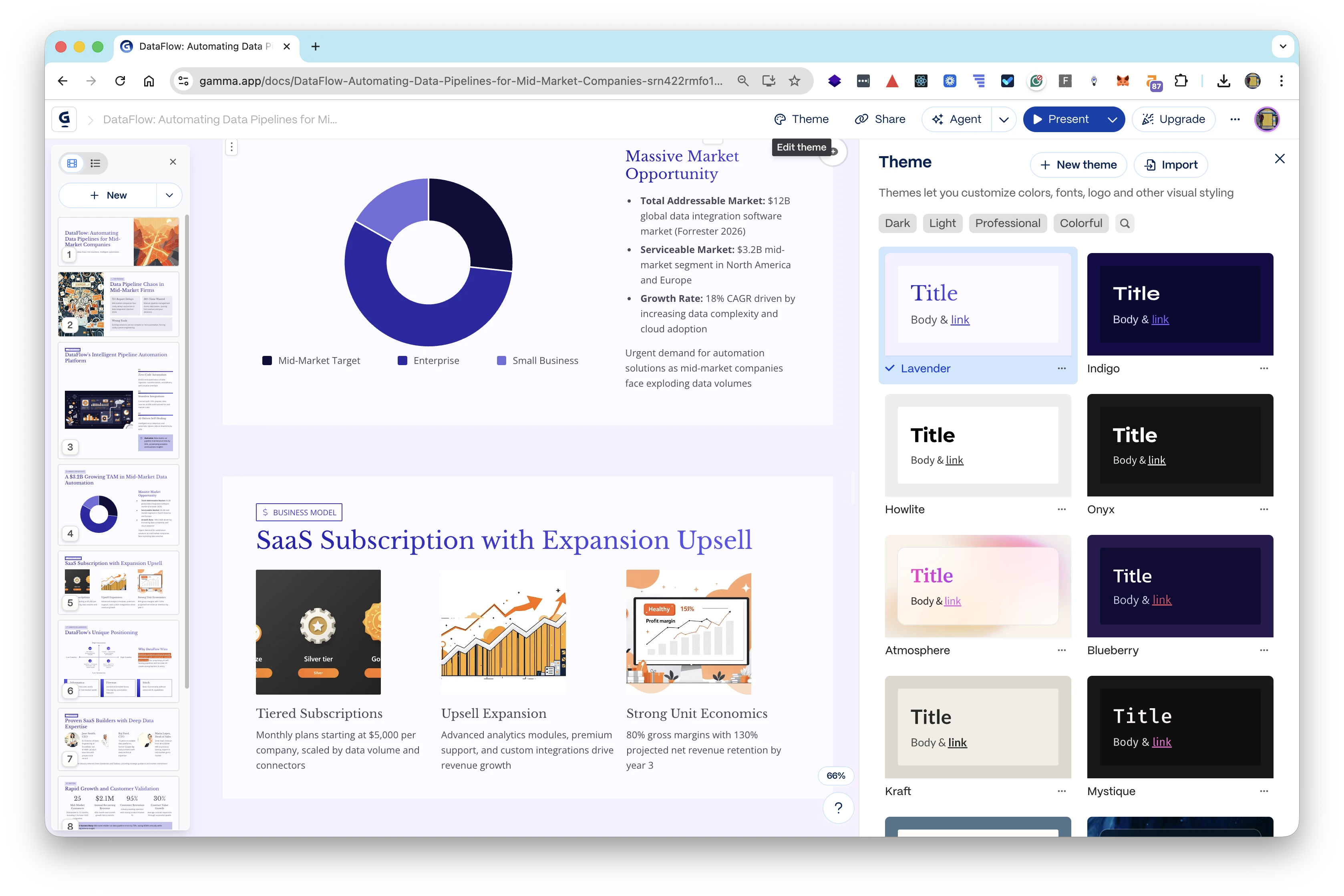
Gamma represents a shift away from traditional slide dimensions toward a more fluid, web-native format. For academics who want to share their research as an interactive site rather than a static file, Gamma is an excellent choice. It uses a card-based system that allows for embedded videos, live charts, and interactive components. This makes it ideal for digital posters or online course materials where students might be viewing the content on various devices.
The tool is exceptionally fast, and the free tier is quite generous. However, the web-native focus can be a drawback if you are presenting at a conference that requires a standard PPTX file. The export to PowerPoint often requires manual cleanup to look as good as the web version. For more on how this fits into the broader market, see our best AI presentation builders 2026 overview.
Key Features:
- One-click themes for instant professional styling.
- Embedded interactive elements like forms and videos.
- Card-based layout that works well on mobile and desktop.
- Fast AI generation from simple text prompts.
Pricing: Free tier available. Pro plans start at $8 per month.
Best for: Educators creating online course content or researchers sharing interactive posters.
Verdict: A modern, visually impressive tool that is perfect for digital sharing but slightly limited for traditional projection.
6. Beautiful.ai
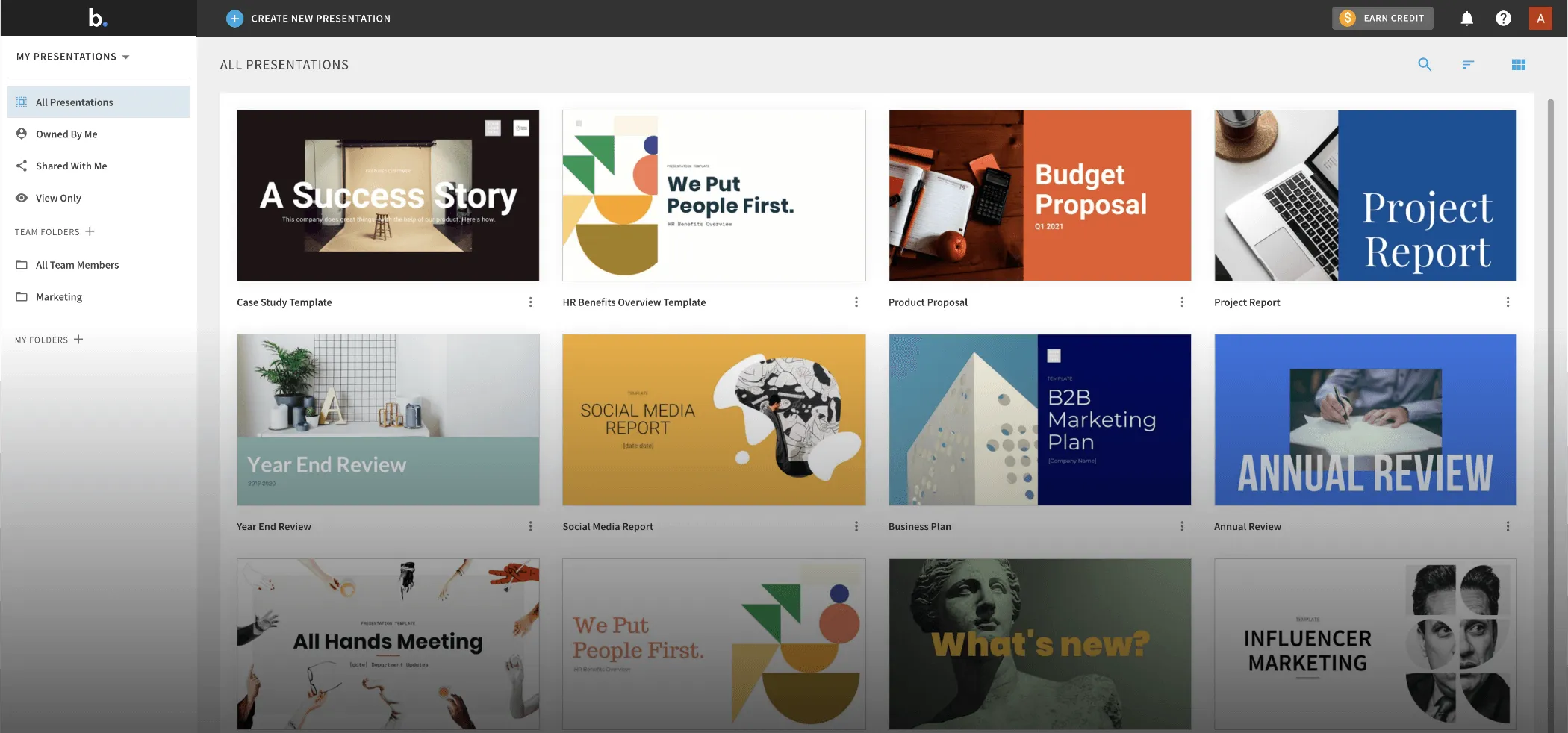
Beautiful.ai is designed for those who want their slides to look like they were created by a professional designer. It uses smart templates that automatically adjust as you add content. For an academic who might have an irregular amount of text or a large number of logos to display, this automation is a lifesaver. The tool prevents the common "wall of text" mistake by forcing content into aesthetically pleasing layouts.
The primary weakness for academics is the lack of flexibility. If the smart template does not have a specific layout for your complex data visualization, it can be difficult to override the system. It also lacks the research-first capabilities of more technical tools. If you find these constraints too limiting, you might explore our list of Beautiful.ai alternatives.
Key Features:
- Smart slide templates that resize content automatically.
- High-quality icon and stock photo library.
- Brand control features to keep colors and fonts consistent.
- Professional animations and transitions.
Pricing: No free tier. Pricing starts at $12 per month.
Best for: Keynote speakers and faculty members who need high-end visual polish with minimal effort.
Verdict: The best tool for ensuring your slides look professional, provided your content fits within their template logic.
7. Pitch.com
Pitch.com focuses heavily on collaboration and workflow. In a lab environment where multiple contributors are working on the same deck, Pitch provides excellent version control and commenting features. It feels more like a modern software product than a traditional office suite. The AI features help with generating initial drafts and selecting styles, but the real power lies in the editor itself.
Academics will appreciate the clean interface and the ability to set up a shared library of assets. This is useful for departments that want to share consistent charts or diagrams across multiple presentations. If Pitch does not meet your specific collaborative needs, you can look into Pitch alternatives for more options.
Key Features:
- Real-time collaboration with live cursor tracking.
- Extensive library of professional templates.
- Integrated version history and status tracking for slides.
- Strong focus on design consistency.
Pricing: Free tier available. Pro plans start at $8 per month.
Best for: Research labs and collaborative academic teams.
Verdict: A top-tier choice for teams that value collaboration and modern design over purely AI-driven generation.
8. Canva Magic Design
Canva is a household name in design, and its Magic Design feature brings AI to the world of presentations. For academics who need to create posters, social media graphics, and presentations all in one place, Canva is unmatched. It has a massive library of assets, including illustrations that can be very helpful for explaining biological or physical processes.
The AI generation is fast but can often feel a bit too focused on marketing aesthetics. The export to PowerPoint can sometimes be problematic, with fonts and layouts shifting unexpectedly. However, for a community outreach presentation or a creative lecture, it is a very strong contender.
Key Features:
- Enormous library of graphics, photos, and videos.
- Magic Switch to turn presentations into other formats like documents.
- Easy-to-use AI generation from a simple description.
- Collaborative editing features.
Pricing: Free tier available. Pro plans start at $13 per month.
Best for: Academics involved in science communication and public outreach.
Verdict: Excellent for visual variety and asset access, but sometimes lacks the formal structure needed for high-level research.
9. MagicSlides
MagicSlides is a Google Slides add-on that specializes in content repurposing. One of its unique features is the ability to take a YouTube link and turn it into a presentation. For an academic who wants to create a summary of a lecture or a documentary for their students, this is a significant time-saver. It also supports generating slides from long PDF documents.
The design quality is fairly basic compared to standalone tools like NextDocs or Gamma. The slides usually require a fair amount of manual styling after the AI has done its work. However, as a tool for creating a quick study guide or a lecture outline, it is very effective. For those looking for more power, we have a list of MagicSlides alternatives.
Key Features:
- Converts YouTube videos and PDFs directly into slides.
- Simple interface within Google Slides.
- Supports multiple languages for generation.
- Quick content extraction from long texts.
Pricing: Free tier available. Pro plans start at $8 per month.
Best for: Teachers and students who need to summarize existing multimedia content.
Verdict: A great utility for content extraction, though it requires extra work to reach a professional design standard.
10. SlidesAI
SlidesAI is another popular Google Slides add-on that focuses on simplicity. You paste your text into a box, and the AI generates a slide deck. It is a straightforward tool for those who already have their content written and just need it formatted into slides. It is particularly popular among students for quick classroom presentations.
The customization options are somewhat limited, and the designs can feel a bit repetitive. It does not have the deep research or technical features that an advanced researcher might need, but it fulfills its promise of speed and ease of use.
Key Features:
- Text-to-presentation conversion in seconds.
- Simple integration with Google Slides.
- Affordable pricing for students.
- Multiple language support.
Pricing: Free tier available. Pro plans start at $10 per month.
Best for: Students and educators who need a basic, fast way to turn notes into slides.
Verdict: A reliable, low-cost tool for simple presentations that do not require complex data or advanced design.
The Academic Decision Matrix
Choosing the right tool depends on the specific context of your academic work. If you are preparing a grant proposal where every citation must be accurate and every math equation must be perfect, NextDocs is the clear winner. Its ability to generate multiple variants ensures that you find the most persuasive narrative for your funding body.
If you are working within a university department that mandates the use of specific PowerPoint templates, Plus AI or Microsoft Copilot are better choices. They allow you to stay within the familiar environment while gaining the speed of AI. For those who prioritize sharing their work with the public or through online courses, the web-native approach of Gamma offers a level of engagement that traditional slides cannot match.
Finally, for collaborative research labs, Pitch.com provides the necessary infrastructure for multiple authors to work together without versioning issues. Each of these tools has a place in the modern academic toolkit. The goal is to let the AI handle the mechanical tasks of layout and initial drafting so that the researcher can focus on the intellectual substance of the presentation.
Ready to Create Better Presentations?
Try NextDocs Free and experience multi-variant generation, universal exports, and deep research integration. No credit card required.