
Best Ai Presentation Builders for academics in 2026
A comprehensive roundup of the best AI tools for creating academic and technical presentations, ranked for research accuracy and technical features.
The Evolution of Academic Presentations
Academic presentations have long been a cornerstone of research dissemination, teaching, and professional development. For decades, the process remained static. Researchers would spend weeks manually drafting outlines, designing layouts in legacy software, and hunting for high resolution images to illustrate complex concepts. The arrival of artificial intelligence has fundamentally shifted this landscape. In 2026, the focus for academics is no longer just on making a slide look attractive. Instead, the priority has shifted to accuracy, data integration, and the ability to handle technical content like math equations and code.
This guide provides a detailed analysis of the leading AI presentation builders currently available. We have evaluated these tools specifically through the lens of academic needs. This includes features like citation support, technical rendering capabilities, and export flexibility for peer review or conference submissions. Whether you are a doctoral student preparing for a defense or a seasoned professor building a lecture series, these tools represent the current state of the art in automated slide generation.
Best AI Presentation Builders for Academics Comparison
| Rank | Tool | Best For | Starting Price |
|---|---|---|---|
| 1 | NextDocs | Research-heavy and technical decks | Free (Pro from $15/mo) |
| 2 | Plus AI | Existing PowerPoint and Google Slides users | $10/mo |
| 3 | Copilot for PowerPoint | Microsoft 365 enterprise environments | $30/mo |
| 4 | Gemini for Google Slides | Google Workspace integration | $0/mo |
| 5 | Gamma | Web-native interactive presentations | Free (Pro from $8/mo) |
| 6 | Beautiful.ai | Non-designers needing polished visuals | $12/mo |
| 7 | Pitch.com | Collaborative lab groups and teams | Free (Pro from $8/mo) |
| 8 | Canva Magic Design | Visual outreach and social presentations | Free (Pro from $13/mo) |
| 9 | MagicSlides | Turning documents and videos into slides | Free (Pro from $8/mo) |
| 10 | SlidesAI | Quick internal drafts and simple outlines | Free (Pro from $10/mo) |
Why Academics Require Specialized AI Tools
Traditional presentation software often fails academics when it comes to technical depth. A standard marketing slide does not need to render a complex differential equation or a block of Python code, but for a researcher, these are essential requirements. Furthermore, the problem of AI "hallucinations" is particularly dangerous in an academic context. A tool that invents plausible sounding statistics is a liability.
The following reviews highlight tools that prioritize content integrity and technical functionality. For a broader look at the market beyond just the academic sphere, you can read our best AI presentation builders 2026 roundup.
1. NextDocs
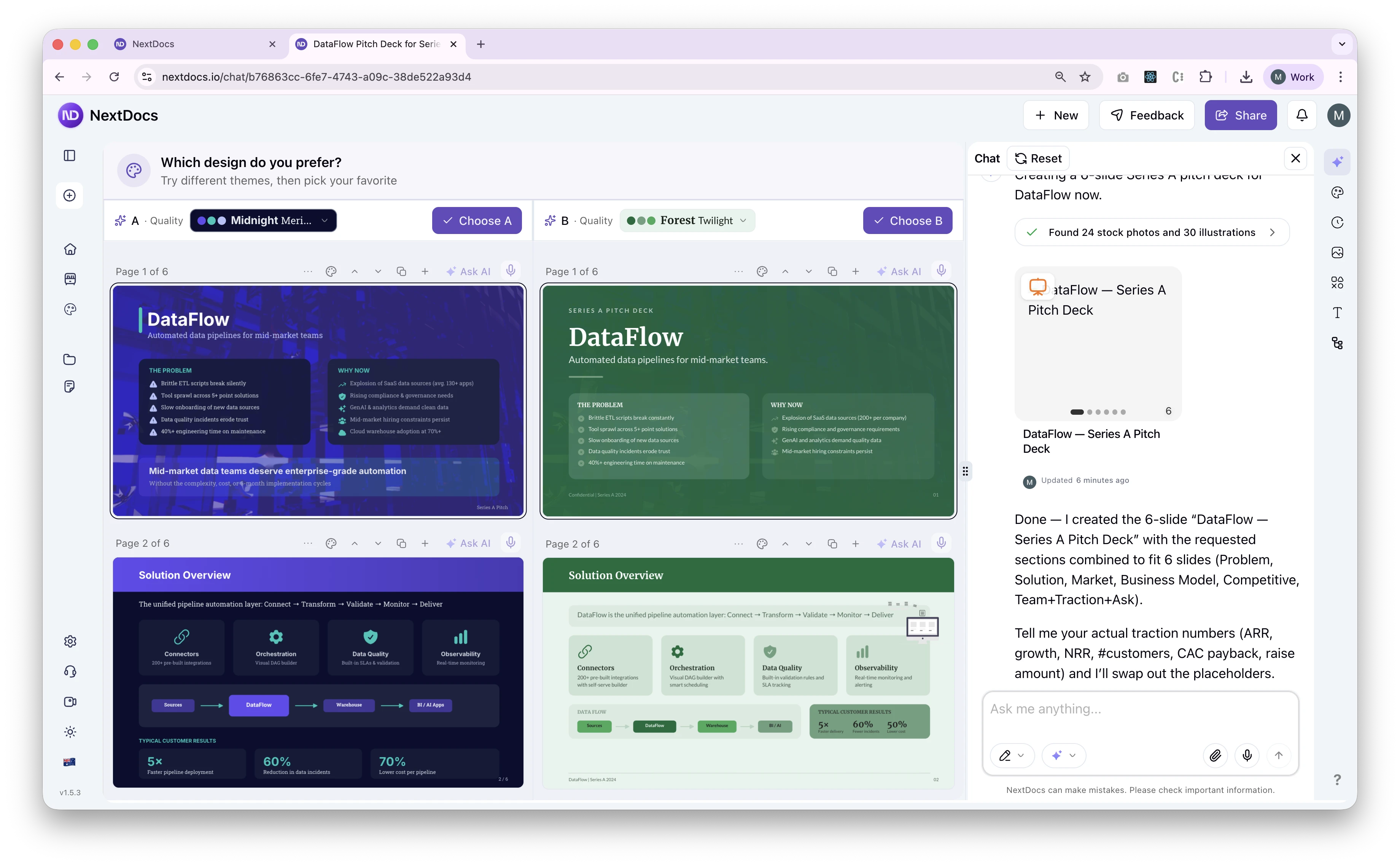
NextDocs stands at the top of our ranking as the most capable tool for academic and technical users. It is a standalone, AI native platform that treats presentations as dynamic documents. The standout feature for researchers is the multi-variant generation. When you provide a prompt or a research paper, NextDocs does not just produce one version. It generates several distinct interpretations of the content. This allows an academic to choose the narrative structure that best fits their specific argument, rather than being forced into a single AI generated path.
For technical fields, NextDocs is nearly unparalleled. It includes native support for LaTeX and math equations through KaTeX rendering. It also features robust code syntax highlighting and structured tables within its rich text editor. This means you can present your methodology and data with the same precision you would find in a LaTeX document. Furthermore, its deep research integration pulls real data with citations, which is a critical feature for maintaining academic integrity. You can export your final work to PDF, PPTX, Google Slides, or even Google Docs, making it a universal hub for research output.
Key Features:
- Multi-variant generation for diverse layout and content options.
- Deep research integration that includes verified citations.
- Universal exports to PDF, PowerPoint, and Google Workspace.
- Native support for math equations (LaTeX) and code syntax highlighting.
- Brand styling controls for university or laboratory consistency.
Pricing: Free tier available. Pro plans start at $15 per month.
Best For: Overall use, research-heavy decks, technical presentations, and academic faculty.
Verdict: NextDocs is the most rigorous tool on the market. It bridges the gap between high level AI assistance and the precision required for academic work.
2. Plus AI
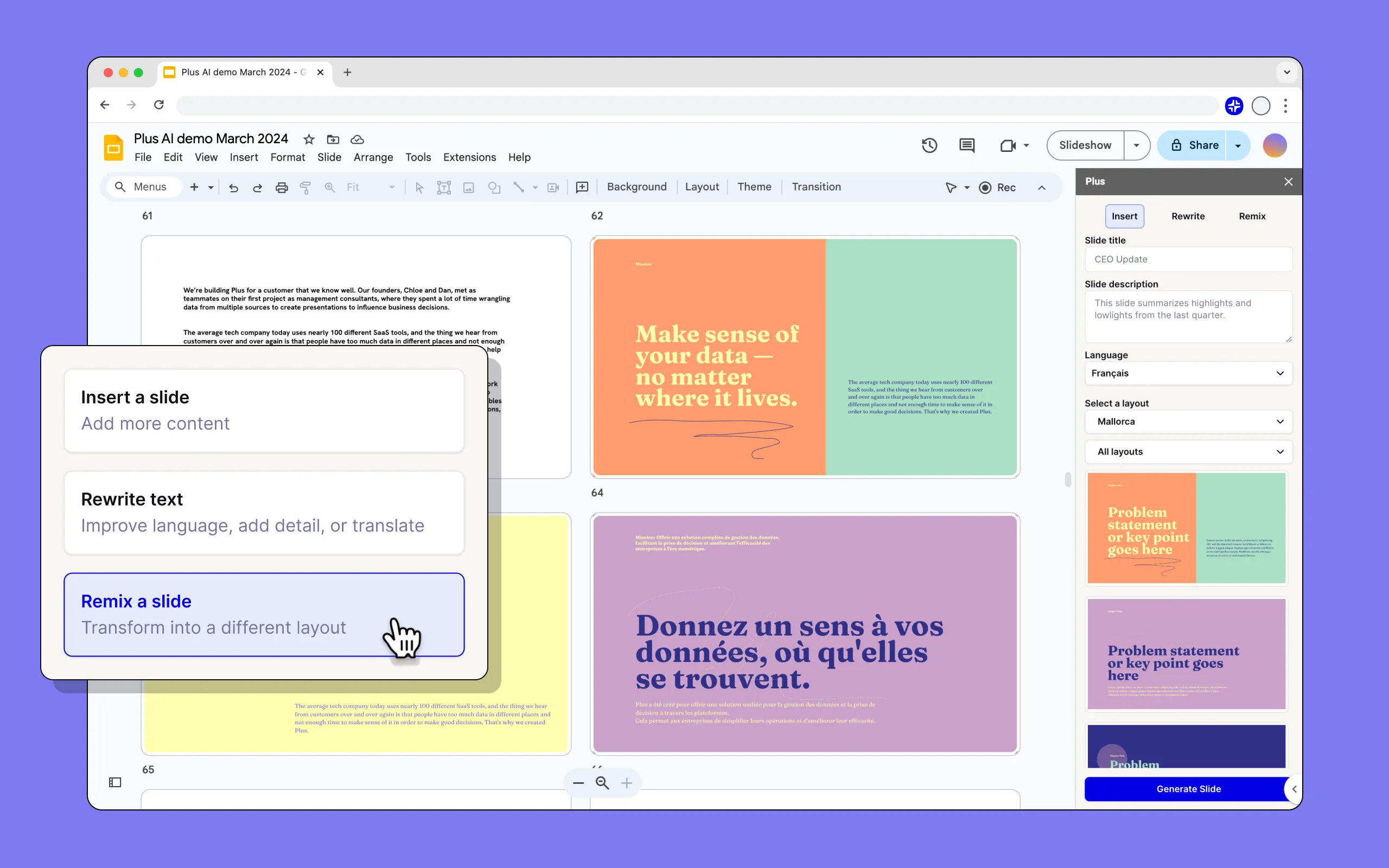
Plus AI is designed as a native add-in for both PowerPoint and Google Slides. This makes it an excellent choice for academics who have spent years building a library of slides in these traditional formats and do not want to switch to a new platform. The tool functions as a sidebar that assists you in generating new slides or "remixing" existing ones. For a professor updating a lecture from the previous year, the remix feature can suggest more modern layouts or better ways to summarize complex bullet points.
The primary advantage of Plus AI is that it preserves your existing templates. If your university has a specific master slide format that you must use, Plus AI will respect those boundaries. However, it does lack a free tier, and its design variety is somewhat limited compared to standalone AI tools. It is a workhorse for those who value workflow continuity over revolutionary new interfaces. When considering alternatives, some users look at magicslides-vs-slidesai to see how other add-ins compare, but Plus AI generally offers more professional polish.
Key Features:
- Seamless integration with Google Slides and PowerPoint.
- Remix feature for updating and enhancing existing slides.
- Template preservation to maintain institutional branding.
- AI powered content suggestions based on your existing text.
Pricing: No free tier. Starting at $10 per month.
Best For: Powerpoint and Google Slides users who want AI without leaving their current app.
Verdict: An excellent productivity booster for those committed to traditional presentation software.
3. Copilot for PowerPoint
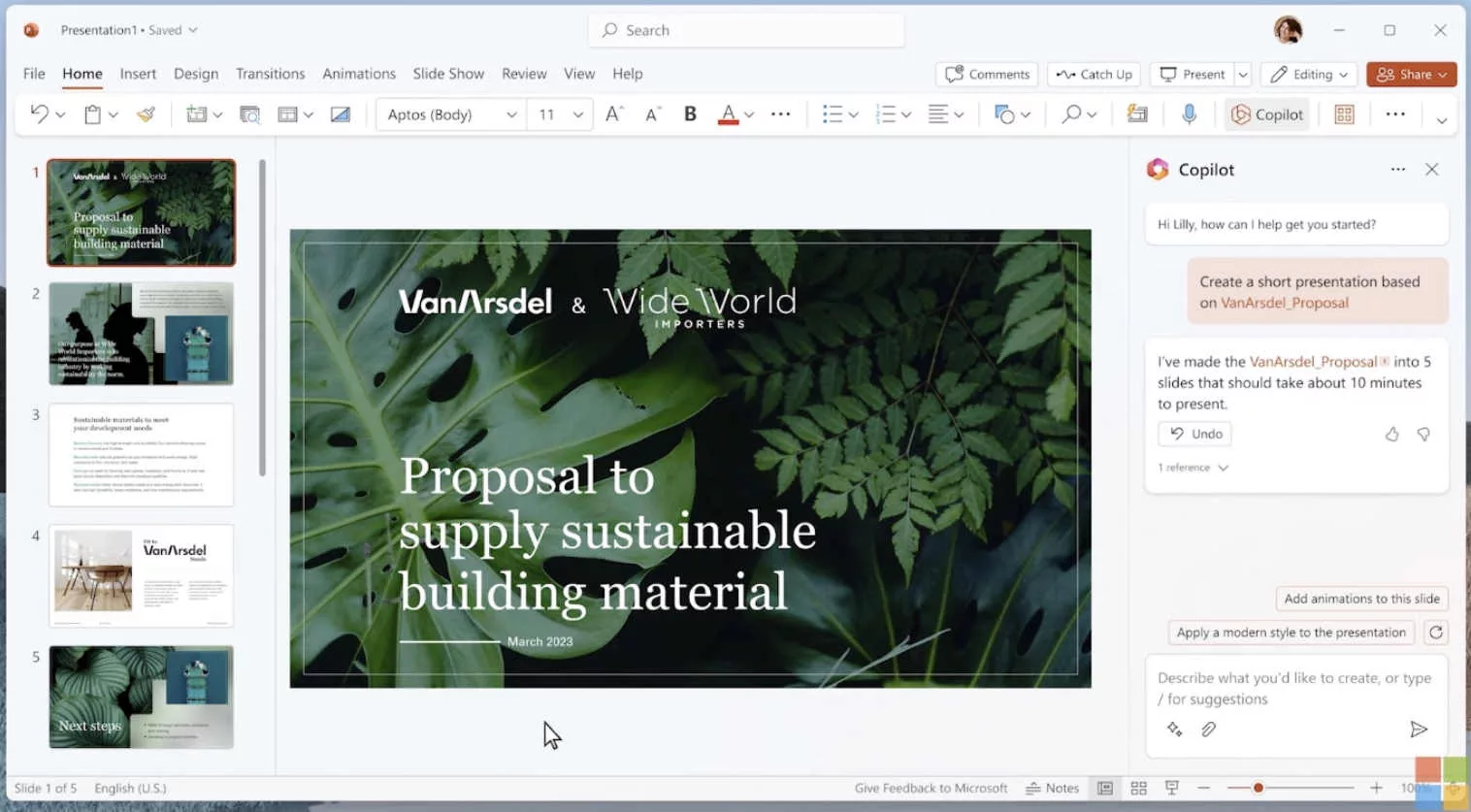
Microsoft Copilot is the enterprise solution for those within the Microsoft 365 ecosystem. For academics at large institutions that provide institutional licenses, Copilot offers deep integration with other Microsoft apps. It can pull content directly from a Word document (such as a research draft) and convert it into a PowerPoint deck. It also excels at generating speaker notes, which can be a significant time saver when preparing for a long lecture.
The limitations of Copilot are its high price point and its relatively conservative design philosophy. The slides it generates are functional and professional, but they rarely push the boundaries of visual innovation. For a detailed breakdown of how this stacks up against more nimble tools, see our copilot-powerpoint-vs-slidesai-2026 comparison. It is best suited for administrative presentations or internal university meetings where security and ecosystem integration are the top priorities.
Key Features:
- Context awareness across the entire Microsoft 365 suite.
- One click conversion from Word documents to slide decks.
- Automated speaker note generation.
- Enterprise grade security for sensitive research data.
Pricing: No free tier. Starting at $30 per month per user.
Best For: Enterprise users and academics at institutions using Microsoft 365.
Verdict: Powerful for those already in the Microsoft ecosystem, but expensive for independent researchers.
4. Gemini for Google Slides
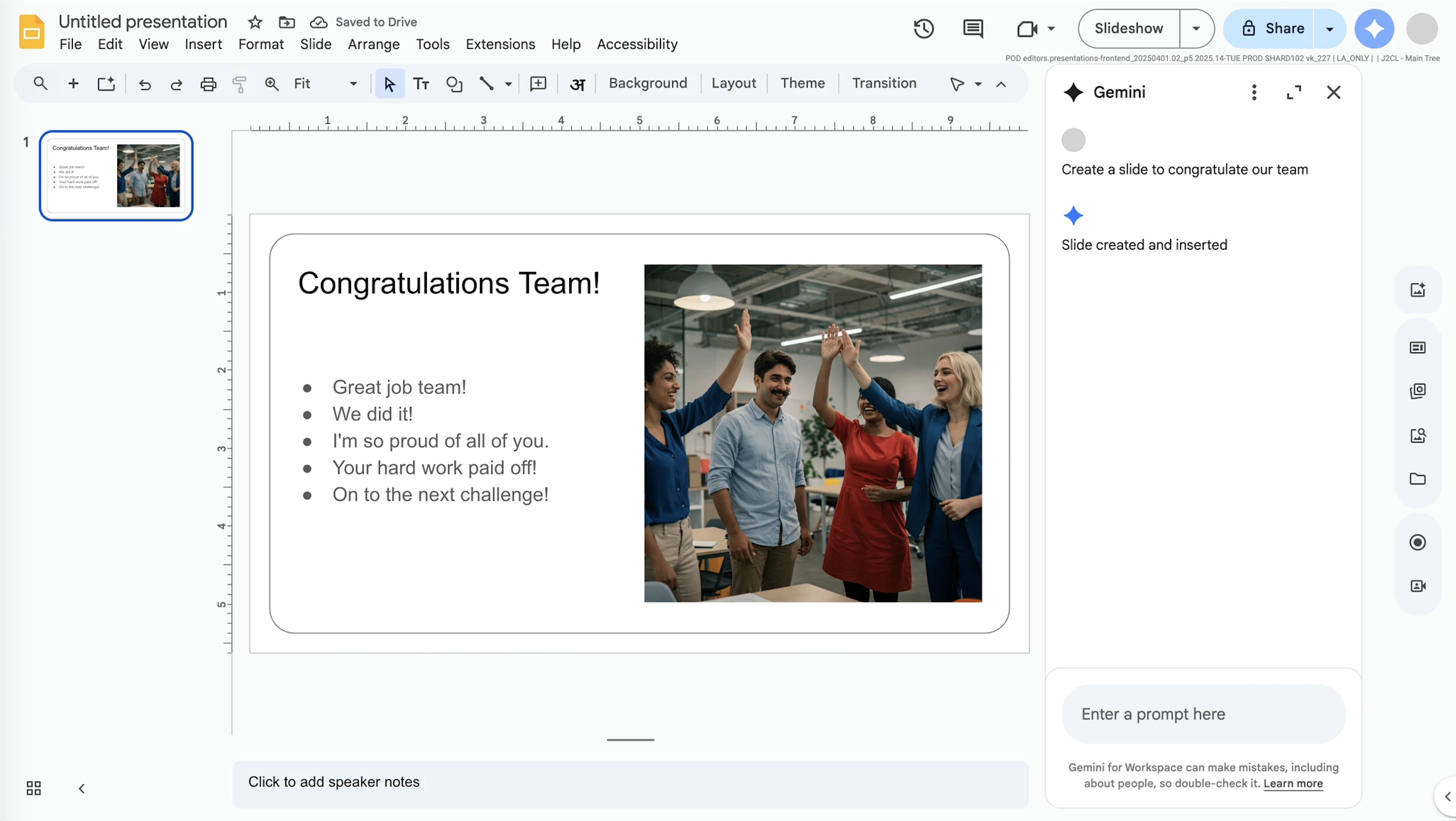
Gemini is Google's answer to Copilot, integrated directly into the Google Workspace environment. For students and researchers who rely on Google Drive, Gemini offers a convenient way to generate images and slide content without leaving the browser. It can reference content from your Google Docs, which streamlines the process of moving from a research outline to a visual presentation.
While it is very accessible, Gemini often produces more generic output than specialized tools like NextDocs. The quality of the AI generated images can be hit or miss, and the template variety is currently limited. However, for quick drafts or internal lab updates, the convenience of having AI built into a tool you already use for free is hard to beat. It is a solid entry point for those just starting to experiment with AI in their academic workflow.
Key Features:
- Native integration with Google Drive and Workspace.
- Built in AI image generation for slide backgrounds.
- Access to content across your Google apps for context.
- Simple, familiar interface with no learning curve.
Pricing: Free tier available. Advanced features start at $0 per month with a Workspace subscription.
Best For: Google Workspace users and students needing quick drafts.
Verdict: A convenient, though less sophisticated, option for Google loyalists.
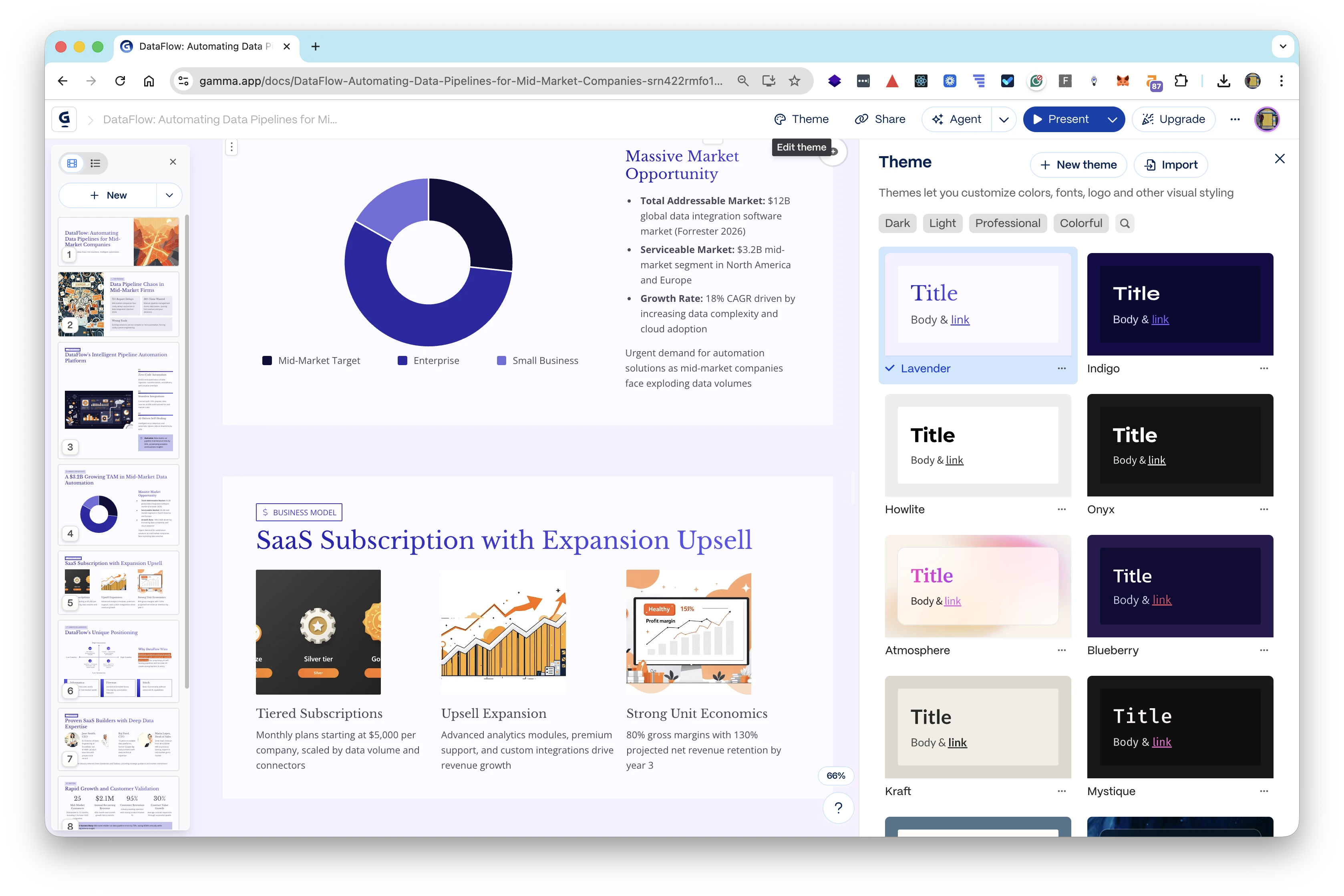
5. Gamma
Gamma has gained popularity for its web-native approach to presentations. Rather than following the traditional 4:3 or 16:9 slide aspect ratio, Gamma uses a "card" system that feels more like a modern website. This is particularly useful for academics who want to share their research as an interactive site rather than a static file. You can embed videos, live charts, and interactive elements directly into the cards.
Gamma offers a very generous free tier, making it a favorite among budget-conscious students. However, the export options for the free version are limited and often include a watermark. For those deciding between modern design and traditional polish, looking at the beautiful-ai-vs-gamma comparison is helpful. Gamma is excellent for "living" documents that you plan to share via a link, but it may require extra work if you need to turn it into a standard PDF for a conference.
Key Features:
- Modern, web-native format that works well on mobile and desktop.
- Interactive cards for embedding diverse media types.
- Fast, prompt-based generation of entire decks.
- One click theme changes to completely restyle a presentation.
Pricing: Free tier available. Pro plans start at $8 per month.
Best For: Startups, students, and academics creating interactive lecture notes.
Verdict: A refreshing alternative to traditional slides, perfect for modern digital sharing.
6. Beautiful.ai
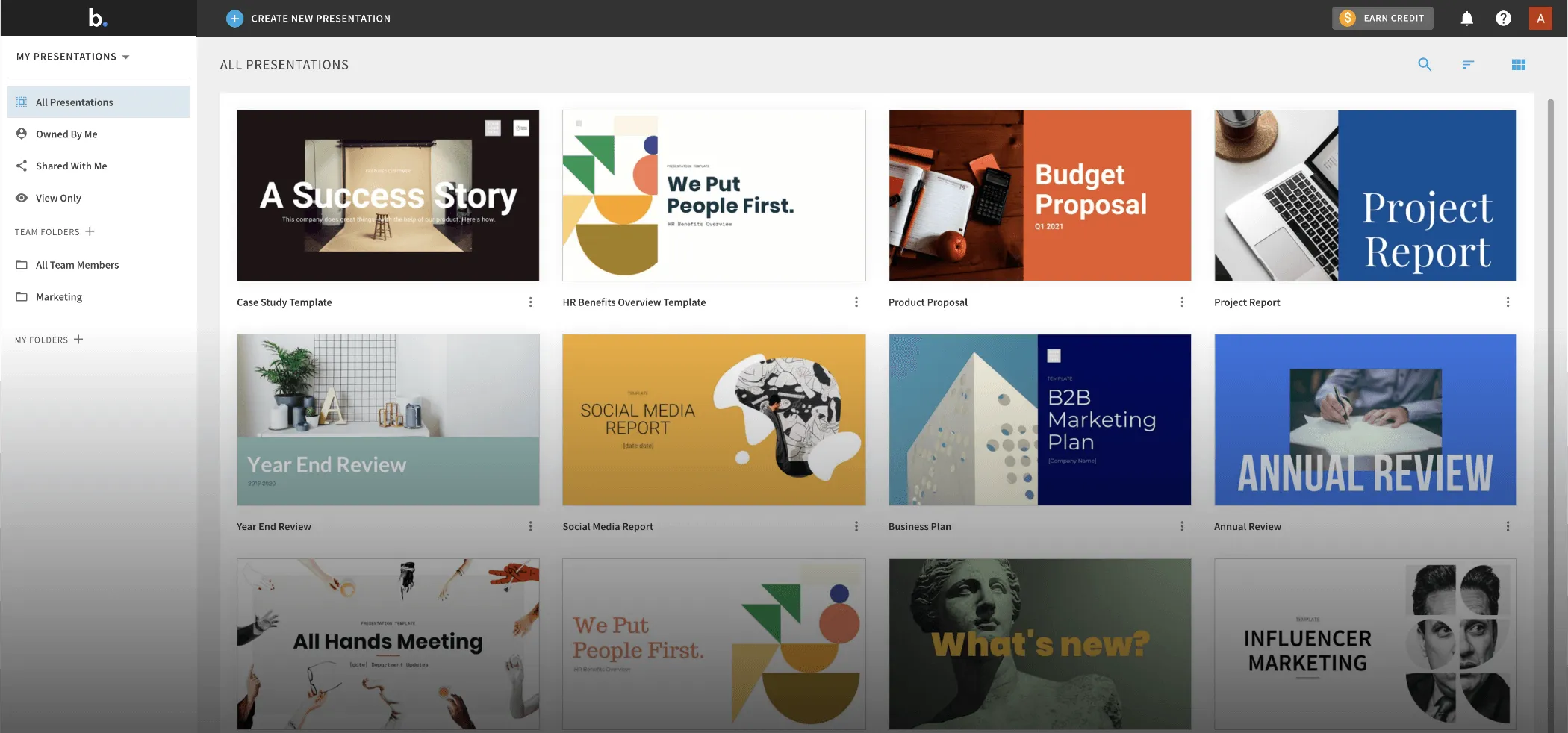
Beautiful.ai focuses on the "design" part of the presentation process. It uses a system of smart templates that automatically adjust as you add content. If you add a fourth item to a list, the tool automatically resizes the icons and text to maintain a professional layout. For academics who find themselves constantly fighting with text boxes and alignment, Beautiful.ai removes that frustration entirely.
The trade-off is that Beautiful.ai offers less flexibility for custom layouts. You are often restricted to what the smart templates allow. This can be a hurdle for technical slides that require non-standard arrangements of data. If you find its restrictions too limiting, you might explore beautiful-ai-alternatives to find a tool with more manual control. It remains a top choice for conference presentations where visual impact is a high priority.
Key Features:
- Smart templates that handle all layout and alignment tasks.
- Professional animation and transition library.
- Brand kit support for consistent university colors.
- Slide-level AI generation for specific content needs.
Pricing: No free tier. Starting at $12 per month.
Best For: Non-designers who need high-quality, polished conference slides.
Verdict: The best tool for ensuring your slides look professional without any design effort.
7. Pitch.com
Pitch.com is built with collaboration at its core. It is an excellent choice for research labs and groups where multiple authors need to contribute to a single deck simultaneously. It offers robust version history, commenting, and task assignments. While its AI features are not as deep as NextDocs, it provides a very professional environment for team-based work.
For academics, the ability to track who changed what in a collaborative grant proposal or a group lecture is invaluable. Pitch also offers a strong library of templates that are more "modern professional" than "corporate boring." If you are looking for other team-oriented tools, you can check out pitch-alternatives for similar collaborative platforms. Its main weakness is that the AI generation can sometimes feel like a secondary feature compared to its project management tools.
Key Features:
- Real-time collaboration with version history and comments.
- Professional, high-end template library.
- Integrated task management for team slide production.
- Clean, intuitive editor that balances AI and manual control.
Pricing: Free tier available. Pro plans start at $8 per user per month.
Best For: Research labs, collaborative groups, and team projects.
Verdict: The gold standard for teams that need to build presentations together.
8. Canva Magic Design
Canva is a household name in design, and its Magic Design AI brings its massive asset library into the presentation world. For academics involved in science communication or public outreach, Canva is an unbeatable resource. It provides access to millions of illustrations, photos, and video clips that can help make complex research accessible to a general audience.
However, Canva is often criticized for a "too designed" look that may not always fit the gravitas of a formal academic defense. It also faces some formatting issues when exporting to PowerPoint. When comparing it to more technical tools, many users look at canva-vs-nextdocs to see how a design-first tool compares to an AI-first tool. If you find Canva too overwhelming, there are several canva-alternatives that focus more strictly on presentations.
Key Features:
- Access to a massive library of templates, icons, and stock media.
- Multi-format export for social media, video, and print.
- AI powered "Magic Switch" to transform presentations into other formats.
- Strong free tier with significant creative freedom.
Pricing: Free tier available. Pro plans start at $13 per month.
Best For: Science communication, public outreach, and visual-heavy presentations.
Verdict: An incredible creative toolkit, though sometimes lacking in technical academic features.
9. MagicSlides
MagicSlides is a specialized add-in for Google Slides that excels at content repurposing. One of its most interesting features for academics is the ability to turn a YouTube video or a long PDF document into a slide deck. For a student who wants to turn a recorded lecture into a set of study slides, or a researcher who needs to summarize a paper into a quick presentation, MagicSlides is highly efficient.
The design output is quite basic, and you will almost certainly need to spend time cleaning up the layouts. It is a "speed first" tool rather than a "quality first" tool. It serves a very specific niche in the academic workflow, primarily as a way to generate a rough first draft from existing long-form content.
Key Features:
- Conversion of YouTube videos and long documents into slides.
- Simple, prompt-based generation within Google Slides.
- Support for multiple languages for international research.
- Extremely fast generation times for quick drafts.
Pricing: Free tier available. Starting at $8 per month.
Best For: Content repurposing, lecture summarization, and quick drafts.
Verdict: A useful utility for turning existing content into a slide format quickly.
10. SlidesAI
SlidesAI is another Google Slides add-in that focuses on extreme simplicity. It is designed for users who have a block of text and want to turn it into slides with as few clicks as possible. It does not offer the advanced research features of NextDocs or the design smarts of Beautiful.ai, but it is affordable and easy to use.
For students who need to create a simple outline for an internal class presentation, SlidesAI is a reliable choice. It handles the tedious work of breaking text into bullet points and finding relevant images. While it sits at the bottom of our list for high-stakes academic work, its utility for low-stakes, rapid drafting should not be overlooked.
Key Features:
- Text-to-presentation generation with minimal configuration.
- Affordable pricing for students and casual users.
- Integration with Google Slides for easy access.
- Basic image sourcing to match slide content.
Pricing: Free tier available. Starting at $10 per month.
Best For: Quick student presentations and simple internal drafts.
Verdict: A straightforward, no-frills tool for basic slide generation.
Decision Guide: Choosing the Right Tool for Your Research
Selecting the right AI presentation builder depends on your specific academic role and the nature of the content you are presenting.
For Technical Researchers and Faculty
If your work involves complex data, math equations, or code, NextDocs is the clear winner. Its ability to handle LaTeX and provide multi-variant options ensures that your technical content is never compromised by the AI. The deep research integration also provides the peace of mind that comes with verified citations.
For Daily Teaching and Lectures
If you are a professor who already has a massive library of content in Google Slides or PowerPoint, Plus AI is the most logical choice. It allows you to modernize your materials without the friction of moving to a new platform. It respects your university templates while providing the efficiency of AI remixing.
For Students and Budget-Conscious Users
Gamma and Canva offer the best free tiers for those who need to create visually appealing work without a monthly subscription. Gamma is better for modern, interactive notes, while Canva is superior for posters, outreach materials, and visual-first presentations.
For Collaborative Lab Groups
If you are working with a team on a grant proposal or a large scale study, Pitch.com is the best environment. Its collaboration tools ensure that everyone stays on the same page, while its AI features help get the initial drafting done quickly.
Conclusion: The Future of Academic Presentation
The use of AI in academic presentations is no longer a luxury. It has become a standard part of the research workflow. Tools like NextDocs have proven that AI can be more than just a layout assistant. It can be a research partner that helps organize complex thoughts and present them with technical precision. By automating the repetitive tasks of slide design and content summarization, these tools allow academics to focus on what truly matters: the quality of their research and the impact of their ideas.
As we move through 2026, we expect these tools to become even more integrated with academic databases and institutional repositories. The gap between a research paper and a presentation will continue to shrink, making the dissemination of knowledge faster and more accessible than ever before.
Ready to Create Better Presentations?
Try NextDocs Free and experience multi-variant generation, universal exports, and deep research integration. No credit card required.