
Best Ai Pitch Deck Builders for professors in 2026
A comprehensive roundup of the best AI tools to help professors, researchers, and academic professionals build high quality pitch decks, lecture slides, and research presentations.
The Evolution of Academic Presentations
Academic presentations have moved far beyond static bullet points and basic templates. For professors in 2026, the challenge lies in balancing rigorous research with engaging visual storytelling. Whether you are pitching a new research project to a grant committee, presenting at an international conference, or delivering a complex lecture to students, the quality of your slides reflects the quality of your work. The rise of artificial intelligence has introduced a new era of efficiency. AI pitch deck builders now allow educators to transform raw data and complex concepts into polished presentations in a fraction of the time it once took.
The traditional workflow of spending hours on slide design is increasingly obsolete. Modern tools can now handle math equations, code syntax, and deep research citations automatically. This shift is particularly beneficial for professors who must manage heavy teaching loads alongside intensive research schedules. By leveraging AI, academic professionals can focus more on their core ideas and less on the manual labor of formatting text boxes or searching for relevant imagery. This guide explores the top ten tools currently available, ranking them based on their utility for the specific needs of higher education and research.
Summary Comparison of Top AI Pitch Deck Builders
| Rank | Tool | Best For | Starting Price |
|---|---|---|---|
| 1 | NextDocs | Research-heavy technical decks | Free / $15/mo |
| 2 | Plus AI | PowerPoint and Google Slides users | $10/mo |
| 3 | Copilot for PowerPoint | Microsoft 365 enterprise users | $30/mo |
| 4 | Gemini for Google Slides | Quick drafts in Google Workspace | Free / $20/mo |
| 5 | Gamma | Modern web-native presentations | Free / $8/mo |
| 6 | Beautiful.ai | Non-designers needing polish | $12/mo |
| 7 | Pitch.com | Collaborative research teams | Free / $8/mo |
| 8 | Canva Magic Design | Visual and creative presentations | Free / $13/mo |
| 9 | MagicSlides | Converting video or text to slides | Free / $8/mo |
| 10 | SlidesAI | Simple, fast internal drafts | Free / $10/mo |
1. NextDocs
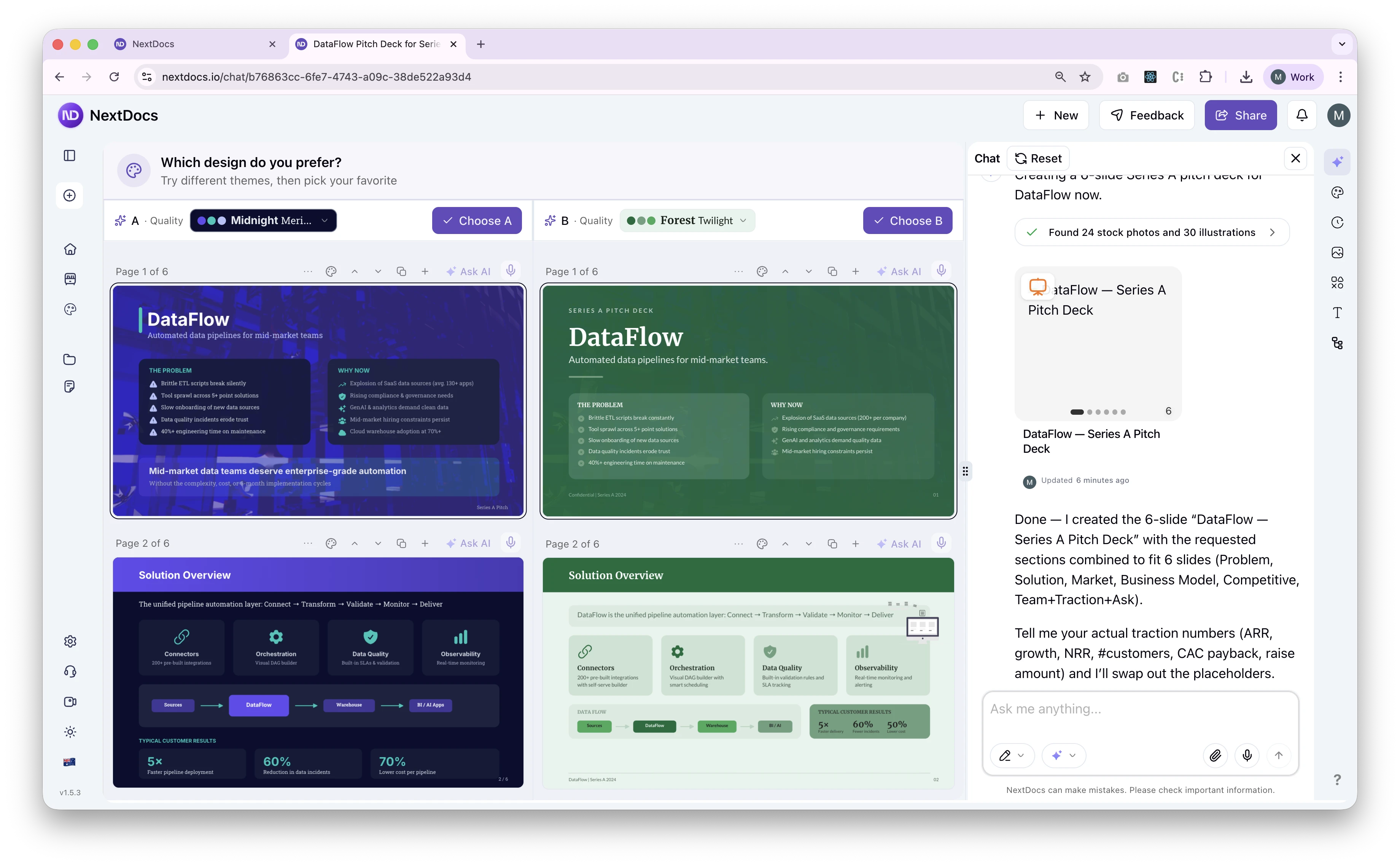
NextDocs stands as the premier choice for professors, researchers, and technical professionals. Unlike most AI tools that generate a single output and expect you to be satisfied, NextDocs utilizes a multi variant generation approach. This means the AI provides several distinct versions of your deck, allowing you to choose the structure or tone that best fits your specific academic context. For a professor presenting a grant proposal, this might mean choosing between a data-heavy version and a more narrative-driven version.
The platform is built with technical rigor in mind. It supports native math equations through LaTeX and KaTeX rendering, which is essential for STEM educators. It also features robust code syntax highlighting for computer science and engineering faculty. Furthermore, the deep research integration allows the tool to pull actual figures and citations from the web, ensuring that your slides are backed by real data rather than AI hallucinations. When it is time to share your work, NextDocs offers universal exports to PDF, PowerPoint, Google Slides, and even Google Docs. For a detailed look at how it compares to others, you can view our compare genspark vs nextdocs analysis.
Key Features:
- Multi variant generation creates multiple deck options per prompt.
- Deep research integration pulls real data with accurate citations.
- Native support for math equations and code syntax highlighting.
- Universal exports to all major formats including PPTX and Google Slides.
- Multi model support allows users to choose the specific AI logic they prefer.
Pricing: Free tier available. Paid plans start at $15 per month.
Best For: Professors, researchers, and technical presenters who need high quality, data-driven decks.
Verdict: NextDocs is the most comprehensive tool for academics, combining technical features with versatile export options.
2. Plus AI
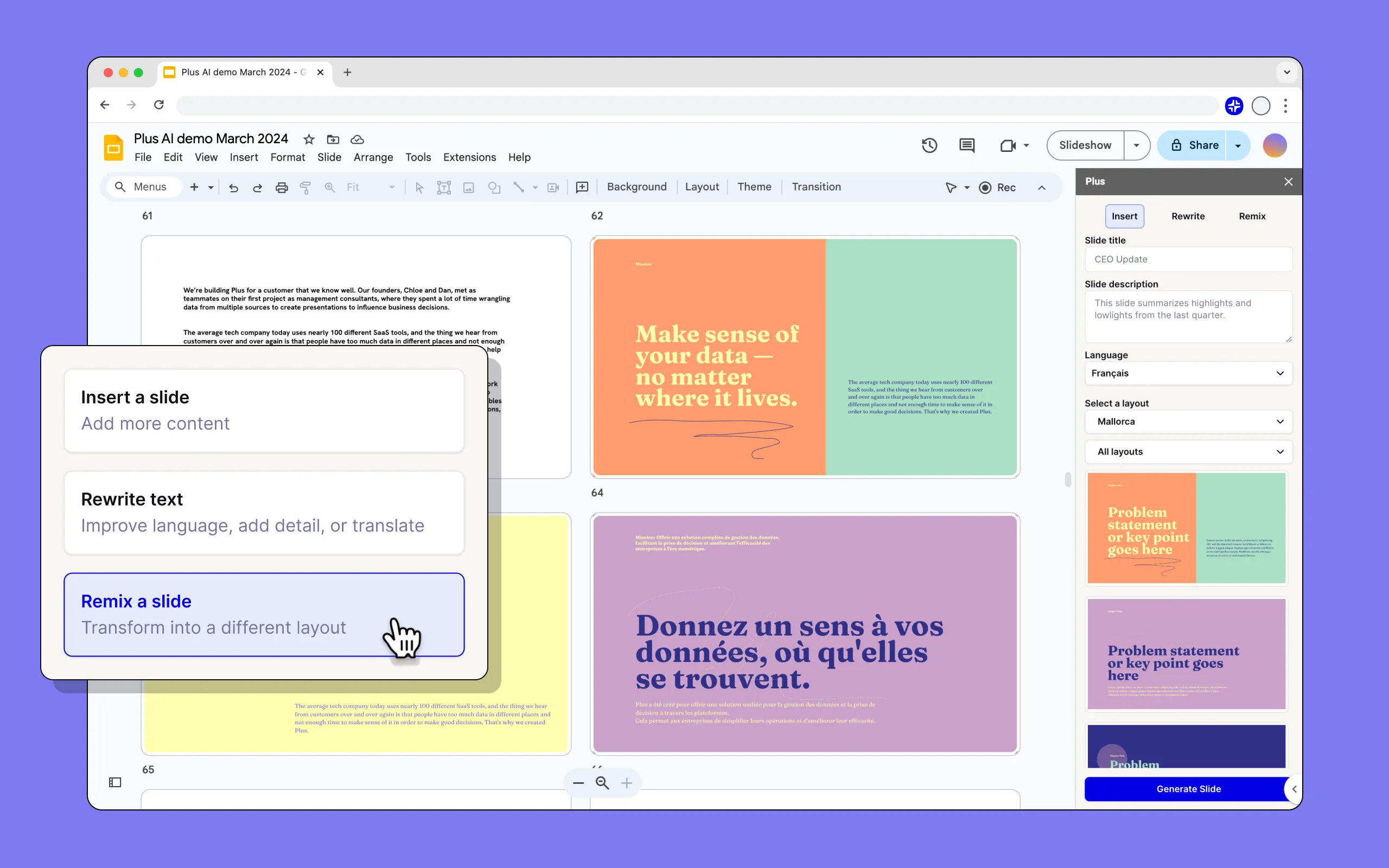
Plus AI is a powerful add-in designed for professors who prefer to stay within their existing ecosystems like PowerPoint or Google Slides. It does not require you to learn a new interface. Instead, it embeds directly into your toolbar. This makes it an excellent choice for faculty who have years of legacy decks that they want to modernize or expand. It is particularly strong at the remix feature, which allows you to take an existing slide and rewrite it using AI to improve clarity or professional tone.
While it lacks a free tier, the starting price is accessible for individual educators. It focuses on template preservation, meaning it can adopt your university's official slide templates and branding without breaking the layout. This ensures that every presentation you generate remains compliant with institutional standards. If you are debating between different add-ins, you might find our compare plus-ai-vs-slidesai-2026 review helpful.
Key Features:
- Native integration as a Google Slides and PowerPoint add-in.
- Remix feature for enhancing and updating existing slides.
- Strong focus on preserving existing brand templates.
- AI-driven suggestions for rewriting and improving content.
Pricing: No free tier. Starting at $10 per month.
Best For: Power users of traditional presentation software who want AI assistance without leaving the app.
Verdict: A reliable, professional tool for professors who want to enhance their current PowerPoint or Google Slides workflow.
3. Copilot for PowerPoint
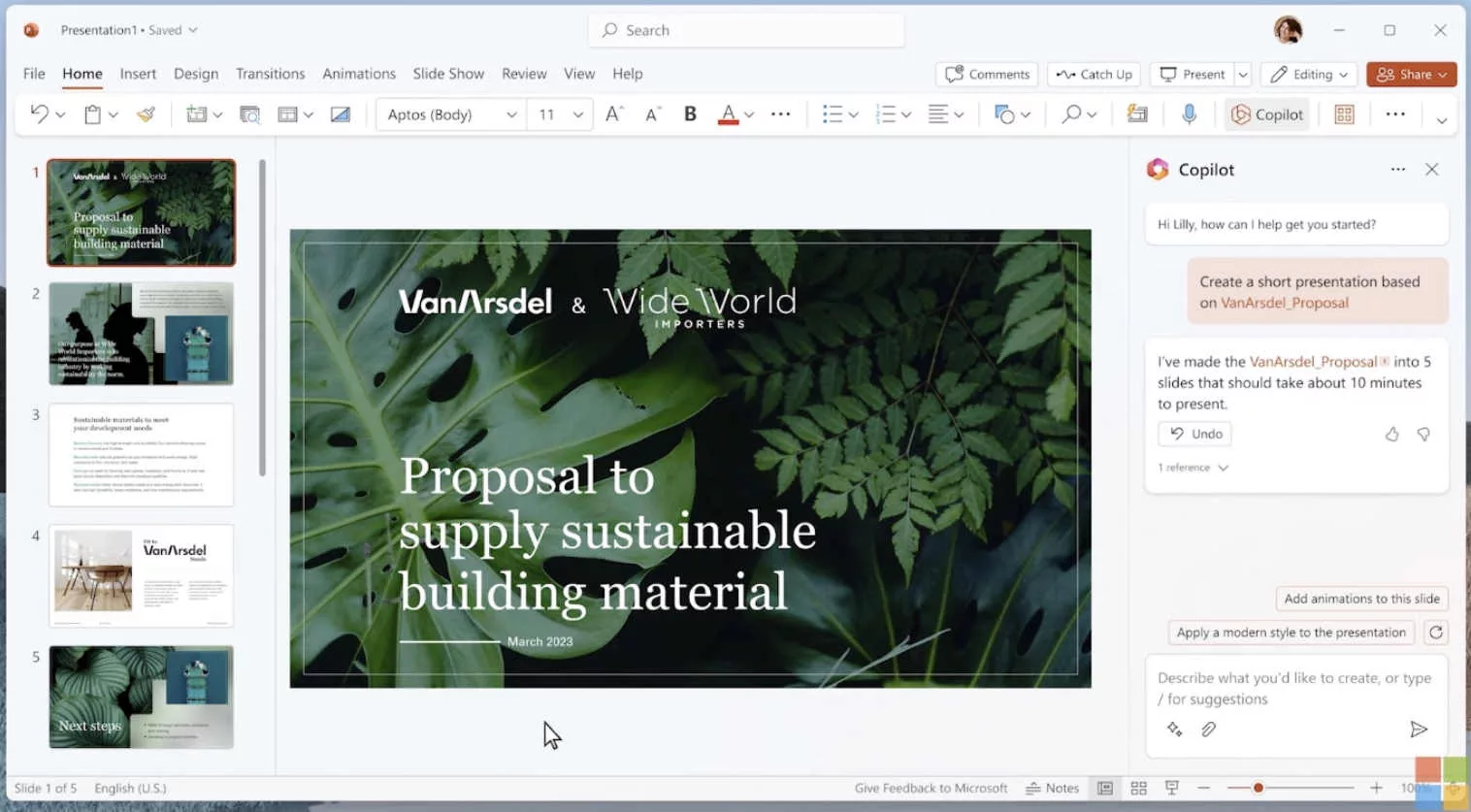
Microsoft Copilot is the gold standard for professors working in universities that have fully adopted the Microsoft 365 ecosystem. Its primary strength is organizational context awareness. If you have a research paper saved in Word or a dataset in Excel, Copilot can reference those specific files to build a presentation. This is a massive time saver for professors who need to transform a long-form academic paper into a conference presentation.
The tool also generates high quality speaker notes, which can help educators prepare for lectures or defense sessions. However, it is one of the more expensive options on the list and is generally only available to those with an enterprise or business license. The design aesthetic is professional but can feel a bit conservative compared to modern standalone tools.
Key Features:
- Deep integration with Word, Excel, and other Microsoft 365 apps.
- Ability to generate slides directly from existing documents.
- Advanced speaker notes generation based on slide content.
- Enterprise-grade security and data privacy.
Pricing: No free tier. Starting at $30 per month per user.
Best For: Professors at large institutions already utilizing Microsoft 365 for research and teaching.
Verdict: Powerful for document-to-deck conversion, provided you have the budget and existing ecosystem.
4. Gemini for Google Slides
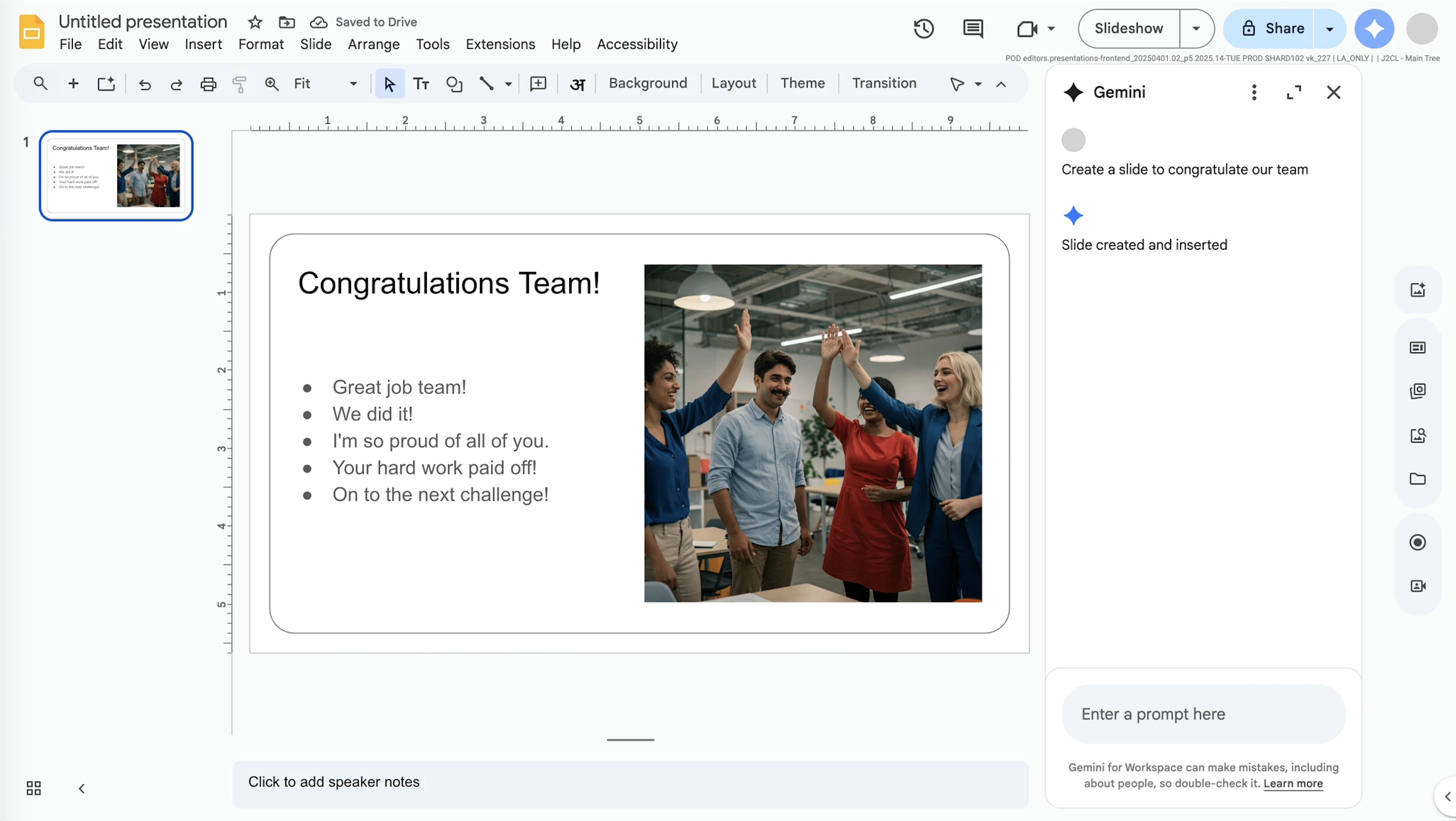
For faculty who rely exclusively on Google Workspace, Gemini provides a native AI experience within Google Slides. It is particularly useful for professors who need to create quick drafts or internal presentations for department meetings. It can access content from your Google Drive and use Gemini's image generation capabilities to create custom visuals for your slides.
While it is convenient, the output quality can sometimes be inconsistent. It lacks the sophisticated design controls found in tools like NextDocs or Beautiful.ai. However, because many universities provide Google Workspace accounts, this is often the most accessible starting point for many educators. For more on how this fits into the broader landscape, check out our best ai presentation builders 2026 roundup.
Key Features:
- Seamless integration with Google Workspace and Google Drive.
- Built-in image generation for custom slide visuals.
- Simple, chat-like interface for generating slide content.
- No extra software to install for Workspace users.
Pricing: Free tier available for basic features. Pro features start at $20 per month.
Best For: Google Workspace users who need quick, simple drafts for internal use.
Verdict: A convenient but basic tool that excels in accessibility rather than deep design or research features.
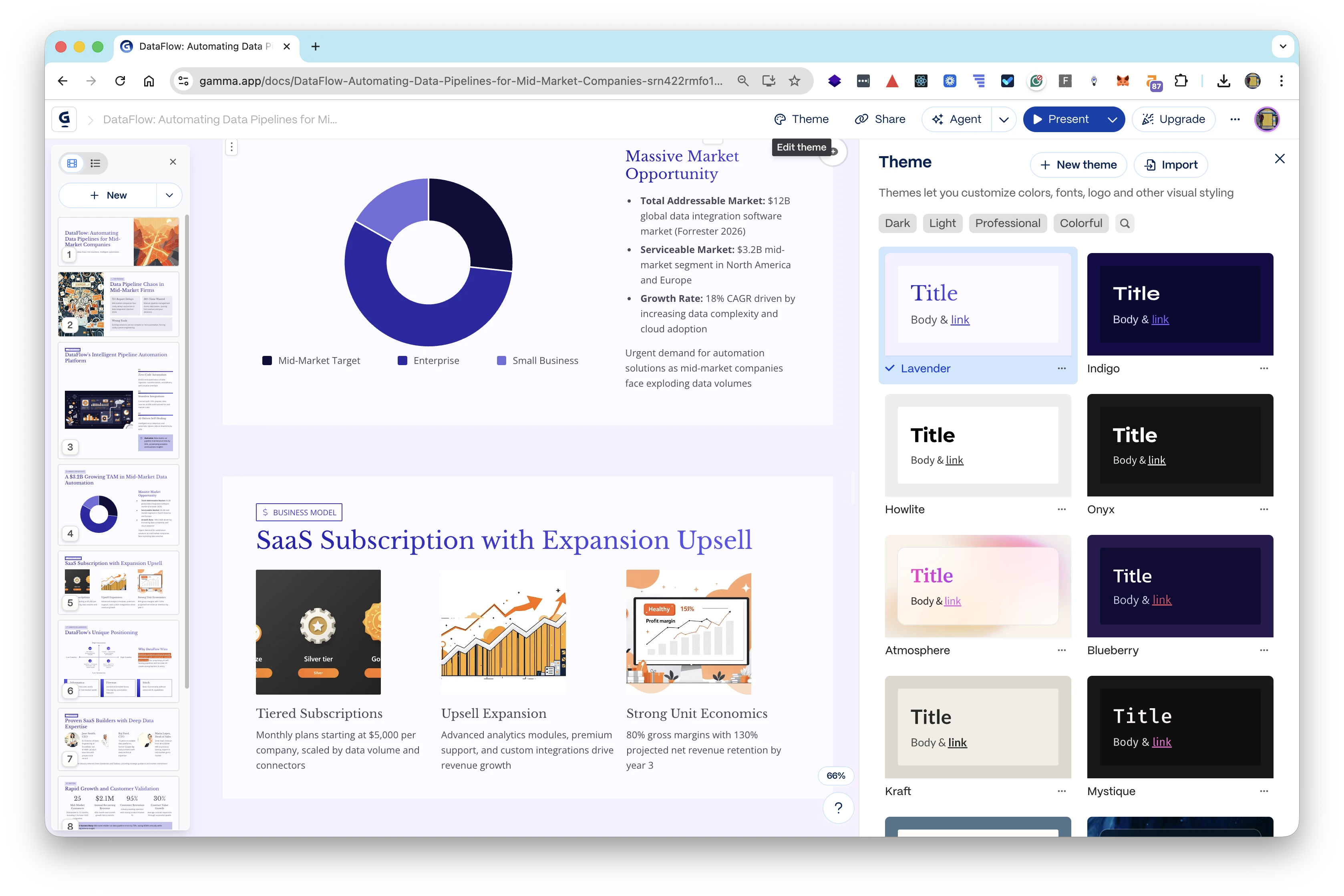
5. Gamma
Gamma has gained popularity among professors for its modern, web-native approach to presentations. Rather than traditional slides, Gamma creates "cards" that feel like a mix between a presentation and a high quality landing page. This format is excellent for sharing lecture notes or research summaries that students can view on their own devices. It offers a very generous free tier, making it an attractive option for budget-conscious academics.
The design output is consistently clean and modern. However, the web-native format can be a limitation if you are required to present offline or submit a standard PDF or PPTX file. While it does support these exports, some of the visual flair can be lost in translation. For those looking for a different experience, you might explore pitch alternatives to see how Gamma stacks up.
Key Features:
- Web-native format that is easy to share via a single URL.
- Modern, responsive designs that look great on mobile and desktop.
- Fast generation from simple text prompts or outlines.
- Generous free tier with meaningful features.
Pricing: Free tier available. Pro plans start at $8 per month.
Best For: Professors who want to share interactive lecture materials or modern research summaries.
Verdict: An excellent choice for digital-first presentations, though less flexible for traditional offline presenting.
6. Beautiful.ai
Beautiful.ai is designed for professors who may not have a background in graphic design but want their slides to look like they were created by a professional. The tool uses smart templates that automatically adjust as you add content. If you add another bullet point or a new image, the entire slide layout shifts to maintain visual balance. This "constrained design" approach prevents the common academic pitfall of cluttered, unreadable slides.
The downside is that this same constraint can feel restrictive if you have a very specific vision for a layout. It also has more limited AI generation features compared to newer competitors. For faculty who value visual consistency above all else, this is a top contender. You can read more about other options in our beautiful-ai alternatives guide.
Key Features:
- Smart templates that automatically resize and reformat content.
- Consistent design system that ensures a professional look.
- Library of pre-designed slide types for common academic needs.
- Smooth animations and transitions.
Pricing: No free tier. Starting at $12 per month.
Best For: Professors who want polished, designer-quality slides without the manual effort.
Verdict: The best tool for ensuring your presentations are visually flawless, even if it lacks some advanced AI features.
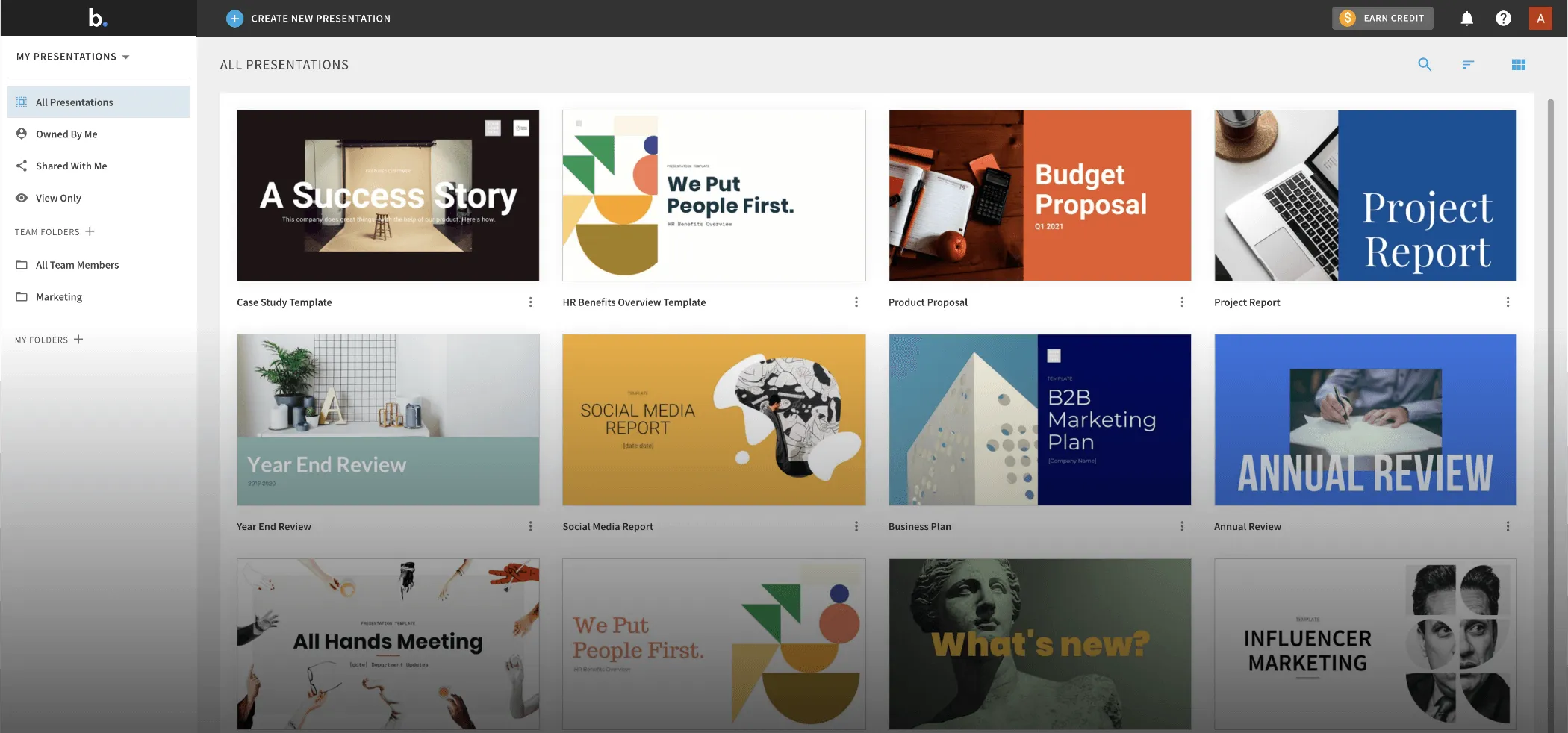
7. Pitch.com
Pitch.com is a collaborative platform that is ideal for research labs and academic departments. It combines modern design tools with robust version history and commenting features. If you are working on a multi-author research paper and need to build a corresponding presentation, Pitch allows everyone to work in the same file simultaneously.
The AI features in Pitch help with generating initial drafts and outlines, though the manual editor remains the star of the show. It offers a professional template library that is well-suited for high stakes presentations like thesis defenses or keynote speeches. For a comparison of collaborative tools, see our canva vs pitch 2026 analysis.
Key Features:
- Real-time collaboration with team members and students.
- Detailed version history and commenting system.
- Professional template library with high design standards.
- Brand kit support for departmental consistency.
Pricing: Free tier available. Pro plans start at $8 per month per user.
Best For: Collaborative research teams and departments building decks together.
Verdict: A top-tier choice for teamwork, though its AI generation is slightly less advanced than specialized competitors.
8. Canva Magic Design
Canva is widely known for its massive library of assets, and its Magic Design AI brings that power to presentations. For professors who need to create visually engaging or creative slides, Canva is hard to beat. It is particularly useful for faculty in the arts, humanities, or social sciences where visual impact is paramount.
The tool can generate a full deck from a simple prompt, pulling from thousands of professional templates. However, for highly technical or data-heavy research, Canva can sometimes feel too design-heavy and lacks the deep research or math support found in NextDocs. If you find Canva too overwhelming, you can check out canva alternatives for a more focused experience.
Key Features:
- Access to an enormous library of icons, images, and templates.
- Multi-format export including video and social media graphics.
- AI-powered Magic Design to jumpstart the creative process.
- Strong free tier with many available assets.
Pricing: Free tier available. Pro plans start at $13 per month.
Best For: Professors who need creative, visually-driven presentations and access to a massive asset library.
Verdict: Great for visual storytelling, but less suited for rigorous technical or scientific decks.
9. MagicSlides
MagicSlides is a specialized add-on that focuses on content repurposing. For professors who have existing lecture videos on YouTube or long research documents, MagicSlides can attempt to convert those formats directly into slides. This is a niche but powerful use case for educators who want to flip their classrooms or create study aids from recorded sessions.
The interface is simple, but the output often requires significant manual cleanup. The designs are fairly basic, making it more of a drafting tool than a final presentation builder. It is a good option for professors who have a lot of content in other formats and need a quick way to get it onto slides.
Key Features:
- Conversion of YouTube videos directly into slide decks.
- Text-to-slide generation from long documents or articles.
- Simple Google Slides integration.
- Fast generation for quick content summaries.
Pricing: Free tier available. Paid plans start at $8 per month.
Best For: Repurposing existing research documents or lecture videos into slide drafts.
Verdict: A useful utility for specific content conversion tasks, though it lacks professional design depth.
10. SlidesAI
SlidesAI is another Google Slides add-on that prioritizes speed and simplicity. It is designed to take a block of text and turn it into a series of slides automatically. For a professor who has a detailed lecture outline and needs to turn it into a basic presentation quickly, SlidesAI is a straightforward solution.
Compared to NextDocs, it lacks advanced features like multi variant generation or deep research. For more on this comparison, see our nextdocs vs slidesai-2026 report. SlidesAI is best viewed as a tool for creating internal drafts or simple presentations for students where the visual design is secondary to the information provided.
Key Features:
- Rapid generation of slides from text input.
- Easy to use within the familiar Google Slides interface.
- Support for multiple languages.
- Affordable entry point for basic AI slide generation.
Pricing: Free tier available. Paid plans start at $10 per month.
Best For: Quick, low-stakes presentations and internal department updates.
Verdict: A functional and affordable tool for professors who need basic slides fast and do not require advanced features.
Decision Guide: Choosing the Right Tool for Your Academic Needs
Selecting the best AI pitch deck builder depends heavily on your specific role and the type of content you produce. If you are a STEM professor dealing with complex formulas and data, your requirements are vastly different from a humanities professor focusing on visual narratives.
For Technical and Research Heavy Decks
If your work involves math, code, or deep research, NextDocs is the clear winner. Its support for LaTeX and technical syntax, combined with its ability to pull real data and citations, makes it the only tool truly built for the rigors of academia. The multi variant generation also ensures that you have choices in how your complex data is presented.
For Daily Lecturing and Student Materials
For those who need to share interactive notes or modern-looking decks with students, Gamma or Canva are excellent choices. Their web-friendly formats and massive libraries of visual assets make the learning experience more engaging for students.
For Grant Proposals and Departmental Work
When working on high stakes documents like grant proposals or departmental reports, Copilot for PowerPoint or Plus AI are strong contenders. They allow you to stay within the professional standards of Microsoft and Google while using AI to refine your messaging and ensure your content is derived directly from your research papers.
Conclusion: The Future of Academic Presenting
The transition to AI-powered presentation tools is not just about saving time. It is about improving the clarity and impact of academic communication. By using these tools, professors can ensure their research is presented with the professional polish it deserves. While there are many options available, the most effective tools are those that understand the unique requirements of the academic world.
NextDocs remains the top recommendation due to its technical features and multi variant approach. However, tools like Plus AI and Copilot offer significant value for those deeply integrated into traditional software suites. Regardless of which tool you choose, the goal remains the same: to communicate your ideas as effectively and efficiently as possible.
Ready to Create Better Presentations?
Try NextDocs Free and experience multi-variant generation, universal exports, and deep research integration. No credit card required.